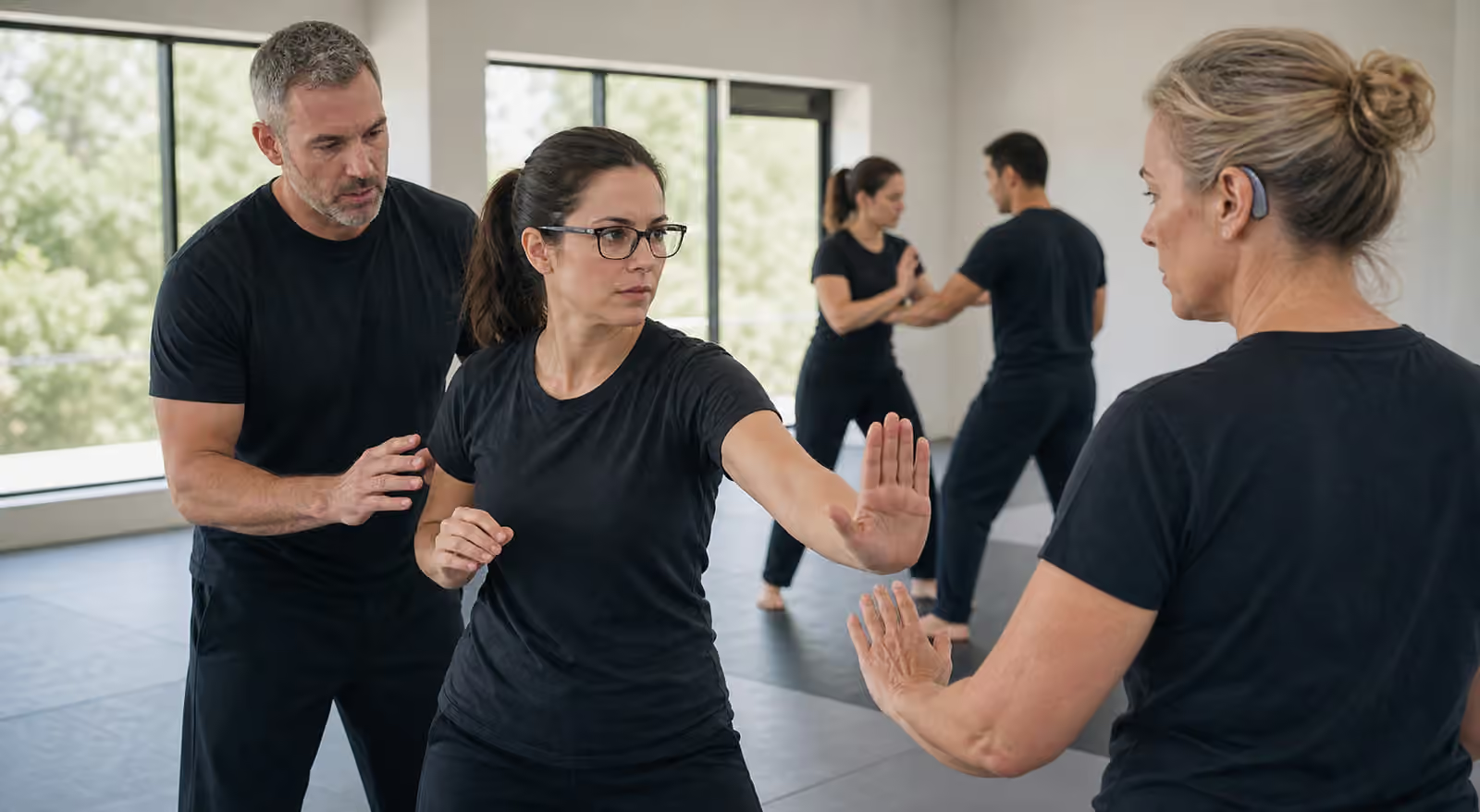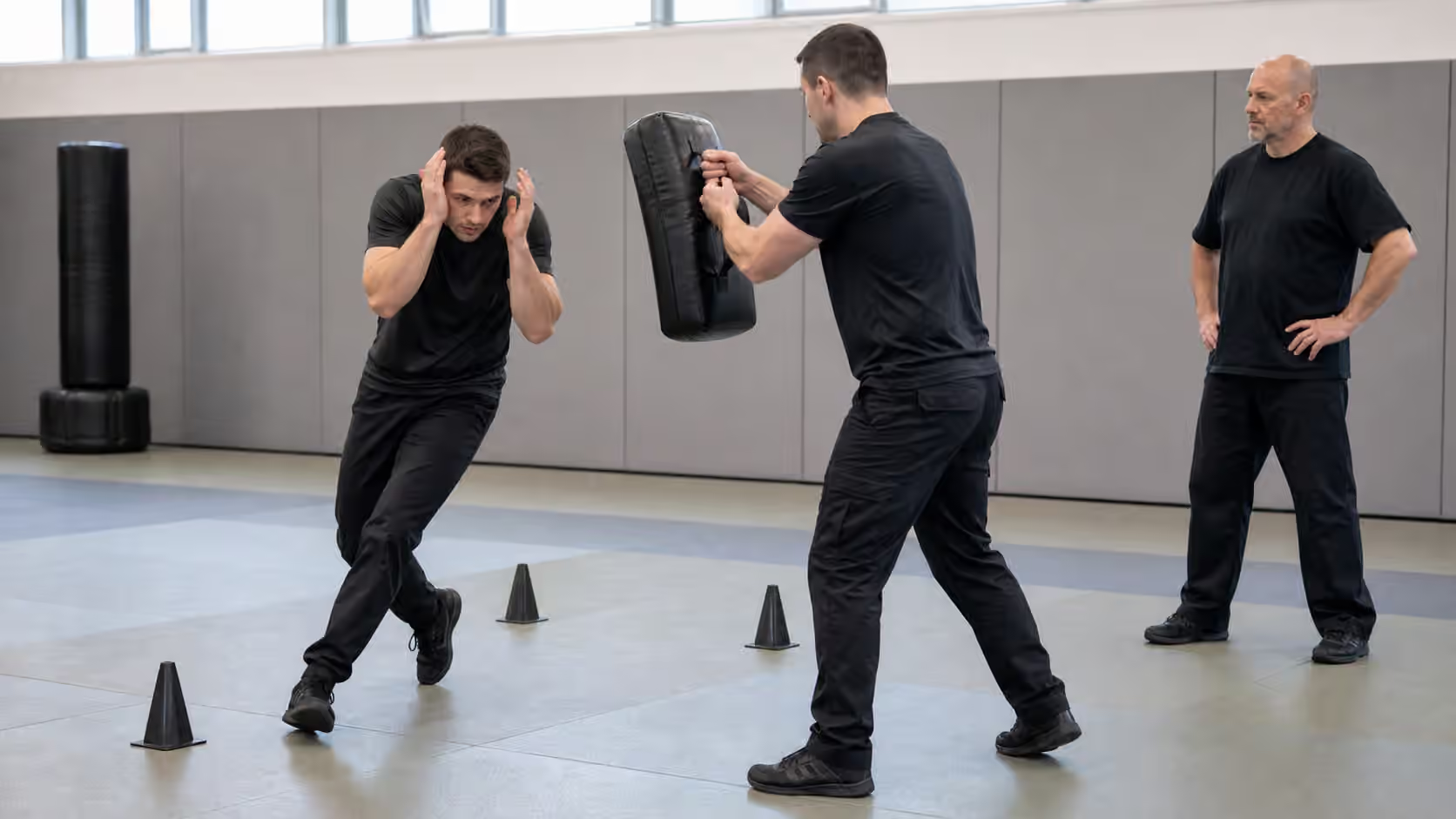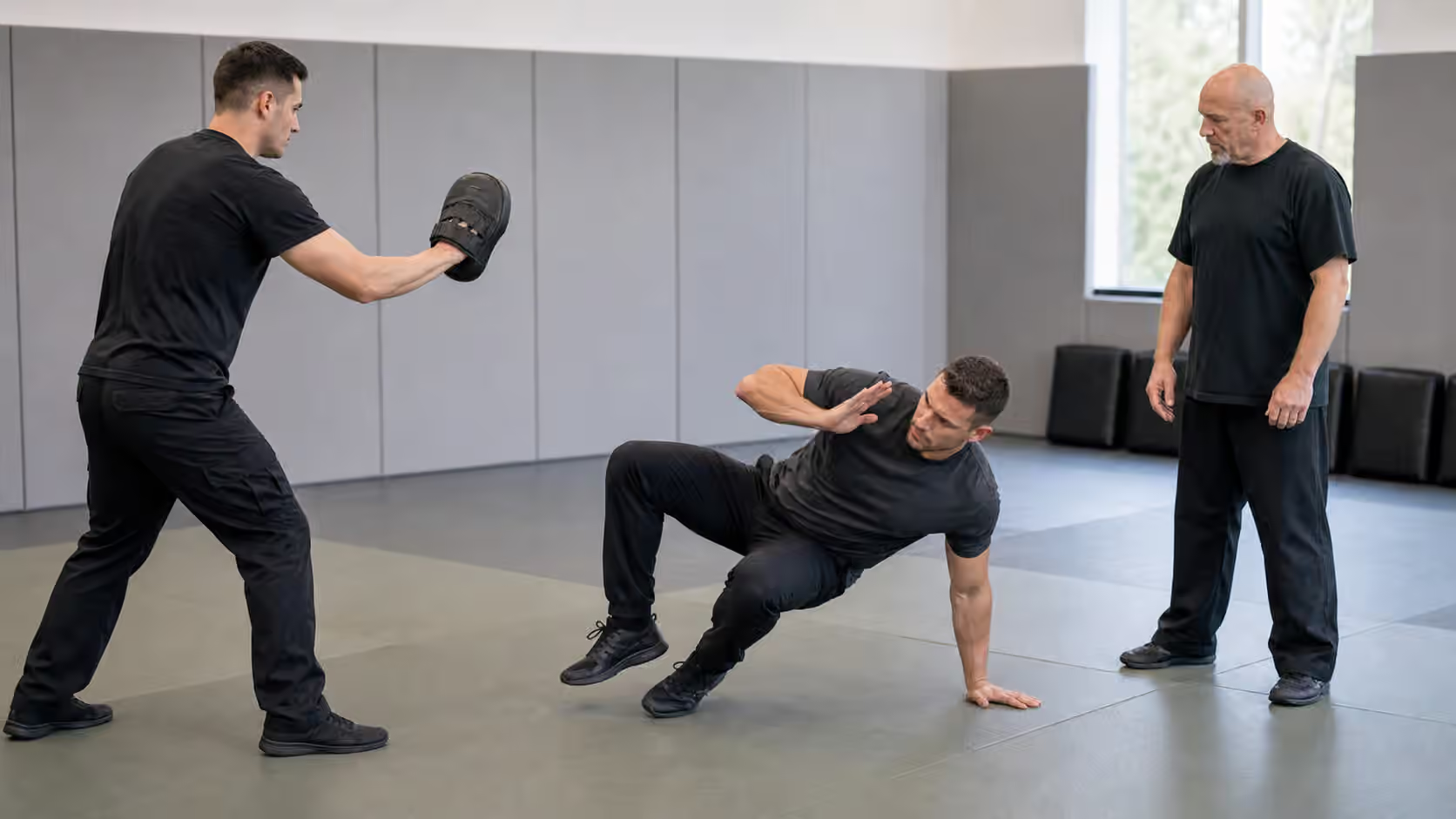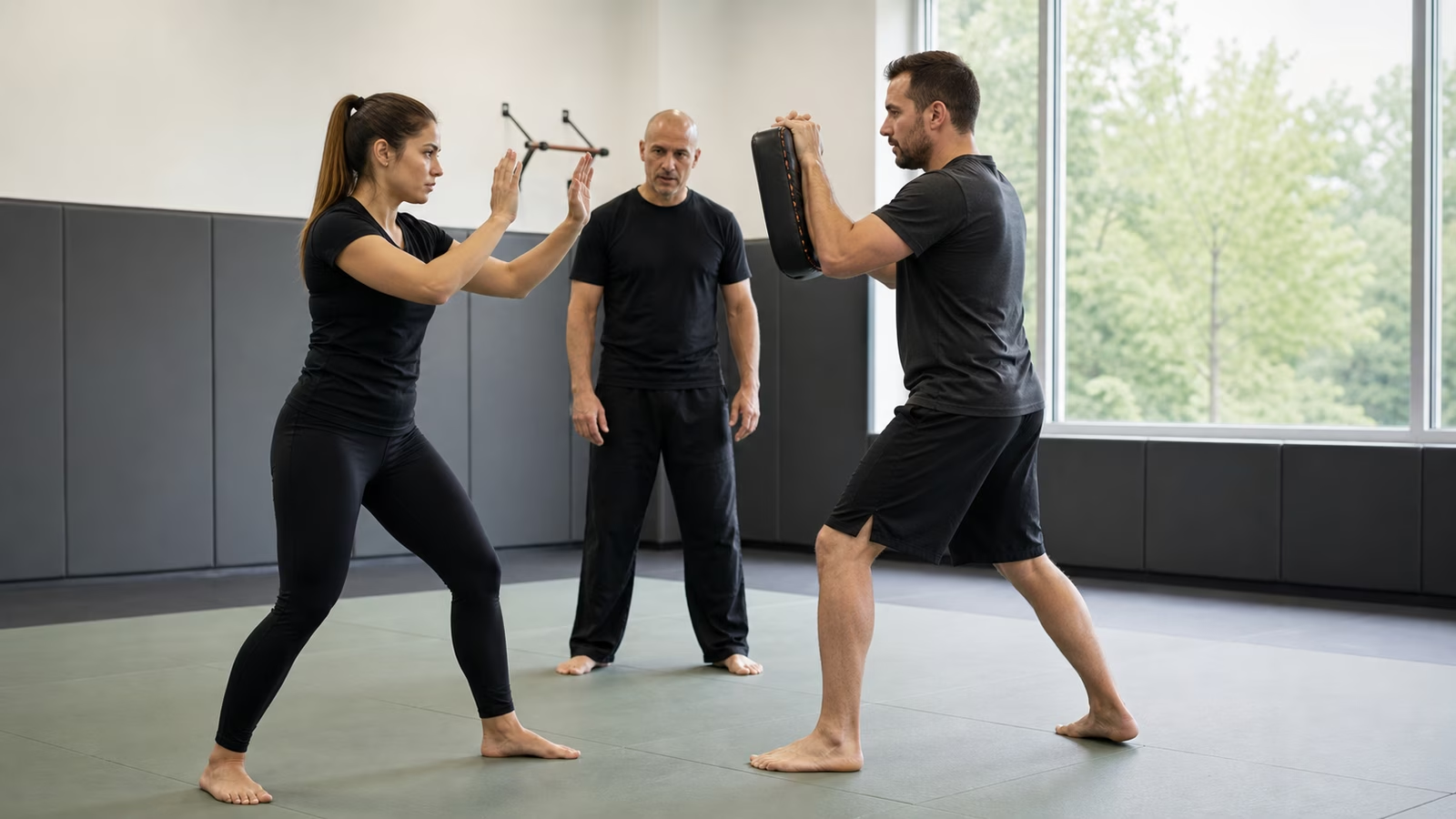
Partner work is where Krav Maga becomes social. That sounds obvious, but many beginners miss its importance because they are busy thinking about their own hands, feet, breath, and nerves. They walk into class wanting to learn defenses, strikes, and escapes. Then the instructor pairs them with another adult, and suddenly the real curriculum includes distance, communication, trust, restraint, timing, and the awkward art of touching another person with enough honesty to learn and enough care to keep them safe.
That social layer is not a side issue. It is one of the main ways a Krav Maga room teaches maturity. A student can hit pads hard and still be a poor partner. A student can know many techniques and still make the room worse by adding surprise, speed, ego, or pressure that was not part of the drill. The opposite is also true. A new student with modest physical skill can become valuable quickly if they listen well, hold safe distance, respect injuries, and help their partner practice the assignment instead of turning every repetition into a contest.
If you are still learning how a healthy class should feel, read Your First Krav Maga Class and Choosing a Krav Maga School alongside this page. The quality of partner work tells you more about a school than its slogans. Watch what students do when the instructor is correcting someone else. Watch whether they keep agreements. Watch whether experienced people make beginners safer or merely more impressed.
Contact Begins Before Touch
Contact does not begin when a hand lands on a shoulder. It begins when two students agree, explicitly or quietly, to share a drill. One person steps into the role of defender, holder, feeder, attacker, or coach. The other accepts a problem at a certain speed and intensity. The room may make that exchange look casual, but it depends on a simple promise: both people are there to learn, not to ambush each other.
Good instructors make that promise visible. They explain the drill before contact starts. They name the target, the level of resistance, the stopping point, and the safety concern. They tell the class what not to add. That last part matters. Many partner problems begin with a student who thinks they are being helpful by making the drill more realistic. They grab harder, step faster, hold longer, change the angle, or add a second action because the first few repetitions felt easy.
That is not realism. It is changing the experiment before the other person has learned what the experiment is measuring. In beginner training, the drill is often narrow on purpose. The instructor may want the defender to feel a wrist position, manage a first step, use voice, recover balance, or find an exit lane. If the partner keeps adding extra problems, the student does not become more prepared. They become busy.
Busy training can feel exciting, but excitement is not the same as learning. A better partner gives the agreed problem clearly enough that the student can discover the lesson. Later, the instructor can add resistance, movement, fatigue, or decision-making. Padwork and Pressure is built around the same idea: pressure should have a point.
The Best Partner Is Accurate, Not Dramatic
Accuracy is underrated because it is quiet. A dramatic partner makes noise. An accurate partner gives the right line, the right distance, the right grip, the right pad angle, and the right amount of pressure for the drill. They repeat the same feed long enough for the other person to learn. They do not win the repetition by becoming unpredictable. They help the instructor’s lesson arrive.
Consider a simple boundary drill. One student approaches. The other uses hands, voice, and footwork to create space. If the approaching student rushes, smirks, circles wildly, or refuses to stop when the defender creates distance, the drill becomes a performance. If they approach with the agreed rhythm, respect the boundary cue, and let the defender practice leaving, the drill teaches. It may look less impressive from outside, but the nervous system is getting cleaner information.
The same principle applies to grabs. A grab should match the lesson. Sometimes the instructor wants a committed hold so the defender can feel structure. Sometimes the instructor wants a light touch so the defender can practice moving early. Sometimes the defender should fail once because the angle is wrong, then feel the correction. The partner’s job is to provide the condition, not to prove that no technique works against a person who ignores the assignment.
There is room for resistance in Krav Maga. There should be. A student who only trains against limp, cooperative movement will be surprised by real pressure. But resistance belongs on a dial, not a switch. It should be introduced when the basic mechanics, safety frame, and purpose are clear. The phrase “go harder” is not a training plan. A mature room knows the difference between a little more pressure and a completely different drill.
Size Difference Is Part of the Lesson
Adult classes include uneven bodies. A tall student pairs with a short one. A strong student works with someone lighter. One person has long arms, another has a knee that dislikes sudden drops, another is recovering confidence after a bad previous training experience. Partner work becomes useful when those differences are treated as information rather than inconvenience.
A larger partner needs restraint. That does not mean they must pretend to be fragile. It means they should know when their weight, reach, grip, and forward pressure are changing the lesson. If the instructor asks for a light wrist grab and a large partner clamps down as if the class were a test of strength, the smaller student may learn only that they cannot move. That may be true in one sense, but it is not the whole lesson. The class should be building timing, angles, communication, and decision-making, not merely announcing a strength gap everyone can already see.
A smaller partner also has responsibilities. They should speak when something is too much, ask for a clearer feed, and avoid compensating with sudden speed or sharpness. People sometimes become reckless when they feel physically overmatched. They snap a movement, strike a pad without checking the holder, or rush through a drill because they fear being controlled. Good partner culture gives them better options. They can say, “lighter,” “slower,” “same grip but less pull,” or “let me ask the coach.”
These small negotiations make the room safer and more honest. Real self-defense can involve size differences, but training is not helped by pretending every repetition must reproduce the worst possible version of that difference. If the goal is long-term skill, the room needs enough control for varied bodies to return next week.
Feedback Should Be Useful
Partner feedback can help, but it can also become noise. Beginners often want to coach each other because they are trying to be generous. The problem is that a student who half-understands a correction may pass on a quarter of it with great confidence. Soon the drill has two instructors, three theories, and no rhythm.
The cleanest feedback is simple and observable. “Your hand dropped after the pad strike” is useful. “The pad angle feels bad on my wrist” is useful. “You are crowding me before the drill starts” is useful. Long speeches about what would happen on the street are rarely useful in the middle of a beginner round. They pull attention away from the assignment and often smuggle in fantasy.
When in doubt, bring the instructor in. That is not helplessness. It is respect for the learning process. A coach can see both bodies, identify whether the issue is distance, angle, timing, grip, fear, fatigue, or misunderstanding, and reset the drill without turning it into a debate. A good partner wants the correction more than they want to be right.
Feedback also includes listening to the body in front of you. If your partner flinches away, stops breathing, gets quiet, laughs nervously, or begins moving with less coordination, do not ignore it. They may be fine, or they may need the intensity lowered. Partner work is not mind reading, so ask plainly. A quick check can prevent the room from rewarding silence.
Role Discipline Makes Scenarios Safer
Scenario training asks even more from partners because roles can become emotionally charged. One person may play a boundary violator, a pad attacker, a loud stranger, or an obstacle near an exit. That role should stay inside the instructor’s frame. The role player is not there to explore their acting range. They are there to help the defender practice a decision under controlled stress.
Scenario Training and Ethics explains why boundaries matter so much in this part of the curriculum. A role player who adds insults, surprise contact, weapon ideas, extra grabs, or refusal to stop can turn a useful drill into a careless one. Even if nobody is injured, trust is damaged. Students become less willing to participate honestly when they cannot predict whether partners will respect the frame.
Good role discipline is calm. The partner gives the cue, maintains the agreed pressure, and stops immediately when the drill ends. They step out of role cleanly. They do not keep teasing, crowding, or arguing after the whistle. They understand that training stress should be put down when the drill is over.
This discipline matters during ground recovery too. A standing partner near a grounded student has an obligation to manage distance carefully, avoid stepping near limbs, and follow the coach’s instructions. Ground Recovery in Krav Maga is a reminder that awkward positions already make decision-making harder. A partner who adds careless pressure from above is not making the drill realistic. They are making it less teachable.
Control Is Not Softness
Some students worry that careful partner work will make training weak. They imagine that control, consent, and steady progression are polite ideas that disappear when danger arrives. That misses the point. Control is what allows intensity to be repeated. Without it, students get injured, avoid certain partners, hide discomfort, and stop trusting the room.
Hard training is possible only when people can regulate it. The striker who can hit a pad with power and still recover balance is more useful than the striker who throws everything into one uncontrolled shot. The holder who can absorb impact safely and ask for an adjustment is more useful than the holder who silently endures bad mechanics. The role player who can create pressure without losing the frame is more useful than the role player who treats every drill as permission to dominate.
Control also makes escalation clearer. When partners usually respect agreements, a change in pressure means something. The student can feel the difference between light contact, committed contact, resistance, and overload. If every drill begins too hard, the nervous system has no scale. Everything becomes urgency. That may feel intense, but it gives beginners fewer choices.
Distance, Awareness, and Exit keeps returning to the same quiet lesson: options appear earlier when you can perceive them. Partner work should train that perception. You learn what distance feels like before contact. You learn how a grip changes when someone commits. You learn when a pad holder is too close. You learn when a drill is moving from useful pressure into confusion. Those are self-defense skills too.
The Culture Travels
A room’s partner culture does not stay on the mat. Students carry it into how they speak, how they use force, how they interpret conflict, and how they treat people who are newer or less comfortable. If training rewards surprise, humiliation, and unnecessary escalation, those habits become part of the lesson. If training rewards clarity, boundaries, restraint, and useful pressure, those habits become part of the lesson too.
This is why a beginner should pay attention to the small rituals. Partners introduce themselves. They ask about injuries. They agree on intensity. They reset when a drill gets sloppy. They thank each other without making a performance of it. They call the instructor when something is unclear. They stop when someone says stop. None of this is decorative. It is the operating system that lets practical training stay practical.
The best partner in Krav Maga is not the person who makes every repetition feel like a crisis. It is the person who helps you become more capable without making you less safe. They give you enough honesty to improve and enough control to keep learning. They know when to add pressure and when to hold the line. They understand that a training partner is not a prop, opponent, or audience. They are the person who lets the lesson have a body.
If you become that partner, the room changes around you. Beginners relax enough to ask questions. Experienced students can train harder because the frame is trusted. Instructors spend less time repairing ego and more time correcting skill. The class becomes more serious, not less, because seriousness is not measured by how careless people can be. It is measured by how well they can practice difficult things and still protect one another.