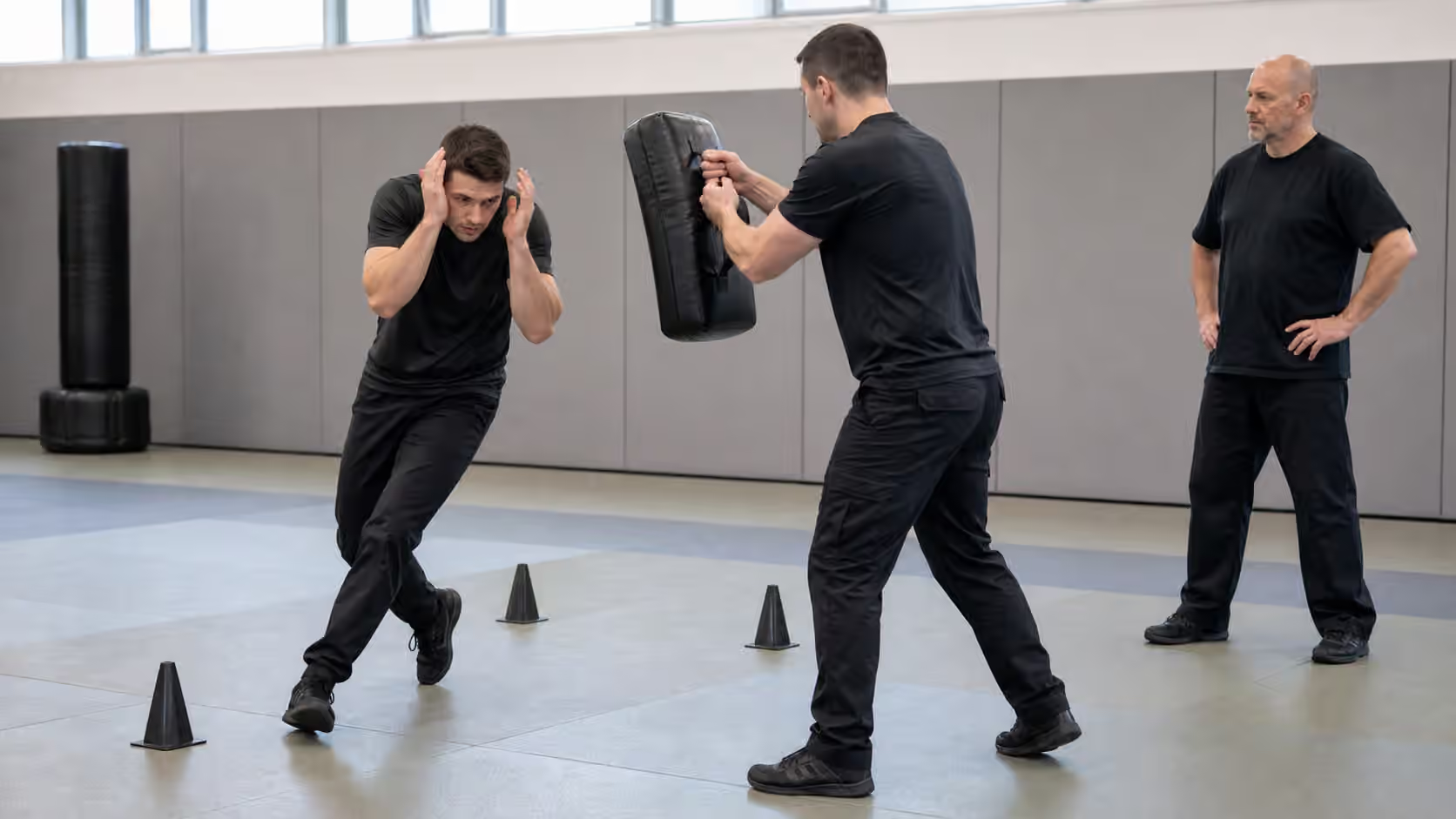
Hand strikes are often the first loud skill a Krav Maga beginner meets. The pad makes a sharp sound, the holder steps back a little, the room seems to approve, and the student feels something close to proof. After weeks of hearing about awareness, distance, stance, voice, and exits, impact can feel refreshingly simple. The hand travels forward. The pad moves. The drill worked.
That feeling is useful only if the class slows down enough to examine it. A hand strike is not just a hand. It is stance, breath, shoulder position, timing, target choice in training, partner trust, and recovery after contact. A punch that lands hard while the student’s feet tangle is not a complete success. A palm strike that moves a pad while the other hand drops to the hip is not finished. A combination that sounds impressive but leaves the student staring at the target teaches a habit that will have to be corrected later.
This is why hand-strike training belongs next to Padwork and Pressure rather than outside it. Pads let beginners feel impact without turning a partner into a target, but the pad is still feedback, not permission to become careless. It tells the striker whether the wrist stayed organized, whether the shoulder lifted, whether the breath disappeared, and whether the hand came back after the sound. It tells the holder just as much: whether the target was stable, whether the distance was honest, and whether both people were still working inside the drill they agreed to do.
The Strike Starts Before the Strike
Beginners often want to know which strike is best. Palm heel or fist. Straight punch or hammerfist. Lead hand or rear hand. The better first question is usually quieter: can the body support the hand at all? A student who stands too narrow may reach for impact. A student who leans back while striking may feel powerful in the arm and disconnected everywhere else. A student whose chin drifts forward may be solving one problem while opening another.
Footwork and Balance sits under every answer here. The feet do not need to perform anything fancy before a basic strike, but they do need to keep the body available. If the base collapses, the hand becomes a messenger from a disorganized body. If the base stays alive, the hand can move out and return without dragging the rest of the student into the pad.
Good coaching often sounds boring at first because it points to structure. Settle your stance. Keep the shoulder from climbing. Do not reach so far that your head follows the hand. Breathe. Recover. Look again. These corrections are not decorations around the real skill. They are the real skill. Power that arrives by sacrificing posture is expensive. Speed that arrives by dropping protection is fragile. A beginner who learns to strike with less drama and more structure is building something more useful than noise.
The moment before the strike also includes the decision to strike at all. Krav Maga training should not make students eager to hit every problem. Distance, Awareness, and Exit keeps the context honest. A hand strike in class may be part of a movement drill, a pad round, or a controlled scenario. Outside the room, the better answer may be leaving earlier, using voice, putting a barrier between bodies, or giving up an object that is not worth the fight. Training hand strikes responsibly means remembering that impact is one tool inside a larger self-defense education.
Palm Heel and Closed Fist
The palm-heel strike gets introduced in many Krav Maga rooms because it can be practical for beginners. The striking surface is not the fingers, and the hand can stay open in a way that connects naturally to boundary posture, frames, and visible communication. A palm can become a protective hand, a stop gesture, a frame on a pad, or a strike in the right training context. That does not make it magic. It still needs distance, structure, angle, and recovery.
The closed-fist straight punch asks for different attention. Wrists, knuckles, hand wraps, gloves, pad angle, and shoulder behavior all matter. A beginner may be able to make a loud sound with a poorly aligned fist and not notice the problem until the wrist complains later. That is why a careful instructor watches the hand, the elbow, the shoulder, and the base instead of congratulating sound alone. If a school uses wraps or gloves, those tools should support mechanics, not hide them.
There is no need to turn palm heel and fist into rival identities. They answer different training needs. A palm heel may help a beginner understand open-hand structure and direct pressure without closing the fist too early. A straight punch may teach line, recovery, hand discipline, and the cost of poor alignment. Both can become sloppy if the student treats them as proof of toughness. Both can become useful if the student treats them as coached movements that must return to stance, breath, and vision.
Open-Hand Protective Posture is especially relevant because the open hand is not only a strike shape. It is also a social shape. A person can raise visible hands while speaking, make distance clear, and avoid looking as if they are hunting for a fight. The training value of the palm is partly that it belongs to this earlier moment. It reminds the student that hands can communicate before they collide.
Impact Is Feedback
The pad does not care about the student’s opinion. It gives information immediately. A strike may feel strong in the arm and weak in the body. It may land with a slap instead of a connected push. It may jam because the student stepped too close. It may fall short because the student stayed too far away and reached. It may turn the holder because the angle was wrong. None of that is failure if the class uses the information well.
A beginner should learn to listen to the pad without worshiping it. A loud sound can come from good timing, but it can also come from a bad angle, a loose target, or a student muscling the motion. A quiet strike may be technically cleaner than a loud one if it keeps the body organized and teaches the right line. The instructor’s eye matters because the sound is only one witness.
Holding pads for hand strikes is skilled work. The holder should not simply absorb whatever arrives. They need a stable base, a target that matches the drill, and enough honesty to say when the angle hurts. A focus mitt held too far outside the body can teach the striker to chase. A mitt held too close can jam the strike and invite sloppy shoulders. A holder who drifts backward at the wrong time can pull the striker into overreach. This is why Partner Work in Krav Maga is not a side subject. The holder is helping create the lesson.
The striker has matching responsibilities. They should not increase power because they feel embarrassed. They should not surprise a holder who has not signaled readiness. They should not treat a pad as a place to dump anger. If the target feels wrong, the answer is to pause and fix the setup. A student who can lower intensity to preserve the drill is not training less seriously. They are proving that they understand what training is for.
Recovery Is Part of the Strike
Many beginners stop at contact. The hand lands, the pad moves, and the student admires the moment. The other hand drops, the chin lifts, the feet square up, and attention narrows to the sound that already happened. Coaches correct this constantly because the strike is not complete until the student can act after it.
Recovery can mean different things in different drills. It may mean the hand returns to guard. It may mean the feet angle out. It may mean the student uses voice, looks for the exit, or resets distance before the next repetition. It may mean they stop because the holder lost position or because fatigue has made the movement sloppy. The important point is that the body does not treat impact as a final punctuation mark.
Breathing and Stress Recovery helps explain why this matters. Hand-strike drills can flood a beginner quickly. The combination starts clean, then the jaw tightens, the shoulders rise, the eyes lock on the pad, and the breath disappears. Once breath is gone, hearing and judgment usually get worse too. A short exhale on impact can help, but the deeper lesson is returning to breath after impact. The student should be able to hear the coach, notice the partner, and continue making decisions.
This recovery habit also keeps hand strikes from becoming emotional theater. A person who strikes and immediately recovers is training control. A person who strikes and stays attached to the moment may be training excitement. There is nothing wrong with effort or intensity, but intensity has to remain usable. If the student becomes louder and less teachable every time the pads come out, the drill is moving in the wrong direction.
Straight Lines Need Human Judgment
Straight strikes are attractive because they seem honest. They travel directly, they are easy to explain, and they fit naturally into beginner padwork. But straight does not mean thoughtless. A straight line can be useful when the distance is right and the student has a reason to act. It can also become a tunnel if the student forgets that the room is wider than the pad.
This is where Controlled Sparring in Krav Maga eventually becomes useful. Light, supervised, restrained contact can show students that a hand does not travel in a vacuum. Another person moves, changes rhythm, touches the guard, exits the line, or gives information the pad did not give. Sparring should not be rushed, and it is not the same as a fight, but it can reveal whether hand recovery, distance, breathing, and balance remain present when the target is no longer a quiet object.
Even without sparring, beginner drills can ask for judgment. The coach may have the student strike one pad and leave instead of throwing more. They may ask for voice before contact. They may ask the striker to notice a wall, a cone, or a second target that is not meant to be hit. These small changes prevent hand strikes from becoming a private conversation between fist and pad. The body learns that impact is connected to space.
The straight line also needs proportion. Not every pad round should become maximum effort. Not every student needs the same contact level. People arrive with different wrists, shoulders, histories, coordination, fitness, and confidence. A useful class lets them build pressure in layers. Clean slow repetitions are not a warmup for real training; they are real training. Speed and force should expose a skill that already exists, not replace it.
Training the Hands Without Losing the Room
Hand strikes can make Krav Maga feel practical very quickly, which is part of their value. They give the student a way to protect space, interrupt pressure in a drill, and feel how the body behaves under impact. They also reveal habits that quieter work may hide. Does the student hold their breath? Do they overreach? Do they punish the pad instead of learning from it? Do they forget the other hand? Do they stop seeing the room?
Those questions make the training mature. A beginner does not need a catalog of dramatic answers. They need a handful of honest corrections repeated until the body starts believing them. Stand in a way that lets the hand return. Strike the training target with care. Respect the holder. Breathe before the drill steals the breath. Recover after sound. Move toward a better position. Leave when leaving is the point.
The guidebooks on this site keep returning to the same pattern because good Krav Maga is less scattered than it looks. Quickstart introduces stance, awareness, pads, pressure, and realistic expectations. The hand-strike lesson is the same curriculum made louder. If the student can strike without losing balance, recover without being reminded every time, and stay connected to the partner’s safety, the sound of the pad starts to mean something.
Hand strikes are not the heart of self-defense by themselves. They are one way the body learns to act under pressure without falling apart. When taught well, they make the student more organized, not more reckless. The hand goes out, but the mind stays in the room. The pad moves, but the feet remain available. The moment gets louder, but the choices do not disappear. That is the standard worth training toward.