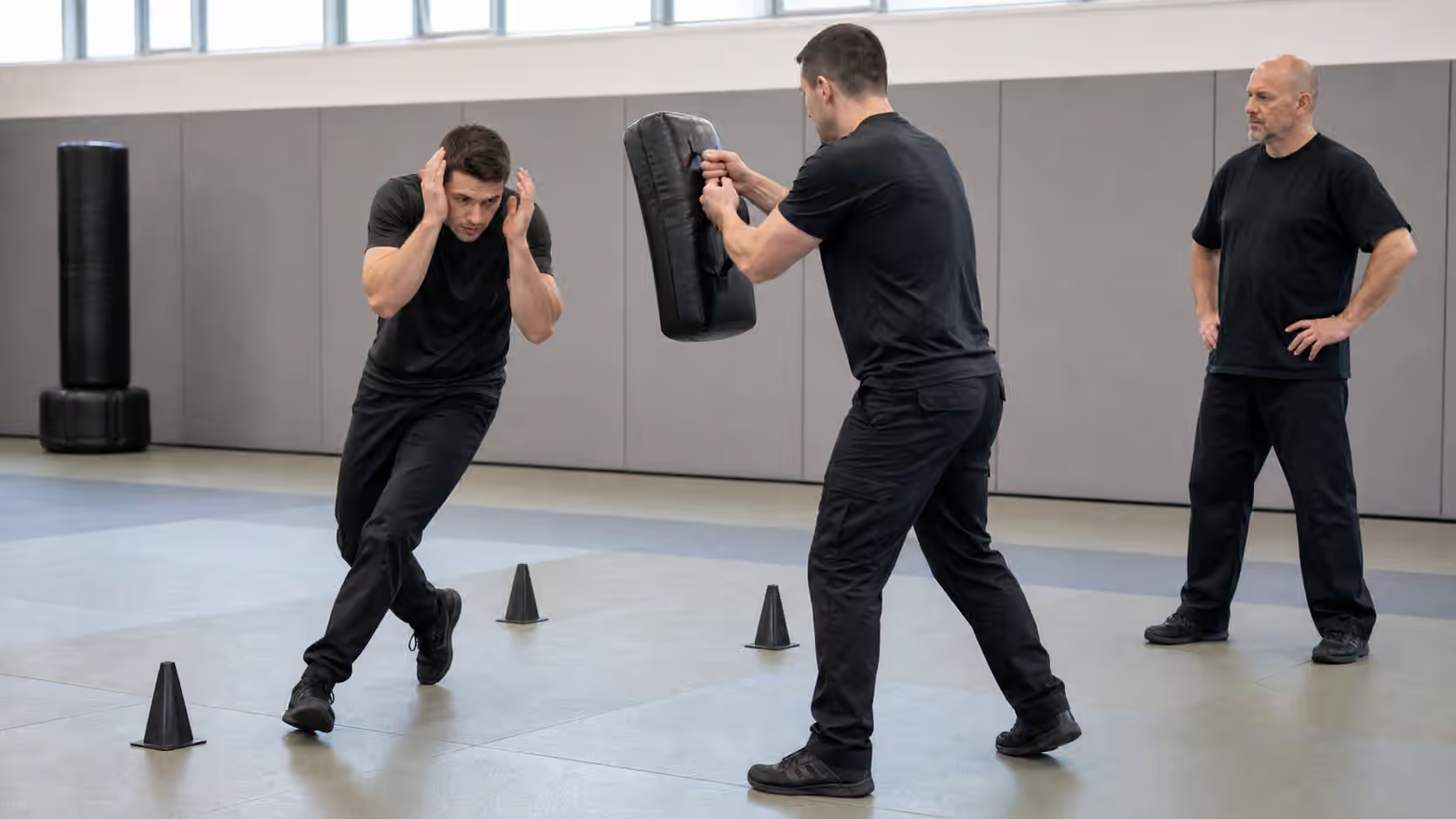
Pad holding is one of the most important beginner skills in Krav Maga, and one of the easiest to treat casually. The striker gets the sound, the sweat, and the obvious feeling of impact. The holder seems to stand there and receive it. From the outside, it can look like one person is training while the other person is helping.
That is the wrong way to understand the drill. A pad holder is not furniture. The holder is building the target, managing distance, protecting both bodies, and giving the striker information that the air cannot provide. A good holder can make a beginner’s first strike safer and clearer. A careless holder can teach bad distance, twist a wrist, overload a shoulder, or turn a simple round into avoidable confusion.
This page belongs beside Padwork and Pressure because padwork is never only about the person striking. It also belongs beside Partner Work in Krav Maga because holding pads is partner work with impact added. The better the holding, the more honestly the striker can train without treating the partner as equipment.
The Holder Creates the Lesson
Every pad position teaches something. A focus mitt held too wide teaches a striker to chase the target. A shield held too low may make knees or kicks collapse downward instead of driving through a stable line. A pad held too close can jam the striker and make them think the problem is power when the real problem is distance. A holder who drifts backward every time impact arrives may teach overreaching without meaning to.
The beginner holder usually discovers this after a few awkward rounds. The pad feels heavier than expected. The striker hits at a slightly different angle than the demonstration showed. The holder braces too late, or braces so hard that the whole body becomes rigid. The instructor steps in and changes one small thing: foot position, elbow angle, pad height, breathing, or the distance before the strike begins. Suddenly the drill feels cleaner for both people.
That small correction is the point. Holding is active skill. The holder is reading the striker’s size, speed, reach, fatigue, and coordination while also following the instructor’s assignment. If the drill is about straight punches, the target should support straight punches. If the drill is about knees into a shield, the holder should not set the shield like a focus mitt. If the drill is about exiting after impact, the holder must leave enough room for the striker to move instead of trapping the drill in place.
Bracing Is Not Freezing
Good bracing looks quieter than beginners expect. It is not a heroic pose. The feet are organized enough to accept force, the knees are alive, the torso is connected, and the shoulders are not shrugged up around the ears. The holder should be able to breathe, speak, and move after the impact. If the holder becomes a statue, the next correction is usually late.
Freezing creates problems. A frozen holder may absorb force through the arms alone. They may lock the elbows and irritate the joints. They may plant both feet so firmly that they cannot adjust when the striker’s distance changes. They may hold their breath and then fatigue quickly, which makes the last repetitions of a round less safe than the first ones.
A useful brace has some give. The holder receives impact without collapsing, but also without pretending the body is a wall. There is a subtle relationship between firmness and movement. Too soft, and the striker gets no honest feedback. Too rigid, and both partners start fighting the pad instead of learning from it. That middle ground is why instructors correct holders as carefully as strikers.
Footwork and Balance is relevant here even though the holder may not be moving much. Balance is what lets the holder keep the target honest. A pad held by a person with crossed feet, narrow stance, or drifting posture becomes a moving accident. The striker adjusts to the holder’s instability, and the drill teaches the wrong lesson.
Distance Is Shared
Strikers often get blamed for distance mistakes, and sometimes they deserve it. They step too close, reach too far, or let excitement pull them into the pad. But the holder is part of the same distance equation. If the holder steps in while raising the target, the striker may be crowded before the round begins. If the holder backs away after every impact, the striker may chase without realizing why. If the holder changes the target line without warning, the striker may twist through the strike.
Shared distance requires communication. The holder can say, “Take half a step back,” or “I am too close,” or “Reset before the next one.” Those sentences do not interrupt training. They preserve it. A room that treats pad adjustments as weakness is teaching students to hide preventable problems.
Distance also affects the emotional tone of the drill. A beginner who feels crowded may strike harder because they are tense. A holder who feels overwhelmed may laugh, apologize, or keep accepting impact they cannot manage. A good instructor watches for those cues, but partners should learn to notice them too. The pad is not a place to test how much awkwardness two people can ignore.
The Holder Has a Body
Holding can be tiring in a different way than striking. The wrists, shoulders, ribs, neck, hips, knees, and ankles all participate. A shield round can make the holder’s legs work hard. Focus mitts can make the shoulders burn if the pads are held too high or too far from the body. Repeated impact can make the neck tense. Even a light round can become uncomfortable if the angle is wrong.
That reality should change the culture of the room. The striker should not treat the holder as a disposable target. They should check that the holder is ready, especially before adding power. They should not surprise a partner who is adjusting a strap or looking to the instructor. They should not punish the pad because they are embarrassed, frustrated, or excited. Impact is not a private emotional release when another person’s joints are receiving it.
The holder also has responsibilities. They should not stay silent when something hurts. They should not keep holding a target they do not understand. They should not pretend to be more stable than they are. Saying “lighter,” “lower,” or “let me ask the coach” is not a failure of toughness. It is part of making the drill repeatable.
Safety Signals and Stopping Early applies directly. A pad round should have brakes. If a finger gets caught, a wrist folds, a shoulder pinches, or the holder loses position, the round can stop and reset. The goal is not to preserve the rhythm at all costs. The goal is to train impact in a way that lets people return next week.
Different Pads, Different Jobs
Focus mitts, Thai pads, curved kick shields, body shields, and improvised soft targets all change the lesson. A mitt can teach accuracy and hand recovery, but it gives less mass for heavy impact. A larger shield can teach drive and body connection, but it may hide whether the striker’s hand or knee is landing cleanly. A pad that works for punches may be wrong for elbows, knees, or kicks unless the instructor changes the setup.
Beginners do not need to become equipment experts, but they should learn that pad choice is not random. The target should match the tool being trained, the body of the holder, and the level of the striker. A small holder should not be asked to absorb a heavy kick from a much larger striker without the instructor making the drill appropriate. A new striker should not be encouraged to throw maximum force at a holder who has not learned the brace.
Krav Maga Training Gear covers equipment from the student’s perspective. Pad holding adds another question: does the gear help the drill stay honest? Worn straps, slippery surfaces, loose seams, and hard edges can all matter. A mature room does not make a show of gear, but it does respect the way equipment affects safety.
Pressure Starts With Holding Well
Pressure drills often focus on the defender’s stress, but pad holders shape that stress. A holder can make a drill louder without making it better. They can rush the feed, crowd the striker, change the rhythm randomly, or add verbal pressure that was never assigned. The room may feel intense, but the lesson gets muddy.
Useful pressure begins with clean holding. The holder gives the agreed target, at the agreed distance, with the agreed intensity. Then the instructor can add one layer: movement, fatigue, a second target, a verbal cue, an exit lane, or a time limit. The holder’s job is to keep that layer clear enough that the striker knows what they are solving.
This is especially important when the striker is new. Beginners often treat every pad round as proof of courage. They may hit harder than they can organize. They may keep striking after balance is gone. They may hold their breath and become less coordinated. A good holder helps the coach see those changes. The holder can feel when impact turns sloppy before it is obvious from across the room.
Holding Teaches Self-Defense Too
Pad holding may seem removed from self-defense because the holder is not the one practicing a defense. In reality, holding teaches several practical habits. It teaches distance without panic. It teaches how bodies change under force. It teaches communication under noise. It teaches the humility of realizing that your partner’s safety depends on your attention.
It also teaches restraint. A person who can hold steady for a newer student, lower intensity for a tired partner, and ask for a reset before something goes wrong is practicing a form of control that matters beyond the mat. Krav Maga should not only produce people who can make impact. It should produce people who understand when impact is useful, when it is unsafe, and how much another body is trusting them.
The better you hold, the better the room gets. Strikers learn cleaner mechanics because the target is honest. Beginners relax because the drill feels supervised instead of chaotic. Instructors can add pressure because the foundation is trustworthy. The sound of the pad starts to mean more than effort. It means two people built a safe enough target for real learning to happen.