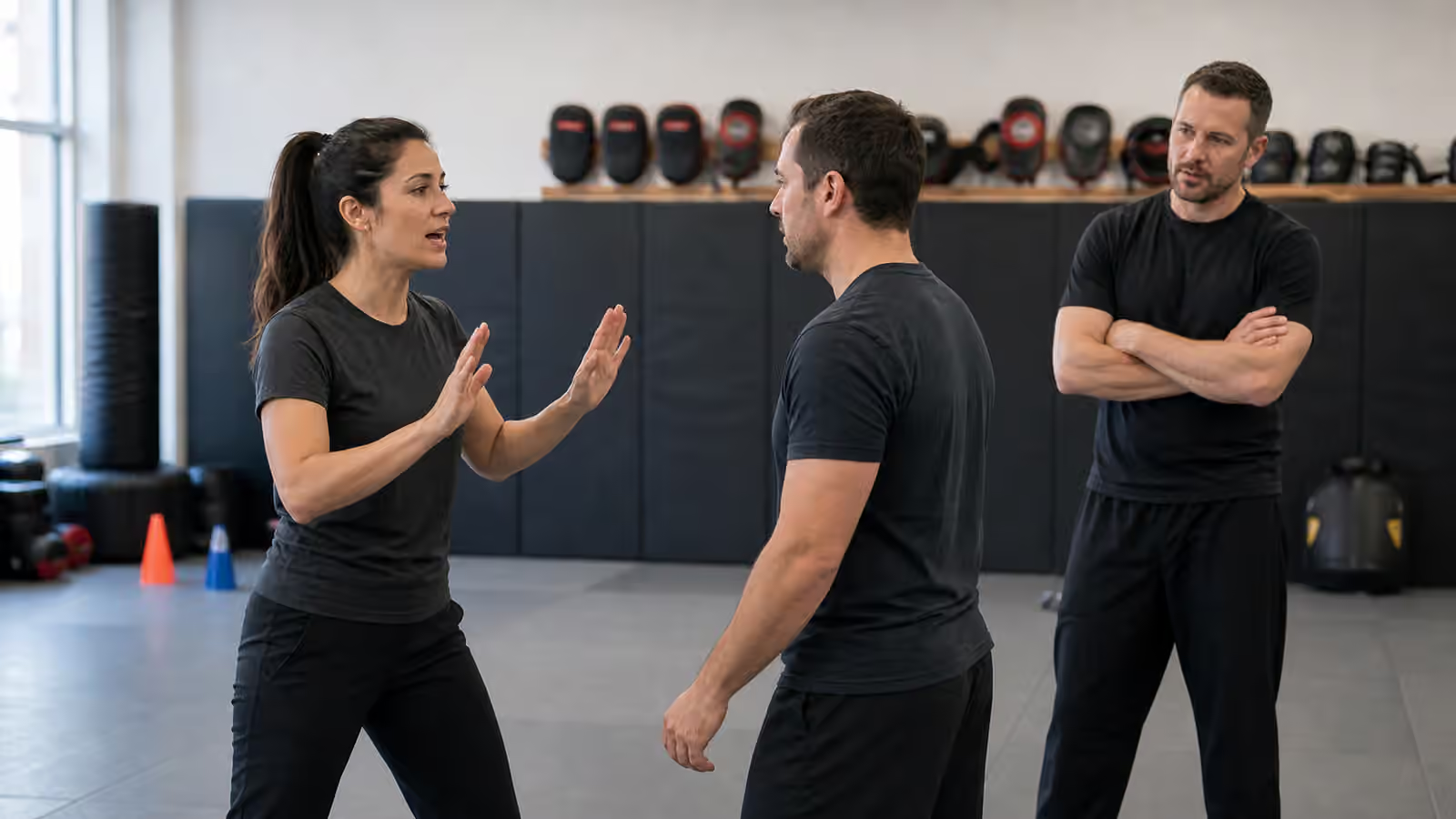
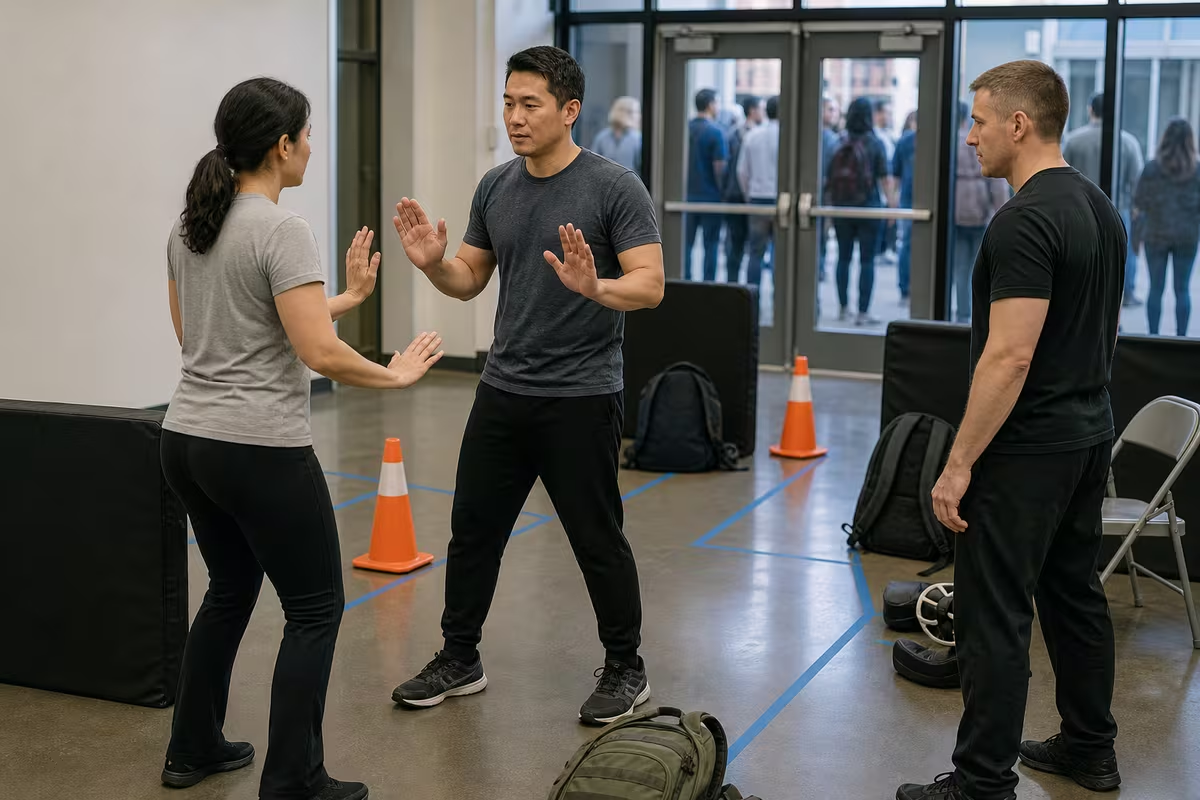
Open hands are easy to overlook because they do not look dramatic. A beginner expects the important part of Krav Maga to be the strike, the escape, the pad impact, or the loud moment when the class moves at speed. Then an instructor stops everyone before any of that happens and asks for hands that are visible, relaxed, and already between the body and the problem.
That small correction is not cosmetic. Open-hand protective posture is one of the bridges between ordinary life and physical training. It lets a person speak without hiding their hands. It gives the body a head start if distance collapses. It can look less threatening than a closed-fist fighting stance while still protecting the line to the face, throat, chest, and ribs. It also tells the student something important: self-defense is not only what happens after the hands become fists.
The open hand belongs beside Distance, Awareness, and Exit , not after it. If distance is the quiet core of Krav Maga, the hands are often the first visible sign that the student understands the distance has changed. A person may step closer while talking. A doorway may narrow. A conversation may stop feeling normal. The hands come up before panic, before impact, and before the body has to solve the whole problem at once.
This does not mean walking around with a theatrical guard. Most of the time, ordinary posture is enough. The skill is in noticing when ordinary posture no longer fits. Hands in pockets, hands wrapped around a phone, arms crossed tightly, or one hand occupied with a bag all make sense in normal life. They become less useful when space starts closing. Krav Maga training gives students a place to feel that change early and move the hands before the situation has already decided for them.
Hands Before Techniques
Beginners often ask where their hands should be. The honest answer is that the exact shape depends on distance, context, body type, injury history, and what the instructor is teaching that day. Still, the principle is steady. The hands should be available. They should not be trapped low, hidden behind the hips, clenched with tension, or frozen in a pose that prevents movement.
An open-hand posture usually keeps the palms visible and the elbows connected enough that the shoulders do not climb toward the ears. The hands may sit near the chest and face, not jammed against the cheeks, not reaching out stiffly, and not so low that a quick movement has to travel too far. The fingers are not decorations. They should be alive but not rigid. A tense hand can become a tense arm, and a tense arm can make the whole body late.
The word guard can be misleading if it makes students think only of sport fighting. A Krav Maga guard in a verbal boundary moment may need to communicate as much as protect. The palms may say, “Stay there.” The arms may mark a line without shoving. The posture may help a witness understand that the student is trying to create space rather than start a fight. None of that guarantees safety, and it does not remove the need for judgment, but it matters.
Closed fists change the message. They may be useful in some training contexts, especially when striking pads, but they can also escalate the visual picture earlier than necessary. A person with clenched fists may feel stronger while also becoming narrower, tighter, and easier to read as aggressive. Open hands keep more options available. They can signal, frame, cover, guide, push against a pad, protect the head, or become striking tools if the drill has moved there under instruction.
The Social Guard
The hardest part of open-hand posture is not the shape. It is the embarrassment. Raising the hands in front of another adult can feel rude, dramatic, or theatrical. Many people would rather keep smiling while their body quietly reports that something is wrong. This is why De-escalation and Verbal Boundaries pairs so naturally with hand position. The voice and the hands need to agree.
If the voice says “please give me some space” while the body keeps leaning backward with both hands pinned to the sides, the boundary is harder to hold. If the hands rise sharply while the voice becomes insulting, the posture may add fuel. A better beginner habit is plain and coordinated: the hands come up calmly, the feet keep space, and the voice stays brief. The student is not performing dominance. They are making the boundary visible.
In class, this can be practiced without turning the room into drama. One partner steps forward from a safe range. The other raises open hands, names the boundary, angles away, and exits the line. The drill should begin slowly enough that both people can feel the timing. Did the hands rise before the partner was already too close? Did the student lean back instead of moving the feet? Did the palms reach so far forward that the shoulders lost structure? Did the voice become a script, or did it match the moment?
Those questions are more useful than a perfect-looking pose. Self-defense training has to survive the awkward middle ground between normal conversation and physical danger. The open hand lives in that middle ground. It gives politeness a spine without pretending that politeness controls everything.
When Surprise Gets There First
Sometimes the hands are late. A student gets distracted, misreads distance, or receives pressure before they were ready. That is where Startle Response in Krav Maga becomes relevant. Many people naturally bring their hands up when surprised. Training can shape that reflex so the hands protect instead of flail.
A startled open hand may not look clean. It may arrive high, crooked, tense, or too close to the face. The goal is not to pretend that surprise produces perfect technique. The goal is to recover from the first messy shape into something usable. The hands cover, the chin settles, the breath comes back, the feet become available, and the eyes return to the room. From there, the student can move, speak, frame, strike a pad if needed, or leave.
Pressure drills should respect this. A partner who tries to trick or scare a beginner into chaos is not teaching better hands. Useful surprise work is bounded. The student knows the range, the contact level, the stop signal, and the purpose of the drill. The surprise is enough to show the habit, not enough to make the room unsafe. A coach can then help the student find the difference between protective tension and useless stiffness.
Open-hand work also teaches recovery after action. Many beginners strike a pad and let the hands fall as soon as the sound ends. The instructor’s correction may be quiet but constant: return your hands. This is not about posing. It is about not assuming that one action solved the whole problem. Padwork and Pressure makes the same point through impact. The pad is feedback, not the finish line.
Frames, Contact, and Partner Care
Open hands eventually connect to framing. A frame is not a shove with a nicer name. It is a structure that helps keep breathing space, manage distance, and create an angle. In close range, the forearm, palm, shoulder line, and posture may all matter. Close Range in Krav Maga covers that crowded place in more detail, but the beginning of the skill is often the same simple habit: hands available early.
The danger is reaching without balance. A beginner may extend both arms toward a partner and leave the feet behind, turning the body into a leaning shelf. That can feel active while making the student easier to pull, turn, or collapse. Good open-hand posture keeps the hands connected to the base. The hands mark space, but the feet own the exit. The arms can protect only as well as the stance lets them.
Partner safety matters here because hand drills can become sloppy quickly. Fingers can poke eyes. Palms can land on throats. Wrists can get grabbed harder than intended. A light boundary drill can turn into a pushing contest when pride enters. Partner Work in Krav Maga is a useful companion because open-hand training depends on disciplined contact. The feeder should offer the agreed pressure. The defender should not turn every palm into a strike. Both people should be able to pause, reset, and lower the intensity before the lesson gets buried under ego.
This is also why open-hand posture should not be taught as a secret trick. It is a practical habit, not a promise. A determined person may ignore the visual boundary. A crowded room may steal the space needed to use it. A weapon, multiple people, a fall, or a wall can change the problem immediately. The value of the open hand is that it gives the student a little more time, information, and structure before choices narrow.
Everyday Practice Without Acting Strange
The best place to understand open hands is still the class, under an instructor who can see your shoulders, elbows, balance, and timing. But the habit also has an ordinary life outside the room. You can notice when both hands are buried in pockets while walking through a tight space. You can place a phone away before crossing a parking lot instead of letting the object claim your attention. You can keep one hand free while opening a door. You can avoid standing so close to a wall that your hands have nowhere to go.
These are not paranoid rituals. They are small ways of making the body less late. The site already treats awareness as ordinary rather than theatrical, and open-hand posture should be understood the same way. Most days, nothing happens. The hands are just hands. The training is there so that if a moment changes, the body does not have to invent availability from scratch.
There is a useful humility in this subject. A person can know many techniques and still be late with their hands. They can hit pads hard and still drop their guard whenever someone talks. They can speak confidently and still freeze because raising open hands feels socially uncomfortable. Beginners should not be embarrassed by that. The room exists to reveal the gap before it matters.
Over time, the open hand becomes less of a pose and more of a decision. It says that the student has noticed distance. It says the voice has support. It says the head and chest are not being offered for free. It says the feet may move. It says the situation is not yet a fight, and the student is still trying to keep it that way.
That is the quiet strength of the posture. It gives Krav Maga a visible pause before the louder tools. It keeps the student connected to exits, witnesses, breath, partner safety, and proportion. The hands rise not because the student wants trouble, but because the student has learned to take space seriously while there is still time to leave it.