Online Krav Maga videos are easy to find and hard to interpret. A beginner can watch a clean demonstration, pause it, replay it, and feel as if the movement has become available. The screen makes training look tidy. The camera chooses the angle. The partner gives the right energy. The instructor may be skilled, but the viewer is still alone with no one checking distance, balance, contact, timing, fear, or the quiet mistakes that decide whether a movement is safe.
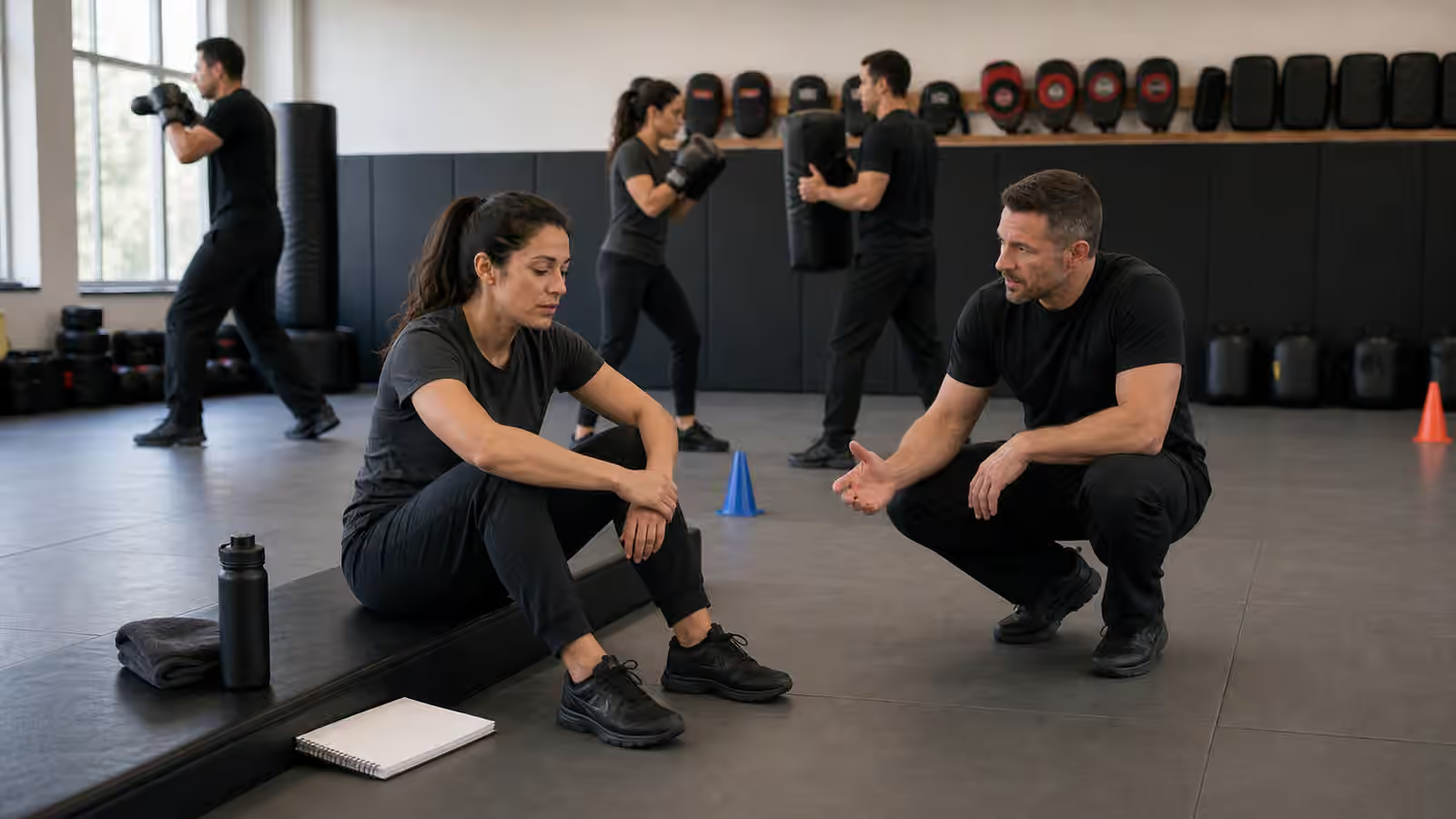
This does not mean every video is useless. Video can help a student remember class vocabulary, review broad ideas, prepare better questions, and understand why an instructor keeps correcting the same habit. The boundary is important: a video can support training, but it cannot become the whole instructor. Krav Maga depends too much on bodies, pressure, judgment, and feedback to be learned responsibly from demonstration alone.
Training Between Krav Maga Classes gives the right starting point. Between-class practice should make the next coached class better. It should not create private habits that the coach must later untangle. If a video helps you remember to keep your stance alive, breathe, recover your hands, or think about exits, it may be useful. If it tempts you to drill high-risk defenses at speed in a living room, it has moved outside its lane.
The Camera Hides the Lesson
A video can show what the instructor wants the viewer to see. It rarely shows everything the student needs to feel. Distance may look obvious from the camera angle but feel completely different with a real partner. A grip may look light but have a specific direction of pressure. A turn may depend on foot placement that is hidden by the body. A strike may land on a pad at a safe angle because the holder knows how to receive it. The viewer may copy the visible shape while missing the conditions that made it work.
This is especially true in Krav Maga because the goal is not simply to reproduce a move. The student has to understand why the move appears, when it is too late, when it is unnecessary, and when leaving is better. Distance, Awareness, and Exit cannot be reduced to a camera trick. It is a relationship to space that has to be corrected in real time.
A beginner watching video often looks for certainty. “If this happens, do that.” Real training is less tidy. A person may be larger, smaller, drunk, frightened, armed, unbalanced, close to a wall, with friends nearby, or blocking a child. The video may demonstrate one answer to one starting point. A coach helps the student understand the boundaries of that answer. Without that help, the student may collect techniques like souvenirs and mistake collection for skill.
What Video Can Do Well
Video is strongest when it supports reflection rather than imitation. After class, a student may watch a short explanation of stance and realize why their feet kept crossing. They may review a clip about verbal boundaries and decide to practice saying the words clearly. They may watch a discussion of pad holding and arrive next class with better questions. They may compare a coach’s correction with a broad demonstration and finally understand the shape of the mistake.
Class Debriefs and Training Journals pairs well with video. Instead of watching endlessly, write down one class correction, then use video only to clarify that correction. If the coach said your hands dropped after contact, watch for hand recovery. If the coach said you were too close to the pad, watch how distance is managed. If the coach said you froze after the first movement, watch how the demonstration returns to looking and leaving.
This focused use keeps video from becoming entertainment disguised as training. A student can spend an hour watching dramatic defenses and learn very little about their own body. Ten careful minutes tied to a real correction may be more valuable. The screen should send attention back to class, not replace the need for class.
What Should Stay Off the Living Room Floor
Some Krav Maga material does not belong in solo home practice. Anything involving impact, falls, chokes, head pressure, weapon problems, hard grabs, body weight, surprise, or resistance needs qualified supervision and a safe environment. Even if the viewer understands the broad idea, the risk is too easy to misjudge. Furniture, pets, children, slick floors, low ceilings, hard corners, and tired bodies do not care that the video looked simple.
Ground Recovery in Krav Maga is a good example. Getting up from the ground can be trained safely in class with proper spacing and instruction. At home, a student might still practice gentle mobility or remember the idea of protecting the head and making space, but fast falls, rolls, kicks from the ground, or partner pressure are different matters. The difference is not cowardice. It is respect for the conditions that make practice repeatable.
The same is true for Weapon Awareness in Krav Maga . Online weapon-defense clips are especially seductive because they make a frightening problem look solvable in seconds. A responsible student should be skeptical. Weapon awareness is mostly avoidance, distance, barriers, compliance decisions, exits, and qualified instruction. Copying a clip with a kitchen object or training prop at home can teach confidence without competence, which is a dangerous trade.
Online Claims Need a Filter
Videos compete for attention. The most careful explanation may look less exciting than a dramatic clip. A title may promise secret techniques, instant survival, or defenses that work against anyone. Krav Maga students should treat those claims as warning signs. Real instructors talk about context, limits, safety, and the need for correction. They do not make size, surprise, weapons, numbers, surfaces, or fear disappear through confident editing.
Choosing a Krav Maga School can be adapted to online material. Does the instructor explain what the drill is for? Do they name what the video cannot teach? Do they avoid humiliation and fantasy? Do they show safe partner behavior? Do they emphasize avoidance and exit as much as impact? Do they encourage students to train with qualified people rather than treating the channel as enough?
The viewer should also notice what the camera rewards. Fast cuts can hide poor balance. Loud pad sounds can hide bad structure. A compliant partner can make timing look universal. A dramatic finish can hide the absence of scanning, leaving, or calling for help. If the video ends with a pose, ask what happens next. Krav Maga should return the student to decision-making, not just give the camera a clean final frame.
A Better Home Practice Habit
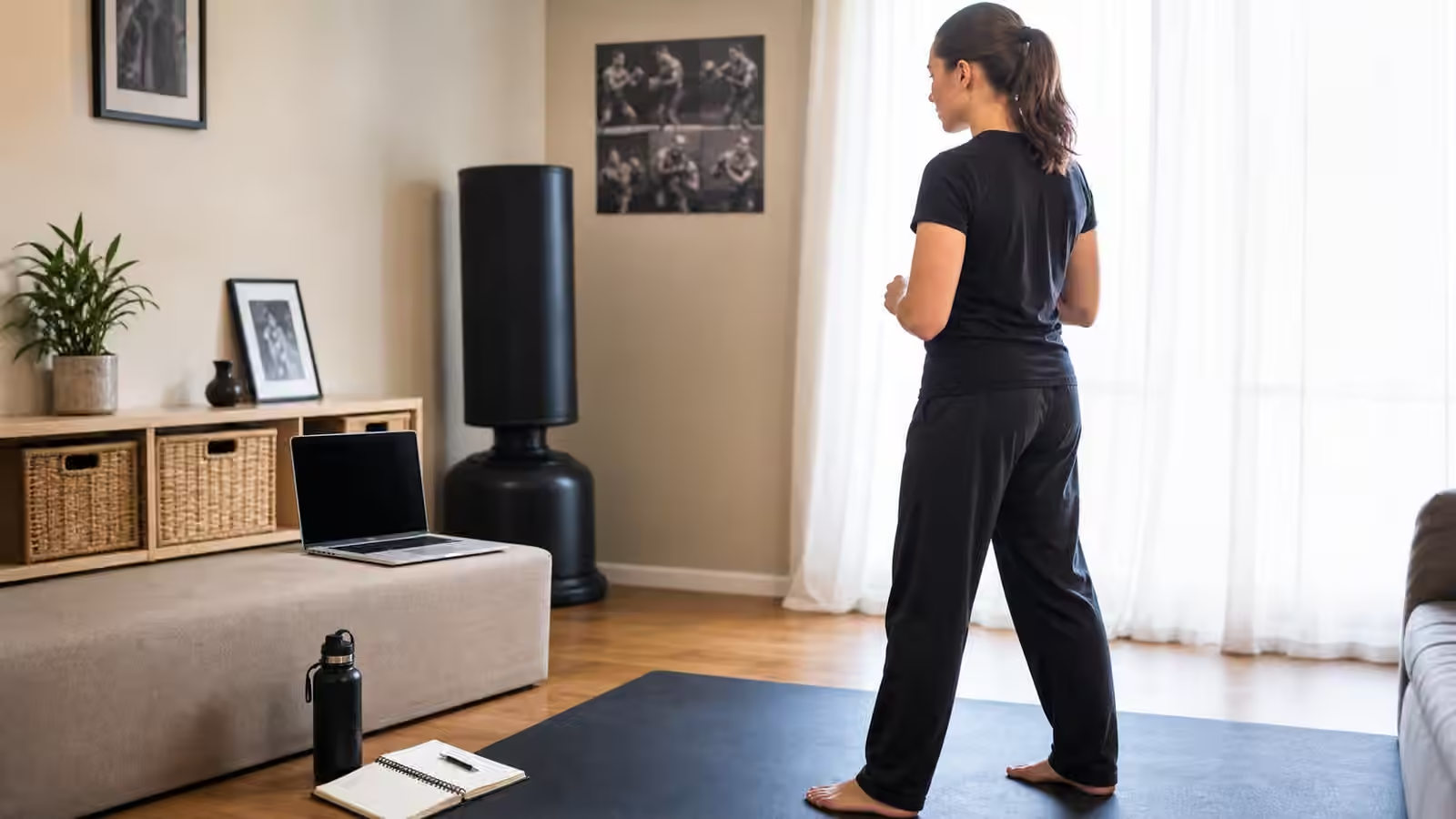
Home practice can be useful when it stays humble. Clear a small space. Put the phone or laptop where it will not become a trip hazard. Use video to remember one idea, then turn the screen off and move slowly. Practice stance, breathing, gentle footwork, verbal boundaries, or writing a debrief. Stop before fatigue turns movement sloppy. Bring the question back to class.
Using Corrections in Krav Maga matters because the goal is not to win an argument with the screen. If your instructor corrects something that a video seemed to present differently, ask. Styles, school methods, body types, and drill purposes vary. The person who can see your movement in the room has information the video does not have.
Online material becomes safer when it makes the student more coachable. It helps them recognize vocabulary, ask clearer questions, respect limits, and remember that self-defense is bigger than technique. It becomes riskier when it makes the student more certain, more isolated, or more eager to test uncorrected movements on friends.
Krav Maga is a contact practice, a decision practice, and a responsibility practice. A screen can explain parts of that world, but it cannot feel your balance, protect your partner, stop the drill when your breathing changes, or tell you that the exit was behind you the whole time. Use video as a notebook with pictures. Let coaching remain the place where the work becomes real.