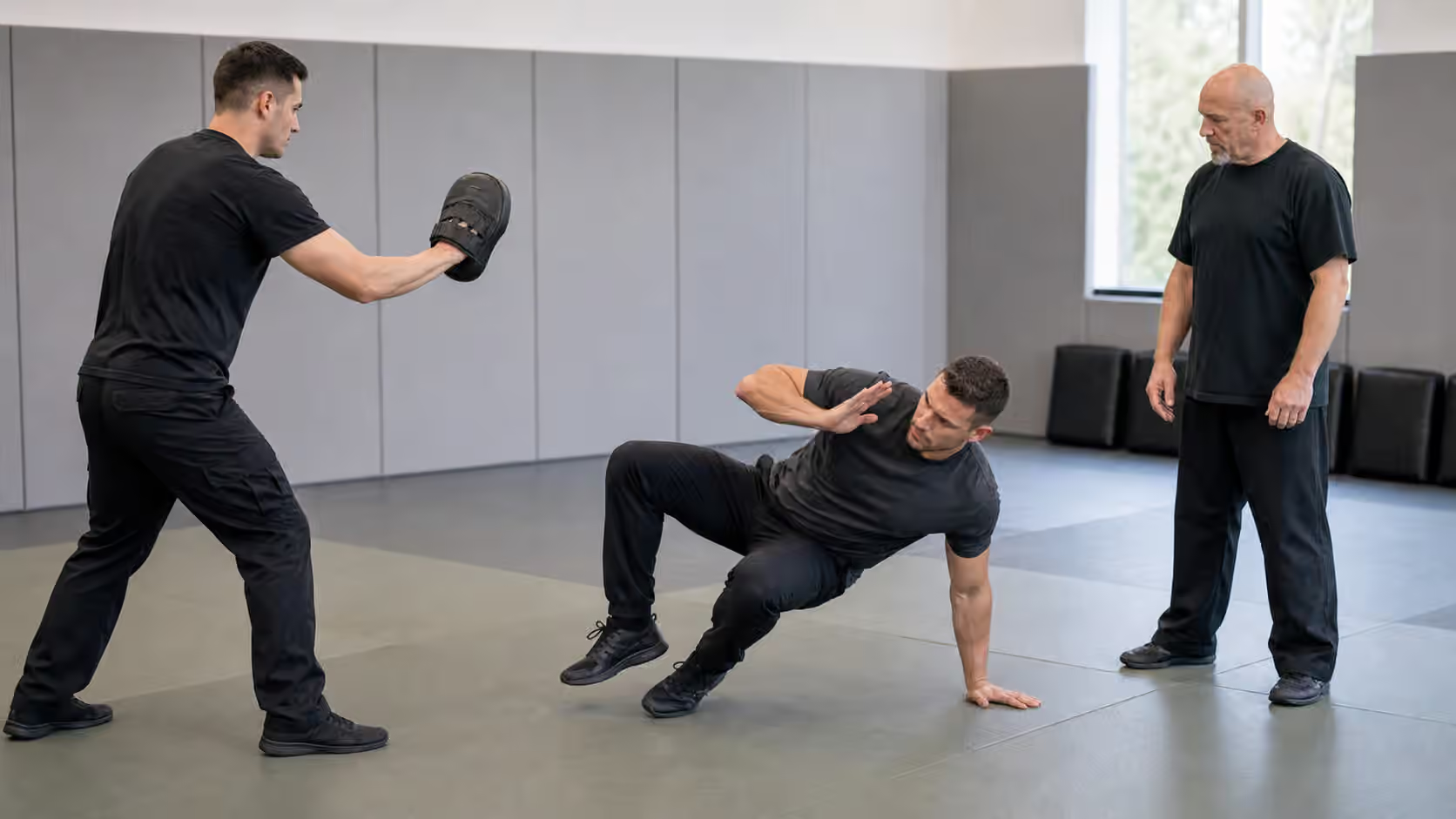
Neck-pressure training asks Krav Maga students to handle one of the most uncomfortable subjects in the room without becoming careless about it. A hand near the throat changes the body quickly. Attention narrows. Breath feels personal. The shoulders climb. The student may want to rip, shove, turn, freeze, apologize, or prove they are not scared. That is exactly why the topic needs careful practice, and exactly why the practice has to be bounded.
Good training does not begin with panic. It begins with trust. The student playing the attacker has to understand that the neck is not a place to improvise, squeeze harder, test toughness, or chase a reaction. The student receiving pressure has to know they can stop the drill immediately. The instructor has to define the contact, the speed, the pressure level, and the purpose before anyone touches anyone.
This is not a guide to written choke defenses. A page cannot see the angle, the pressure, the student history, the partner’s control, or the emotional state in the room. What it can do is explain the training frame that keeps the subject serious. If a school treats neck pressure as a dramatic test of grit, beginners should be cautious. The point is not to make students tolerate danger longer. The point is to make them recognize the danger earlier, protect structure, communicate clearly, and return to distance when the drill allows it.
The Neck Changes the Room
Krav Maga often uses direct language about practical problems, and neck pressure is one of those problems that feels immediately practical. People grab collars. They push. They pin. They crowd. They may reach toward the throat in anger or confusion. Students understandably want a reliable answer, because the sensation is alarming even when the contact is light.
That alarm is part of the lesson. The body does not need heavy pressure to react. A soft hand near the throat can make a beginner lift the chin, arch the back, hold the breath, or grab wildly at the partner’s wrists. Those reactions are human. They are also useful information. Training gives students a place to notice them slowly, while a qualified instructor can keep the contact safe and the learning specific.
The first practical habit is to preserve posture. A lifted chin exposes more. A collapsed chest steals movement. Locked feet make every turn late. A student who panics at the neck often forgets the rest of the body. The instructor may slow the drill until the student can feel the feet under them, keep the chin from floating, and avoid turning the whole moment into an arm-wrestling contest.
That connects to Footwork and Balance more than many beginners expect. If the feet are dead, the hands become desperate. If the knees lock, the shoulders do too. If the student backs straight up without seeing the room, they may move into a wall, a bag, or another person. Neck-pressure work is not separate from movement. It tests whether the foundation survives discomfort.
Pressure Must Be Agreed Before It Is Felt
A healthy class makes pressure explicit. The instructor should name the difference between hand placement, directional contact, simulated pressure, and actual squeezing. Beginners do not need a surprise lesson in how intense the neck can feel. They need a controlled way to study posture, hand position, voice, and movement while the nervous system stays available enough to learn.
The role partner matters. Their job is not to win the drill. Their job is to provide the agreed problem and stop instantly when asked. That requires discipline, especially because neck drills can tempt people into performance. The partner may want to act more convincing. They may think a little extra pressure will make the drill more realistic. They may assume the defender is fine because the defender is not complaining. Those assumptions are how a useful drill becomes unsafe.
Partner Work in Krav Maga belongs beside this subject because neck-pressure drills reveal the quality of the room. A good partner asks whether the contact is clear. They ease in. They listen. They do not mock a pause. They do not add speed, angles, grabs, or verbal pressure that the instructor did not assign. They remember that training realism is not permission to remove consent.
The defender has responsibilities too. They should not wait until they are flooded before saying something. If the contact is wrong, too strong, too fast, or emotionally too much that day, the correct response is to stop and reset. That is not failure. It is training skill. The class only works if students can report what is happening before the drill turns into a private endurance test.
The Tap Is Part of the Technique
Some students think stopping early breaks the drill. In neck-pressure work, stopping early is one of the most important lessons. The room should have obvious safety signals: a verbal stop, a tap, and an instructor’s command that freezes everyone. Those signals need to be practiced when the drill is easy so they appear when the drill becomes uncomfortable.
Safety Signals and Stopping Early is not a side topic here. It is the operating system. A student whose voice is crowded may need to tap. A partner who feels the defender stiffen may need to release before being asked. An instructor who sees a chin lifted, eyes squeezed shut, or posture collapsing may need to stop the drill even if both students think they can continue.
The tap should be treated as useful information, not embarrassment. It may mean the pressure was too much. It may mean the angle was wrong. It may mean the student held their breath, remembered a previous experience, or simply reached their limit for the round. Whatever the reason, the reset is part of the learning. The class can lower intensity, clarify the goal, and begin again with more honesty.
This matters because many people bring private history into training. The instructor does not need to know every detail of a student’s life to keep the room respectful. They only need enough humility to understand that neck contact can be loaded. A mature school gives students options, avoids surprise escalation, and lets people train the principle without being forced into a version of the drill they cannot use.
Breathing Is Not Decoration
Breathing advice can sound too simple until a hand is near the throat. Then the student discovers how quickly breath changes posture. Holding the breath often makes the body rigid. Rigid shoulders slow the hands. A tense jaw can make listening harder. A student who cannot exhale may rush the movement because the mind wants the sensation to end immediately.
This does not mean breath solves the problem. It means breath helps the student stay organized long enough to apply the instruction. Breathing and Stress Recovery explains the broader pattern: pressure is useful only when the student can come back, hear corrections, and keep learning. Neck-pressure drills make that pattern sharper.
A good coach may ask the defender to exhale before moving, keep the shoulders from climbing, or reset the feet before repeating. Those corrections can feel small compared with the urgency of the topic, but they are not small. Panic makes people late. Structure gives them a chance to act earlier and recover sooner. The calmer repetition is often more valuable than the dramatic one.
The same is true after the drill. Students may need a few seconds to clear the feeling. They may roll the shoulders, take water, or step out briefly. That should not be treated as weakness. The drill touched a sensitive subject. The nervous system deserves a clean landing before the class piles on another layer.
Do Not Confuse Choreography With Understanding
Neck-pressure defenses can become choreography very quickly. One hand goes here, the body turns there, the feet step, the partner releases, and everyone feels better because the shape was completed. Choreography has a place in learning. Students need sequences to begin. But the danger is mistaking the sequence for understanding.
The real questions are quieter. Did the student notice the pressure before it became overwhelming? Did they keep their chin safer, or did it float? Did their feet move them to a better line, or did they simply twist in place? Did they protect their own balance while trying to change the partner’s hands? Did they return to distance, or did they stay attached because the drill ended in the middle?
Close Range in Krav Maga helps with that last question. Neck pressure often happens close enough that students forget the exit. Once the immediate pressure changes, the task is not to admire the technique. The task is to create usable space, check the room, use voice if it helps, and leave when leaving is available. A movement that clears the neck but leaves the student frozen chest-to-chest has not finished the practical problem.
The partner should not overhelp either. In many beginner drills, the role partner releases at the exact moment the sequence expects it. That can be useful early, but later the instructor may ask for slightly more honest pressure, a slower release, or a different starting posture. Those changes should be added carefully and one at a time. The goal is to test understanding, not to ambush the student with chaos.
Training Should Reduce Fantasy
Neck-pressure topics attract strong claims. Some people promise instant answers. Others turn the subject into toughness theater. Both approaches miss the point. A person reaching for the neck creates a serious problem, but seriousness does not justify exaggeration. Krav Maga training should leave students less interested in fantasy, not more.
A responsible guide keeps returning to limits. Size, strength, surprise, walls, fatigue, clothing, and bystanders can all change the moment. A defense that worked on a cooperative partner may look different when the person is moving, larger, panicked, or using the neck contact as part of a larger assault. That is not a reason to avoid training. It is a reason to train with more humility.
This is why Scenario Training and Ethics matters. If a scenario includes neck contact, it needs a strong frame. What is being trained? How much contact is allowed? When does the drill stop? What happens after the defender creates space? Does the role player know exactly what not to add? A neck-pressure scenario without boundaries is not more realistic. It is simply less controlled.
The Useful Outcome
The useful outcome of neck-pressure training is not that a beginner feels invulnerable. It is that the student becomes less surprised by their own reaction and more respectful of the subject. They learn that posture matters. They learn that breath changes decision-making. They learn that safety signals are part of the drill, not an interruption. They learn that a role partner’s restraint is a real skill.
They also learn to leave sooner. If a conversation is closing distance, if a hand starts reaching, if a wall is behind them, if the body says the moment is moving toward physical contact, the best answer may be to use voice, angle out, and exit before the neck becomes part of the problem. That habit is more practical than any written sequence.
Krav Maga is often described as direct, but direct training should not be crude. The neck deserves precision, consent, and a clear reason for every repetition. When the class handles that well, the student gains more than a defense. They gain a calmer relationship with a frightening subject, and a better standard for what serious self-defense practice should feel like.