Multiple-person pressure is one of the easiest Krav Maga topics to make foolish. The phrase invites fantasy before training has even started. People imagine spinning through attackers, dropping one body after another, solving the room through speed and will. That image is dramatic, but it is not a responsible beginner lesson. More people usually means less time, more blind spots, worse footing, more legal and ethical complexity, and fewer clean choices.
The first principle is blunt: do not train as if fighting several people is a problem to win. Train as if several people make leaving more urgent. That does not mean every situation offers an exit, or that physical skills never matter. It means the purpose of the drill is not to prove that one body can dominate a group. The purpose is to protect attention, move to better angles, use barriers, avoid being fixed in place, and take the first real exit when it appears.
This topic sits beside Crowded Space Awareness but is not the same thing. Crowds may be neutral, confused, or simply in the way. Multiple-person pressure means more than one person is part of the problem, or at least close enough to change how the problem behaves. One person talks while another moves. A friend steps in from the side. A group closes around an argument. Someone blocks the path without touching you. The geometry changes faster than a clean mat drill suggests.
More People Shrink the Map
Distance is time, and multiple people spend that time quickly. A person in front of you can hold attention while another cuts the angle. A person to the side can turn an exit into a bottleneck. A person behind you can make backing up dangerous. Even if nobody is skilled, numbers create pressure because the defender has to process more information than one nervous system wants to process.
That is why Distance, Awareness, and Exit is the foundation. The student who waits for certainty may wait too long. The question is not, “Which person do I defeat first?” The better question is, “Where is the open lane, and how do I keep from being surrounded?” The body should learn to angle, circle, and exit before the mind starts negotiating with pride.
Beginners often make the map smaller by staring at the loudest person. This is natural. The loudest person seems like the main problem. But the quieter person may be moving. The person with hands down may be blocking a doorway. The person behind the shoulder may be the one who changes the moment. Training should teach students to soften their focus without pretending they can see everything. The goal is not perfect awareness. The goal is enough awareness to avoid giving away the one useful lane.
Footwork matters because it keeps the map from closing. Footwork and Balance teaches the general idea, but multiple-person drills punish narrow steps quickly. Crossing the feet, backing straight up, or planting to trade strikes can trap the student. A small angle may do more than a hard impact if it moves the defender toward daylight and keeps the problems on one side.
The Line-Up Matters More Than the Strike
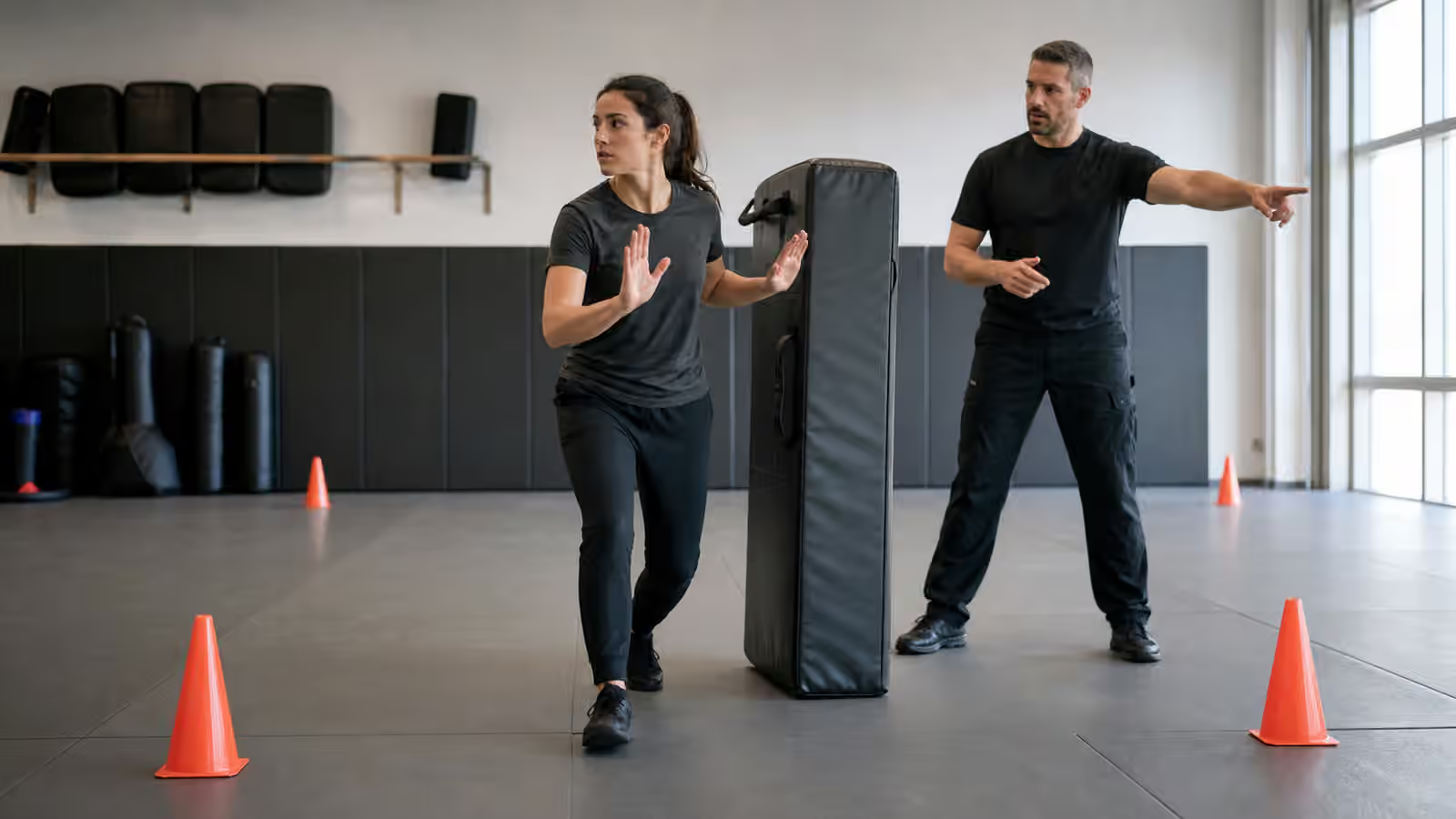
One of the most practical ideas in multiple-person pressure is lining up the problems. If two people are in front of you at different depths, movement can sometimes put one behind the other from your point of view. That does not make the situation safe. It simply reduces how many directions demand immediate attention. A barrier, chair, car, doorway, counter, or padded shield in class can serve the same purpose by forcing the group to move around something before reaching you.
This is where Environmental Movement in Krav Maga becomes more than a side lesson. The environment decides whether a student is creating space or stepping into a trap. A wall behind the defender removes options. A doorway may be an exit or a narrow place where bodies collide. A chair can slow someone down or catch the defender’s own foot. The class has to study these details at slow speed before adding pressure.
Impact can have a role, but it should not become the center of the fantasy. Pad strikes in a multiple-person drill should be used to create space, interrupt a line, or help the student leave. If the student keeps hitting because the pad is available while the exit sits open, the drill is rewarding the wrong habit. The instructor should stop and ask what the strike was for. If the answer is only “because I could,” the lesson needs correction.
Padwork and Pressure gives a useful standard here. Pressure is not panic. Padwork is feedback, not proof. In multiple-person drills, pads can make the scene loud enough to expose tunnel vision, but the student still needs a clear task. Move. Line up the problems. Use voice if it helps. Touch the pad only when it supports the exit. Leave.
Voice Can Buy a Second
When several people are involved, voice has two jobs. It may set a boundary with the people creating pressure, and it may communicate to bystanders or companions. “Back up” may be useful. “I’m leaving” may be useful. “Move” may be useful if someone friendly is blocking the route. None of these phrases is magic, and none should be treated as a script that works everywhere. The value is that voice can interrupt silence, mark your intent, and sometimes buy the second your feet need.
De-escalation and Verbal Boundaries matters here because multiple-person pressure often begins socially. There may be an argument, embarrassment, alcohol, a group identity, or someone performing for friends. A student who answers performance with performance may feed the group. A student who stays calmer, creates distance, and leaves the social contest may prevent the physical one.
The hard part is that leaving can feel humiliating when several people are watching. The ego hates witnesses. It wants the last word, the clean stare, the proof that fear is not present. Good training should make that ego visible. If the exit is open and pride is the only reason to stay, the drill should reward leaving. The room has to say plainly that safety beats image.
Voice also helps after movement begins. A student escorting a friend out may need to say, “Keep walking,” or “Door, now,” with enough clarity to move the other person. That links naturally to Krav Maga When You Are Not Alone . Multiple-person pressure becomes harder when someone with you freezes, argues, or moves slowly. The defender’s job is not only self-protection. It may include choosing a route another person can actually use.
Good Drills Are Narrow
Multiple-person drills become unsafe when the instructor tries to simulate everything at once. Noise, surprise, fatigue, moving partners, pads, chairs, bystanders, and exits can all be useful training elements, but not all at the same time for beginners. A narrow drill teaches more because the student and instructor can see what changed.
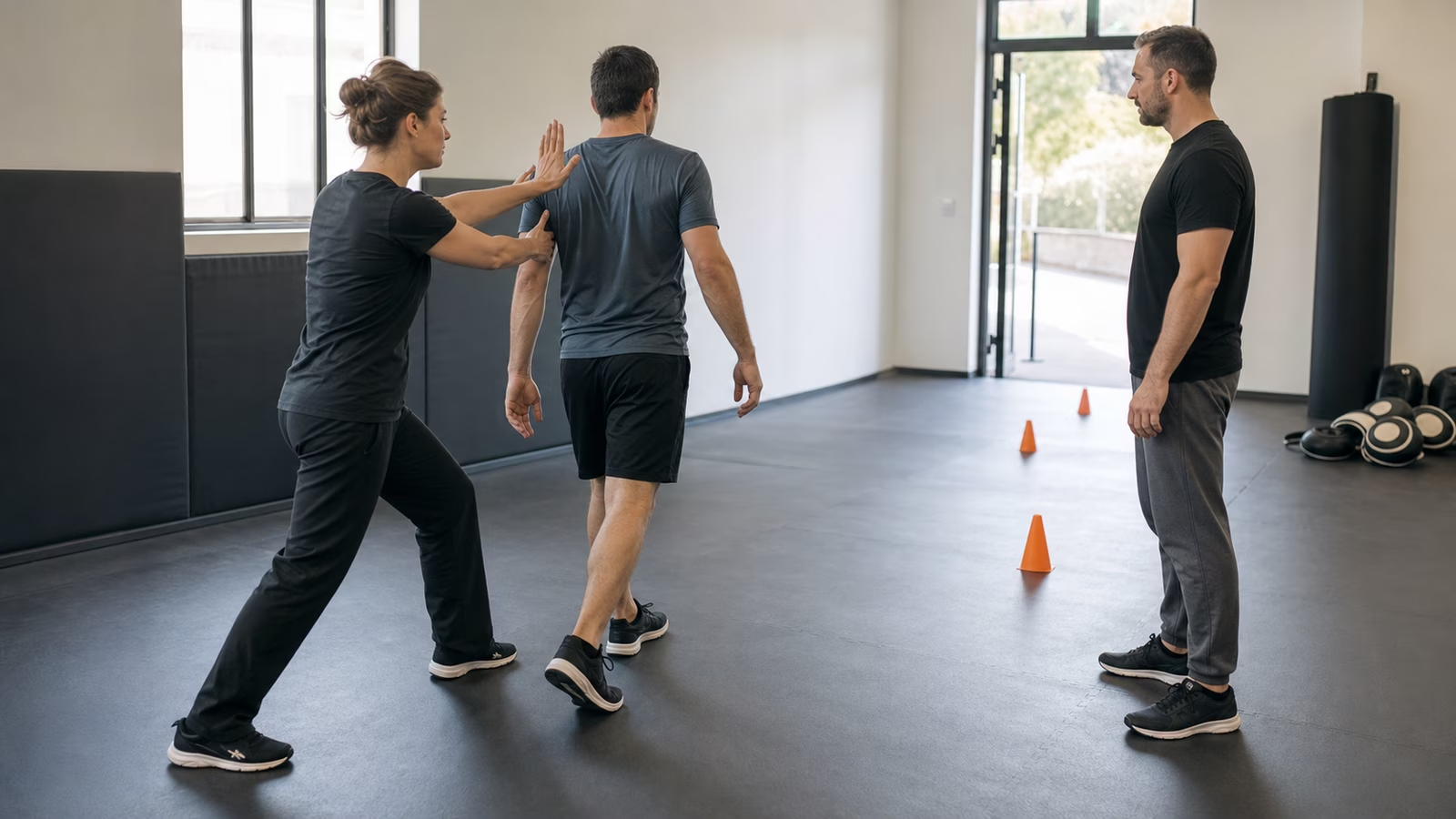
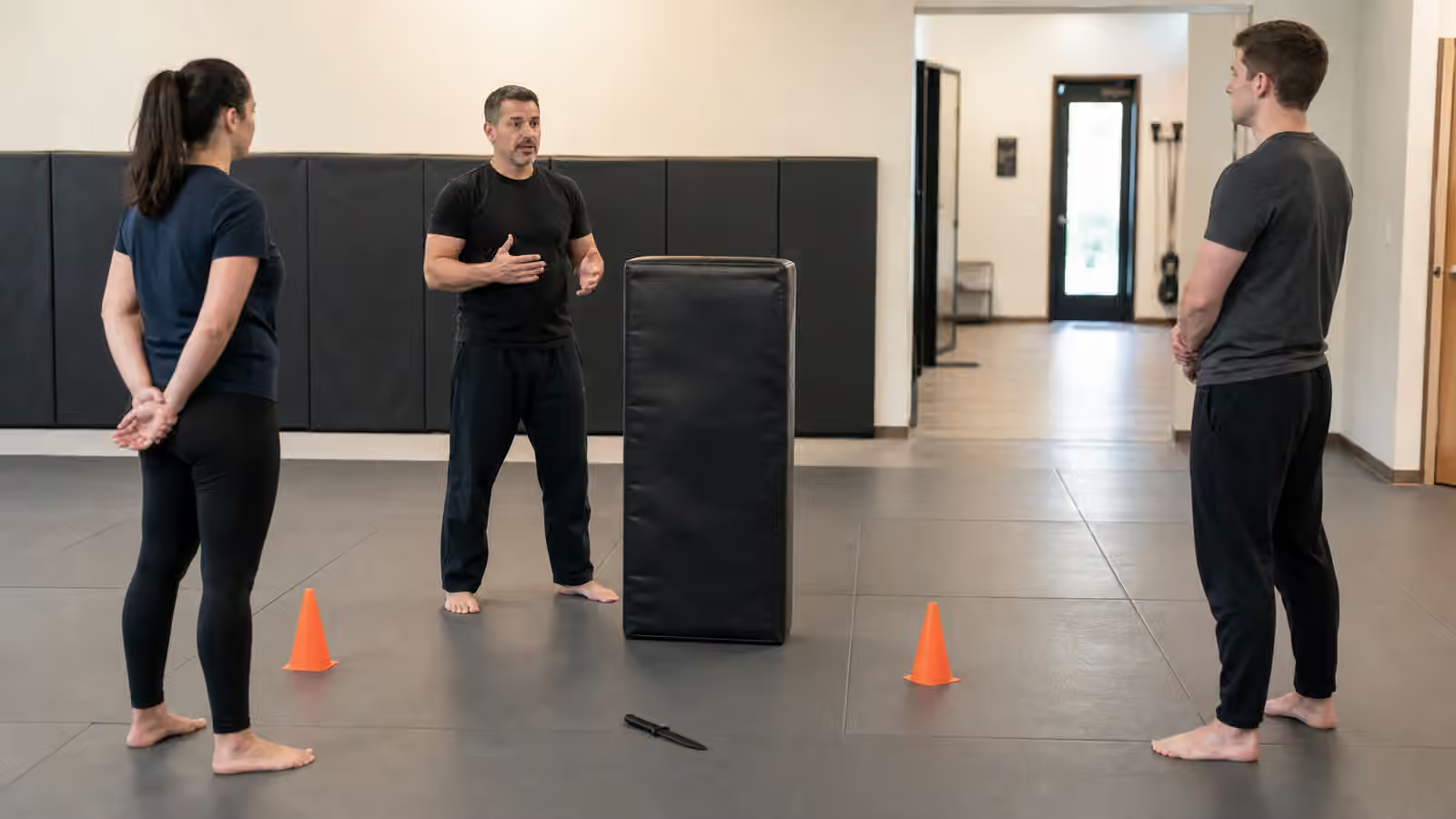
One early version might have two pad holders standing several steps apart, with cones marking an exit lane. The defender begins in the middle and has to move so the pad holders line up, touch a pad only if it supports movement, and leave through the marked lane. The drill is simple enough to observe. Did the defender stare at one person? Did they drift backward? Did they cross their feet? Did they turn their back on the second pad? Did they leave when the lane opened?
A later version might add a chair as an obstacle, or a role partner who talks, or a companion who must be guided. Each new layer should have a reason. Scenario Training and Ethics gives the larger rule: scenario work needs boundaries, consent, a stop signal, and a debrief. Without those, multiple-person training becomes a scramble that students survive without understanding.
Role discipline is especially important. The partners creating pressure are not there to hunt the defender. They are there to present the agreed problem at the agreed intensity. If one partner suddenly grabs, another rushes, and a third blocks the exit because the drill looked easy, the class has stopped training the assigned skill. It is now training confusion and calling it realism.
Contact Levels Need Control
Multiple-person pressure raises the chance of accidents because people lose track of space. A student moving away from one pad may back into another. A role partner may step on a foot. A chair may shift. A shoulder may collide with a wall. The more bodies in the drill, the more important it is to lower speed until the room proves it can manage the traffic.
This is where Safety Signals and Stopping Early has to be obvious. Everyone should know how to freeze the drill. The instructor should use the stop signal before movement gets sloppy, not after someone is already frustrated. Students should understand that stopping is not a failed rep. It is how the room preserves the lesson.
Protective gear and pads can help, but they can also create false confidence. A soft shield does not make a reckless charge educational. Gloves do not make blind swinging useful. Cones do not make a bad exit safe. Equipment supports a drill only when the people using it stay disciplined. Otherwise, the class becomes busier without becoming smarter.
The Aftermath Is Larger With More People
A multiple-person encounter, even one that ends without serious harm, can create a messy aftermath. There may be witnesses with different stories, friends of the people involved, phones recording late, property dropped, companions scattered, and confusion about who started what. Laws vary by location, and this guide is not legal advice, but it is fair to say that several bodies make consequences harder to predict.
That should influence training. The goal is not to teach students to create more damage than the situation requires. The goal is to leave danger with as much restraint as the moment allows. If a shove, angle, barrier, voice, or brief pad strike opens an exit in class, the student should not be rewarded for staying to finish a fantasy. Stop when the danger stops. Leave when leaving is available. Keep thinking after the first successful movement.
The emotional aftermath may be larger too. Multiple-person drills can make students feel surrounded, embarrassed, angry, or unusually tense. A class that treats those reactions with maturity will get better learning from them. A short debrief can ask what the student saw, what they missed, why they chose the route, and whether the exit was real. The discussion keeps the drill from becoming only a story about adrenaline.
The Boring Answer Is Usually the Better One
The best multiple-person training often looks less impressive than people expect. The student moves early. They put one pad holder in the way of another. They do not chase the loud person. They use a chair as a delay, not a prop. They speak clearly. They leave through the wide lane. The round ends before anything cinematic happens.
That is not a disappointment. It is the point. More people should make the student more cautious, not more theatrical. The body can still learn impact, framing, balance, and recovery, but those skills serve an exit. If the drill builds a person who wants to test themselves against a group, the training has drifted. If it builds a person who notices the map closing and leaves sooner, it has done useful work.
Krav Maga is practical only when it tells the truth about disadvantage. Numbers are disadvantage. They reduce options, speed up mistakes, and punish pride. A serious school does not hide that behind heroic language. It teaches the student to move before the room collapses, to keep the problems in front as much as possible, to use the environment without pretending it solves everything, and to leave with no apology when the exit is real.