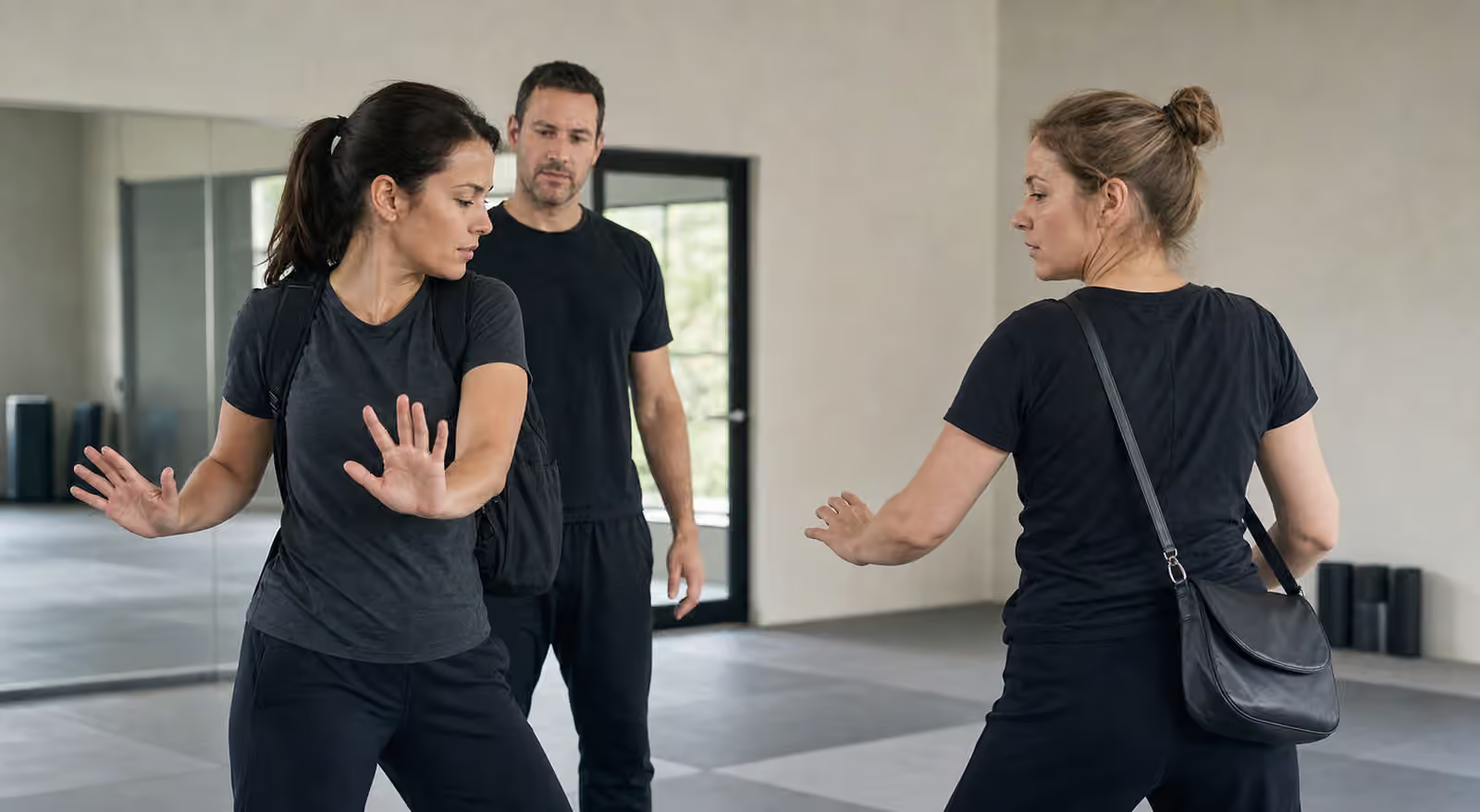
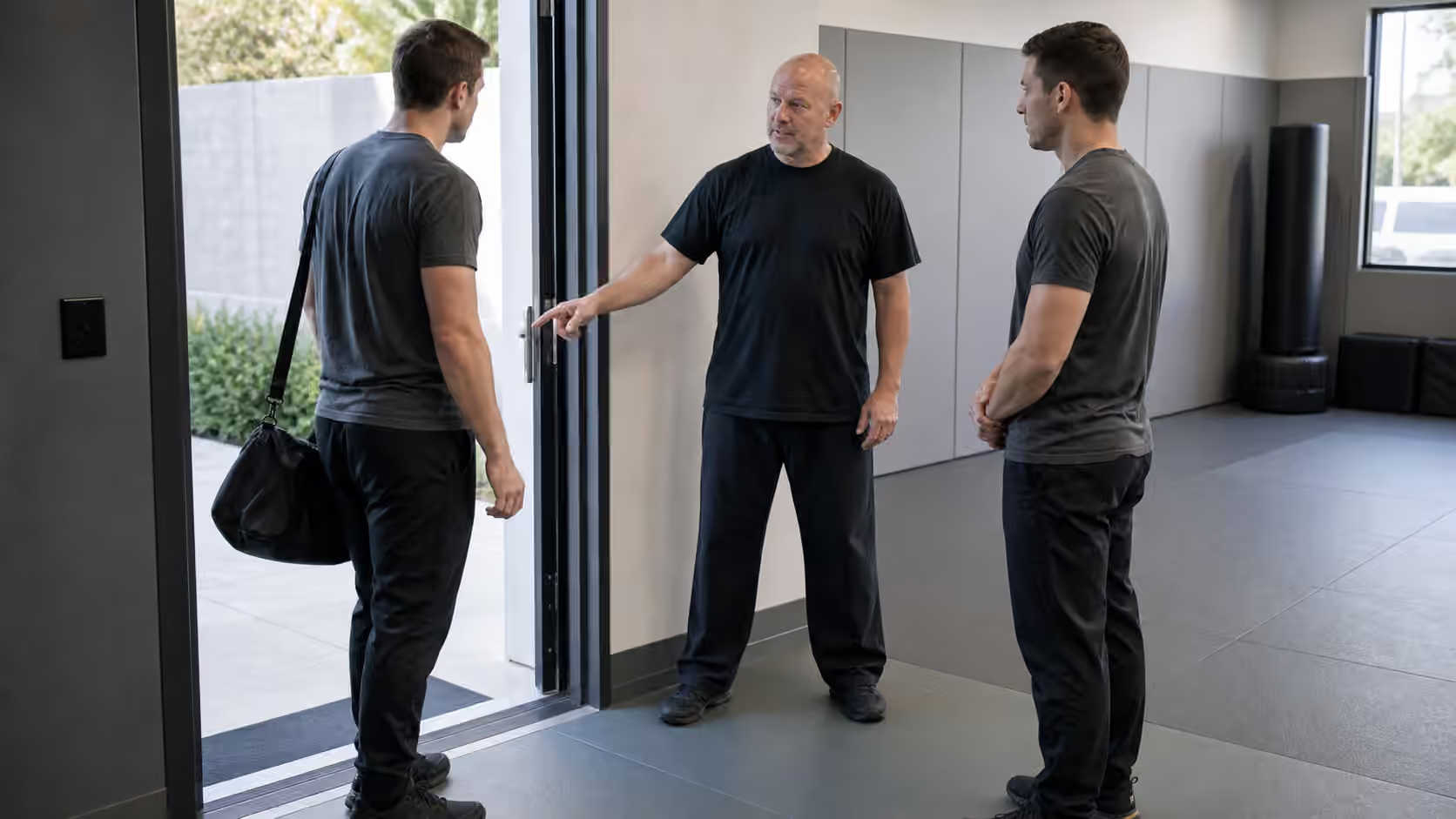
Parking lots and garages are not dangerous because they look dramatic. Most of the time they are ordinary spaces where people carry groceries, check messages, load bags, look for keys, buckle children, argue about directions, and try to remember where they parked. That ordinariness is exactly why they matter in Krav Maga training. The body is often busy before anything unusual happens.
Low light adds another layer. Shadows, glare, pillars, cars, weather, engine noise, and uneven sightlines make information arrive late. A person may be harmless and still appear suddenly from behind a vehicle. A doorway may be closer than it looks. A phone screen may pull the eyes down at the moment the feet should be moving. The practical lesson is not to become suspicious of every parked car. It is to understand how transitions narrow attention.
This topic sits between Crowded Space Awareness , Hands Full in Krav Maga , and Environmental Movement in Krav Maga . A parking lot is a moving environment. It has people, vehicles, doors, bags, blind spots, and moments where ordinary tasks make self-defense choices slower.
The Transition Is the Vulnerable Part
Walking through a parking area can be simple. The more complicated moments happen at transitions. You leave a building and pause under the light. You search for the car. You approach the door. You open it, load a bag, open a trunk, answer a message, settle into the seat, or wait for someone else to arrive. Each task takes a little attention. Together, they can take most of it.
Krav Maga training should make those transitions visible. The first habit is to finish one task before starting the next when the setting feels uncertain. Put the phone away before crossing the lot. Find the keys before stepping into a poorly lit area. Shift the bag before you reach the car door. Look around before opening the trunk. These are modest choices. They are not secret tactics. They simply reduce the number of things the body must solve at once.
Distance, Awareness, and Exit keeps the bigger principle clear. Distance is not only measured from a person. It is measured from the building you can return to, the car door that may trap a hand, the lane between vehicles, the lighted path, and the people who might notice if something goes wrong. A useful parking-lot habit asks where movement remains available.
Cars Are Barriers and Traps
A car can help or hinder. It can create distance, interrupt a straight path, and give you something to move around. It can also pin your attention, block your feet, hide another person, or trap you while you are half inside and half outside. A door can be a shield for a moment, then become an anchor if you hold it too long. A trunk can organize a task, then swallow both hands.
The training point is not to assign one fixed meaning to the vehicle. The question is what the car is doing right now. Is it between you and the person closing distance? Is it behind you, making retreat clumsy? Is the open door helping you create space or keeping your hand attached? Are you stepping into the narrow lane between cars when a wider path exists?
These questions should be practiced slowly before they are practiced under pressure. A training room can mark cars with pads, cones, or a simple prop without pretending to recreate every detail. The student practices approaching, noticing the lane, keeping the hands available, using voice, and leaving toward a marked exit. The value is not theatrical realism. The value is that the student learns to think while ordinary objects are pulling attention.
Low Light Changes the Eyes
Low light is not just darkness. It is contrast. A bright doorway can make the parking area beyond it seem darker. Headlights can create glare. Reflections can make movement harder to read. A person wearing dark clothing near a dark vehicle may not register until they move. A phone screen can narrow the eyes and make the rest of the space fade.
Training should respect those limits. Awareness is not the same as certainty. You may not know what you saw at first. You may need to slow down, widen the path, return inside, wait for a companion, or choose the better lit route. That does not mean every uncertain shape is a threat. It means poor information should make you choose more conservative movement.
Low-light scenario drills should avoid melodrama. Beginners do not need surprise ambushes in a dark room. They need controlled practice noticing lighting, angles, and exits while still breathing. The instructor can dim part of the room, mark a safer path with cones, and ask the student to move with a bag while a partner stands in a non-threatening but inconvenient position. The lesson is whether the student sees the path and keeps options open, not whether they can perform under a staged scare.
Bags and Phones Are Part of the Scene
Parking areas often make hands full. A person may carry a gym bag, backpack, groceries, coat, umbrella, or child’s belongings. The phone may be out for directions, rideshare details, messages, music, payment, or a call. These objects are normal, but normal does not mean neutral. They change posture, attention, and timing.
Hands Full in Krav Maga explains the broader skill of noticing what an object costs. In a parking lot, that cost can appear quickly. A shoulder bag can catch on a car door. A phone can pull the eyes down while someone approaches. Keys can make the hand busy at the exact moment the body wants open palms and balance. A drink or fragile object can make the student hesitate to move.
Training can make release decisions less surprising. Set the bag down before opening the door if that improves movement. Drop the disposable object in a drill when the instructor cues pressure. Keep the phone useful without letting it become the center of the body. None of this should become a fantasy about using objects as weapons. More often, the object is simply something that must stop making decisions for you.
Companions Change the Route
Parking lots are often shared with companions. A friend may be slower. A child may move unpredictably. An older relative may need a steady pace. A training partner may be carrying equipment. The self-defense question is no longer only where you can go. It is where the group can go without scattering into worse positions.
Krav Maga When You Are Not Alone is useful here because parking transitions make responsibility concrete. You may need to place yourself between a companion and an approaching problem. You may need to use a simple phrase before stress rises: “Stay with me,” “Go inside,” or “Move to the light.” In training, those phrases should be calm and direct, not cinematic.
The route matters more than the display of confidence. If the building entrance is safer than the car, the group may return to the entrance. If a car door is already open and a companion is halfway inside, the better choice may be to finish the transition and leave. If uncertainty appears early enough, waiting inside for help or company may be the cleanest option. Krav Maga should make those ordinary choices feel legitimate.
De-Escalation Still Belongs Here
A parking-lot problem may begin as confusion, not immediate violence. Someone asks for directions. A person wants money. A stranger comments too closely. A driver is angry about a parking space. A former acquaintance appears when you would rather not talk. The body may feel the setting before the conversation becomes clear.
De-escalation and Verbal Boundaries belongs in this subject because words can buy space before hands are needed. A simple “I cannot help you,” said while moving, may be better than stopping to explain. A direct “stay there” may be appropriate if distance is closing. A return inside may be better than winning an argument beside a car.
No phrase guarantees safety, and this guide is not a script for every encounter. The principle is that voice, movement, lighting, and exit should support one another. If the words say you are leaving but the feet stay trapped by an open door, the message is weaker. If the body leaves while the mouth keeps arguing, the conflict may follow. The cleanest answer is often brief, boring, and already moving.
Training Without Paranoia
Parking-lot awareness can be taught badly. A school can make students imagine danger behind every vehicle until daily life becomes tense and distorted. That is not useful. Good training should make parking transitions calmer because the student has simple habits for them. Look before committing. Keep a hand available. Do one task at a time when the setting asks for attention. Choose light and people when available. Leave earlier when the body has enough information to justify leaving.
Scenario training should stay controlled. Scenario Training and Ethics reminds students that role players need boundaries. A parking-lot drill should not become an excuse for surprise grabs, frightening language, or reckless contact around props. The instructor should define the goal clearly. Maybe the goal is noticing the exit. Maybe it is managing a bag. Maybe it is using voice while moving around a car-shaped obstacle. If everything happens at once, the student may remember fear more than skill.
The best result of this training is not a student who walks through parking lots looking for a fight. It is a student who finishes the text before leaving the building, carries the bag in a way that keeps one hand useful, chooses the brighter lane, notices when a car door pins their movement, and feels no embarrassment about returning inside when the situation seems wrong. Those habits are small. They are also exactly the kind of small habits that make practical self-defense less late.