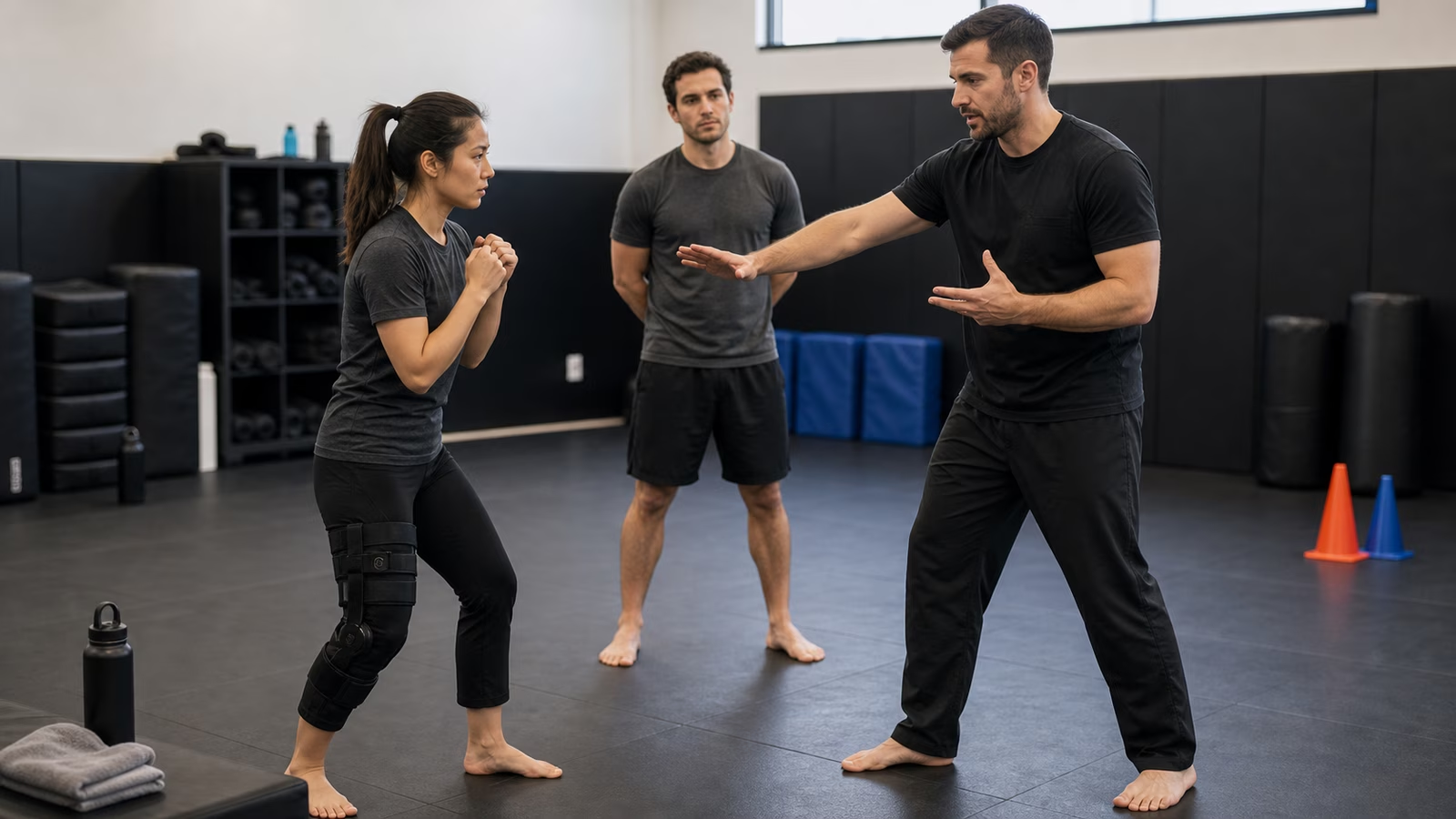
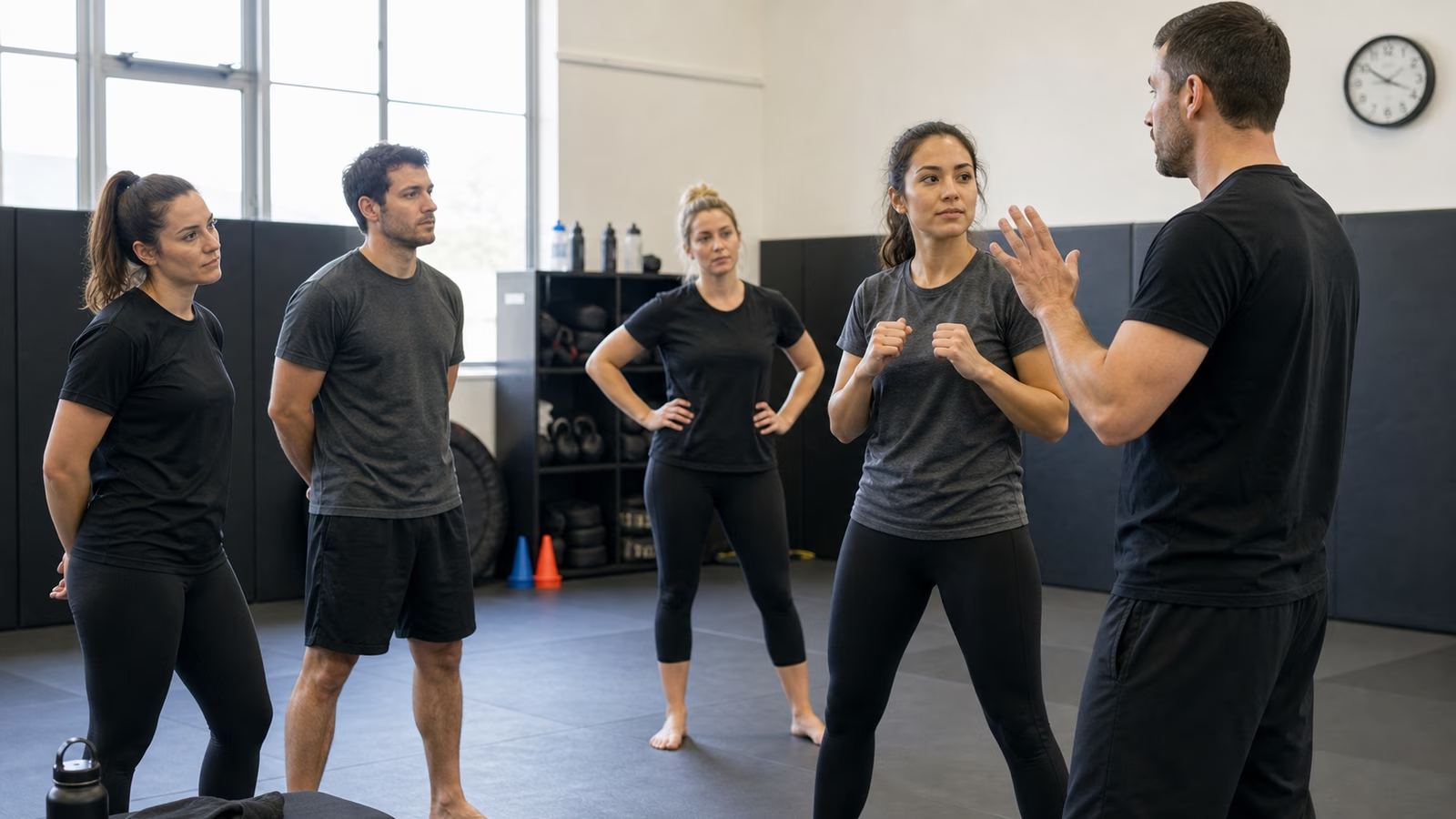
The first minutes of a Krav Maga class can quietly decide the quality of everything that follows. Students often think of the warmup as the part before training, a small obstacle between the locker room and the work they came to do. In a good room, the warmup is already training. It shows how people listen, how they pace themselves, how they notice stiffness, how they handle simple coordination under mild pressure, and whether the instructor treats bodies as durable machines or as living systems that need preparation.
Warmups matter because Krav Maga asks for changes of state. A student may begin class after sitting at a desk, driving across town, carrying a bag, or rushing in from childcare. The body may be cold, the mind may still be elsewhere, and the nervous system may be running faster than the joints. Asking that person to sprint, strike, sprawl, clinch, or absorb impact immediately is not toughness. It is poor sequencing.
A useful warmup does not need to be theatrical. It should give the body time to become available. Ankles need a chance to bend. Hips need room to move. Shoulders need to know they may soon hold pads, frame, cover, or strike. The spine needs rotation without surprise. The breath needs to settle into the room. None of this requires a long performance. It requires attention.
Beginners sometimes confuse a hard warmup with a serious class. They expect to be exhausted before the first drill because exhaustion feels honest. The problem is that exhaustion can hide information. If your legs are shaking before footwork begins, you may blame poor movement on lack of fitness instead of noticing the stance problem. If your shoulders are smoked before padwork, your punches may collapse for reasons that have nothing to do with structure. If your breathing is frantic before the instructor explains the next task, you may miss the very detail that would keep the drill safe.
The goal is not to stay comfortable. Krav Maga training includes effort. The question is whether the effort prepares you for skill or spends the currency you need to learn. A warmup that leaves students alert, mobile, and slightly elevated is different from a warmup that leaves them foggy, competitive, and clumsy. The first supports the class. The second becomes the class by accident.
Mobility Is Not Decoration
Mobility work is easy to dismiss because it looks quiet. A student circles a shoulder, shifts weight through the hips, steps into a controlled lunge, or rolls gently through the ankles. Nothing dramatic happens. No pad cracks. No one looks brave. Yet these small movements decide whether later movements can happen cleanly.
Krav Maga depends on positions that ordinary life may not prepare well. Protective covers ask the shoulders to rise and round without locking the neck. Angled footwork asks the ankles and hips to share rotation. Knees and front kicks ask for balance on one leg while the upper body stays aware. Getting up from the floor asks for hips that can fold, hands that can post safely, and enough coordination to keep the eyes working while the legs do something else. If the body cannot visit these ranges calmly, pressure makes them worse.
Mobility should not be forced. A warmup is not the place to win an argument with a joint. The useful question is not how far you can stretch. It is whether you can move through the range you need without holding your breath, losing posture, or borrowing motion from somewhere that will complain later. For many students, especially adults who train after long workdays, that question is more honest than chasing a shape.
This is why Training Around Injuries and Limits belongs in the same conversation. A student who knows how to modify a warmup can stay present without pretending every body arrives the same. A sore knee may need a smaller range. A recovering shoulder may need controlled activation rather than fast circles. A tired back may need gentler hinges before impact work. None of this makes the student less serious. It makes the training more sustainable.
Warmups Teach Pace
Pace is one of the first self-defense skills that hides inside ordinary class structure. A person who cannot moderate a warmup may also struggle to moderate a pad round, a partner drill, or a sparring exchange. They go as hard as possible because they do not yet know how to go correctly. They treat every instruction as a race. They confuse sweat with progress.
The warmup gives a safer place to learn that mistake. If the room begins with movement across the mat, the student can notice whether they are trying to beat the line rather than prepare the body. If the instructor asks for light footwork, the student can notice whether their shoulders climb and their jaw tightens. If the class does bear crawls, sprawls, or direction changes, the student can ask whether the speed still allows control.
This connects directly to Progress Without Chasing Intensity . The beginner who learns to pace early becomes easier to coach. They can add effort when the drill calls for it and remove effort when the drill needs accuracy. They can work with a smaller partner without overwhelming them, hold pads without bracing wildly, and stop before fatigue turns mechanics into guesswork.
Pacing also protects attention. A warmup should make students more able to hear, not less. If the instructor explains a safety signal after a brutal conditioning block and half the room is bent over, the sequence has created its own problem. Breathless students may nod without absorbing the instruction. Later, when the drill becomes physical, the missing detail returns as confusion.
The First Partner Check
Warmups are often individual, but they still reveal partner culture. Students notice who takes space carefully, who charges through the room, who treats shared movement as a contest, and who watches before entering a lane. The same habits appear later when pads, grabs, and scenario roles enter the class.
A thoughtful instructor uses the warmup to set the room’s tone. They may remind students to keep enough space, watch corners, avoid crossing paths blindly, and adjust movement to the person beside them. These reminders sound small, but they teach that awareness does not begin when a drill is labeled self-defense. Awareness begins when bodies share a floor.
The warmup can also introduce the day’s movement theme without announcing it like a lesson plan. If class will focus on Footwork and Balance , the warmup might include slow angle changes and balance checks. If class will work Padwork and Pressure , the warmup might wake up wrists, shoulders, hips, and breathing before anyone hits. If class will involve ground recovery, the warmup might include safe level changes and controlled posts.
This kind of preparation helps beginners understand that techniques are not isolated events. The body that learns to shift weight during a warmup is the same body that later needs to move away from a wall. The shoulders that learn to soften during mobility are the same shoulders that later need to cover without hiding. The breath that comes back after a short movement burst is the same breath that later helps a student listen after pressure.
When Warmups Go Wrong
A poor warmup can fail in several ordinary ways. It can be too vague, leaving students copying shapes without understanding what is being prepared. It can be too intense, turning the first ten minutes into a fitness test that rewards the already fit and punishes the already anxious. It can be too casual, skipping the specific joints and patterns the class will actually use. It can be too performative, filling time with movements that look hard but do not serve the training.
The common thread is loss of purpose. A warmup should answer the class in front of it. If students will hold shields, wrists and shoulders deserve attention. If students will practice knee strikes, hips and balance deserve attention. If students will work close-range frames, necks, ribs, and posture deserve attention. If students will train under stress, breathing and recovery deserve attention. The warmup is not a separate ritual. It is the opening paragraph of the class.
Students have responsibilities too. Arrive with enough time to join the warmup rather than using the first drill as your personal preparation. Mention relevant limits before they become public problems. Do not turn mobility work into a flexibility contest. Do not sprint through a warmup lane because embarrassment makes you want to finish quickly. Notice what feels stiff, what feels sharp, and what simply feels sleepy. Those are different signals.
The distinction matters. Normal stiffness may ease as the body warms. Sharp pain asks for stopping, modifying, or speaking to the instructor. Fatigue may mean lowering intensity before form falls apart. None of this is medical advice, and persistent pain belongs with qualified care, but a student can still learn to respect obvious feedback. Safety Signals and Stopping Early should apply before the dramatic parts of class, not only after contact begins.
Preparation Is a Skill
The best warmup leaves almost no story. Students feel awake, joints feel less suspicious, the room feels organized, and the next instruction lands cleanly. There is no need to brag about surviving it. It did its work by making the rest of class more teachable.
That quiet result is valuable. Self-defense training is already full of tempting drama. The warmup teaches a different lesson: readiness can be built without panic. You can enter a room, check your body, raise your heart rate, coordinate your limbs, notice other people, and prepare for harder work without pretending you are already in danger.
Over time, this changes how a student experiences the whole practice. They stop asking only what techniques they learned and begin asking whether they arrived prepared enough to learn them. They notice how sleep, stress, soreness, shoes, hydration, and patience affect movement. They understand that the first minutes of class are not filler. They are where the body and the room agree to begin.
Krav Maga is often described through decisive action. Warmups teach the quieter half of that idea. Decisive action depends on a prepared body, a listening mind, and enough restraint to spend energy where it matters.