Travel changes self-defense because it removes the comfort of familiar exits. At home, you know which stairwell is quiet, which parking area feels poorly lit, which door sticks, where the staff desk is, and how long it takes to walk back to your car. In a hotel, airport, rental apartment, conference venue, or unfamiliar street, those details have to be noticed from scratch. That does not mean travel should feel frightening. It means the ordinary habits of awareness deserve a little more attention.
Krav Maga has useful tools for this because it keeps returning to space, distance, voice, movement, and exit. Those ideas are not limited to a training floor. They apply when you step out of an elevator with luggage, walk a long corridor after a late arrival, wait in a rideshare pickup zone, or realize that the route you planned is blocked by construction. The practice is not about imagining danger everywhere. It is about keeping options visible when a place is new.
Transit and Rideshare Awareness covers platforms, pickups, phones, and public movement. Travel and hotel awareness narrows the lens to temporary places where people often become tired, distracted, and overloaded. You may be carrying bags, checking a reservation, watching a child, reading a room number, or trying to solve a problem in a language you do not use every day. None of those tasks is dramatic. Together, they can make attention thin.
The first useful habit is arriving with a pause. When people are tired, they rush to end the travel day. They step out of a car, gather bags, look down at a phone, and move toward the next door without seeing the space. A short pause can change that. Where is the main desk? Where are people gathered? Is the entrance clear? Which way is brighter? Is there a staff member nearby? Is your hand free enough to open a door, use a phone, or create space?
Luggage Changes Movement
Luggage is not only weight. It changes posture, balance, hand availability, and decisions. A rolling suitcase may occupy one hand and create a small obstacle behind you. A backpack may make tight spaces feel tighter. A shoulder bag may slide at the wrong moment. A phone held for navigation may steal the hand you would otherwise use for a door, a boundary gesture, or a grip on a child’s backpack strap.
This is why Hands Full in Krav Maga belongs in the travel conversation. The question is not whether a bag can become a weapon or a shield. That kind of fantasy arrives too quickly. The more reliable question is whether your hands and balance let you make ordinary safe choices. Can you move without tripping over the suitcase? Can you set the bag down without blocking your own feet? Can you keep one hand free in a corridor? Can you stop scrolling long enough to read the space?
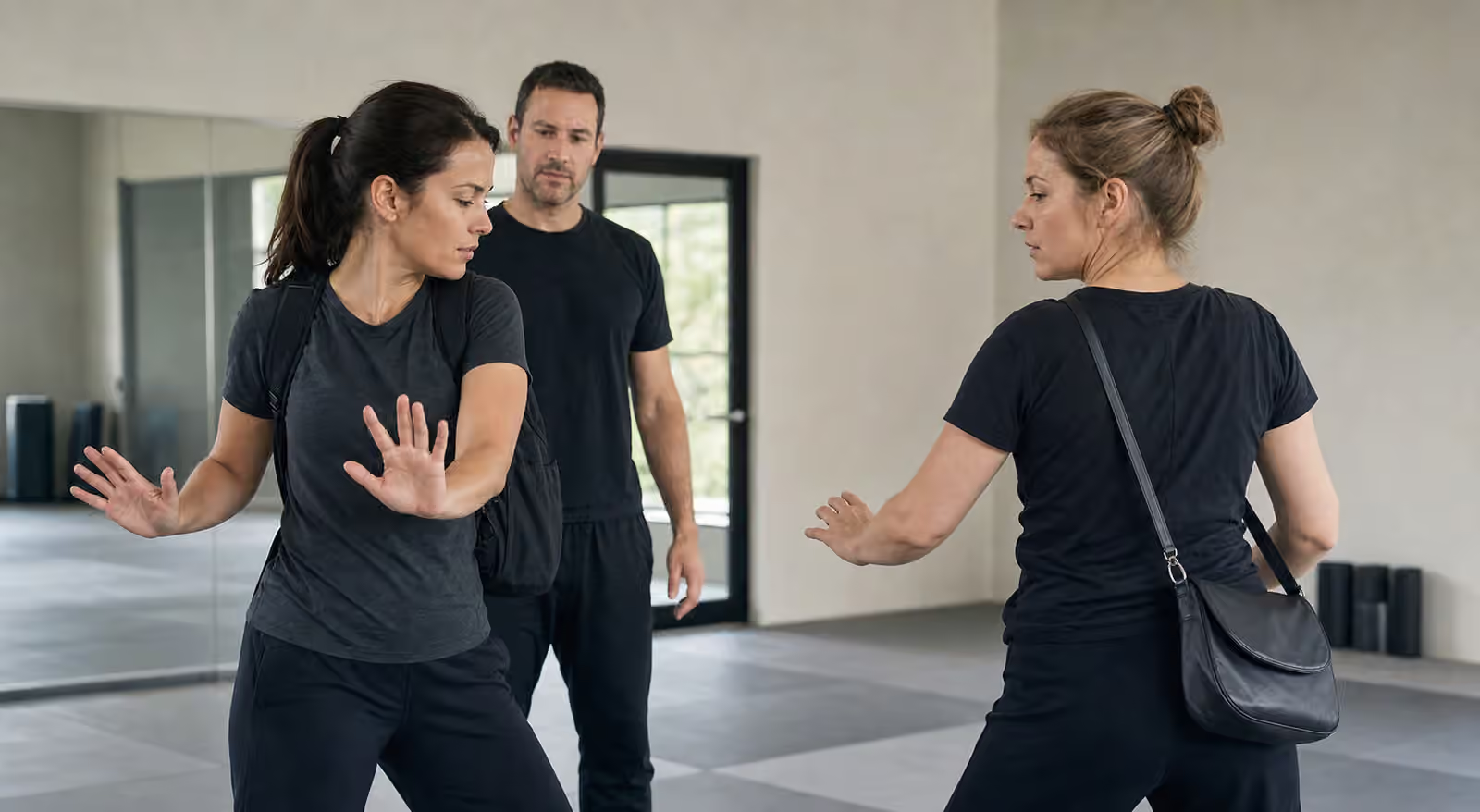
Training can make these details concrete. A class can place a suitcase, backpack, or training bag near a doorway and ask students to move through without tangling feet. It can ask students to angle away from pressure while one hand is occupied. It can show how easily a rolling bag makes a person turn their back to a corridor. The goal is not to make luggage tactical. The goal is to stop pretending it is invisible.
Fatigue makes luggage worse. A person at the end of a travel day may accept awkward positions they would normally avoid. They may stand too close to an elevator door, leave a bag behind them, or keep both hands busy while arguing with a booking app. Awareness in these moments is mostly kindness toward your future self. Make the path simple. Keep your hands useful. Do not let a minor inconvenience pull you into a worse position.
Corridors, Corners, and Elevators
Hotel corridors can create a strange kind of tunnel vision. Long lines of doors look similar. People search for room numbers, listen for keycard beeps, and walk past corners without seeing around them. Elevators create another common squeeze point. People wait with luggage, step into a small box, turn their backs, and negotiate space politely even when the feeling is wrong.
Krav Maga training cannot give a universal rule for every corridor or elevator. It can teach a relationship to space. Avoid standing so close to a door that you have no angle. Let an elevator go if the situation feels off. Keep enough distance to turn without crashing into your own bag. Notice who exits before you enter. If someone makes you uncomfortable, choose the awkward but available option: wait, move, return to the desk, or take a different route.
Those choices can feel socially expensive. People do not want to look rude, nervous, or dramatic. Distance, Awareness, and Exit is useful because it treats leaving as a skill rather than a failure. Travel asks for that skill often. You may decide not to share an elevator. You may walk back toward a brighter lobby. You may ask staff for help finding a safer route. You may give up the fastest path because the slower path keeps more options open.
Environmental Movement also matters here. Corridors, doorways, luggage carts, benches, stairwells, and elevator thresholds shape movement. A small angle can keep you from being backed flat against a wall. A wider turn can keep a suitcase from trapping your feet. Standing where you can see both the elevator and the corridor may feel ordinary, but it changes how early you notice movement.
The Room Is Part of the Map
When you enter a hotel room or rental space, the self-defense question is not cinematic. It is practical. Does the door close and lock normally? How do you leave in a hurry? Where is the phone? Which window or hallway direction matters in an emergency? Where can you place bags so they do not block the door path at night? These are ordinary travel habits, not paranoia.
Students should be careful with certainty here. Building layouts, local rules, emergency procedures, and security systems vary. A guidebook cannot tell you how every place works. It can encourage the habit of checking before you need the information. If a hotel has posted emergency instructions, read them. If the lock seems broken, ask staff. If a route feels confusing, clarify it while you are calm.
Krav Maga training can support this by making exits a normal part of thinking. On the mat, students learn not to finish a drill by posing. They move, look, breathe, and leave. In travel, the same habit becomes quieter. You put the suitcase where it does not block the path. You keep shoes or essentials findable. You notice the hallway direction before you are half asleep. The drama is low, but the usefulness is high.
This is also where companions matter. Traveling alone is different from traveling with a partner, child, coworker, or older relative. The exit that works for your pace may not work for theirs. The person with the room key may not be the person with the free hands. Someone may freeze, argue, or keep looking at the phone while the situation changes. Krav Maga When You Are Not Alone gives a better frame: responsibility includes communication before movement becomes urgent.
Phones Help and Distract
Travel relies on phones. They hold maps, bookings, boarding passes, ride details, payment apps, translations, and messages from people waiting for you. That usefulness makes them hard to put away. It also makes them a powerful distraction at exactly the moments when attention matters most: arrivals, exits, pickups, corridors, elevators, parking structures, and unfamiliar intersections.
The answer is not to reject the phone. It is to use it with rhythm. Stop where you have space before reading. Look up before stepping through a doorway. Confirm the next turn, then move with your eyes available. Share location or travel details when appropriate, but do not let the act of managing safety become a reason to stare downward through the transition itself.
This is one of the most transferable Krav Maga ideas. Awareness is not a permanent state of scanning. It is the timely return of attention. You do not need to be tense for an entire trip. You need to wake up at transitions: leaving the lobby, entering the elevator, stepping into a parking area, loading bags, approaching the room, waiting for a ride, or realizing someone has followed the same turn twice.
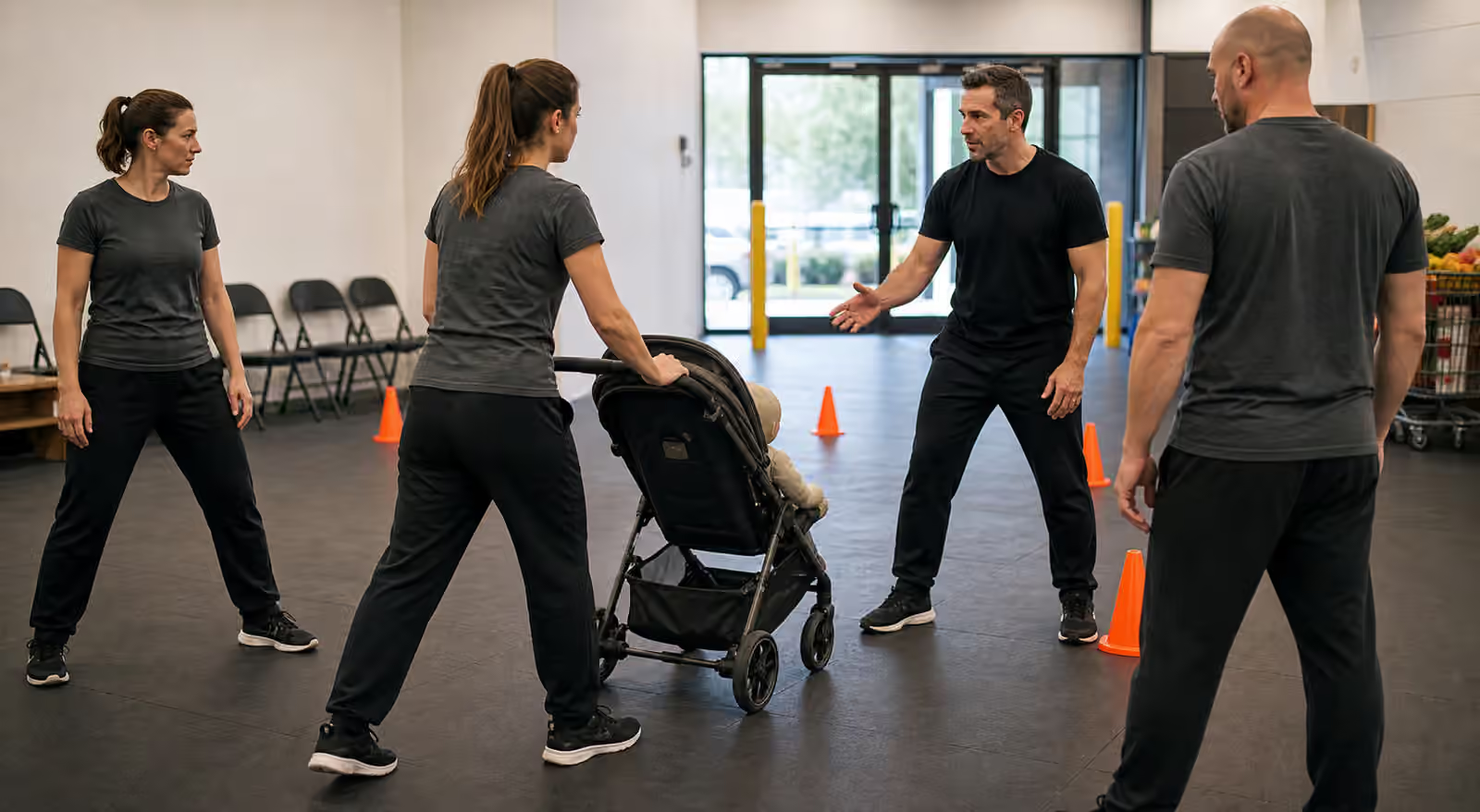
Good training can rehearse those transitions. A scenario does not need a villain. It can simply ask a student to move from lobby to corridor with a bag and a phone, notice a blocked path, use voice, and choose another route. The absence of drama is the point. Most travel awareness is made of small decisions before anything becomes dramatic.
Calm Is the Measure
Travel awareness should make a person calmer, not more suspicious. If a habit makes every hallway feel threatening, it is not sustainable. If it makes you notice exits, keep a hand free, pause before entering tight spaces, and ask for help without shame, it is useful. The difference is tone.
Krav Maga can sometimes attract language that makes danger sound constant. That is not helpful for travel. Most trips are uneventful. Most strangers are not part of your story. The value of training is that it gives you a few simple habits that do not require fear to operate. Notice the transition. Keep space. Use your voice. Leave early when leaving is available. Ask staff or bystanders for help when the situation is no longer ordinary.
Travel also rewards humility. You may be tired, jet-lagged, distracted, or out of your routine. You may misunderstand a building or a local custom. You may need to apologize and step away. You may decide that pride is less important than returning to the desk, calling a friend, waiting for a different elevator, or giving up the shortcut. None of these choices looks impressive. That is their strength.
The best travel awareness does not turn a student into a guarded tourist. It turns them into a person who keeps options visible in unfamiliar places. The suitcase, corridor, elevator, phone, room key, companion, and exit all become part of the same practical question: can I still move, speak, and leave if the moment changes?
That question is simple enough to carry anywhere. It belongs in a hotel hallway as much as on a training floor. It asks for attention, not panic. It asks for preparation, not fantasy. It lets Krav Maga remain what it should be at its best: a practice of noticing sooner, making space, protecting people, and choosing the exit before the story gets louder.