Conditioning has an awkward place in Krav Maga. On one hand, fitness matters. A tired body makes poor decisions, drops its hands, narrows its stance, holds its breath, and turns simple movement into a negotiation. On the other hand, exhaustion is easy to worship. It is loud, measurable, and satisfying in the short term. A class can leave everyone drenched and still fail to teach self-defense well.
The difference is purpose. Conditioning should make skill more available under stress. It should not replace skill, hide bad coaching, or turn every student into a prop in someone else’s idea of toughness. The question is not whether a class is hard. The question is what the hard work reveals, protects, and improves.
Beginners often arrive worried about not being fit enough. That worry is understandable, but it can distort the first months of training. A student who believes fitness is the admission ticket may delay starting forever. Another student may push past useful limits to prove they belong. A third may leave class thinking they failed because they were tired, even though tiredness is one of the reasons people train.
Krav Maga should meet fitness honestly. Strength, balance, endurance, mobility, and the ability to recover all help. None of them makes a person invincible. None of them removes the need for awareness, distance, voice, judgment, or qualified instruction. A fit person can still walk into bad distance. An unfit person can still make a good early exit. Conditioning supports the practice. It is not the practice by itself.
Fatigue Is Information
Useful conditioning shows what disappears when effort rises. Maybe the hands drop after twenty seconds of padwork. Maybe the student starts stepping too narrow after shuttle movement. Maybe the jaw tightens, the neck lifts, and breathing stops. Maybe the person can strike hard but cannot hear the coach. These discoveries are not failures. They are data.
This is where Padwork and Pressure offers the right frame. Pressure should reveal habits without drowning learning. The same is true of conditioning. A short burst before a drill can show whether the student’s stance survives fatigue. A controlled carry can show whether posture collapses. A brief sprint can show whether breathing returns quickly enough for the student to listen. The hard work is useful because it points back to skill.
Exhaustion becomes less useful when it erases the feedback. If everyone is too tired to move safely, the room stops learning and starts surviving. Partners hold pads poorly. Strikers lose wrist alignment. Students stumble through footwork. Corrections become too many and too late. The class may feel intense, but the body is no longer receiving clean information.
This does not mean instructors should avoid difficult work. It means difficult work needs a container. Students should know what quality matters during fatigue. The class might emphasize keeping a stance, recovering the hands, breathing after a burst, maintaining partner distance, or exiting after impact. Without that quality target, conditioning becomes a weather system. Everyone endures it, but no one is sure what it taught.
Conditioning Should Protect Partner Work
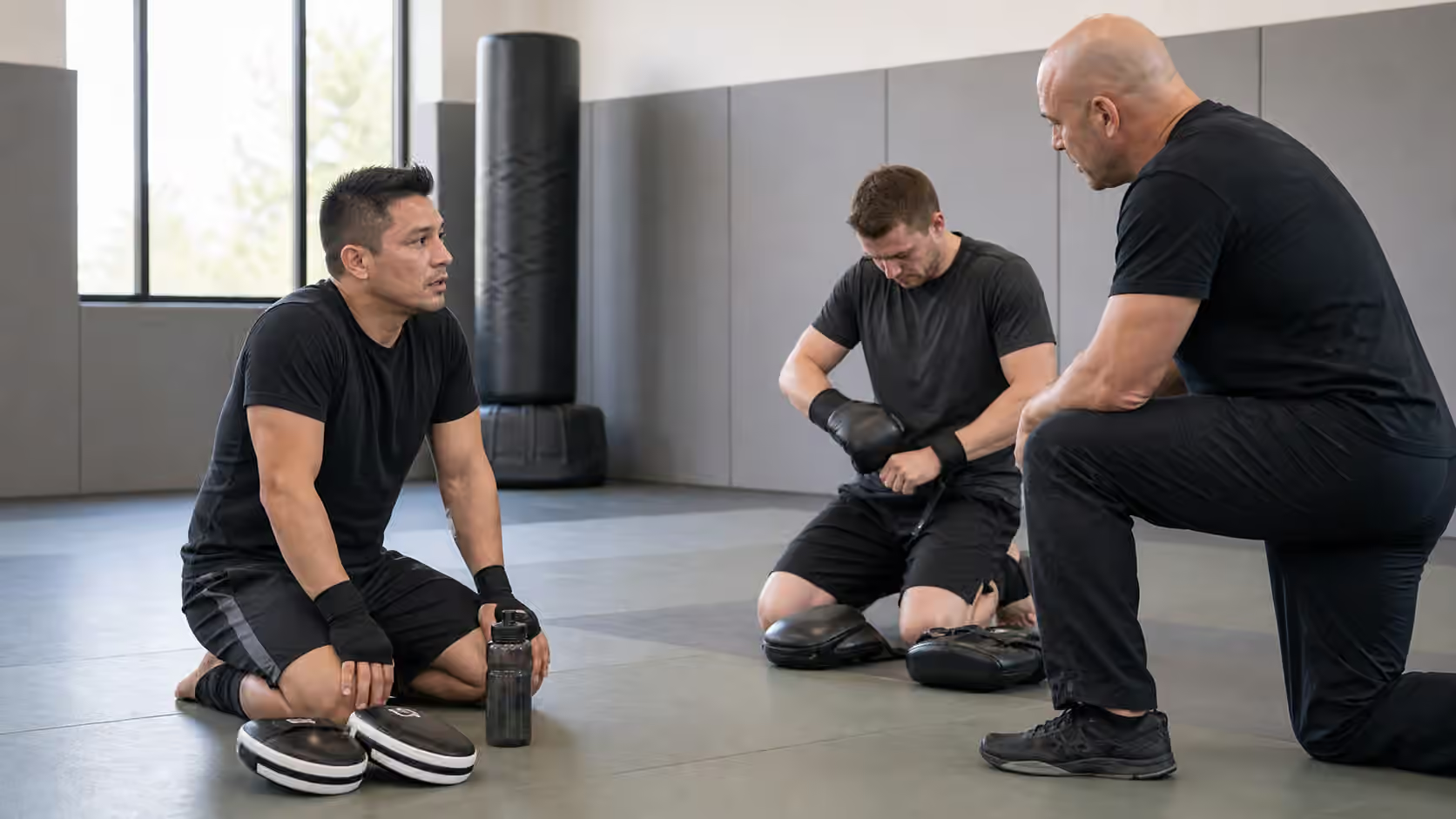
Fatigue does not stay private. In Krav Maga, tired students often work with other tired students. That makes conditioning a partner safety issue, not only a personal fitness issue. A student who loses control while striking pads can hurt the holder. A student who gets careless during grab work can twist a wrist or crash into a knee. A student who turns every drill into a test may exhaust a newer partner who did not consent to that pace.
Good schools account for this. They do not simply ask students to push harder. They teach students to notice when harder has become sloppier. They normalize lowering intensity before safety disappears. They make the holder’s body matter. They remind students that a partner is not equipment, and that intensity without control is not respect.
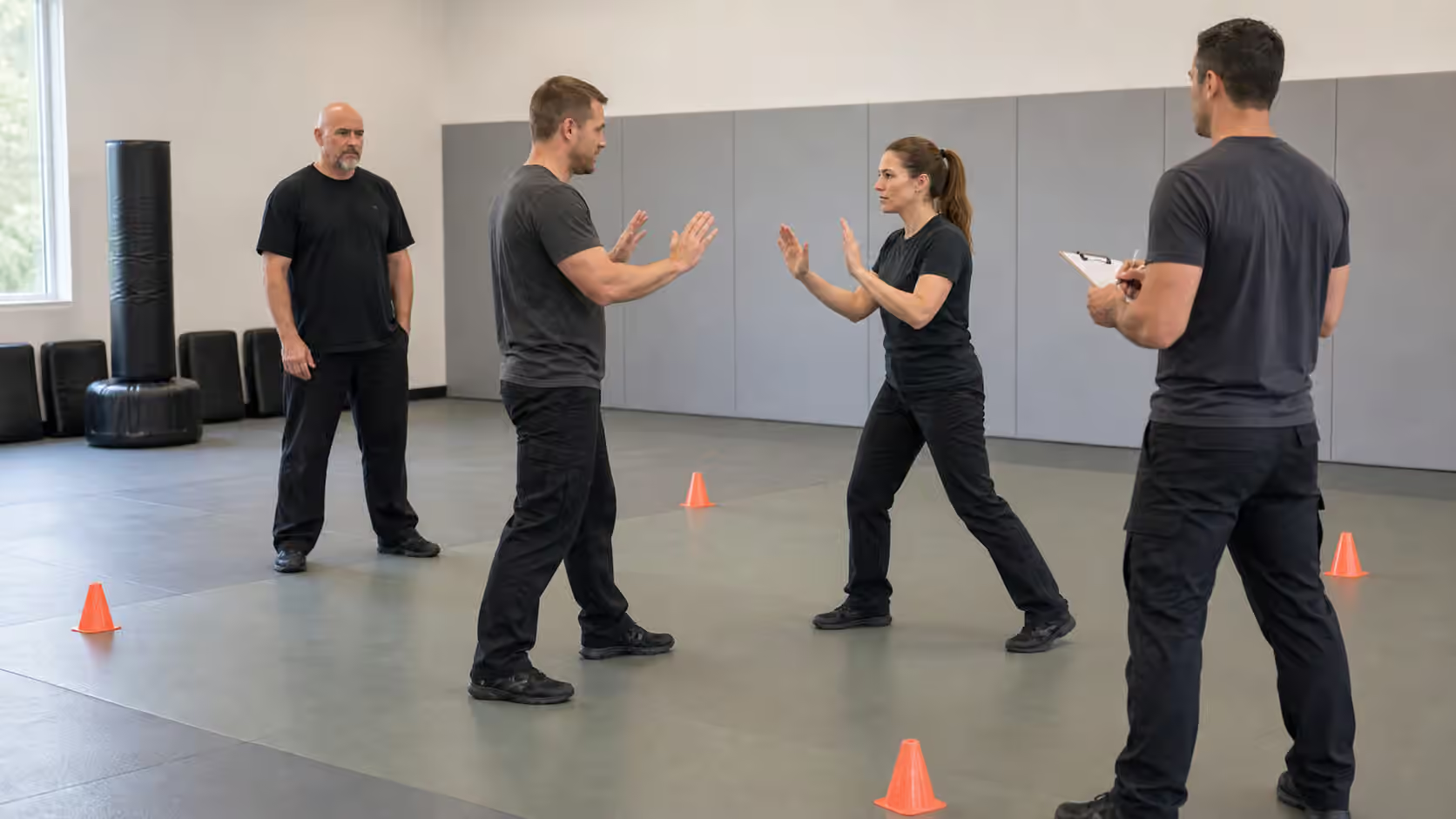
This connects to Partner Work in Krav Maga . Conditioning should make partner work steadier, not more reckless. A student who can stay attentive while breathing hard becomes safer. They can check whether the pad is ready, hear a stop signal, and reset after a collision. The goal is not just a bigger gas tank. It is a more reliable person under load.
There is a subtle humility in this. Fitness can make students overconfident. Someone with strong lungs and heavy lifts may assume they can simply overpower a drill. Another student with less athletic background may assume they have nothing to offer. Both miss the same point. Self-defense training asks for timing, judgment, adaptation, and restraint. Conditioning helps when it serves those qualities.
The Right Kind of Hard
The right kind of hard leaves students more capable over time. It may be uncomfortable in the moment, but it does not depend on humiliation, confusion, or constant escalation. It has a reason. It can be explained. It can be adjusted for bodies with different training histories. It makes room for recovery.
A short pad round can be hard because the student must keep breathing and recover the hands. A footwork drill can be hard because the student must angle out without crossing feet after the heart rate rises. A carry can be hard because posture and grip must remain calm. A ground-to-standing drill can be hard because the student must protect space while tired. The value is not in the misery. The value is in the quality that survives.
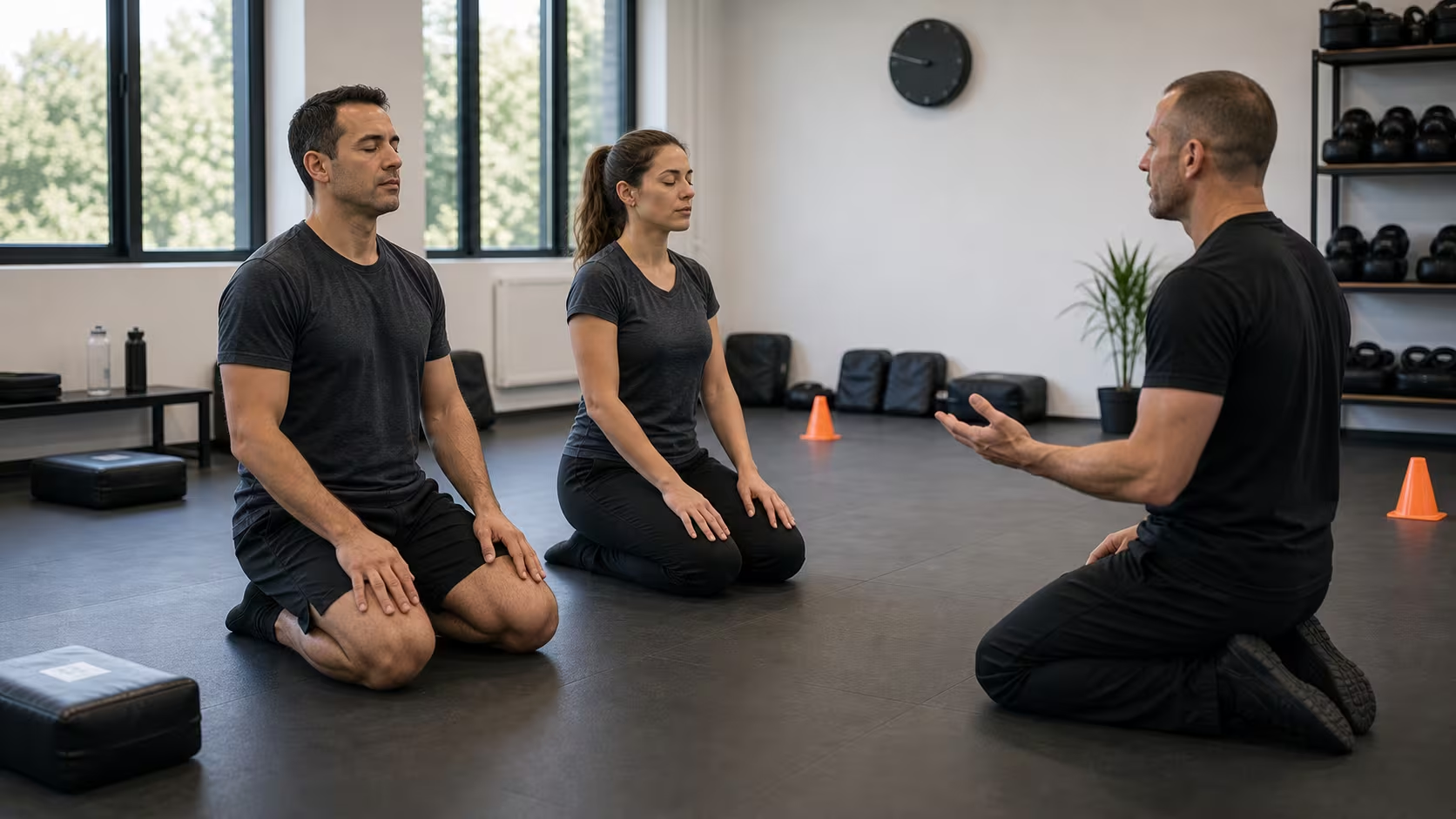
This is where Breathing and Stress Recovery becomes practical rather than decorative. A student who can work hard and then come down has more choices than a student who only knows how to climb. Recovery lets feedback enter. It lets the instructor speak to a person rather than to a body still trapped in the last burst. It lets partners check in without embarrassment.
The room should not treat recovery as weakness. Recovery is part of conditioning. If the student can hit a pad for thirty seconds but cannot return to normal breathing, listen, and move safely again, the skill is incomplete. Real situations may require bursts of effort, but they also require decisions after the burst. Leaving, checking on someone, calling for help, speaking clearly, or noticing a new problem all depend on recovery.
Training Outside Class
Students often ask what conditioning they should do between classes. The most honest answer is that it depends on the person, the school, and the rest of life. A demanding job, poor sleep, a previous injury, caregiving, and age all affect what is useful. This site is not a substitute for medical or coaching advice. Still, the principle can be simple: outside conditioning should make you arrive at class more trainable, not more depleted.
For some students, that means basic walking, mobility, and steady aerobic work. For others, it may mean strength training, intervals, loaded carries, or sport-specific conditioning guided by a coach. The exact method matters less than the outcome. Do you recover better? Do your joints feel more reliable? Can you hold pads with less strain? Can you keep posture while tired? Can you return to class consistently?
Training Between Krav Maga Classes is useful here because it keeps the ego out of solo work. A student alone in a garage can easily turn conditioning into fantasy performance. They imagine a threat, push too hard, and practice frantic movement with no feedback. Better between-class work often looks less dramatic. It supports mobility, strength, breathing, balance, and recall. It makes the next coached session cleaner.
The danger is adding more fatigue to a week that already has enough. Krav Maga classes may include striking, floor work, stress drills, and partner contact. If a student stacks intense conditioning on every off day, soreness can become a constant background noise. The body may still show up, but learning slows. Recovery, Soreness, and Training Frequency matters because consistency beats occasional heroics.
Fitness Without Fantasy
Conditioning also needs realistic claims. Better fitness may improve confidence, stamina, posture, and recovery. It may make class more enjoyable and give students more room to think when tired. It does not guarantee safety. It does not solve weapons, multiple attackers, surprise, hard surfaces, legal consequences, or poor judgment. A very fit person can still make a bad choice faster.
This is why conditioning belongs beside awareness rather than above it. If hard training makes a student more willing to stay in a bad conversation, it has failed. If it makes them believe they can always fight their way out, it has failed. If it makes them contemptuous of less athletic partners, it has failed. Useful fitness should widen options, not shrink judgment to the option that flatters strength.
There is a better confidence available. It is the confidence of knowing how your body behaves under effort. You know when your breath disappears. You know how your balance changes after a burst. You know what pace lets you stay accurate. You know when to ask for a lighter round. You know how to work hard without treating the person across from you as an obstacle.
That confidence is quieter than exhaustion theater. It does not need every class to become a survival story. It measures progress by cleaner movement under fatigue, safer partner behavior, better recovery, and the ability to keep thinking when the room gets loud. Those measures are less spectacular, but they are much closer to what Krav Maga is supposed to build.
Conditioning is valuable when it serves the whole student. It should make the body stronger, the breath more available, the mind less surprised by effort, and the room safer for partners. When it does that, hard work earns its place. When it only proves that people can be made tired, it is just noise with a stopwatch.