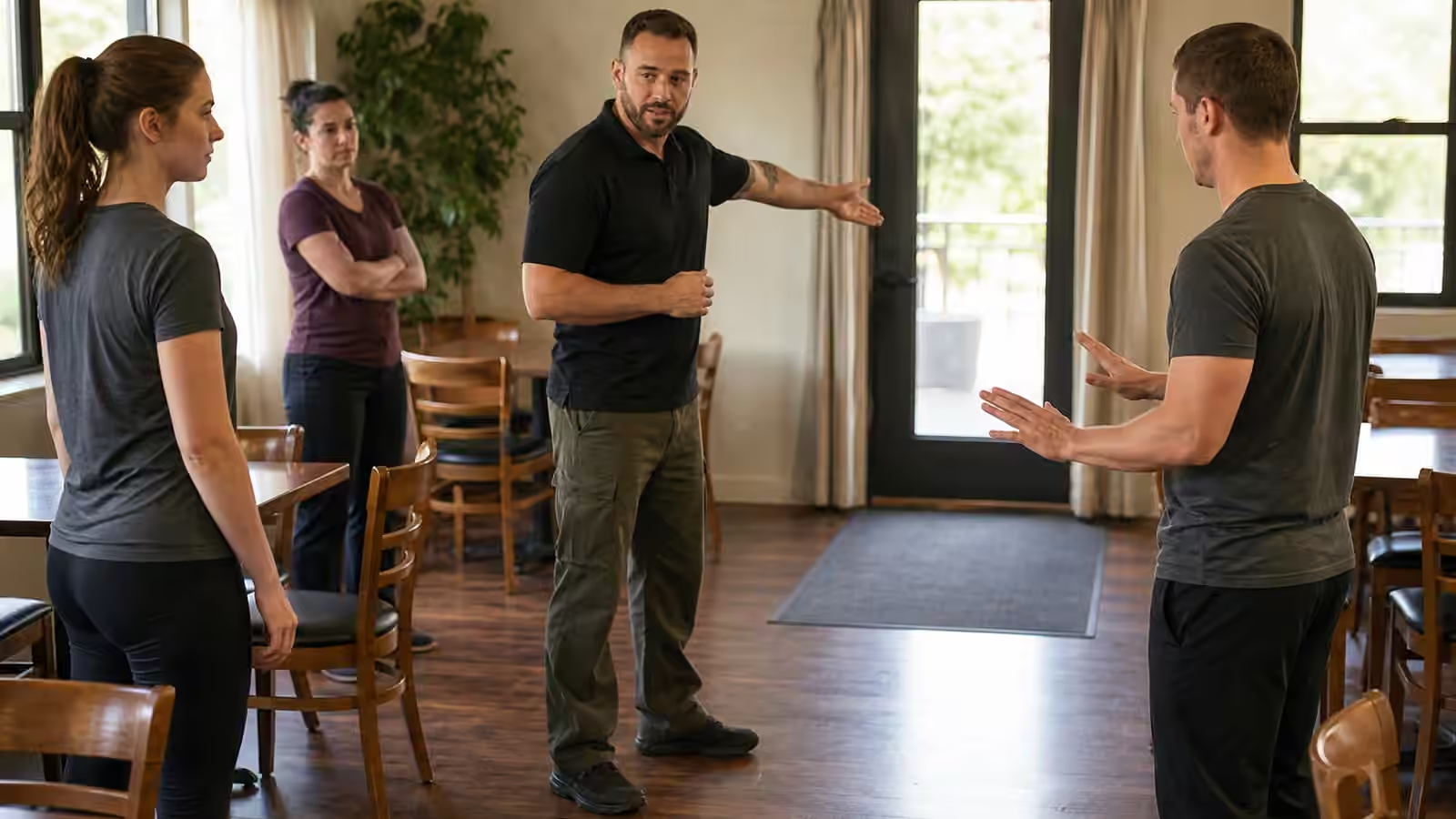
Krav Maga students spend a lot of time thinking about the person in front of them. That focus makes sense. The partner holds the pad, reaches for the grab, crowds the doorway, or plays the role that makes the drill happen. But real public situations rarely include only two people. There may be staff, friends, strangers, cameras, drivers, security, children, coworkers, or people pretending not to notice. The room around the problem is part of the problem.
Bystanders matter because they can change the available choices. A person who can draw attention early may not need to solve everything alone. A student who knows how to speak clearly to a specific person may get a door opened, a phone call made, a manager alerted, or a friend moved away. A student who freezes into tunnel vision may miss all of that help even while standing beside it.
This is not about becoming theatrical in public. It is about remembering that self-defense is social before it is physical. Distance, voice, posture, and exit all communicate. So does silence. A clear boundary may tell the person closing distance to stop, but it may also tell everyone nearby that something is wrong. That second audience can matter.
De-escalation and Verbal Boundaries covers the direct line between you and the person creating pressure. Bystander work adds a wider line. It asks who else can hear you, who else can help, who might become confused, and how to make the situation legible without making it worse. That is a subtle skill, and it deserves practice before stress makes the voice disappear.
Help Needs to Be Specific
People often imagine asking for help as one loud sentence thrown into the air. The problem is that vague help can scatter responsibility. In a public place, several people may look around, each assuming someone else will act. Stress makes this worse. A person who wants help may shout, apologize, explain, and plead all at once. The room hears noise but not a task.
Training can make help more specific. Instead of only saying that something is wrong, a student can learn to identify a person and give a simple job. The point is not to memorize a perfect script. The point is to practice directing attention. A person at the counter can be asked to call security. A friend can be told to take the child outside. A driver can be told not to leave. A nearby adult can be asked to stand with you near the exit. The exact words depend on the moment, but the structure is clear: get someone’s attention, name the need, and keep moving toward safety when possible.
This is harder than it sounds. Many people feel embarrassed asking for help. They worry about overreacting, being rude, making a scene, or being judged. That hesitation is normal, and it is exactly why practice matters. A self-defense class can create low-pressure repetitions where a student uses voice while moving, while holding a bag, while guiding a partner, or while exiting a crowded lane.
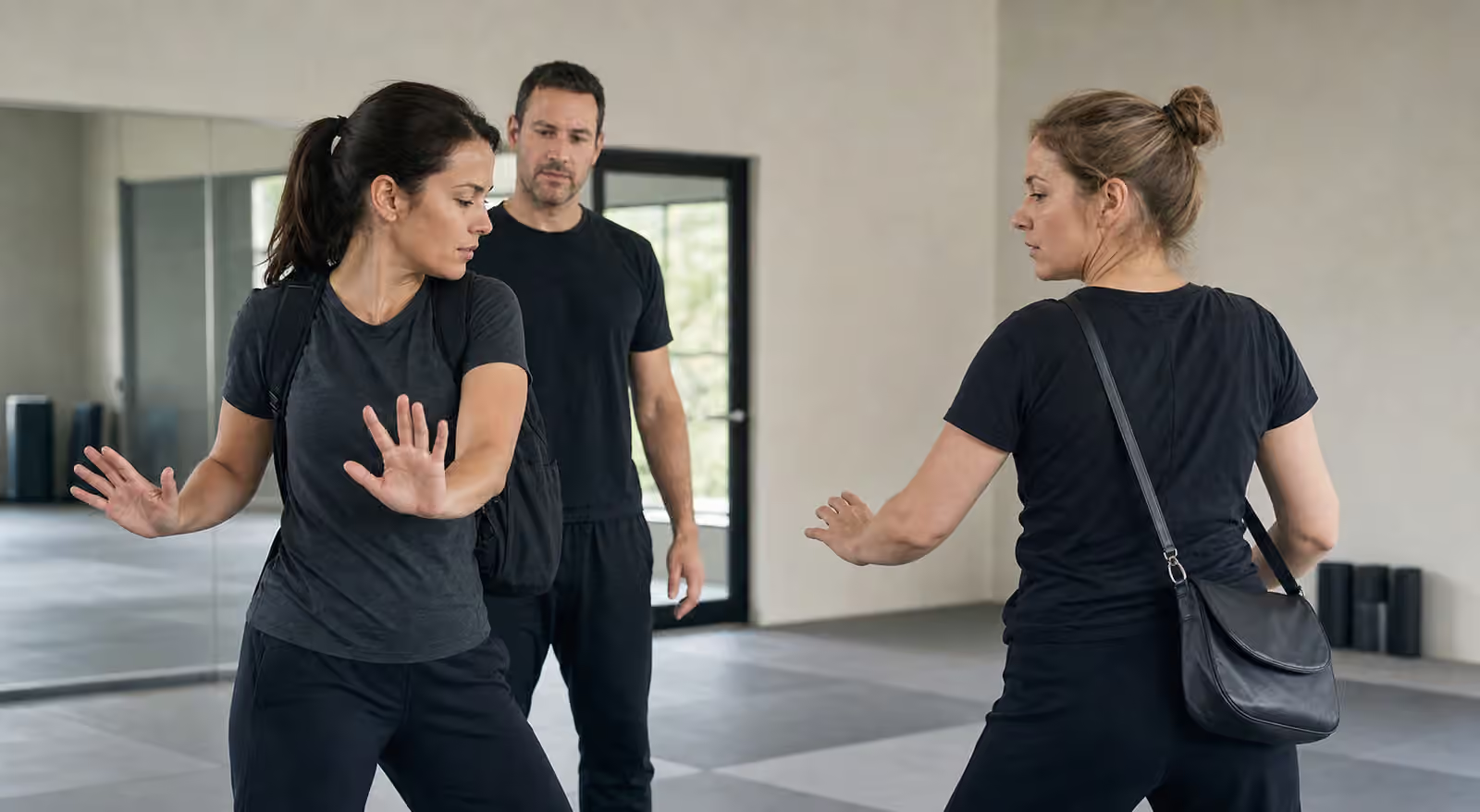
The practice should stay grounded. It should not become a shouting contest or a performance of fear. Good help-seeking sounds human. It may begin quietly and become firmer if ignored. It may include an open-hand posture, eye contact with a bystander, and a clear step toward space. It may stop when the situation resolves. The skill is not volume. The skill is making the next useful action easier for someone else to understand.
Witnesses Are Not Props
Scenario drills sometimes misuse bystanders. A class may assign one student to be the aggressor, one to be the defender, and several to stand around as background noise. If those background students have no role discipline, the scenario becomes messy. They laugh, improvise, crowd the action, or make the drill more confusing than useful. Real bystanders may be confused, but training partners still need boundaries.
Scenario Training and Ethics is the right anchor here. Bystander roles should have a purpose. A bystander might be someone who can help, someone who blocks a path accidentally, someone who needs to be moved, or someone who records what is happening. The role should be explained enough that the student can learn from it. Chaos is easy to create. Useful complexity takes care.
Witnesses also shape responsibility. Laws and reporting requirements vary by place, and this site is not legal advice. Still, students can understand the broad ethical point: public force does not happen in a vacuum. People may misunderstand what they saw. Cameras may catch only the last seconds. A clear voice, an attempted exit, and visible efforts to avoid escalation may matter after the fact. Training should not promise legal safety, but it can teach students to care about clarity.
This is one reason open-hand posture appears so often in Krav Maga awareness work. Hands that are visible can protect space, support voice, and communicate that you are not trying to hide a strike. They can also be seen by bystanders. The posture is not magic, and it does not guarantee anything, but it fits the larger goal of making responsible choices visible while keeping the body ready.
Bystanders Can Also Be Problems
Not every person nearby helps. Some freeze. Some film. Some shout bad advice. Some try to intervene physically and make the space more crowded. Some know the person causing pressure and take their side. Some are intoxicated, frightened, or too young to be useful. Krav Maga training should not build a fantasy where the public always arrives as backup.
The useful lesson is flexible attention. You may ask for help and still need to move. You may need to avoid being trapped by people who are only curious. You may need to position yourself so a well-meaning person does not block your exit. In a crowded space, the crowd can be both cover and obstacle. Crowded Space Awareness is relevant because it treats people as part of the terrain, not as a clean background.
This also affects companion safety. If you are with someone else, the bystander question changes. A friend may freeze. A child may cling. An older relative may move slowly. A partner may want to argue. A self-defense plan that depends only on your body ignores the social weight you brought with you. Krav Maga When You Are Not Alone explores that problem directly, and help-seeking often becomes the bridge between solo awareness and group movement.
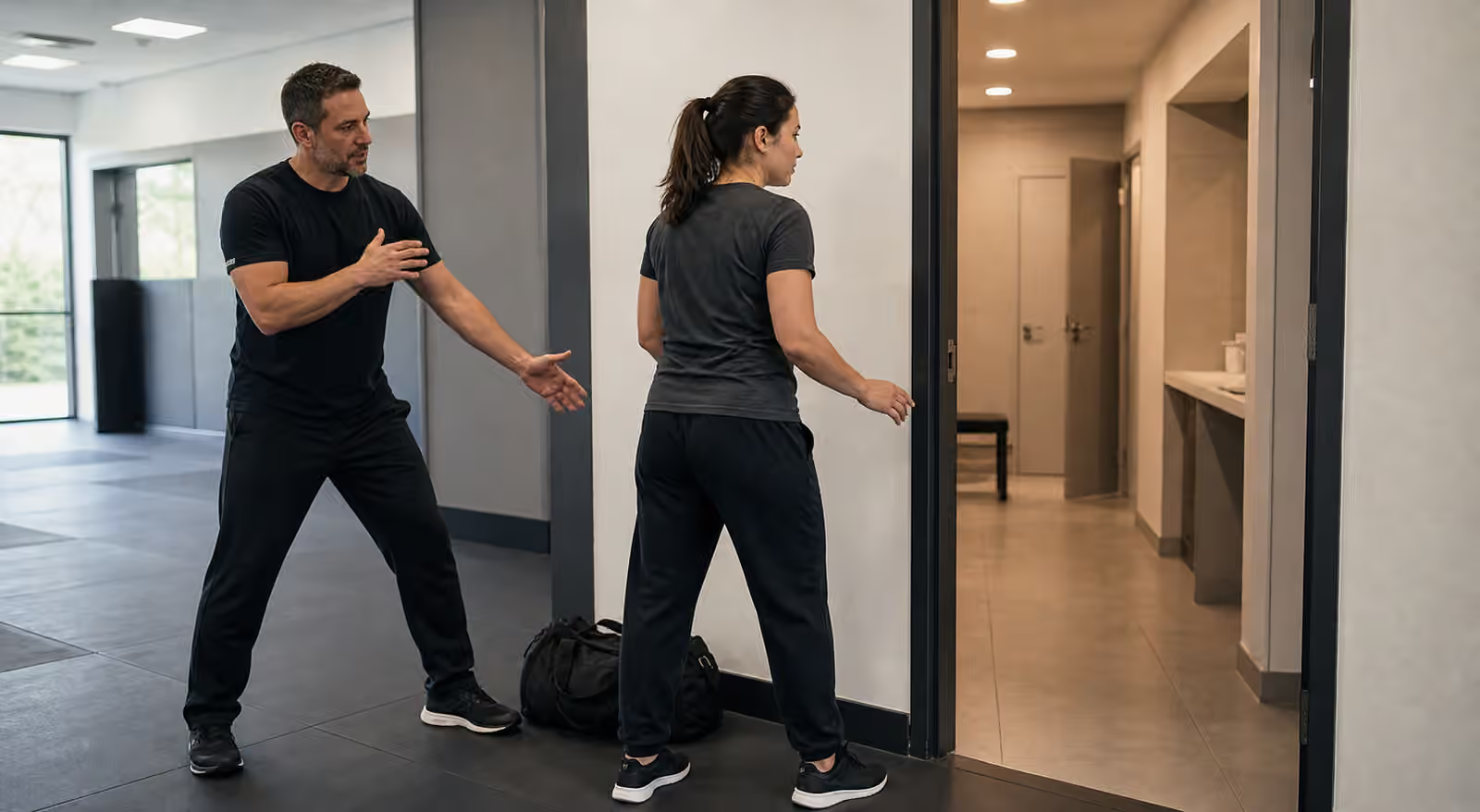
For example, leaving alone through a door may be simple. Leaving with a companion may require asking a staff member to open a side exit, asking a friend to keep walking without debate, or asking a nearby adult to stay between a child and the pressure. These are not heroic moments. They are ordinary coordination under stress. Ordinary coordination is worth training.
Practice Without Paranoia
Bystander training can go wrong if it teaches students to see every public room as hostile. That is not the goal. The goal is to be less alone if something begins to feel wrong. Most public spaces are ordinary most of the time. People buy groceries, wait for rides, stand in lobbies, talk too loudly, and move awkwardly around one another. Awareness should help you participate in that ordinary world, not withdraw from it.
A good drill might begin with normal movement. Students walk through a doorway, pass a bench, carry a bag, or stand near a counter. One role player closes distance or blocks a path. The defender uses voice, angles toward an exit, and directs a bystander. The drill ends as soon as space and clarity are restored. The class discusses what was noticed, what was missed, and whether the help request was understandable.
That kind of drill is less dramatic than a fight scene, but it may be more useful. It practices the early moments when physical force may still be avoidable. It teaches students to keep the world in view instead of staring only at the loudest person. It gives the voice a job. It also shows that leaving can require cooperation, and cooperation can require instruction.
The instructor’s tone matters. If bystander work becomes humiliation, students will retreat into silence. If every help request has to sound aggressive, students may avoid using it in real life because it feels unnatural. The best practice lets students find clear language that fits their voice. Some people are naturally loud. Some are firm but quiet. Some need to rehearse eye contact. Some need permission to interrupt social politeness. All can improve.
After Help Arrives
Help-seeking does not end the moment someone responds. If staff, security, friends, or emergency services become involved, the student still needs to breathe, speak clearly, and avoid adding confusion. After a Krav Maga Incident is useful here because the aftermath can be its own pressure drill. People talk over one another. Adrenaline changes memory. The body wants to shake or pace. The student may feel embarrassed, angry, or relieved.
Training can teach a simple relationship to the aftermath: get safe, check injuries, keep distance, identify who needs to know, and give clear information without performing certainty you do not have. Details may need to wait. Legal or medical questions belong with qualified professionals. What class can train is the habit of returning from stress enough to communicate.
There is humility in asking for help. It admits that self-defense is not a solo movie. It admits that other people, places, exits, phones, cameras, and staff can matter. It also admits that the best use of training may be creating enough clarity that someone else can help before violence becomes the only visible option.
Krav Maga often emphasizes decisive action. Bystander work widens the definition of action. Speaking clearly can be action. Naming a problem can be action. Directing a person to call for help can be action. Moving a companion toward an exit can be action. Leaving while the room finally understands what is happening can be the most successful action of all.