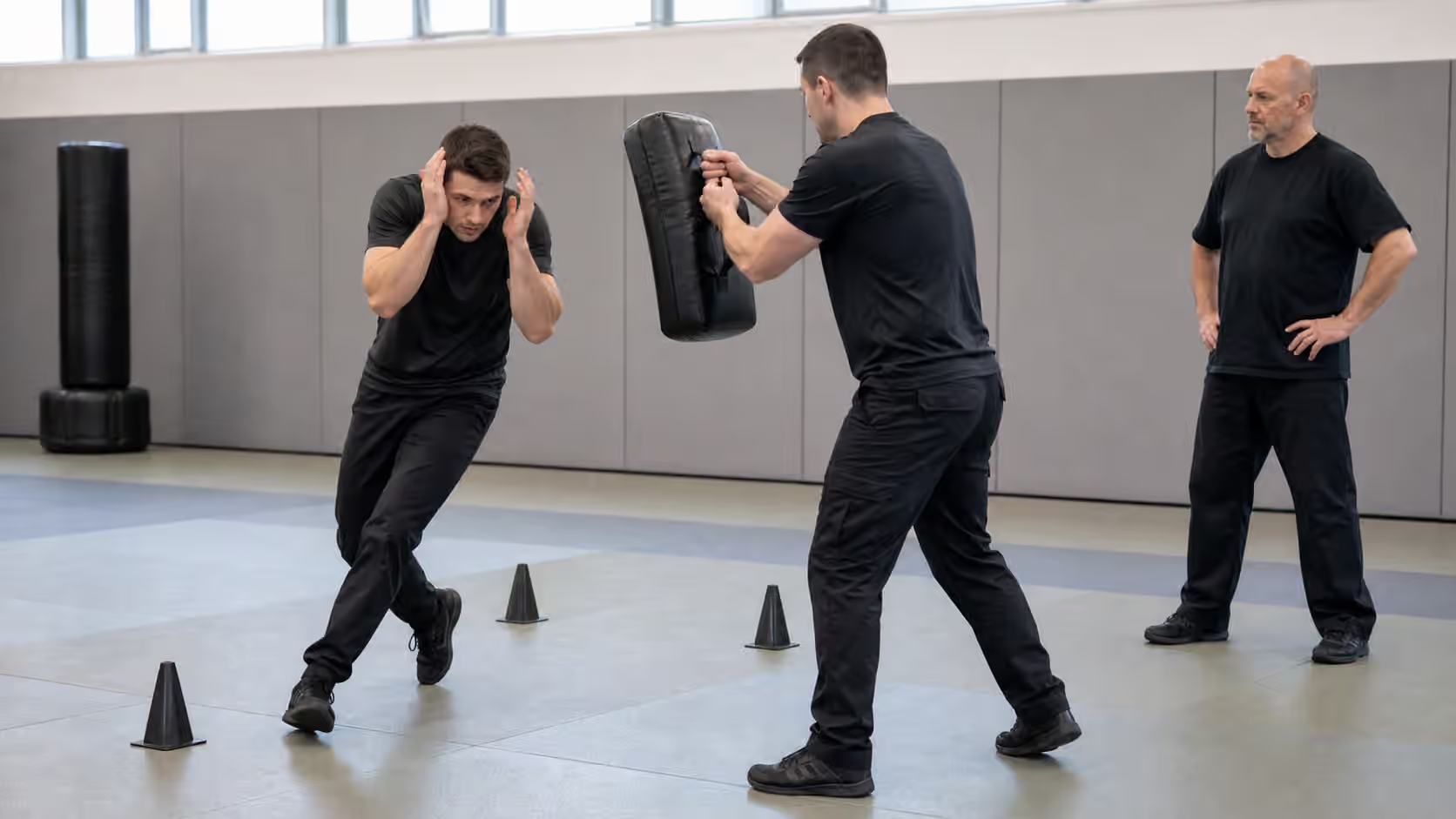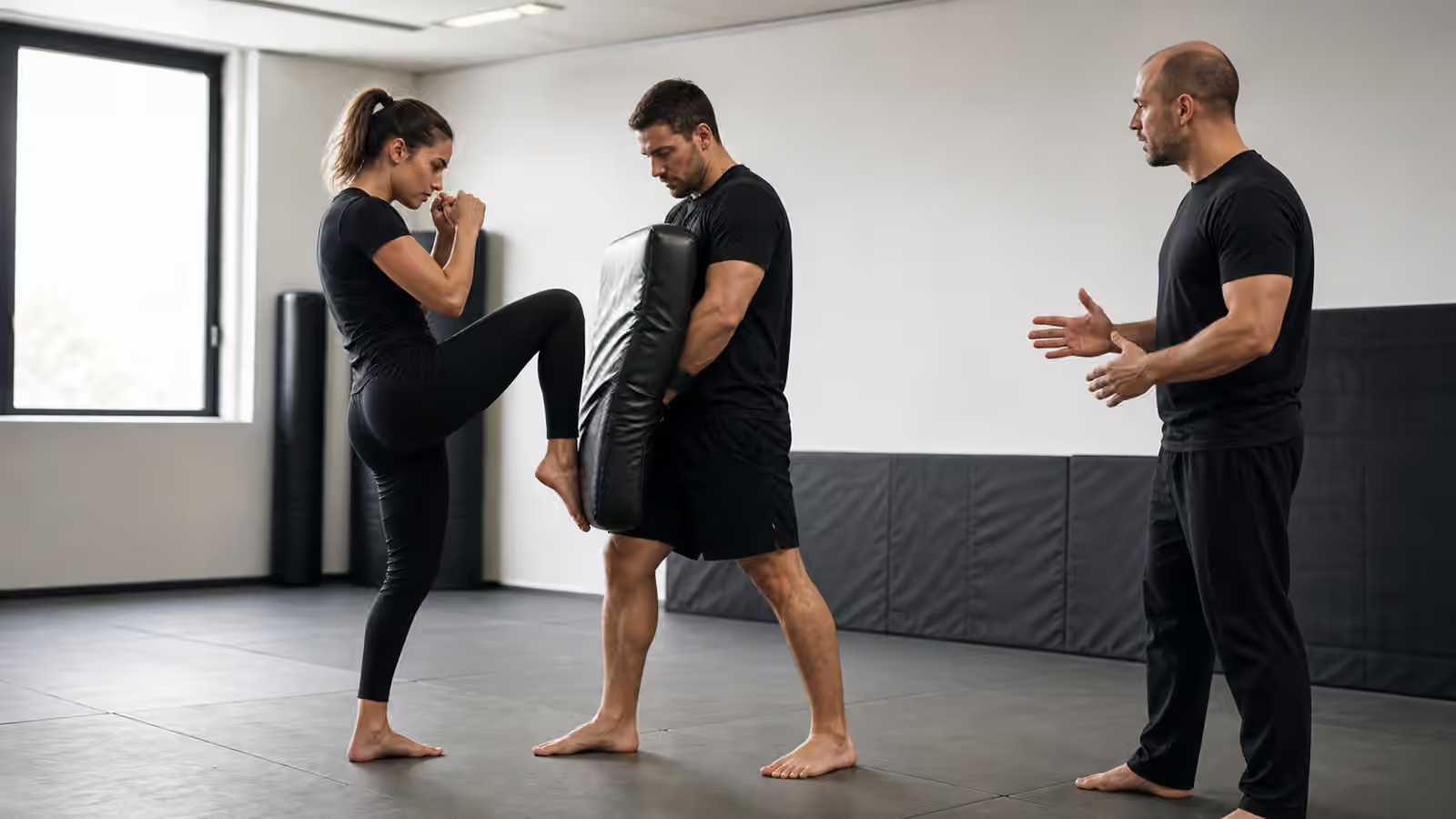
Kicks and knees get a strange kind of attention in Krav Maga. They look decisive from the outside. A pad makes a loud sound, the body travels farther than it does during a hand strike, and a beginner can feel powerful before they feel skillful. That feeling is not worthless, but it can mislead. A lower-body strike is useful only if it leaves the student able to stand, see, breathe, and leave.
Good training therefore starts with a quieter question than power. What happens to the supporting foot? What happens to the hands while one leg is busy? Does the student return to balance, or do they admire the impact and drift forward? Does the pad holder understand the angle, or are both partners borrowing luck from their knees and backs? Those questions make kicks and knees less glamorous, but more honest.
This guide belongs beside Footwork and Balance and Padwork and Pressure . Footwork explains why the floor matters before impact. Padwork explains why the person holding the shield is not equipment. Kicks and knees sit at the meeting point of those two ideas. They ask the body to generate force while temporarily giving up the comfort of two feet on the ground.
The Standing Leg Is The First Lesson
Beginners usually pay attention to the leg that moves. The coach often pays attention to the leg that stays. That standing leg decides whether the strike is training or a stumble with sound effects. If the knee locks, the student becomes stiff. If the foot turns without the rest of the body following, the knee may feel the argument. If the hips chase the pad while the head leans away, the student may land in a narrow base and need a second to recover.
The point is not to make students afraid of kicking. The point is to teach them that balance is part of the strike, not a separate cleanup afterward. In a healthy class, early lower-body work is usually modest. The range is smaller. The targets are pads. The pace allows correction. The instructor watches whether students can return the foot to the floor without crossing themselves, dropping their hands, or turning their back on the room.
This is where Krav Maga differs from the fantasy version of self-defense that lives in highlight clips. A clean kick on a perfect training floor may feel impressive. A useful kick in a self-defense frame has to survive ordinary mess: tight space, tired legs, shoes, bags, slick floors, fear, and another person who does not stand still for your timing. The safest beginner lesson is often not how high the leg can go. It is how little height is needed for the body to learn distance, structure, and return.
Kicks Need Distance And Modest Ambition
Kicks are often taught as long-range tools, but distance is not just empty space between two people. It includes reaction time, footing, exits, obstacles, and whether your hands are free. Distance, Awareness, and Exit is the larger idea. A kick that helps maintain distance may be useful in training. A kick that traps the student in place because they are reaching for a dramatic target is less useful, even if it lands on the pad.
Beginners sometimes want high kicks because high kicks feel like proof of athletic ability. A responsible Krav Maga room usually treats them with caution. High kicks require more balance, flexibility, space, and recovery. They can also make the student easier to move if the strike misses or gets crowded. Low and midline work on pads may look less exciting, but it teaches more about the real problem: can the student make contact without donating their posture?
The pad gives feedback. If the student reaches with the toes and folds at the waist, the impact feels thin. If they step too close, the strike jams. If they stand too far away, the body overextends and the return becomes late. If they forget the hands, the upper body becomes a passenger. A good coach does not need to turn that into a lecture every time. The pad, the floor, and the student’s breath tell the story quickly.
Kicks also have to be connected to the next decision. In a practical drill, the student does not kick and stop as if a bell rang. They land, regain stance, see the room, and move. Sometimes the correct next action is to leave the line. Sometimes it is to use voice. Sometimes it is to lower intensity because the partner is not holding safely. The strike is a moment inside a decision, not a final punctuation mark.
Knees Belong To Close Range
Knees feel different because they usually happen when distance has already collapsed. They may be trained against a shield, in a controlled clinch frame, or after a pad holder steps in. The closeness can make beginners rush. They grab too hard, pull with the arms, lift the knee without base, and forget that the person holding the pad has ribs, shoulders, neck, and balance of their own.
Close Range in Krav Maga gives the right caution here. Close range is not permission to become careless. Frames, posture, and disengagement still matter. A knee strike on a shield should not teach the student to cling to the partner as if staying attached were always the answer. It should teach the student how close range changes breathing, balance, and timing, then how to recover enough space to choose again.
The emotional pressure of knees is also real. A knee drill can feel more aggressive than a kick drill because bodies are nearer and hands may be involved. Some students become excited and over-pull. Others become tense and barely move. A careful instructor can lower the temperature by making the roles clear. The holder feeds a stable shield. The striker works within the agreed range. Both partners reset before fatigue makes the drill sloppy.
There is a useful humility in that reset. A knee is not magic because it is close. It still needs posture. It still needs a path back to the floor. It still needs a partner who can absorb the drill safely. If any of those pieces disappear, the sound of impact may hide the fact that the class is practicing poor control.
The Pad Holder Carries Half The Skill
Lower-body padwork depends on the holder even more than many beginners realize. A focus mitt can be moved quickly and adjusted with small changes. A kick shield or body pad has more mass, more surface area, and more responsibility. If the holder stands too narrow, braces with a locked back, angles the pad poorly, or retreats at the wrong time, the striker receives false information and both partners absorb unnecessary strain.
This is why Partner Work in Krav Maga is not a side topic. The holder is creating the lesson. They decide, under the coach’s direction, where the target appears, how much pressure it gives back, and when the repetition ends. A careless holder can make a good striker look uncontrolled. An ego-driven holder can turn a beginner drill into a contest of who can tolerate discomfort longer. Neither version teaches much.
The striker has responsibilities too. They should not unload full effort into a partner who has not signaled readiness. They should not chase the pad when it moves unexpectedly. They should not treat a shield as permission to ignore the holder’s body. If the angle feels wrong, the answer is to pause and fix it, not to prove toughness through the bad setup.
Safety Signals and Stopping Early belongs directly in this conversation. Lower-body impact can go wrong in ordinary ways: a foot lands awkwardly, a knee feels sharp, a holder’s wrist or shoulder is bothered by the shield, partners drift too close to another pair, or fatigue makes instructions hard to hear. Stopping early is not a failure of intensity. It is how the class keeps the lesson available.
Fatigue Changes The Strike
Kicks and knees reveal fatigue quickly. The first repetitions may look organized. A few rounds later, the hands drop, the chin rises, the standing leg gets lazy, and the student starts reaching for impact instead of building it from the floor. This is not a character flaw. It is information. Lower-body strikes are demanding because they ask for balance, timing, strength, breath, and coordination all at once.
Breathing and Stress Recovery helps explain why a student can look powerful and still be losing the drill. If they cannot exhale, listen, and return to stance, the strike is becoming a fitness event rather than a self-defense lesson. Hard work has value, but hard work should reveal habits that can be corrected. If every round ends with the student bent over, blind to the room, and unable to hear the coach, the pressure may be outrunning the learning.
Fatigue also changes judgment. A tired student may swing the leg wider than planned, hold the partner too roughly during knee work, or step backward into another pair after impact. A mature class does not wait for a dramatic mistake before lowering pace. It teaches students to notice the earlier signs. The breath gets stuck. The landing foot wanders. The shield holder starts absorbing impact with their spine instead of their stance. Those signs are enough.
Ordinary Bodies Need Ordinary Adjustments
People arrive with different hips, knees, ankles, backs, balance histories, and confidence levels. Some can lift a knee easily but struggle to land with control. Some can kick a shield but dislike pivoting. Some are returning from injury. Some are strong enough to make bad mechanics look acceptable for a while. Training Around Injuries and Limits is especially useful here because lower-body work should be adaptable before it becomes painful.
A modified version of a kick or knee drill can still preserve the lesson. The range can be shorter. The target can be lower. The student can work the footwork without impact. The holder can give a lighter feed. The class can slow the repetition until the student finds balance again. None of that makes the student unserious. It makes the training more precise.
Surfaces matter too. Mats are forgiving compared with tile, gravel, wet pavement, stairs, or a cluttered floor. Shoes change traction. Bare feet change feedback. A heavy bag on the ground can become a trip hazard. Environmental Movement in Krav Maga reminds students that the room is always part of the skill. A kick that only works on a clear mat with generous space should be treated as a training exercise, not a guarantee.
The Strike Should Give Space Back
The best lower-body training returns to the same quiet principle that runs through the rest of the site: create space, keep balance, and leave when leaving is available. A kick may help maintain distance. A knee may help create a moment in close range. Neither should make the student more attached to the problem. If the drill ends with the student planted in front of the pad, waiting for applause from their own nervous system, it is missing the larger point.
Responsible Krav Maga does not need to make kicks and knees theatrical. It can make them useful by making them honest. The student learns to strike a pad without losing the supporting leg, to hold a shield without sacrificing the body, to lower intensity before fatigue turns sloppy, and to connect impact to movement rather than ego. That kind of training looks plain from across the room. Up close, it is full of important details.
The measure is not how loud the shield sounds. It is whether the student can land, breathe, see the room, respect the partner, and move toward a better position. When those pieces are present, lower-body strikes become part of the same practical education as stance, voice, distance, and recovery. They are not tricks added on top of Krav Maga. They are another way the body learns not to lose itself when pressure arrives.