Head protection is easy to misunderstand because it looks defensive in the plainest possible way. The hands come up, the shoulders settle, the chin drops, and the student tries not to give the head away. There is no satisfying pad sound at first, no clean escape shape, and no dramatic finish. From the outside, a cover can look like waiting.
In a good Krav Maga class, it is not waiting. It is a brief piece of organization under pressure. A useful cover buys a moment for the body to stop being surprised, for the eyes to find the room again, and for the feet to move before the student freezes in place. It is not a shell to live inside. It is not proof that the student is safe. It is a bridge between the first shock and the next decision.
That bridge matters because the head often becomes the place where stress shows up first. A beginner may lift the chin when backing away, turn the face from a pad, blink hard during a noisy drill, or reach with both hands while leaving the head uncovered. None of those reactions means the student is careless. They are ordinary signs that surprise, embarrassment, fatigue, and impact pressure have narrowed attention.
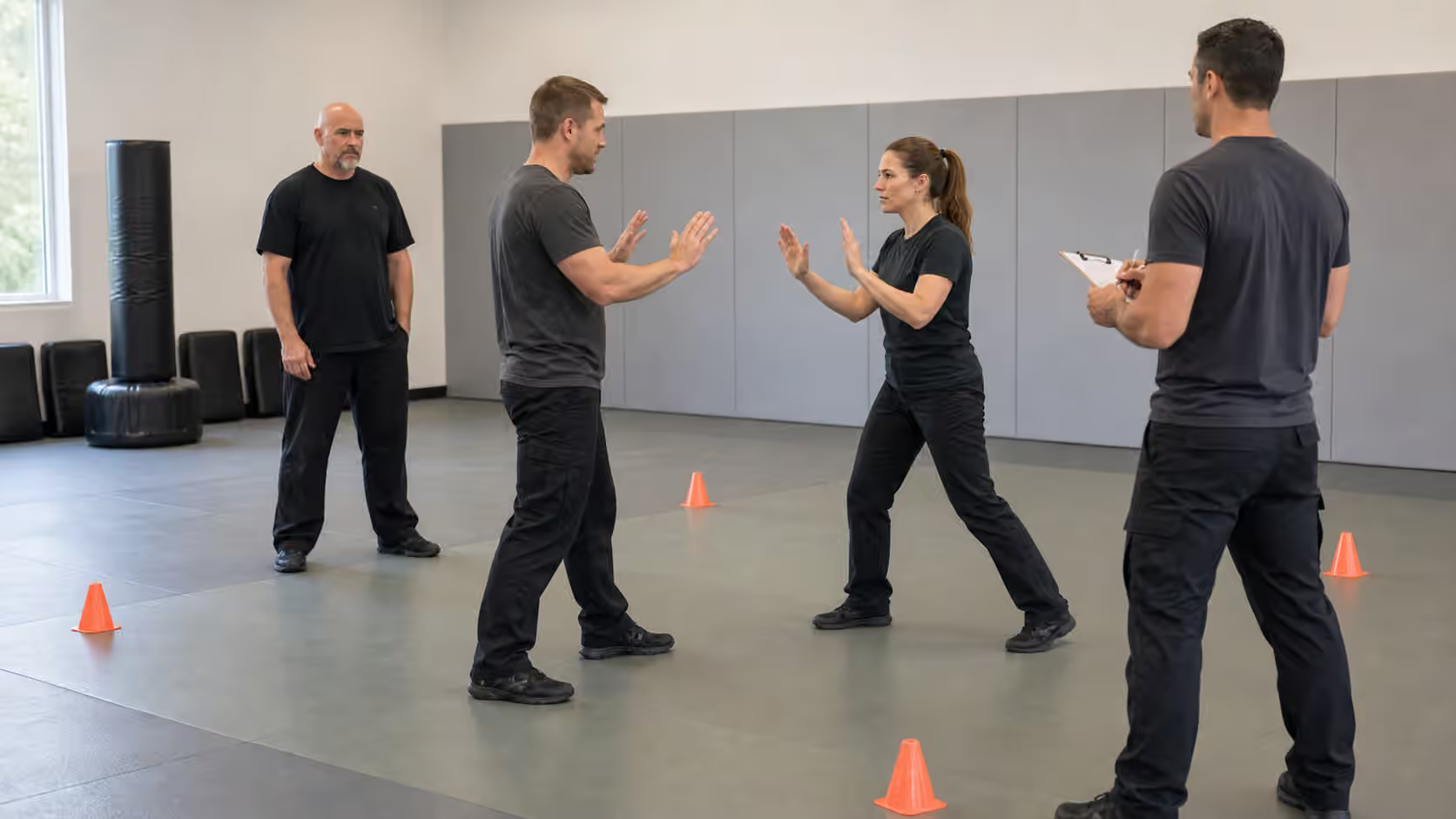
Head protection belongs beside Open-Hand Protective Posture , not after everything else has failed. Open hands help a student set a boundary before contact. A cover helps when the boundary is late, ignored, or overwhelmed. The two ideas are connected by the same principle: hands should be available early enough to protect choices, not only to perform techniques.
Covering Is Not Hiding
The most common beginner mistake is to treat the cover as a hiding place. The forearms rise, the shoulders climb, the eyes disappear, and the feet stop moving. For one second, the student may feel less exposed. In the next second, they have lost the room. They cannot see the pad, the partner, the wall, the exit, or the instructor’s correction. The cover has become a curtain.
A better cover leaves the student protected enough to keep learning. The hands and forearms create structure near the head without smothering the eyes. The chin settles without folding the spine. The shoulders stay active without locking the neck. The ribs keep enough room for breath. The exact mechanics should be coached in person because bodies, injuries, and drill goals differ, but the larger idea is simple: protect the head while keeping the rest of the body useful.
This is why a coach may correct a cover that appears strong from across the room. If the arms are clamped so tightly that the student cannot move, the shape is too expensive. If the elbows flare so wide that the centerline opens, the shape is too loose. If the hands sit high but the hips lean backward, the body is still giving up balance. The cover is not judged by how much tension it contains. It is judged by whether the student can breathe, see, move, and recover from it.
The phrase “recover from it” matters. A cover should have an exit. It may recover into open hands and voice. It may recover into an angle step. It may recover into a frame, a pad strike, or a disengagement drill under instruction. It should not recover into a statue. Distance, Awareness, and Exit keeps the context honest here. The point of protecting the head is not to stand in place longer. The point is to survive the first moment well enough to make space again.
Surprise Makes the Shape Messy
Students often imagine that good head protection will look tidy when they need it. Training usually teaches a humbler lesson. Surprise is messy. A hand may arrive late. A forearm may cover more ear than temple. The body may turn too much. The student may blink, exhale sharply, or forget the feet. That does not make the practice useless. It gives the class something real to shape.
Startle Response in Krav Maga is the natural companion to head protection because the first second rarely offers clean choices. Many people flinch with their hands up or shoulders raised. A responsible room does not pretend that reflex is shameful. It teaches students how to turn the reflex into a usable cover and then turn the cover back into movement.
The difference between flinching and covering is not perfection. It is recovery. A flinch may collapse the body inward and keep it there. A trained cover accepts that the body was startled, then asks for a task. Find the floor under your feet. Keep the head from floating forward. Let the breath out. See around the edge of the arms. Move to the angle that opens the exit. The student is not trying to erase the startle response. They are trying to shorten the time spent trapped inside it.
This is also why surprise drills need discipline. A partner who scares a beginner for entertainment is not making the training more honest. The student should know the purpose, range, contact level, and stop signal. The surprise can be enough to reveal the habit without turning the room unsafe. If the drill is supposed to teach head cover against pad pressure, then the feeder should give pad pressure, not improvised strikes, grabs, insults, or extra chaos.
Good training makes the first second more familiar without pretending to control everything that might happen outside class. That honesty is important. Head protection can reduce exposure in some moments, but it does not erase size, speed, hard surfaces, weapons, multiple people, poor footing, or bad luck. It is a practical habit inside a larger safety picture, not a guarantee.
Pad Pressure Should Teach Seeing
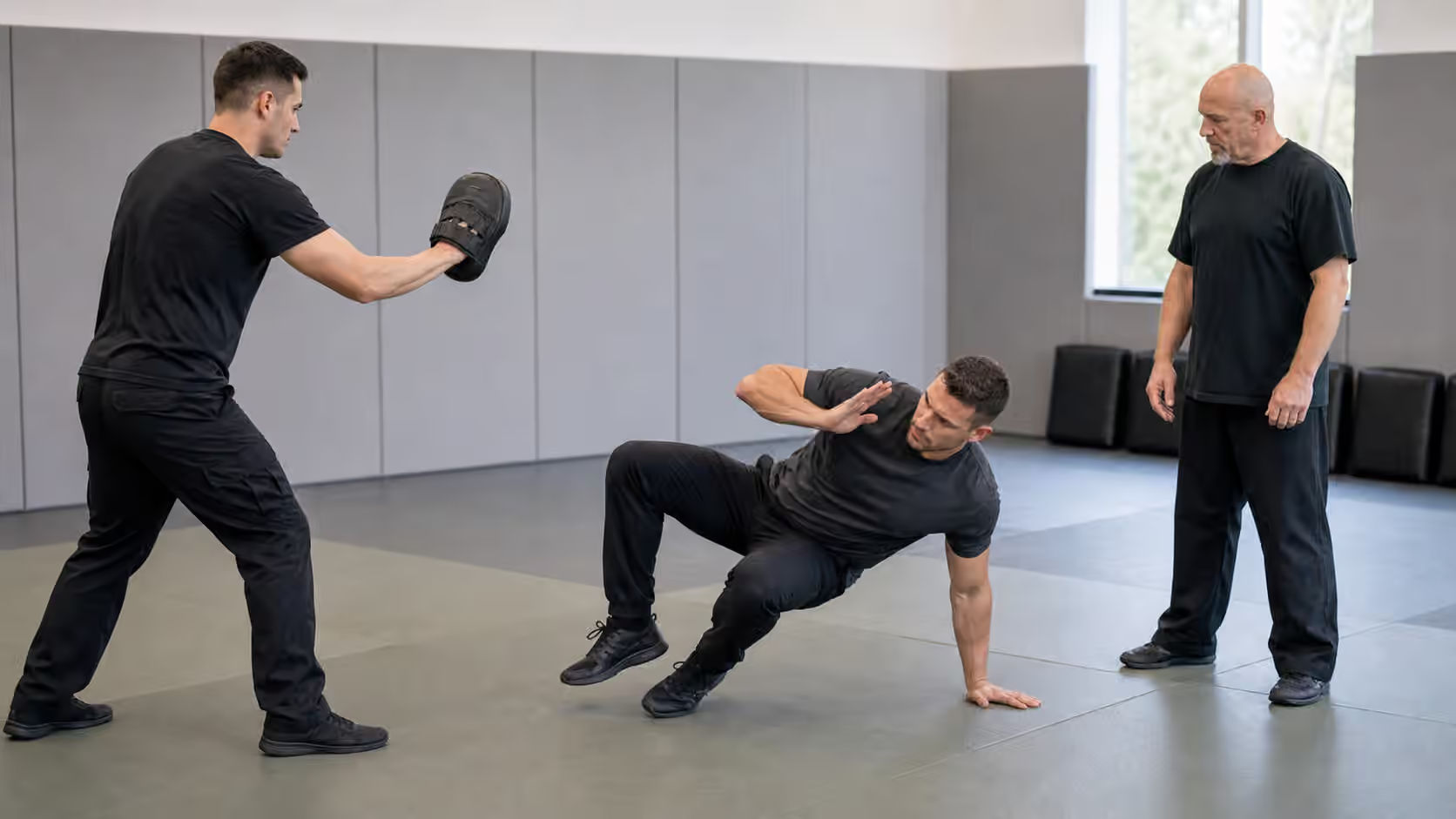
Pads are useful for head-protection work because they can create noise, movement, and pressure without turning a partner’s bare hands into the lesson. A shield can crowd space. Focus mitts can ask the student to cover and return. A soft striking surface can teach the difference between turning away blindly and staying oriented through contact. The pad gives the nervous system a reason to care.
It also creates responsibility. Padwork and Pressure explains that pressure should build capacity rather than panic. That is especially true when the drill is near the head. The feeder must know exactly what they are giving. A shield that bumps the student too hard, too high, or from an unexpected angle can teach fear instead of skill. A mitt held carelessly can clip fingers or invite awkward shoulder positions. The holder is not background equipment. The holder is part of the safety system.
For the defender, the pad should teach attention rather than a reflexive crouch. The student feels pressure, covers, keeps the feet underneath the body, and looks for the next useful action. At slow speed, that next action may simply be an angle step and a reset. At a livelier level, it may be a covered entry to a pad, a clear verbal boundary, or a disengagement after contact. The drill should still have a recognizable lesson. When every repetition turns into a scramble, nobody knows what improved.
Beginners often overvalue toughness in these drills. They want to absorb more force, cover harder, or prove that the pad did not bother them. That impulse should be redirected. The useful question is not whether the student can endure a noisy moment. The useful question is whether they can remain teachable inside it. Can they hear the coach? Can they notice that their feet crossed? Can they lower intensity when the cover falls apart? Can they reset without embarrassment? Those answers tell more about progress than the volume of the pad.
Feet Decide What Happens Next
A head cover that does not include footwork can become a trap. The hands protect the top of the problem while the lower body keeps drifting into worse space. The student backs straight into a wall, squares up against pressure, or steps so narrow that the next bump feels enormous. The cover did part of its job, but the feet did not finish the sentence.
Footwork and Balance sits under this skill as much as it sits under striking. The feet do not need to be fancy. They need to keep the student from leaning into the pad, turning blindly away, or becoming rooted in the first spot where surprise happened. A small angle can matter more than a large retreat. A stable step can matter more than a dramatic cover. The head is easier to protect when the body is not falling away from itself.
This becomes clear near walls, doors, and corners. On an open mat, a student may cover and step back without consequence. Near a wall, the same step can remove the last bit of space. In a doorway, turning too much may hide the exit instead of finding it. In a crowded room, covering with both arms while lowering the eyes may make the student miss the friend, chair, bag, or bystander that changes the next choice.
That is where head protection connects to Environmental Movement in Krav Maga and Crowded Space Awareness . The cover is not a private shape performed inside an empty box. It lives in a room. The student has to know where the room is. A careful class can add soft obstacles, clear exit lanes, and simple wall references without turning the drill into theater. The lesson remains plain: cover long enough to move intelligently, then move.
Close Range Changes the Cover
At close range, head protection becomes more crowded. The student may not have room for a large shell or a clean step. A forearm, frame, shoulder position, and small angle may all matter at once. The hands that protected the head may need to become a frame. The frame may need to become a disengagement. The body has to stay organized while contact is close enough to affect breathing.
Close Range in Krav Maga explains this compressed place in detail. For head protection, the key idea is that the cover should not make the student passive. If the arms rise and then stay glued to the head while the partner keeps crowding, the student has preserved one area while giving away everything else. A frame that creates breathing room may be more useful than a perfect-looking cover that never changes the distance.
This is subtle for beginners because close pressure makes time feel shorter. They may rush out of the cover and expose themselves, or they may stay covered too long and let the partner decide the movement. The answer is not a memorized count. It is coached timing. Feel the pressure. Protect the head. Make enough space to see. Use the feet. Recover the hands. Leave if the drill gives you the lane.
Head protection also asks for emotional restraint. Getting bumped near the head can wake up pride quickly. Students may answer a safe pad touch with an angry strike, a hard shove, or a sudden burst that was not part of the drill. That response may feel honest, but it can damage partner trust. Partner Work in Krav Maga belongs in this conversation because contact near the head requires clear roles, named intensity, and a shared willingness to stop early.
Protect, Recover, Leave
The quiet goal of head-protection training is not to become comfortable being hit. It is to become less disorganized when pressure reaches the head line. The student learns that the hands can rise without panic, that the eyes can keep working, that the feet can still move, and that the next decision matters more than the first startled shape.
A mature cover is temporary. It appears because the moment demands protection, then it changes because the student has found enough information to act. Sometimes the action is voice and distance. Sometimes it is an angle step. Sometimes it is a frame, pad strike, or exit drill. Sometimes it is stopping the class repetition because a partner gave too much pressure or the body needs a reset. All of those choices are more useful than hiding inside tension.
This skill is not glamorous, but it teaches a kind of honesty that Krav Maga needs. The face is vulnerable. Surprise is real. The body does not always perform the clean answer first. A good training room does not deny any of that. It gives the student a way to cover without disappearing, to recover without pretending nothing happened, and to keep looking for the safest way out of the moment.