Many self-defense drills begin with empty hands because empty hands make instruction clean. The student can stand squarely on the mat, see the partner, hear the coach, and move without negotiating with a bag strap, a phone, a takeout cup, a door handle, a child seat, a jacket, keys, or whatever else real life has placed in the way. The clean version is useful, but it can make a beginner forget how often trouble arrives when the body is already busy.
Krav Maga becomes more honest when it includes that ordinary mess. A person leaving a gym may have one hand around a phone and the other in a bag. A person opening an apartment door may be balancing groceries against a hip. A person in a parking lot may have a backpack strap across one shoulder and a car door half open. None of these details is dramatic by itself. Together, they decide how quickly someone can move, whether their eyes are up, whether their balance is narrow, and whether their first choice is still available.
This topic belongs beside Distance, Awareness, and Exit because hands-full situations make distance harder to read and exits harder to use. It also belongs beside Environmental Movement in Krav Maga because the object in your hand often becomes part of the environment. It can help, hinder, distract, or trap. The first skill is not turning every object into a weapon. The first skill is noticing what the object is doing to your choices.
The Object Is Already Making A Choice
Beginners often think of hands-full training as a question of technique. What do I do if someone approaches while I am holding a bag? What do I do if my phone is in my hand? What if I have keys, a water bottle, a coat, or a shopping bag? Those questions are reasonable, but they can lead too quickly to clever answers. Before the answer, there is a quieter truth: the object has already shaped the situation.
A heavy bag pulls one shoulder lower. A phone pulls the eyes downward. A cup makes the hand cautious because nobody wants to spill it. Keys can make the fingers tense. A door handle can anchor the body in place for half a second longer than the person realizes. A backpack strap may make turning feel slower. A loose jacket may hide the position of the hands. A small object may seem harmless until the student notices how much attention it steals.
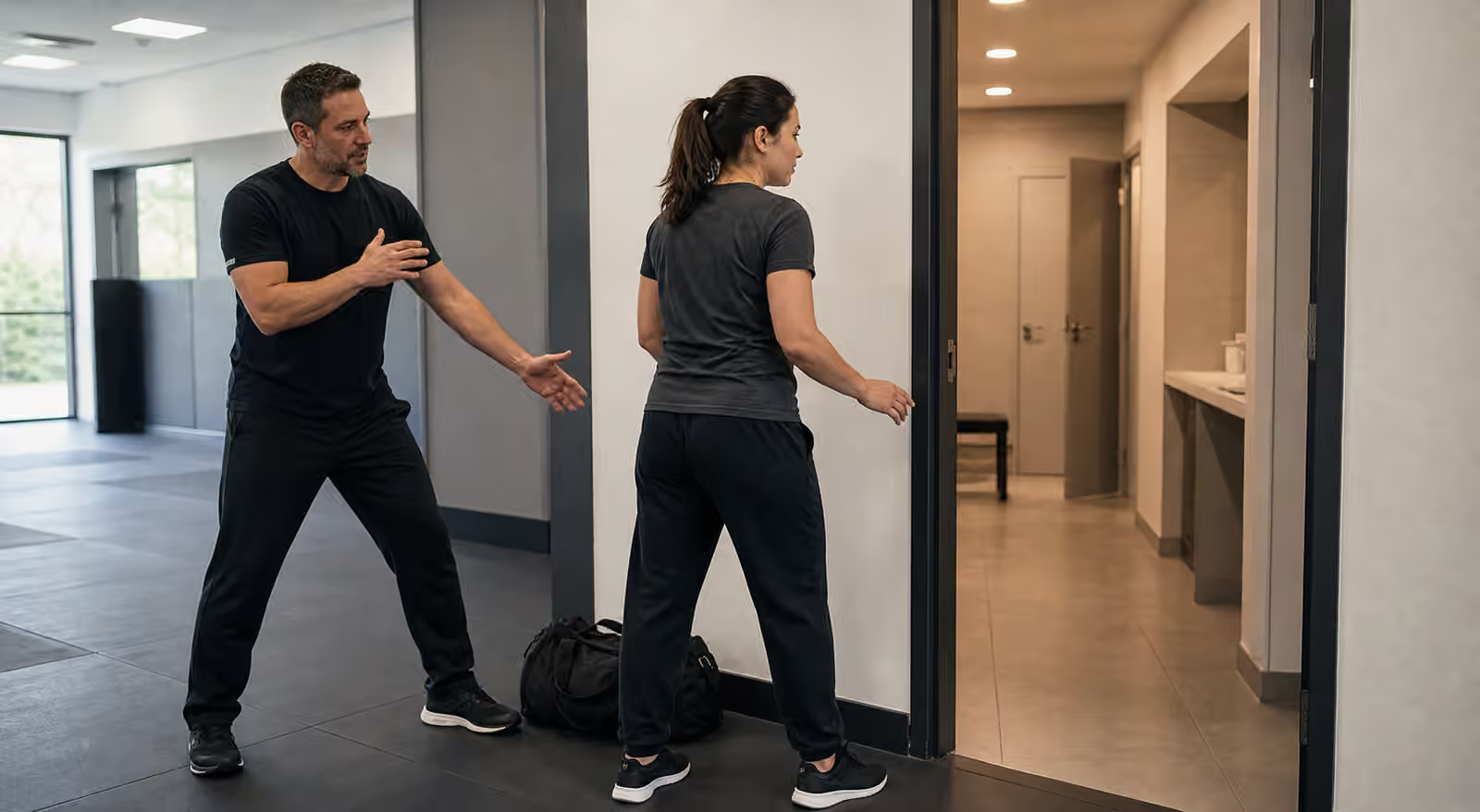
Good training lets students feel that without panic. The instructor might ask a student to walk toward a marked exit while holding a gym bag, then repeat the same movement after setting the bag down. The lesson is not that the bag is bad. The lesson is that the bag changes the body. The shoulder, hip, step length, arm swing, and head position all become information. Once the student can feel the difference, they can make better decisions earlier.
That early decision may be simple. Put the phone away before crossing the lot. Shift the bag from the hand to the shoulder while still inside a safe place. Pause near a doorway instead of working the lock while staring at a screen. Ask a friend to wait. Take the wider path. Leave the cup behind. These are not heroic answers, but Krav Maga is full of useful answers that look boring from the outside.
Phones Narrow The Room
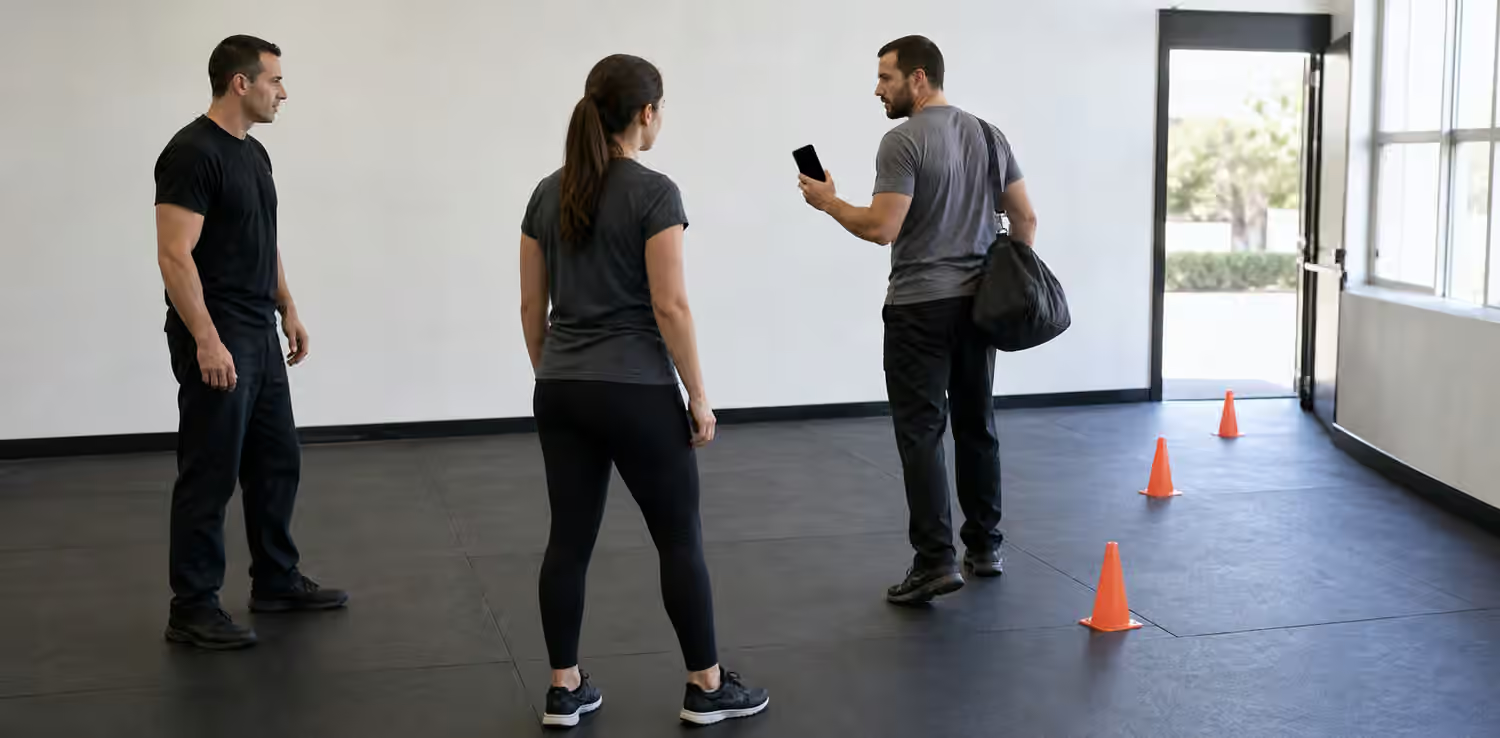
The phone is one of the most common hands-full problems because it does not only occupy a hand. It occupies attention. A student can hold the phone lightly and still lose the room because the screen keeps asking for the eyes. Even when the screen is dark, the hand often treats the device as precious. The body becomes careful with the object and careless with the space.
Training can expose this gently. A blank phone prop in the hand changes posture immediately. Students tend to glance down, keep the elbow close, and forget that the hand is no longer ready to frame, gesture, hold a door, or protect space. If a partner begins closing distance in a controlled drill, the student may try to keep the phone safe before keeping the body organized. That is a useful discovery, not a reason for shame.
The practical habit is not to fear phones. It is to choose when the phone deserves the hand. If the environment feels uncertain, the phone may be more useful pocketed, bagged, or held in a way that does not dominate attention. If calling for help matters, the phone has a purpose, but the student’s feet, eyes, voice, and exit still matter. A call that freezes the body in place may not serve the same goal as a call made while moving toward better light, more people, or a safer doorway.
This connects naturally to De-escalation and Verbal Boundaries . A student may need to speak while holding a phone, but voice should not become a substitute for movement. A calm “I am leaving” means more if the body is actually leaving. A direct request for space means more if the feet are not planted behind a screen.
Bags Pull On Balance
Bags create a different problem. They have weight, swing, straps, zippers, and sentimental value. A person may not want to drop a work bag, purse, backpack, camera bag, or grocery bag because the contents matter. That hesitation is human. It is also something training should address with care. People do not protect property because they are foolish. They protect it because the property may contain identification, medication, tools, money, records, or other parts of ordinary life.
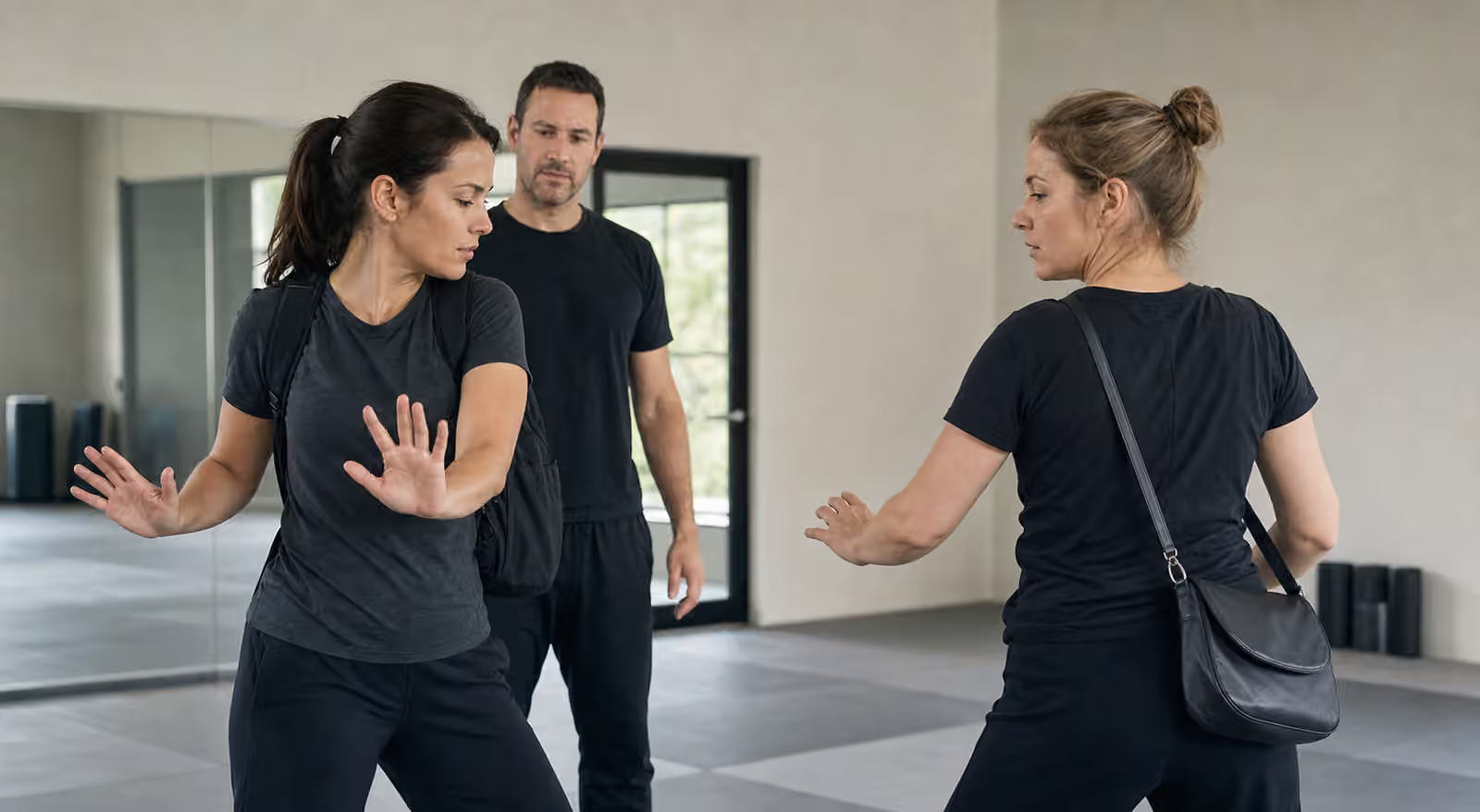
Still, a bag can pull the body into poor decisions. A strap across one shoulder can delay turning. A bag in the hand can widen the arm and expose the ribs. A backpack can bump a wall or doorframe. A grocery bag can split attention between the exit and the fear of dropping something breakable. A student who has never trained with that feeling may be surprised by how quickly an object becomes a tether.
A good Krav Maga class can study bags without turning them into fantasy tools. The drill can begin with a soft training bag that contains nothing hard. The student practices noticing the strap, shifting weight, freeing the hand, setting the bag down, or leaving it behind when the drill calls for movement. The partner stays disciplined and does not yank the bag unless that is the explicit lesson under the instructor’s control. The point is to understand options, not to create a messy tug-of-war.
This is where Krav Maga Training Gear becomes more than a shopping topic. What you bring to class affects how you move around class. Loose straps, hard objects in pockets, dangling jewelry, and overfilled bags can make simple drills clumsy. In daily life, the same principle applies without becoming obsessive. If something changes your balance, blocks a hand, or makes you unwilling to move, it deserves attention before the room becomes urgent.
Doors, Cars, And Narrow Openings
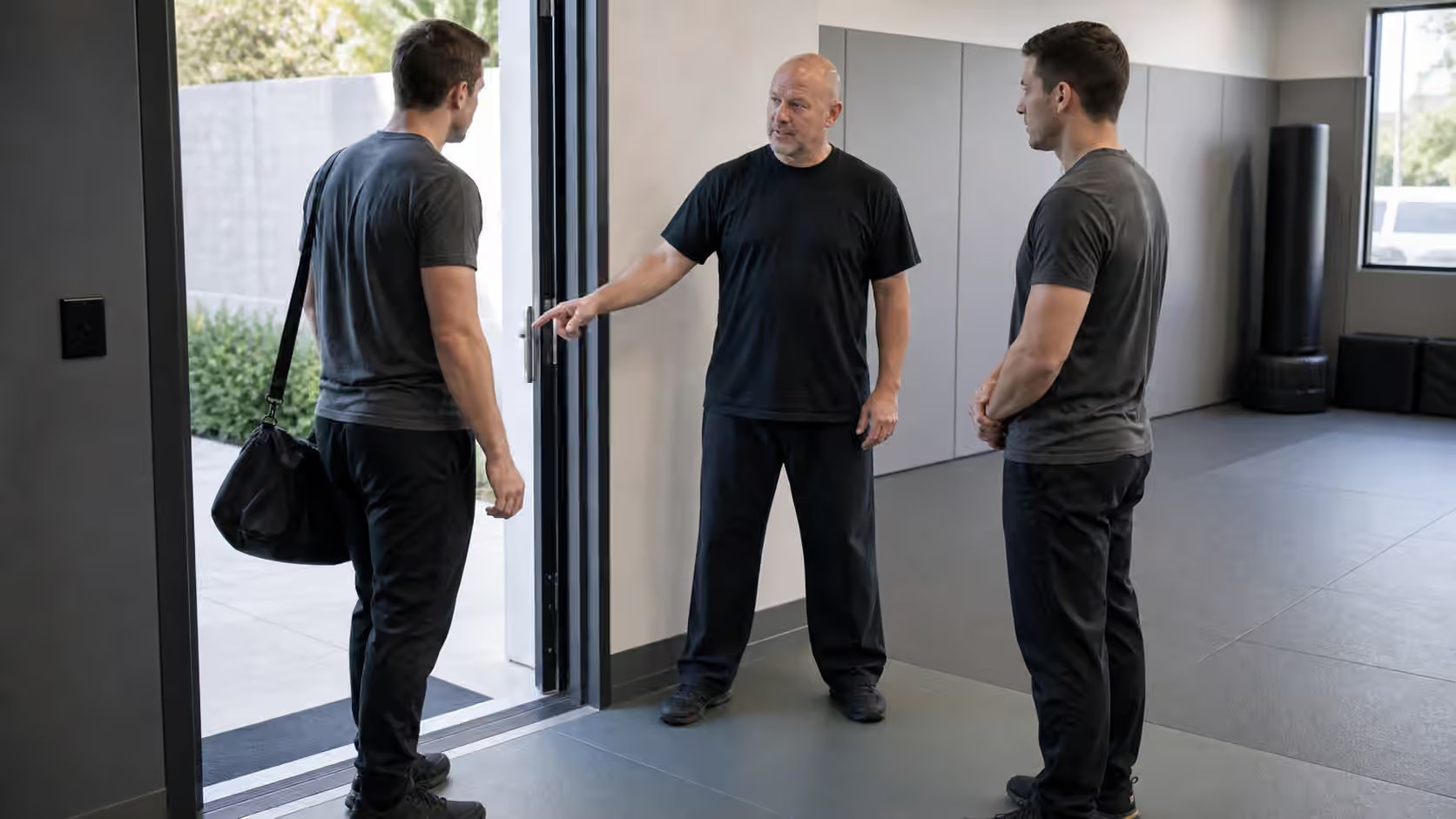
Hands-full situations often happen at thresholds. Doorways, cars, elevators, gates, counters, transit turnstiles, and stairwell doors are places where the body is briefly committed to a task. One hand may be on a handle. The other may hold a bag. The eyes may be on a lock, ticket, phone, keypad, or wallet. The feet may be narrow because the space is narrow. The person may be turned partly away from the room.
That is why thresholds deserve slow practice. A clean mat cannot reproduce every doorway, but it can teach the question. What does my body lose when one hand is anchored? What happens to my balance when I pull a door and step backward? Where does my bag swing when I turn? Can I see the space before entering it, or am I already inside before I look? These questions support the same practical awareness found in Crowded Space Awareness , where the best answer is often moving earlier without making a scene.
Cars add another layer. A car door can be a barrier, a trap, or both. A bag placed on the seat may occupy the hand at the moment the person should be looking around. A phone between the ear and shoulder changes posture. A backpack half removed can catch on the seat or door. Training does not need to create elaborate car scenarios for beginners. It can simply teach students to recognize that opening, loading, and closing are vulnerable moments because attention is split.
The useful habit is a short pause before commitment. Look before you use the key or keypad. Keep the path clear before loading. Do not bury both hands at the bottom of a bag while standing in a place that already feels wrong. If a conversation begins to feel pressured, let the object become less important than distance. None of this guarantees safety. It just gives the student fewer late decisions to make.
Dropping Things Can Feel Harder Than It Sounds
Instructors sometimes say, “Just drop it,” as if the body will obey instantly. Sometimes it will. Sometimes it will not. People hold on to things for reasons that are practical, emotional, or automatic. They do not want to lose the phone. They do not want the bottle to break. They do not want the bag stolen. They do not want to look foolish. They may not even realize they are still holding the object until the drill is over.
That makes dropping a trainable decision. A beginner can practice setting an object down during a calm drill, then practice releasing it more quickly when the instructor adds movement or voice. The class can make the decision ordinary before it becomes urgent. The student learns that letting go is not failure. It may be the action that gives the feet, hands, and eyes back to the body.
The same idea appears in Progress Without Chasing Intensity . Better training is not always louder. Sometimes progress is noticing that you kept the phone in your hand through an entire drill and then choosing differently the next round. Sometimes it is realizing that you protect a bag by freezing, then deciding that the bag does not get to decide your posture. Small discoveries like that travel well outside class.
Props Need Boundaries
Hands-full drills can become silly or unsafe if the room treats props casually. A bag should not contain hard objects. A phone prop should not be a real expensive device unless the drill is so calm that dropping is irrelevant. Keys should not be used in a way that risks scratching partners. Bottles, umbrellas, and other objects should be introduced only when the instructor can explain the purpose and manage the distance.
There is also a mental boundary. This is not a lesson in turning every object into a weapon. Weapon Awareness in Krav Maga warns against fantasy technique collecting, and the same caution applies here. The everyday object is first a responsibility and a constraint. It may help create space in some supervised drills, but the beginner’s larger lesson is still judgment. Can I leave sooner? Can I free a hand? Can I use voice? Can I put a barrier between myself and the problem? Can I stop protecting the object when protecting the body matters more?
Partners also need discipline. A role player should not grab a bag strap unexpectedly, slap a phone prop away, or improvise a chase because the drill feels too easy. Partner Work in Krav Maga applies directly. The feeder gives the agreed problem at the agreed intensity. The defender studies the decision. The instructor keeps the drill from becoming a contest over property.
The Habit That Matters
The best hands-full training does not make students suspicious of every object they carry. It makes them more aware of how ordinary objects affect timing. A phone is not just a phone when it takes the eyes. A bag is not just a bag when it pulls the shoulder. A door is not just a door when it anchors the hand. A cup is not just a cup when the fear of spilling it makes the body stay still.
Once a student sees that, daily life becomes a place to practice calmly. Walk out of a building and notice which hand is free. Approach a car and notice whether the bag is trapping the shoulder. Stand near a doorway and notice whether you can step without crossing your feet. Put the phone away before the transition that needs attention. These small habits match the spirit of Training Between Krav Maga Classes , where practice means paying attention to ordinary movement without pretending the living room is a fight.
Krav Maga often teaches direct action, but direct action begins with available hands, balanced feet, and eyes that are not buried in an object. Hands-full training returns the art to the places where people actually live: doors, cars, counters, sidewalks, gyms, stairwells, and crowded rooms. The quiet goal is simple. Notice what you are carrying. Notice what it costs. Let go when letting go gives you better choices. Move before the object, the doorway, or the screen makes the decision for you.