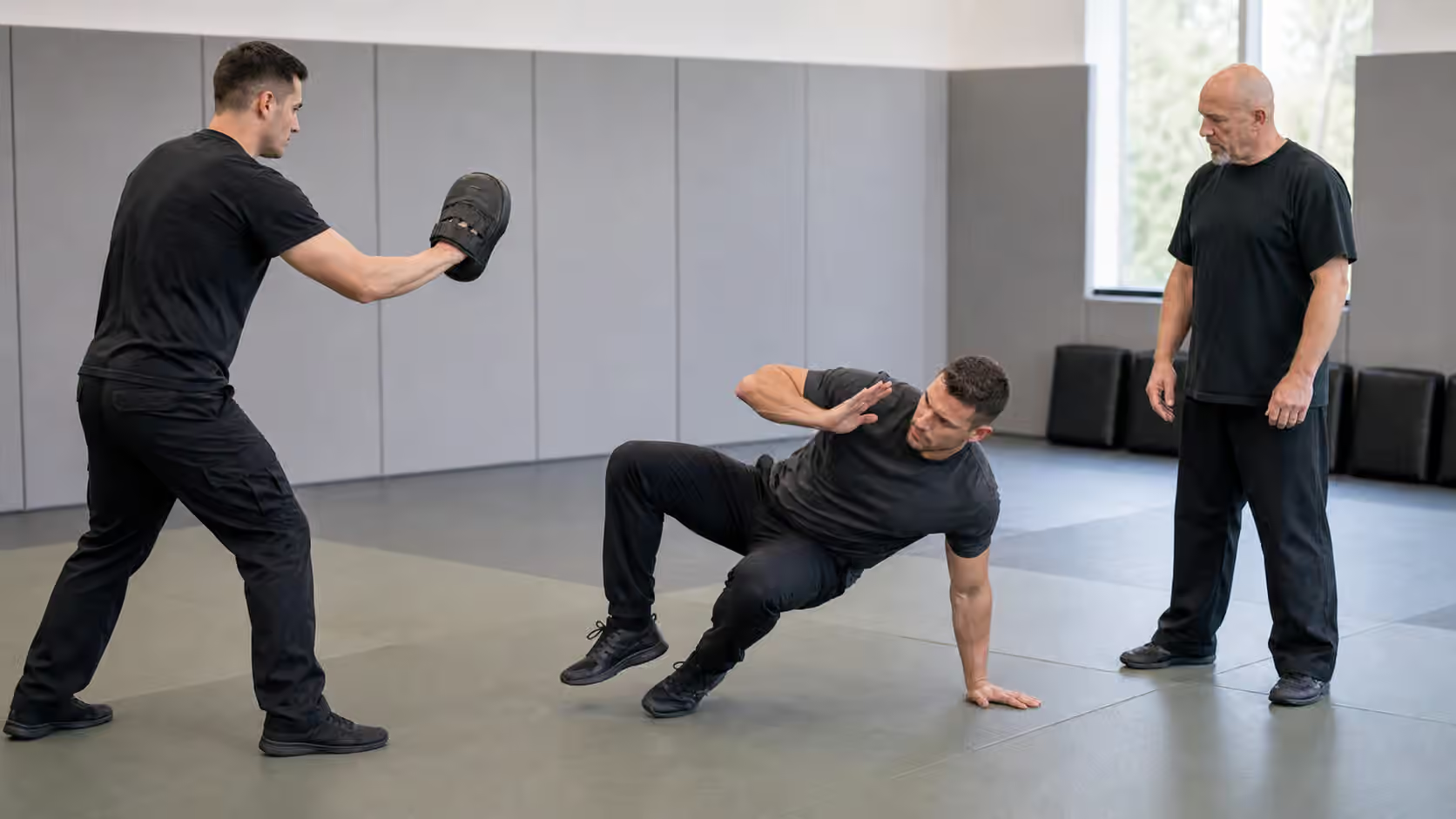
The floor changes the mood of Krav Maga faster than almost anything else. A student who felt calm on their feet may become tense the moment a knee touches the mat. The room seems taller. Partners seem closer. The simple act of standing back up becomes less automatic because the body is suddenly busy protecting joints, finding balance, and deciding where danger might be.
That reaction is worth taking seriously. Ground recovery is not a glamorous topic, but it is one of the places where self-defense training becomes honest. People slip. People are pushed. People trip over curbs, chairs, bags, and their own feet. A beginner does not need to become a grappling specialist to understand that being on the ground is different from being comfortable on the ground.
The goal is not to win a long contest from the floor. In most Krav Maga rooms, the first goal is simpler and more urgent: protect yourself, create enough space to move, orient toward the problem, and get back to a position where leaving is possible. That is why ground recovery connects so naturally to Distance, Awareness, and Exit . Distance does not stop mattering when you fall. It becomes harder to manage, which makes it more important.
The Ground Is Not Just Another Position
It is tempting to talk about the floor as if it were merely a lower stance. That makes training sound tidy, but the body knows better. On the ground, your hips move differently. Your hands may be needed for both protection and support. Your head is closer to hard surfaces. Your ability to turn, retreat, or shield someone else is reduced. If more than one person is present, the problem becomes even more severe.
A good instructor does not use that reality to frighten students. Fear is not a curriculum. Instead, the instructor lets students feel the difference in a controlled way. Stand up, sit down, lie back, turn, post on a hand, move a hip, find the exit lane, and notice how much slower decision-making becomes when the floor is involved. The lesson arrives through the body without needing a dramatic speech.
This is also where humility belongs. Ground recovery does not erase the dangers of concrete, weapons, multiple attackers, poor lighting, alcohol, injury, panic, or surprise. No written guide can make those variables safe. Training can make some movements more familiar and some decisions less late. That is valuable, but it is not a promise.
Falling Is Information
Beginners often treat falling as failure. In class, they apologize when they trip during a drill or lose balance while exiting. Sometimes the apology comes before they have even checked their own body. That habit is understandable, but it misses the point. Falling tells you something about stance, attention, footwear, fatigue, and the environment.
The useful question is not, “How do I never fall?” The useful question is, “What happens in my body when I do?” Some students freeze flat on their backs. Some turn away from the person they should be watching. Some post an arm stiffly and irritate a wrist or shoulder. Some rush to stand and expose themselves because they are embarrassed to be down. None of these reactions makes someone weak. They are ordinary human responses that can be trained carefully.
Good ground practice begins gently. The first repetitions should not be tests of courage. They should teach students how to lower themselves safely, how to move on the mat without panic, and how to stop if something feels wrong. Older students, larger students, hypermobile students, students with old injuries, and students with limited mobility all need room to adapt. Responsible training makes those adaptations normal instead of treating them like interruptions.
That attitude matches the broader safety culture described in Choosing a Krav Maga School . A school that cannot slow down ground work for different bodies is not showing toughness. It is showing poor control over risk.
Standing Up Is A Decision, Not A Race
Many Krav Maga students eventually learn some version of a technical stand-up. Names and details vary by school, but the idea is recognizable: keep attention on the problem, protect the head and centerline, use the floor for support without giving away the body, create space with the legs when appropriate, and rise without turning your back or collapsing your posture.
The shape matters, but the decision matters more. Standing up too early can be as risky as staying down too long. If the person is close, if your balance is broken, if your hands are occupied, or if the exit is not yet open, rushing upward may place your head and neck into danger. If the path is clear and you stay on the ground because you are waiting for a perfect moment, you may give away time you needed.
This is why instructors often make students pause inside the drill. The pause is not hesitation. It is a chance to read the room. Where is the partner? Where is the wall? Where is the open lane? Are your hands free? Can your legs create distance? Is your voice useful? Are you rising into safety or rising into the same problem from a worse angle?
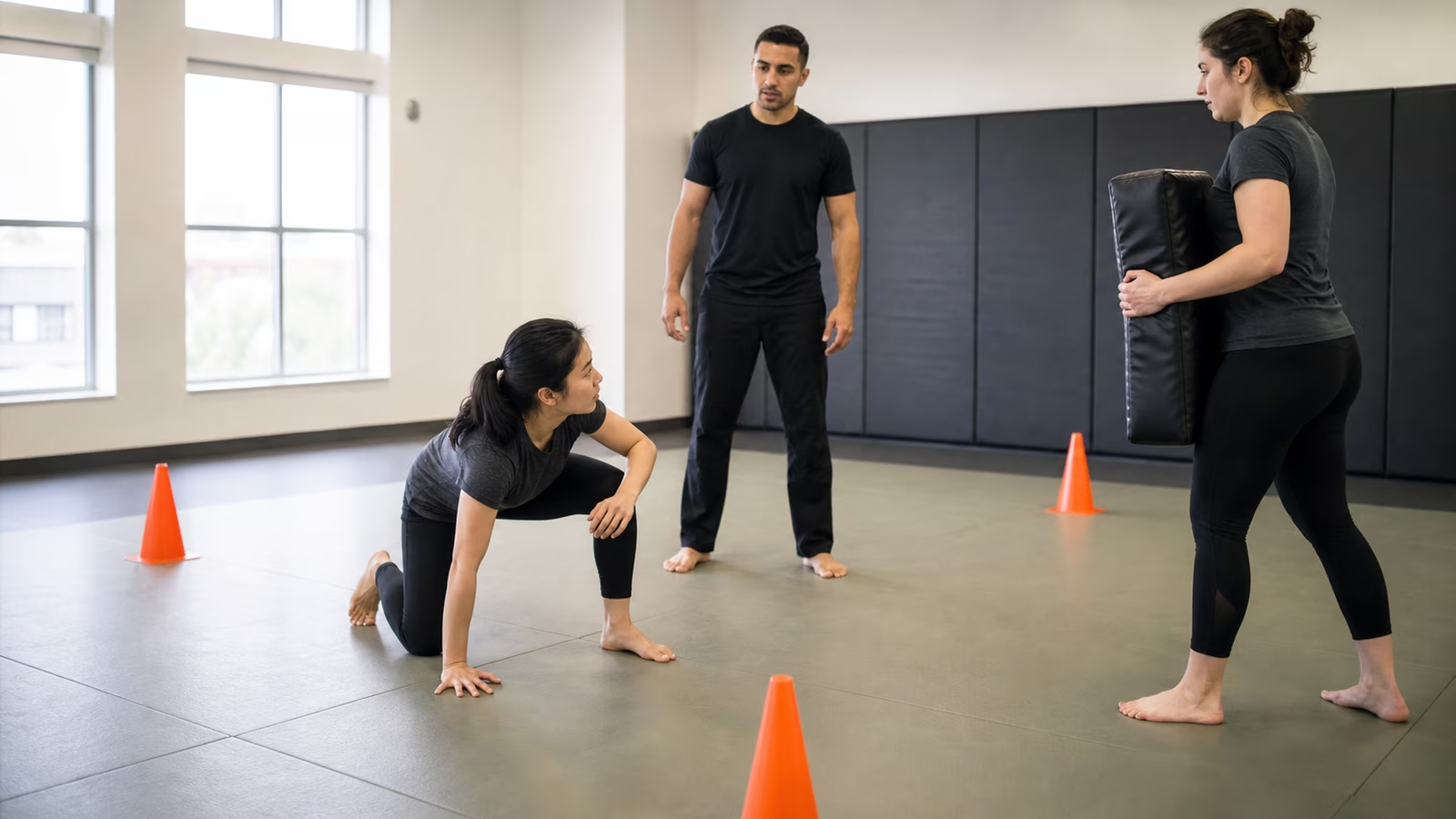
On the mat, the answer may be obvious because cones mark an exit and partners behave predictably. That simplicity is useful at first. Later, the drill can become more alive. A pad holder moves a step. The exit changes. The student has to angle before standing. A verbal command is added. The purpose is not to create chaos. It is to help the student connect movement with judgment.
Hands, Hips, and Eyes
Ground recovery exposes three habits quickly. The first is what the hands do. A nervous student may reach toward the partner, push blindly, or place a palm behind them without looking. Hands are valuable, but they are also vulnerable. A hand on the floor can help the body rise, but it can also become a weak point if the shoulder is loaded badly or the student forgets why the hand is there.
The second habit is how the hips move. A person who tries to sit straight up from the floor often fights their own weight. A person who learns to shift the hips can make space, turn toward the problem, and stand with less strain. This is not about looking athletic. It is about using the body in a way that does not require panic strength.
The third habit is where the eyes go. Many beginners look at the mat when they stand. That feels natural because the floor is close and the body wants certainty. In self-defense training, the eyes also need to keep gathering information. If you stare at your feet, you may miss the partner moving, the exit opening, or the wall arriving behind you.
These habits are small enough to practice slowly and large enough to matter under pressure. They also connect to Padwork and Pressure . Pressure does not only mean hitting harder. It can mean asking the student to keep breathing, keep seeing, and keep making decisions while the body is awkwardly placed.
Partner Pressure Needs Discipline
Ground drills can become careless if the room enjoys intensity more than learning. One student lies down. Another stands nearby with a pad. The instructor says go. Suddenly the standing partner crowds too close, the grounded student kicks without control, and everyone pretends the mess is realism.
That is not useful pressure. A standing partner in a ground recovery drill has a serious job. They provide a problem at the agreed distance and intensity. They do not improvise extra attacks, step on limbs, surprise the grounded student, or turn a beginner drill into a dominance game. The grounded student also has responsibility. They do not kick wildly, grab knees recklessly, or use the other person’s body to prove they are serious.
The instructor should be able to explain exactly what the drill is training. Maybe the lesson is keeping the feet between the body and the pad. Maybe it is rising only after creating space. Maybe it is using voice while seated. Maybe it is finding an exit after a safe pad impact. The clearer the lesson, the easier it is to keep intensity honest.
Stop signals matter here. So do mats, spacing, jewelry rules, pace, and partner selection. A ground drill that ignores those details can create injuries that have nothing to do with self-defense. A good room treats boring safety as part of the art. Boring safety is what lets people train for years.
The Room Has Furniture
The clean mat is only the first classroom. Real environments have furniture, curbs, bags, wet floors, narrow spaces, stairs, gravel, glass, car doors, booth seating, and people who are not part of the problem but still take up space. A mature Krav Maga class does not have to simulate all of that at once. It can introduce environmental thinking slowly.
A simple drill might ask a student to stand with a training bag in one hand, set it down without tangling their own feet, then recover from a seated position while keeping an exit in view. Another might place soft cones near the student’s shoulders to represent a wall or bench. The value is not the prop. The value is the question the prop creates. Does the student notice the obstacle before moving into it?
Daily life offers quiet practice here, without turning anyone into a suspicious person. When you sit in a restaurant booth, notice how you would stand up if someone blocked the aisle. When you set a gym bag down, notice whether it becomes a trip hazard. When you walk on wet pavement, notice the shorter step that keeps balance. This is the same practical awareness encouraged in Training Between Krav Maga Classes . It should make movement calmer, not dramatic.
Getting Up After A Mistake
Ground recovery also teaches emotional recovery. Falling in front of a class can feel embarrassing. So can moving slowly, losing track of the drill, or needing a different version because a knee or wrist does not cooperate. Students sometimes rush because they want the embarrassed moment to end.
That rush is part of the lesson. Self-defense training is full of imperfect moments. You may miss a cue, stumble, hit the pad badly, freeze during a voice drill, or stand too close to a wall. The question is whether you can come back to attention without letting embarrassment drive the next decision.
A good instructor will normalize this. They may say, “Stay with it,” or “Find your base,” or “Look before you rise.” Those cues matter because they replace the student’s private panic with a task. The task does not need to be heroic. Breathe. Protect. See. Make space. Stand when standing makes sense. Leave when leaving is available.
This is one reason a first class should be judged by the room’s response to awkwardness, as much as by the quality of the techniques. Your First Krav Maga Class is not only about what drills appear. It is about whether the school treats ordinary beginner discomfort as part of learning.
The Quiet Goal
The best ground recovery practice does not make students eager to fight from the floor. It makes them less shocked by the floor. It gives them a few familiar landmarks when the body is low, crowded, and under stress. It teaches that standing up is not a reflex to be rushed, but a decision connected to distance, safety, and exit.
Over time, the student begins to feel the difference. They no longer collapse flat when seated. They use their hips more intelligently. They protect their head without hiding their eyes. They stop treating the mat as a place where training has gone wrong. They understand that the ground is another part of the room, one that deserves respect because it makes everything harder.
That respect is the real skill. Krav Maga is often described through forward action, but useful self-defense also includes the unglamorous work of recovering from poor positions. Fall without surrendering your attention. Stand without giving away your balance. Move without forgetting the exit. If ground practice teaches those habits, it belongs in the beginner’s map.