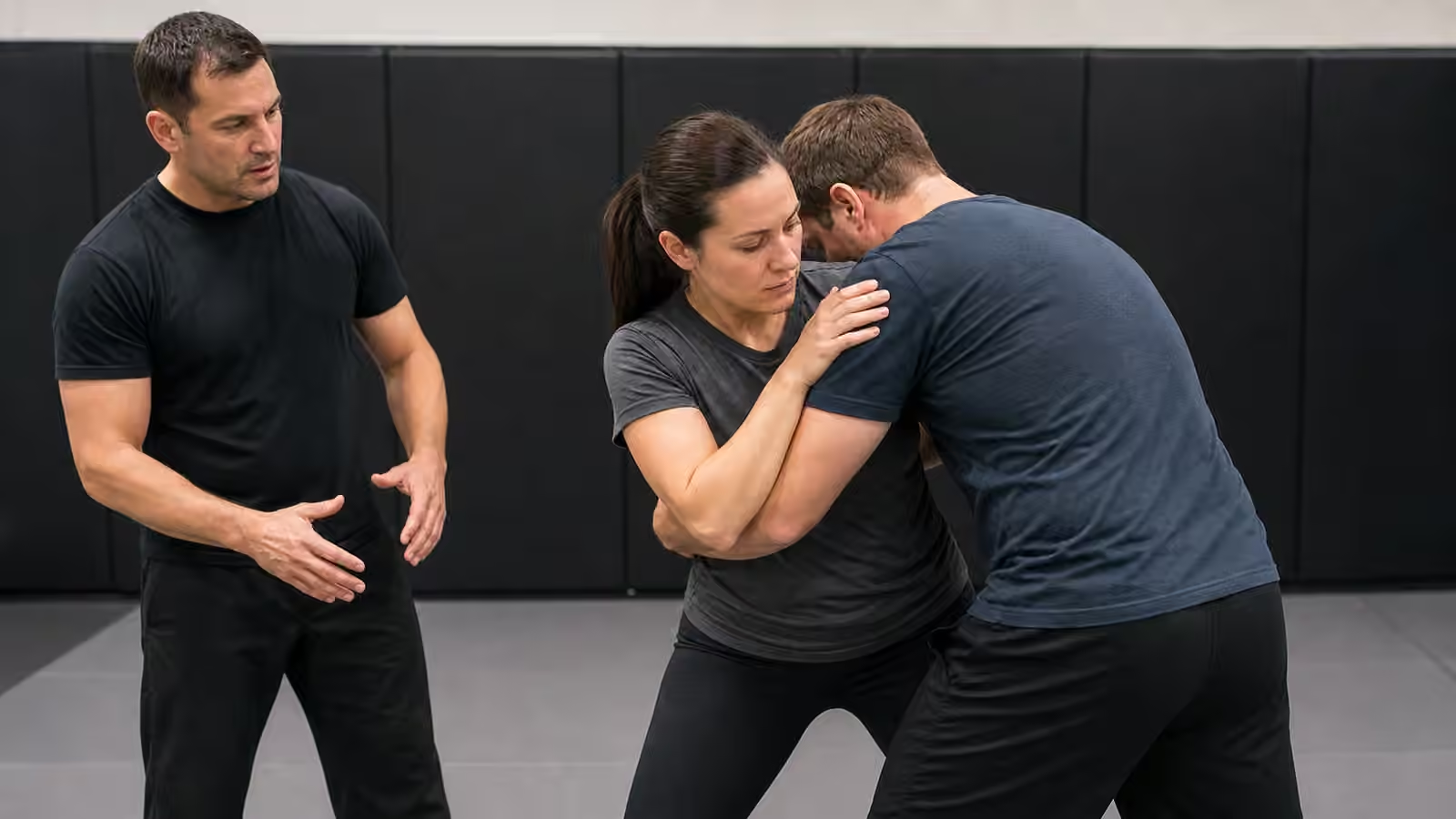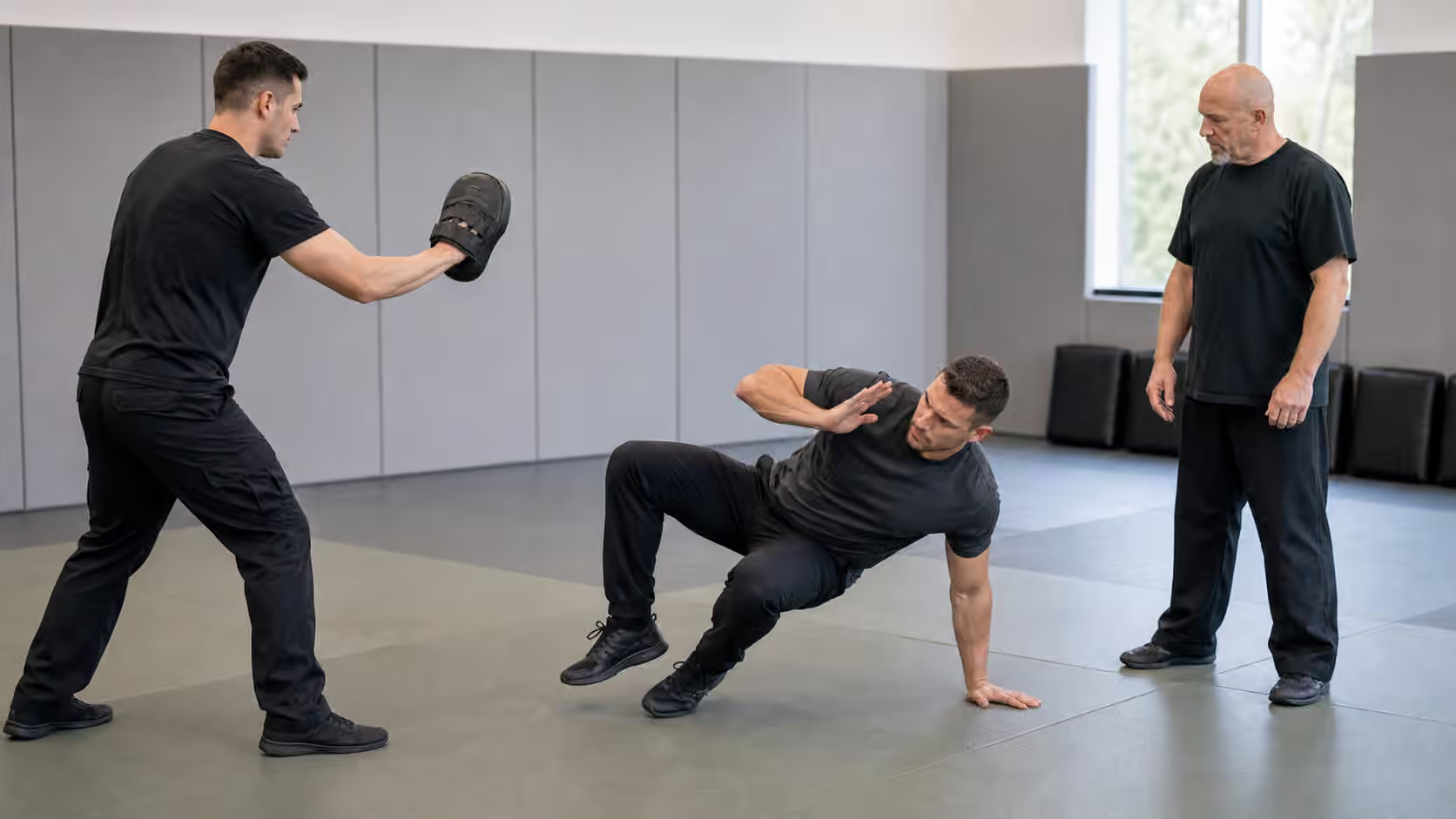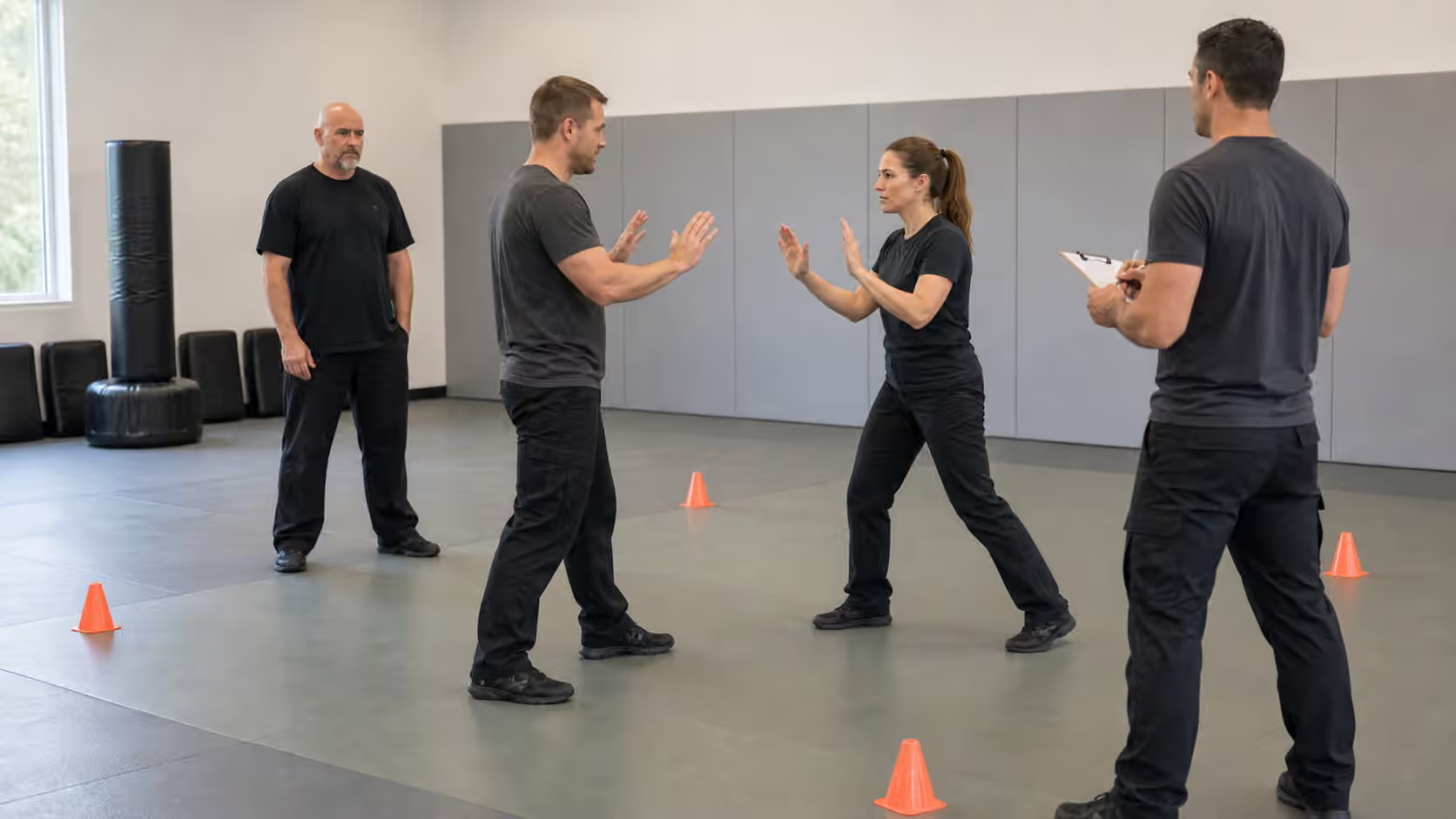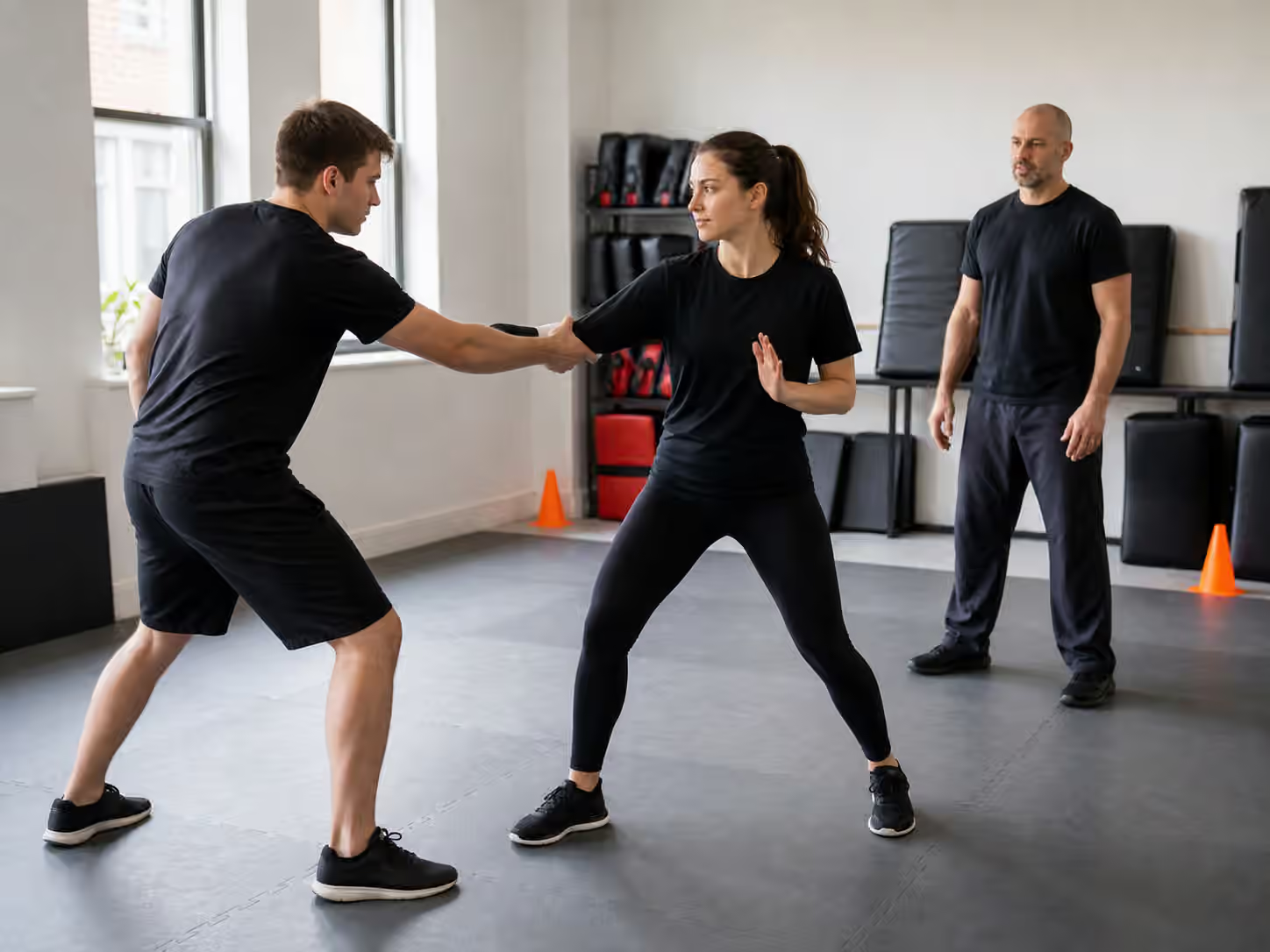
Grabs make self-defense training feel personal in a way that pad strikes often do not. A pad is an object. A grab is another person deciding where part of your body is allowed to go. Even a light hold on the wrist can create a small burst of alarm, especially for a beginner who did not expect the emotional difference between contact and impact. A shirt grip can feel more serious than it looks because it reaches into balance, breath, pride, and personal space at the same time.
That is why grab-release training deserves more than a quick technique demonstration. The important lesson is not that every wrist hold has a clever answer or that every clothing grab can be solved by memorizing a shape. The deeper lesson is that a student can learn to stay organized when contact tries to make them rush. They can feel the hold, recover posture, protect their balance, use voice when it helps, create space when it appears, and leave instead of turning the grip into a private contest.
This page sits between several existing skills. Distance, Awareness, and Exit teaches why earlier movement matters. Close Range in Krav Maga explains what happens when space collapses. Partner Work in Krav Maga gives the culture that makes contact practice repeatable. Grab-release training borrows from all three. It begins with the simple fact that the hold itself is rarely the whole problem. The problem is what the hold does to your options.
A Grab Is A Message, Not Just A Grip
Beginners often look down at the hand that is holding them. That makes sense. The grip is visible, specific, and annoying. The body wants to solve what it can see. But a grab is not only a hand on a wrist, sleeve, lapel, collar, backpack strap, or forearm. It is also a message about distance, intent, and timing. The person has crossed into contact range. They may be trying to stop you from leaving, pull you closer, turn you, distract you, control property, or make a threat feel more convincing.
Training becomes more useful when the student learns to ask what the grab is doing before they chase the hand. A light wrist hold from a stationary partner in class may be a way to study body mechanics. A hard shirt grip near a wall may be a balance problem. A sleeve grab in a crowd may be a question about where your companion is and whether the exit has closed. A two-handed pull may require a different level of urgency than a single loose touch from someone who is confused or intoxicated.
This does not mean pausing forever to analyze the scene. It means letting the body learn that the first visible detail is not always the first priority. If your feet are crossed, your chin is lifted, and your shoulders are tense, the grip may feel stronger than it is. If your balance returns, the same grip may become information instead of a command.
The First Skill Is Not Panicking Into The Hold
Many students respond to a grab by pulling straight back. The instinct is understandable. Something has taken space, so the body tries to reclaim that space by force. Sometimes the pull works against a weak grip in a cooperative drill. Sometimes it makes the situation worse. The person holding you may tighten, pull harder, step with you, or use your backward lean to break your posture. The more your attention narrows to the captured wrist or fabric, the less you see the room around it.
Good training slows this impulse without shaming it. The instructor may ask students to feel the difference between yanking backward and returning to a stable base. They may show how a small turn of the body changes pressure more than a large tug from the arm. They may remind students to look at the whole person, not only the hand. The exact mechanics belong in class, under a coach who can see the bodies involved. The principle is easier to name: do not let the grab shrink you to the part being held.
Footwork and Balance matters here because a grab often tests the feet before it tests the hands. If the student is leaning away, standing too narrow, or stepping blindly, even a modest hold can feel dominant. If the student softens the knees, brings the weight back under the hips, and keeps a path to move, the grip no longer gets to write the whole story.
Clothing Grabs Change The Feeling Of Distance
A wrist grab is direct. A clothing grab can be stranger. The person may have the shirt, jacket, hoodie, lapel, strap, or sleeve instead of the body itself. Because fabric moves, the student may feel delayed pressure. The hand pulls the shirt, the shirt pulls the shoulder, the shoulder pulls the posture, and only then does the student understand that balance is changing. That delay can make people either underreact or overreact.
Clothing also has emotional weight. A collar grip near the throat may feel threatening even before it applies much force. A sleeve grab can feel childish in one setting and serious in another. A backpack strap can turn an attempt to leave into a sudden tether. A loose hoodie or open jacket can give a partner more material than the student expected. None of this requires paranoia about clothing. It simply means class should let students notice how everyday garments change contact.
Gear choices connect naturally to this topic. Krav Maga Training Gear already notes that clothing and equipment should support training rather than become a costume. For grab work, that means avoiding jewelry, loose accessories, hard objects in pockets, and straps that can catch awkwardly during beginner drills. It also means understanding that a school may use older shirts, training jackets, or specific grip rules to keep the lesson controlled.
The purpose is not to become precious about fabric. It is to realize that fabric can transmit force poorly or suddenly, and that the student should not be surprised by either. A good drill might let a partner hold a sleeve lightly while the defender practices posture and stepping. Later, the pressure might become more committed. The progression matters. Students need time to distinguish a harmless training grip from a hold that is changing their balance.
The Release Is Only Useful If It Leads Somewhere
One of the traps of grab-release training is treating the release as the finish. The partner grabs. The defender performs a movement. The hand opens. Everyone resets. That can be a useful early laboratory, but it can also teach a bad habit if the student freezes at the moment of success. In practical training, a released wrist or shirt should lead to a better position.
The next position might be a step back, an angle, a verbal boundary, a frame, a path around a chair, or a quick return to distance. It might be leaving the room. It might be getting between a companion and the person who grabbed, if that is the safest available choice. It might be calling for help or drawing attention. The release matters because it gives the student a chance to make one of those decisions.
That is why De-escalation and Verbal Boundaries belongs in the same conversation. A grab does not automatically erase the usefulness of words. A clear “let go” may not solve the problem, but it can communicate, draw attention, and mark the boundary. A calm “I am leaving” while stepping to an exit may be more useful than a dramatic command that keeps the student planted in place. Voice and movement should support each other, not compete for attention.
In class, instructors can make this visible by giving the release a destination. The student does not simply free the hand and admire the result. They free it, regain posture, move to a safer line, and continue scanning. The drill should teach that escape from the grip is not the same as escape from the situation.
Partners Have To Hold With Purpose
Grab training depends heavily on the feeder. A sloppy partner makes the defender practice against noise. A careless partner makes the room less safe. A useful partner gives the agreed grip, pressure, direction, and timing long enough for the defender to learn the lesson. They do not clamp down harder because their ego woke up. They do not twist joints, yank suddenly, change hands, or add a shove unless the instructor has made that layer part of the drill.
This is especially important with wrist holds. Wrists are small structures, and people vary widely in mobility, strength, previous injuries, and pain tolerance. A grip that feels ordinary to one partner may feel sharp to another. Training Around Injuries and Limits should be read beside any grab curriculum because students need language for old wrist, shoulder, neck, and back issues before contact begins. A responsible class makes modification normal. A student can practice the principle with a lighter grip, a sleeve hold, a slower start, or a different role.
Safety Signals and Stopping Early also matters. A release drill should stop quickly when someone says stop, when a joint feels wrong, when the defender loses track of the assignment, or when partners drift too close to another pair. The room does not become more realistic by ignoring those signals. It becomes less teachable.
Good feeders also resist the urge to coach every repetition. If a grip is wrong for the drill, they can ask the instructor. If the defender looks lost, they can reset patiently. If the pressure is too much, they can lower it without turning the moment into an apology performance. The best partners make the grip accurate enough to learn from and modest enough to repeat.
Grabs Create Emotional Pressure
The emotional side of grab training is easy to underestimate. Some students dislike wrist holds because they feel trapped. Others dislike shirt grabs because they feel confrontational. Some become angry. Some laugh. Some go quiet. A beginner may discover that a light grip from a friendly partner still wakes up a strong private reaction. That reaction is not a flaw in the student. It is part of the reason the topic needs care.
Breathing and Stress Recovery gives a practical frame for this. The student is not trying to pretend the contact feels pleasant. They are trying to come back quickly enough to keep learning. One breath, one look at the partner, one return to stance, and one clear exit can turn the repetition from a panic loop into a training moment.
The instructor’s language matters here. If the room treats every grab as a crisis, students may become flooded before they learn anything. If the room treats every grab as harmless, students may feel that their honest discomfort is being dismissed. The better middle path is to say that grabs can feel intense, that training should progress carefully, and that the goal is not to become numb. The goal is to become functional.
Resistance Should Arrive Late Enough To Teach
There is a place for resistance in grab-release training. A student should eventually feel that some people hold tightly, move, pull, or refuse to cooperate. But resistance should arrive after the student understands the purpose of the drill. If resistance arrives too early, the beginner may learn only to struggle harder. The room becomes a strength contest with martial arts vocabulary.
A better progression begins with clarity. The partner holds in the assigned way. The defender feels the line of pressure. The instructor corrects posture, angle, timing, and exit. The same problem repeats until the body can recognize it without panic. Then pressure increases gradually. The partner may pull slightly, change the rhythm, or continue moving after the first release. The defender learns that the principle must survive motion, not just a still photograph.
This connects to Padwork and Pressure , even though no pad may be involved. Pressure is useful only when it has a job. If the job is to test whether the student can keep balance while freeing a sleeve, then the partner should not also add surprise, insults, extra grips, and a chase. Each layer should answer a question the instructor actually wants the student to study.
The Habit That Travels Outside Class
Grab-release training should not make a person eager to prove they can escape holds. It should make them less surprised by contact and more committed to earlier choices. If someone is moving too close, you do not have to wait for a grip to justify leaving. If a conversation is narrowing, you do not need to let it become a shirt grab before using voice. If a crowded doorway gives you no room, you can angle earlier. The best release is often the one that was never needed because distance and judgment did their work first.
For the moments that do become physical, the useful habit is modest and strong. Do not stare only at the hand. Do not let the grip pull your posture apart. Do not turn every hold into a tug-of-war. Feel the pressure, recover your base, use the opening, and move toward a safer position. If the hold is part of a larger threat, treat it as part of the whole scene. If it is a training grip, respect your partner enough to practice with control.
That is the quiet value of grab-release work. It takes a common, unsettling form of contact and gives the student a way to stay present. The wrist, sleeve, or collar may be the place where the drill begins, but it is not where the lesson ends. The lesson ends when the student has space again, breath again, eyes on the room again, and the discipline to leave instead of proving that the release worked.