Freezing is one of the least glamorous subjects in self-defense training, which is exactly why it deserves attention. Students like to imagine that danger will make them sharper. Sometimes it does. Sometimes the body gets loud, the hands move, the voice appears, and the feet find space. Other times the body goes still. The mind keeps watching, but the next action does not arrive.
That moment can feel embarrassing in class. A partner steps in. A pad appears. A role player raises their voice. The student knows they are supposed to move, speak, cover, angle, or leave, but the body pauses as if waiting for a missing instruction. The pause may last less than a second, or it may stretch long enough for everyone in the room to notice. Either way, the useful question is not why the student failed. The useful question is how training helps the student come back.
Startle Response in Krav Maga looks closely at the first second. Freezing belongs near that guide, but it is not the same subject. Startle is the spark. Freezing is what happens when the spark does not turn into a useful next choice. A beginner does not need shame around that. They need a practical bridge from shock to action.
Freezing is information, not a verdict
A freeze in training tells the instructor something about load. Maybe the drill was too complicated. Maybe the student did not understand the goal. Maybe fatigue made the body late. Maybe the role player crowded too fast. Maybe the student has never used a clear voice in front of others. Maybe a previous correction made them cautious. Maybe they are simply new, and the room is asking for too many decisions at once.
None of those possibilities make the student weak. They make the drill worth adjusting. Krav Maga often attracts tough language, but tough language is not the same as useful coaching. A student who freezes and then gets mocked may learn to hide, rush, or avoid questions. A student who freezes and gets a clean reset may learn exactly the missing piece.
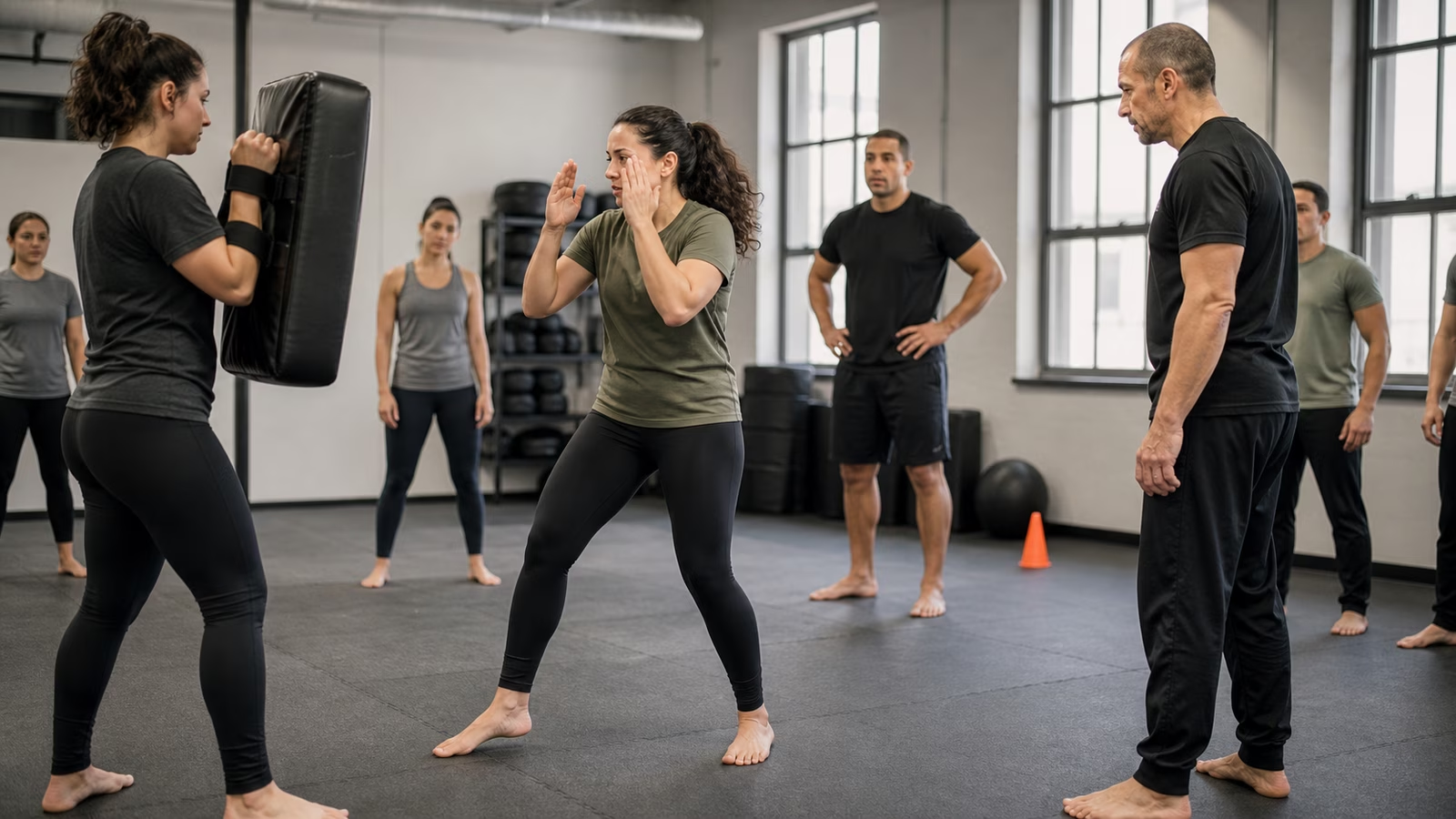
The reset should be concrete. Return to stance. Breathe. Bring the hands back to a natural protective position. Find the exit lane. Say one clear sentence. Move one step. The instructor does not need to explain the entire nervous system in the middle of the mat. The student needs a small action that proves the moment is not over.
The body needs fewer choices at first
Beginners often freeze because the drill gives them a menu instead of a job. They are told to watch the hands, protect the head, move to the outside, use voice, strike the pad, check the exit, avoid the wall, and remember the follow-up. All of those details may be valid, but a new student cannot hold them at full speed under pressure.
Good training reduces the decision. The first assignment might be only to step off the line and raise the hands. The next might add voice. The next might add a pad touch. The next might ask the student to leave after the contact. Skill grows because the choices are layered, not because the student is buried under the whole subject at once.
This is the same discipline behind Progress Without Chasing Intensity . Intensity can reveal a freeze, but intensity alone does not fix it. The fix is better structure, clearer cues, and repetitions that teach the body what to do when the mind briefly stalls.
Breath is a handle, not a magic answer
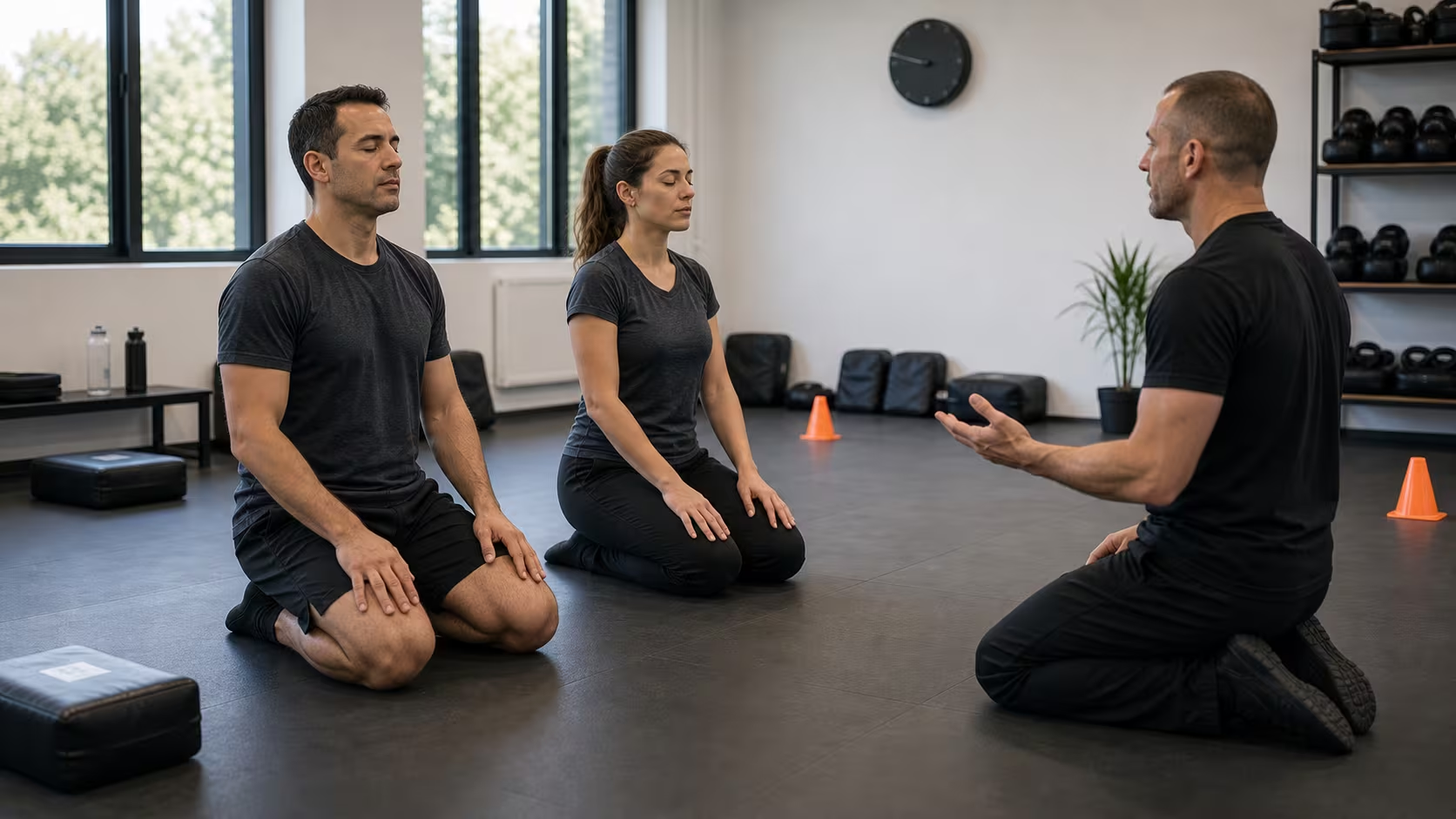
People sometimes talk about breathing as if it solves everything. It does not. A breath will not create distance by itself, change the behavior of another person, or make a dangerous space safe. But breath can give the student a handle when the body locks. A small exhale can soften the shoulders, lower the hands from a stiff hover, and restart movement.
The useful version is plain. Exhale, hands up, step. Exhale, speak, move. Exhale, look for the exit. The breath is tied to an action, not treated as a private ritual while the situation continues. Breathing and Stress Recovery covers the broader recovery pattern, especially after pressure drills. Freeze recovery borrows that pattern and compresses it into the moment when the next choice has to return.
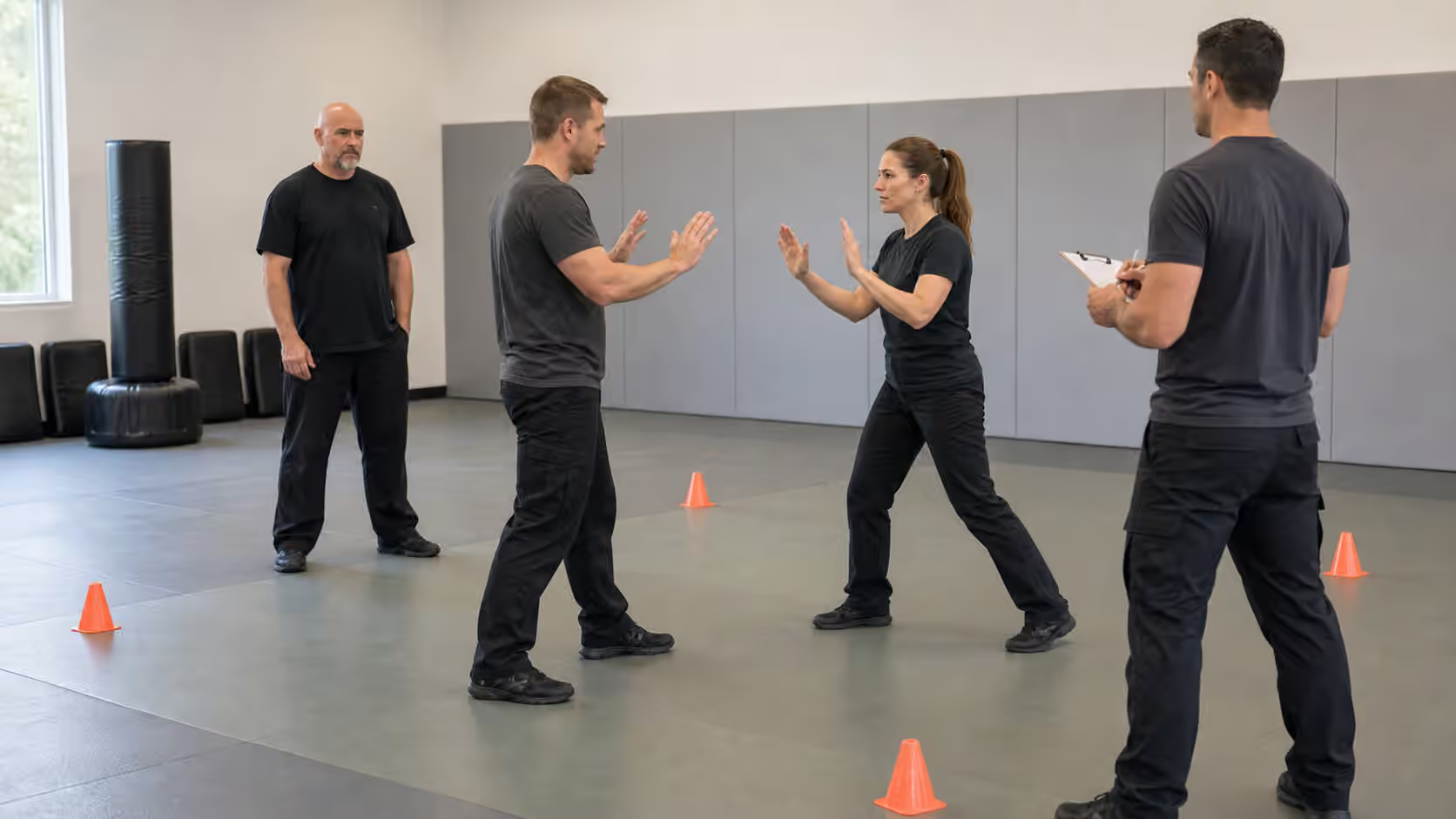
Students can practice this slowly. A partner gives a mild cue. The defender notices the pause, exhales, brings the hands to a useful place, and takes one assigned step. The partner does not punish the pause. The instructor watches whether the student can restart without rushing. Over time the pause may shorten. More importantly, the student learns that a pause does not have to become surrender.
Voice can restart the body
Voice is often treated as something that happens after confidence appears. In training, it can work the other way. A clear sentence can help confidence appear because it gives the body direction. “Back up.” “Stop.” “I am leaving.” “Give me space.” The words do not need to be clever. They need to be available.
Some students freeze hardest in verbal drills, not physical drills. They can hit pads, but they feel embarrassed telling a partner to stop. That embarrassment is worth training because public conflict often begins with social pressure. A person may not need a perfect combination. They may need permission to make an ordinary boundary audible.
De-escalation and Verbal Boundaries belongs here because voice is not only volume. A boundary that sounds insulting may escalate the room. A boundary that sounds apologetic may not reach the person who needs to hear it. Freeze recovery asks for a middle ground: plain words, visible hands, balanced feet, and movement toward space.
Do not turn freeze training into ambush theater
Because freezing is dramatic, some schools try to train it with surprise, shouting, and sudden chaos. That can create stories, but stories are not always skill. A beginner who is startled hard before they have a reset plan may simply learn that class is unpredictable. They may get better at bracing against the school instead of better at solving the problem.
Responsible pressure has a frame. Students should know the purpose of the drill, the level of contact, the stop signal, and what success looks like. Surprise can be introduced carefully, but it should not replace coaching. Scenario Training and Ethics is useful here because freeze training touches trust. Students should not be humiliated for a nervous-system response that the class is supposed to study.
The role player also matters. A feeder who overwhelms the defender with extra speed, insults, resistance, and unclear cues may cause freezing without teaching recovery. A disciplined feeder gives just enough pressure to expose the gap, then stays inside the assignment so the defender can build the missing bridge.
After the freeze, debrief the right thing
The debrief should avoid turning the student into the problem. “You froze” is not enough. The better questions are more specific. What did you notice first? What did you lose? Did your hands disappear, your breath hold, your feet cross, your eyes drop, or your voice vanish? Was the exit visible? Was the assignment clear? Did the role player stay inside the drill?
Those questions point toward training. If the hands vanished, start with open-hand posture. If the feet crossed, return to footwork. If the student did not see the exit, simplify the room. If the voice vanished, practice one sentence at lower intensity. If fatigue created the freeze, adjust pacing. Using Corrections in Krav Maga explains how feedback becomes useful when it is specific enough to carry into the next round.
This kind of debrief also protects the class culture. Students need to see that freezing can be discussed without ridicule. That makes training more honest. People stop pretending every round was fine and start noticing the actual gaps. A room that can admit freezing can improve it.
Recovery is the skill
The goal is not to become a person who never freezes. That promise would be too neat for real pressure. The better goal is to become a person who recognizes the pause sooner and has a practiced way back. Hands. Breath. Voice. Step. Exit. A small sequence can keep the body from waiting for a perfect answer.
Krav Maga is often introduced through action, but recovery is action too. Coming back after a stuck moment is a trained behavior. It can be quiet, visible only to the student and a careful instructor, but it may matter more than the loudest round of padwork. A student who can restart after freezing has learned something durable: the first shock does not get the final vote.