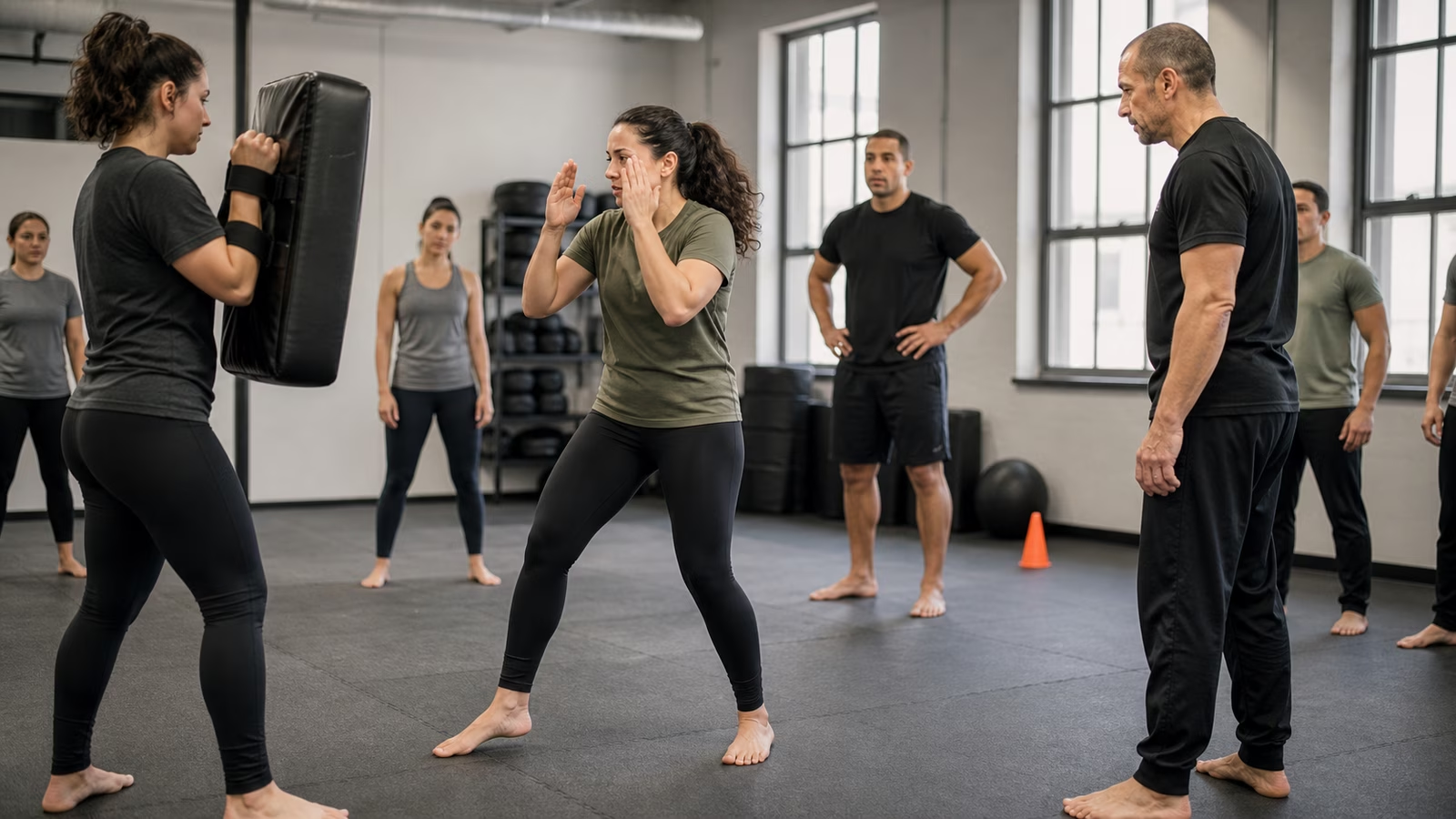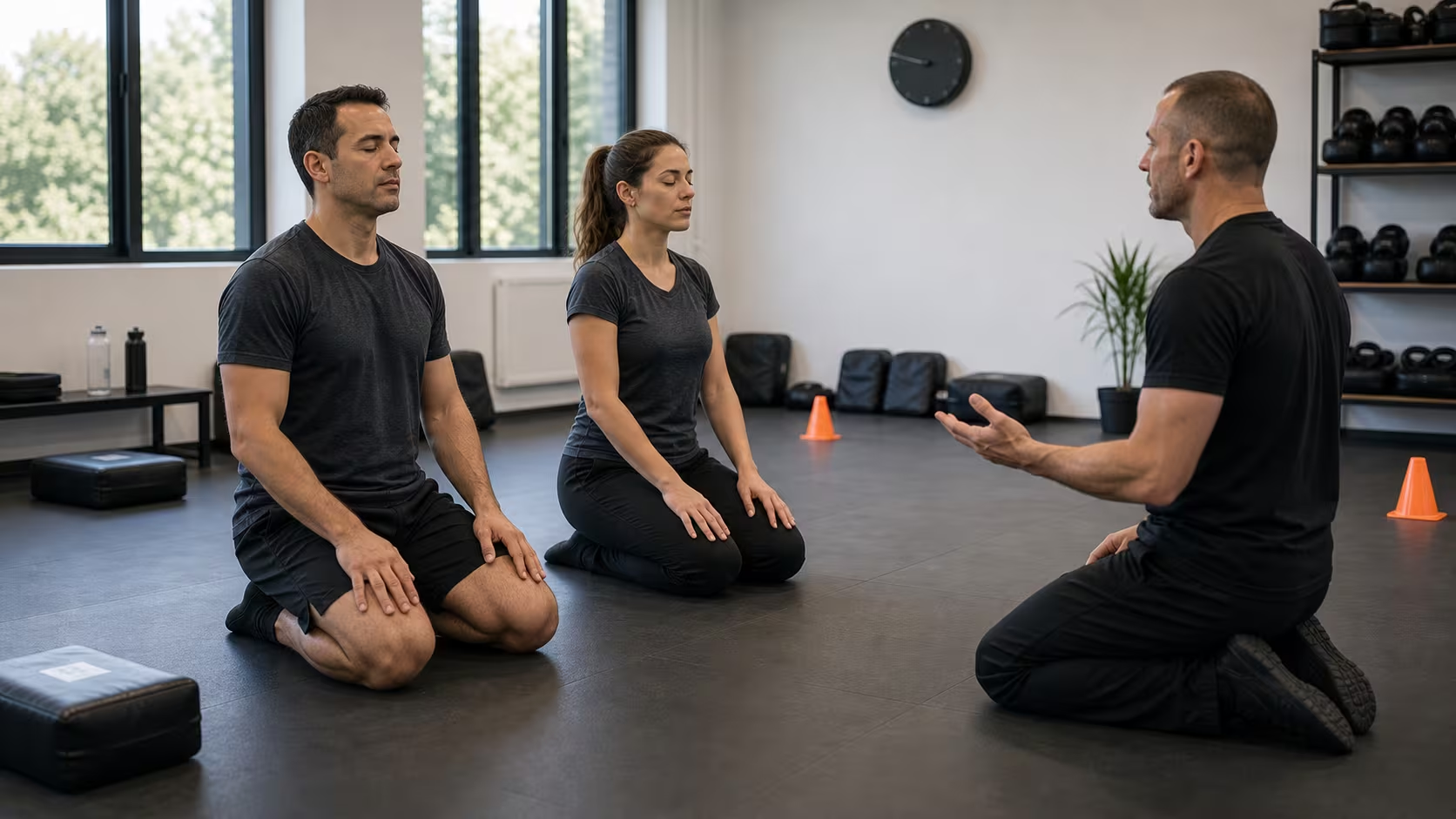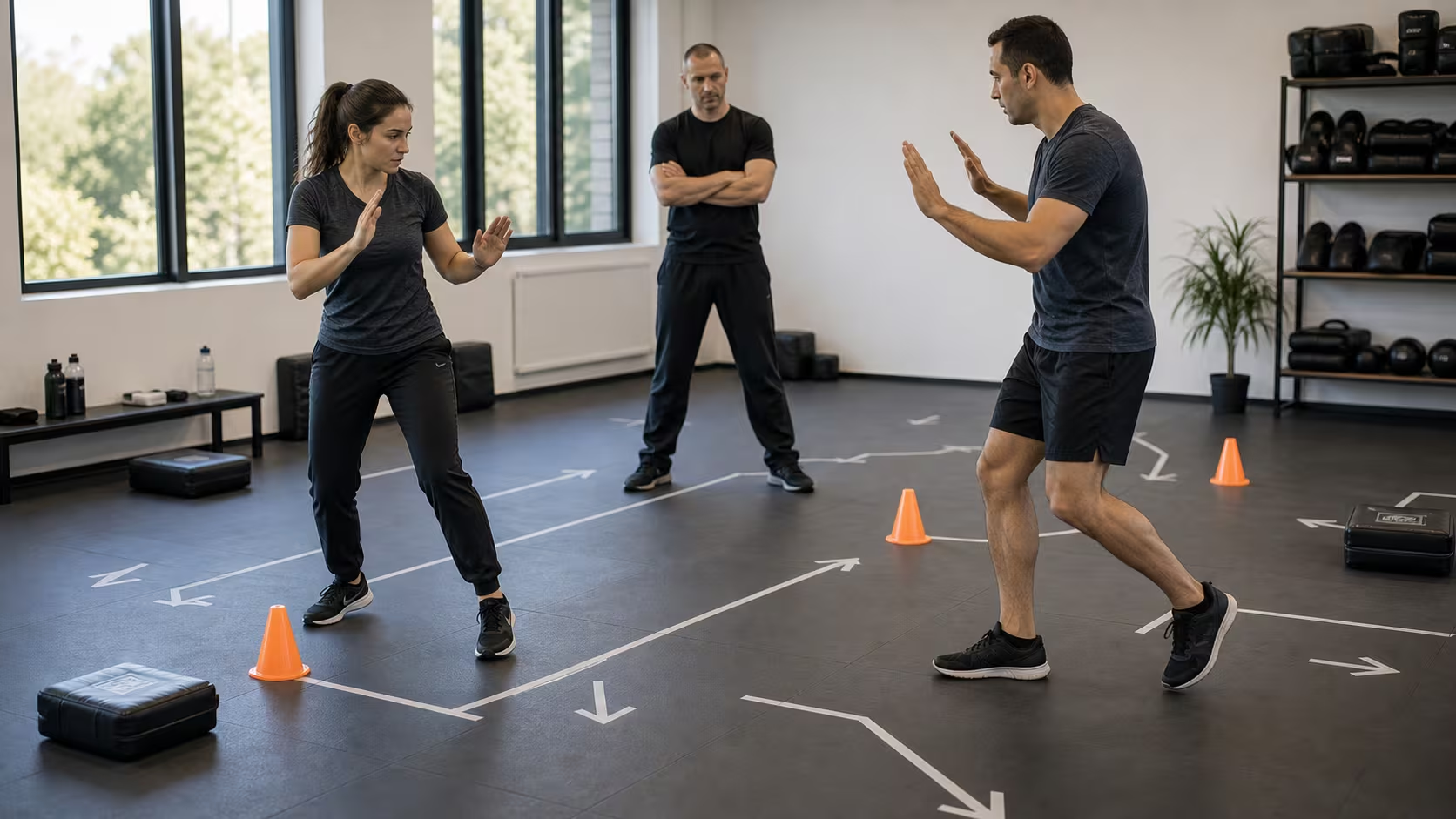
Footwork is easy to ignore because it does not look like the exciting part of self-defense training. A punch makes sound on a pad. A defense has a name. A scenario drill has drama. Footwork asks for something quieter: stand well, step without crossing yourself up, keep your balance when the room changes, and move toward an exit instead of freezing in place.
That quiet skill sits under everything else. If your feet are tangled, your hands will be late. If your weight is too far forward, a small shove can become a fall. If you step straight back forever, you may run out of room. If you cannot turn without losing posture, you may not see the second problem in the room. Good Krav Maga training should make footwork feel less like choreography and more like practical movement under stress.
The point is not to float like a professional fighter. Most beginners do not need fancy movement. They need a stable stance, useful steps, early exits, and the ability to stay upright when pressure changes. The best footwork is often the kind nobody notices because it keeps the situation from becoming worse.
Balance begins before anything happens
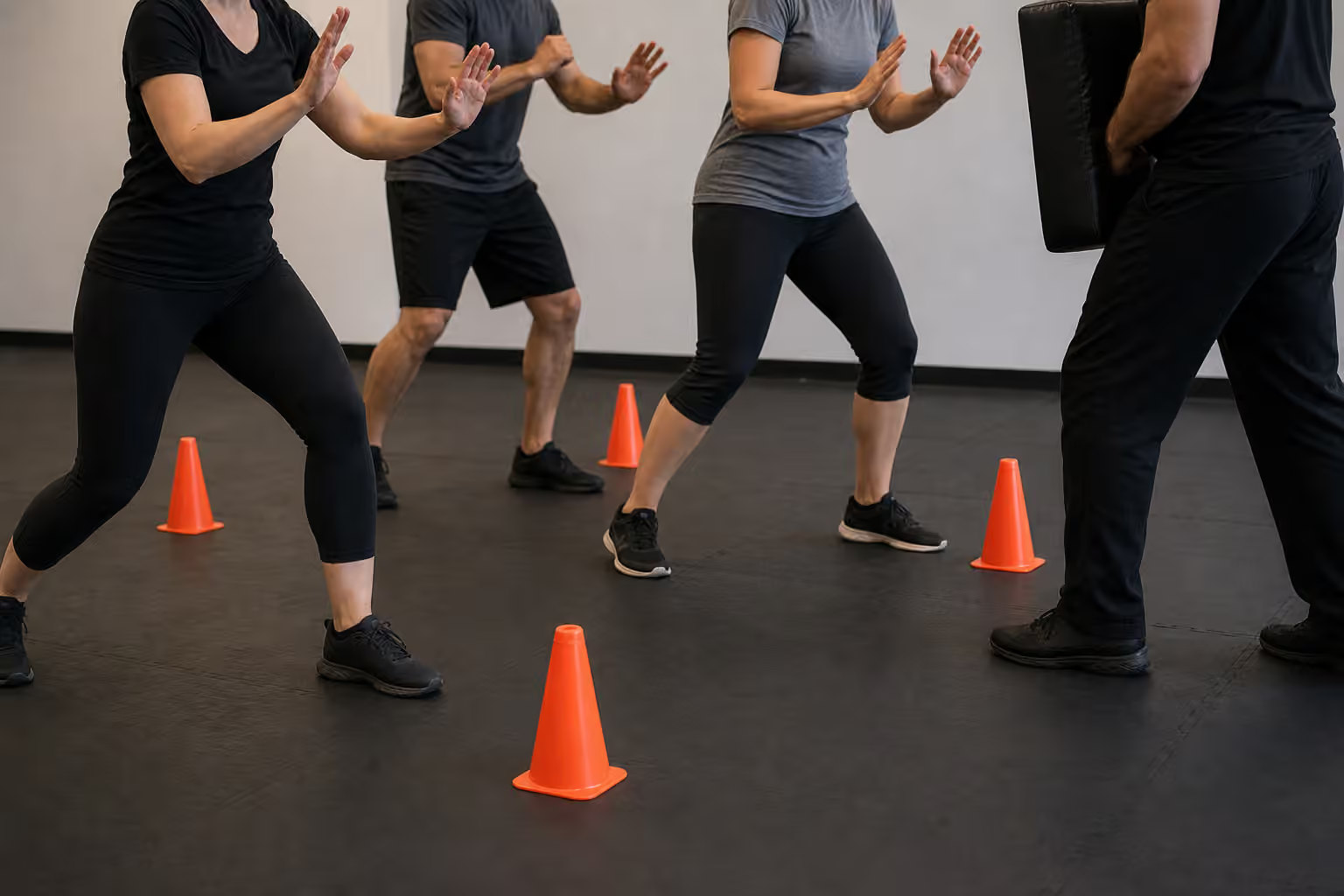
Balance is not something you recover only after losing it. It is a habit you bring into the moment. Many people stand in ways that work fine at a counter, in a line, or while checking a phone but fail quickly when startled. Their feet are too narrow. Their knees are locked. Their weight is on the heels. Their head floats forward. Their hands are unavailable. They are technically standing, but they are not ready to move.
A useful training stance is not a costume. It is a compromise between ordinary posture and urgent movement. The feet give you a base. The knees stay soft. The hands are available without looking theatrical. The chin is not reaching into trouble. The body can step, turn, speak, cover, or leave.
This is why instructors often correct stance before correcting a technique. A beginner may think the correction is boring because the named technique is what they came to learn. But the instructor can see the larger problem. A defense performed from poor balance may work once in a cooperative drill and fail when timing changes. A pad strike thrown from a collapsing stance teaches the body to overreach. A verbal boundary given while leaning backward may communicate less confidence than the words intend.
Balance is the platform. Everything else stands on it.
Stepping back is not the only answer
When someone approaches too close, many beginners step straight backward. That can be useful for a moment. It can also become a trap. Straight backward movement may keep you in the line of pressure, hide obstacles behind you, and teach the other person that the path forward is open. In a hallway, parking lot, kitchen, or crowded room, there may not be much space behind you.
Angle changes are often more useful. A small step off the direct line can change the relationship between bodies. It can open an exit, put furniture between you and the problem, or make the other person turn before continuing. The movement does not need to be dramatic. It needs to be early enough and balanced enough that you are not stumbling while trying to think.
This connects to Distance, Awareness, and Exit . Footwork is not separate from awareness. Your feet should serve the decision to create space, find a safer line, and leave when leaving is available. If movement becomes a dance around the problem instead of a path out, the training has missed the point.
The floor tells the truth
Training mats can make movement feel safer, but real floors are varied. Tile, gravel, wet pavement, grass, stairs, curbs, carpets, and clutter all change balance. A person who only practices large, clean steps on a perfect mat may be surprised by how little room ordinary life provides. The world has chair legs, bags, thresholds, pets, children, dropped objects, and corners.
Good footwork training should eventually respect that mess without becoming reckless. Students can learn to notice floor conditions, shorten steps, avoid crossing feet, and keep posture while moving around simple obstacles. A cone on a mat is not the same as a crowded restaurant, but it can teach the beginning of spatial honesty. You learn that the body must move in relation to the room, not in relation to an imaginary flat diagram.
This is also why looking matters. Under stress, people may stare at the person in front of them and stop reading the environment. Footwork should help the head turn and the eyes work. If you move to an angle, you may see the door. If you step around a chair, you may notice the bag on the floor. If you keep your stance alive, you may avoid backing into the very thing that makes escape harder.
Pressure exposes false balance
Anyone can look balanced in a slow demonstration. Pressure reveals whether the balance is real. The pressure does not need to be violent. A partner holding a pad, a gentle push at the wrong time, a verbal prompt, a time limit, or a drill that asks you to move after fatigue can show what your body actually knows.
Beginners often discover that their stance disappears when they are asked to do two things at once. They can move well until they have to speak. They can speak until they have to move. They can hit a pad until the pad holder changes distance. They can step around a cone until someone else is also moving. This is normal. The nervous system needs simple repetitions before it can combine them.
The correction is not to make every drill harder immediately. The correction is to build pressure gradually. Slow steps become responsive steps. Responsive steps become movement with voice. Movement with voice becomes movement with a partner changing distance. The body learns in layers. A class that jumps straight to chaos may feel intense, but intensity is not the same as learning.
Footwork protects the knees and back
Movement quality is also a safety issue. Poor stepping can twist knees, strain backs, and make training feel rougher than it needs to be. Beginners who overreach, plant the foot awkwardly, or turn the upper body while the feet stay stuck may feel fine once, then sore later. A good instructor watches for those patterns because durable training matters.
Krav Maga attracts people who want practical skills quickly, but rushing the body is expensive. If your ankles are stiff, hips tight, or balance underdeveloped, footwork is where that will show. Treat it as information. The goal is not to shame the body into better movement. The goal is to learn what kind of movement your body can repeat safely and what needs gradual work.
This is where Training Between Krav Maga Classes becomes useful. A few minutes of slow stepping, posture checks, gentle mobility, and breath recovery can support class without pretending your living room is a combat lab. Footwork is one of the safest things to practice modestly because it belongs to your own body before it belongs to any partner drill.
The best movement is often the exit
In a real self-defense frame, the most successful footwork may be the step that ends the situation. A small angle toward a door. A turn that places a table between you and the problem. A retreat toward light and people. A decision not to stay for the next sentence. This movement may not look impressive, but it is exactly the kind of skill training should honor.
Martial arts culture can sometimes reward staying engaged. Self-defense should reward leaving when leaving is possible. Footwork is the physical expression of that value. It gives your boundary a path. It gives your awareness a body. It gives your decision a way out of the room.
The beginner who learns to move well may feel less dramatic, not more. That is good. The goal is not to become a person who performs techniques in every uncomfortable moment. The goal is to become a person who notices earlier, stands better, moves sooner, and avoids needing the harder answer.
Footwork is humble because it sits below the headline skills. It is also honest. Under pressure, the feet often reveal what the mind has not yet admitted. Train them well, and many other things become simpler.