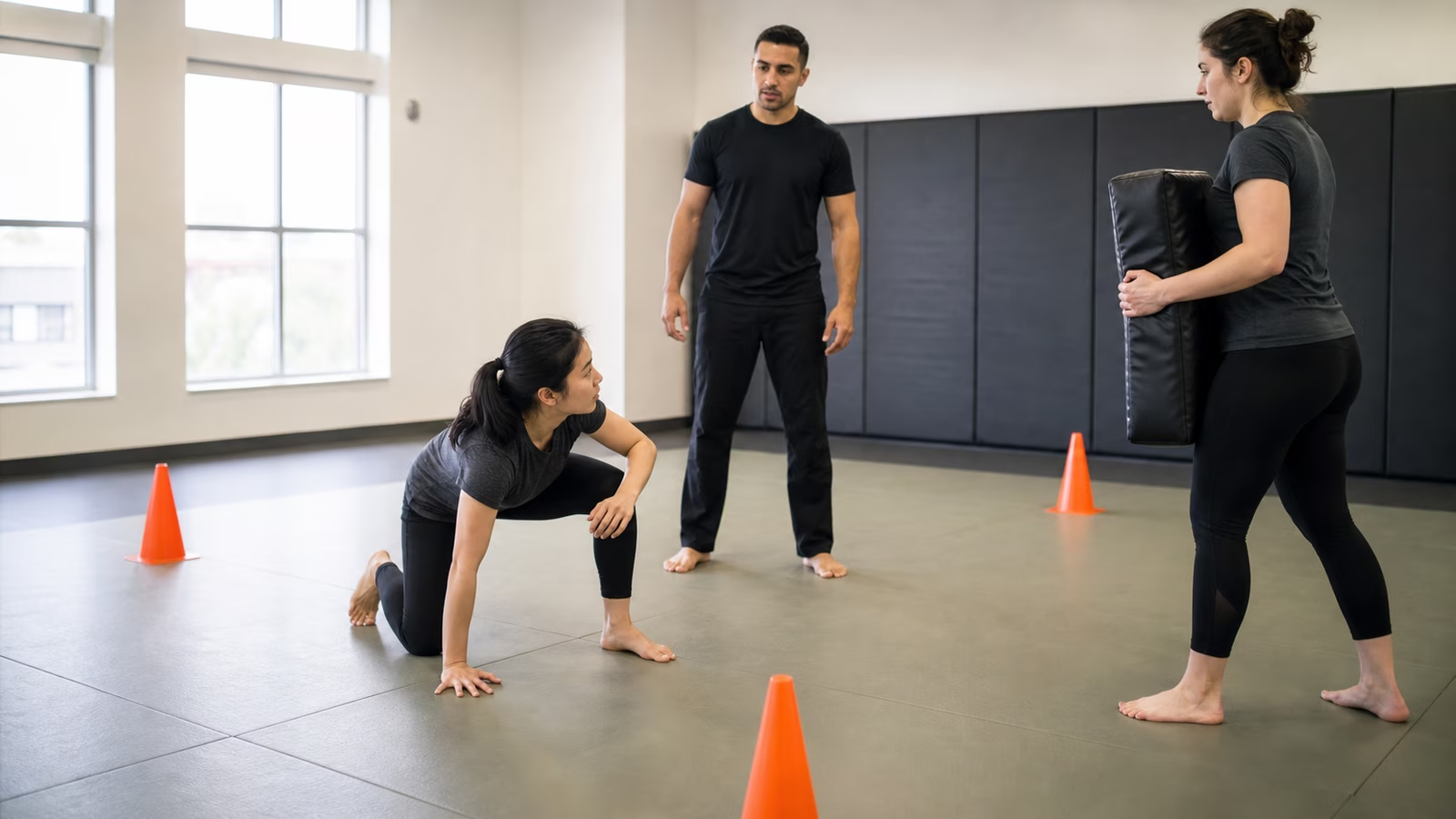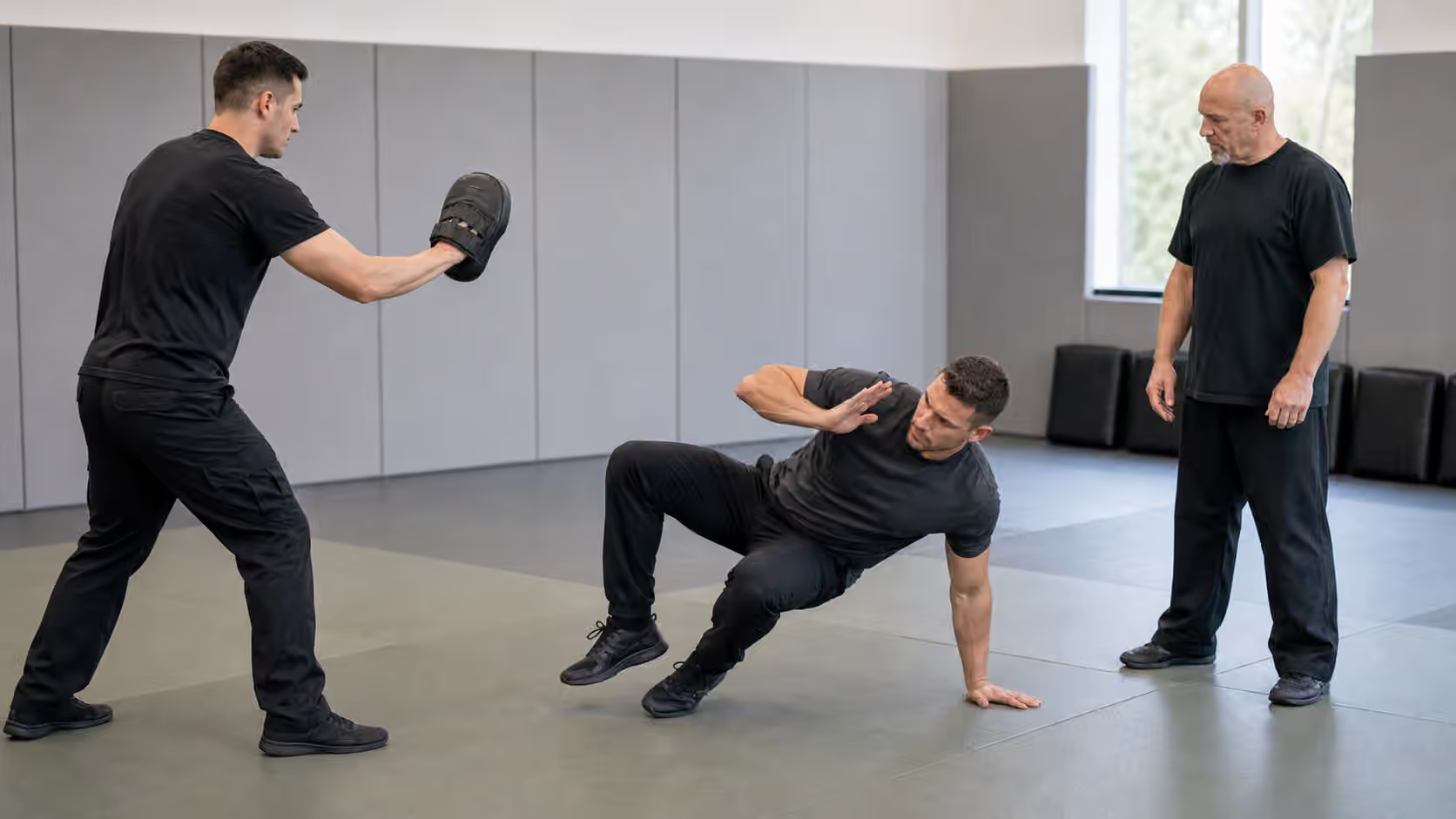
The floor changes a Krav Maga class immediately. A student who felt coordinated while standing may feel slow, exposed, and oddly confused the moment a hand touches the mat. The same room looks different from knee height. Distances become harder to read. Feet become obstacles. A wall that felt far away can suddenly matter. The body wants to hurry because being down feels like losing, even in a drill where everyone agreed to train safely.
That feeling is useful, but it needs careful handling. Floor transitions are not only about what to do after falling. They are about moving between levels without losing orientation, protecting the head while changing posture, and standing up without handing the other person a clean path back in.
The Ground Is Not a Different Universe
Students sometimes divide self-defense into standing skills and ground skills as if a clean border separates them. Real movement is messier. A person can stumble to one knee after a shove. They can sit down hard while avoiding a wall. They can slip while trying to leave. They can trip over a bag, chair, curb, or another person’s foot. They can decide to drop low for balance and then need to stand again while the situation continues.
Ground Recovery covers the larger question of staying functional when down. Floor transitions sit slightly earlier in the chain. They ask how the student arrives there and how they come back. A clean transition can prevent a scramble from becoming panic. A sloppy transition can turn a manageable moment into a pile of elbows, knees, and confusion.
The goal is not to love the ground. Krav Maga usually treats standing and leaving as important outcomes because the ground can be unforgiving, especially around hard surfaces, crowds, or multiple people. But avoiding fantasy requires training the awkward middle. If the only plan is “never fall,” the first bad step becomes a surprise. If the only plan is “fight from the ground,” the student may forget that standing and exiting were available.
Getting Down Without Collapsing
Some classes begin floor work from a tidy seated position. That is useful for learning shapes, but it can hide the transition. A student should eventually understand how it feels to kneel, sit, turn a hip, post a hand, and keep the head from drifting forward while the body changes levels. The movements should be slow enough at first that the instructor can see the knees, wrists, back, and neck.
This is where Training Around Injuries and Limits matters. Not every student should drop to the floor the same way. Old knee injuries, wrist sensitivity, back issues, dizziness, fatigue, body size, and age can all change the safest version of a transition. A serious school does not treat modifications as a lack of commitment. It treats them as part of keeping students trainable.
The student should know how to say that a movement needs adjusting before the drill begins. The instructor should offer options without making the student explain private history in front of the room. A floor transition that preserves dignity and safety teaches more than a dramatic drop done with clenched teeth.
Standing Up Is a Skill, Not a Pause
The technical stand-up is one of those movements that looks simple when performed by someone who has repeated it thousands of times. One hand posts. One foot plants. The other leg moves back. The eyes stay on the problem. The body rises without folding the head toward the other person. The movement keeps a barrier between the torso and the approach line. Done well, it feels like common sense. Done poorly, it exposes the face, tangles the feet, or turns the back.
Beginners often rush this part because standing feels like relief. They pop up without seeing where the partner is. They plant the hand too far behind them and lose power. They let the supporting shoulder collapse. They stare at the floor because the floor is where the work feels complicated. A patient instructor slows the moment down and asks the student to make each piece honest.
The partner’s distance is part of the lesson. If the partner crowds too early, the student learns panic instead of standing. If the partner stays unrealistically far away forever, the student learns a movement that has no relationship to pressure. A good drill keeps the role clear. The partner can hold a pad, show a line of approach, or step in only when invited by the instructor. The student learns to stand while protecting space, not while pretending the room is empty.
Orientation Before Speed
The first question after hitting the floor is not always “How fast can I move?” It may be “Where am I?” A student who spins quickly into a wall has not solved the problem. A student who stands into the partner’s path has only changed altitude. Orientation means knowing where the other person is, where the exit might be, where the hard boundary sits, and whether another person is close enough to change the answer.
Environmental Movement in Krav Maga helps make this practical. On the floor, the environment becomes larger. A chair leg can block the path of a hip. A bag can catch a foot. A wall can stop the technical stand-up halfway. A doorway can look available from standing height and blocked from the mat. Students do not need fear around every object, but they do need the habit of seeing the room before committing to a direction.
The same is true of clothing and footwear. Training barefoot or in smooth-soled shoes on clean mats does not fully explain how a transition might feel in street shoes, boots, tight clothing, a coat, or a backpack. Everyday Clothing and Footwear Awareness is relevant because the body should not be surprised when fabric, soles, and bags change the movement. A school can discuss this without turning class into costume theater. It is enough to know that gear changes options.
Fatigue Makes the Floor Louder
Floor transitions become harder when the student is tired. The breath shortens. Hands slap the mat. Knees land heavier. The stand-up becomes a lunge. The student may stop looking because the effort of moving has consumed attention. This is where training can either become useful or sloppy.
Breathing and Stress Recovery belongs in the same conversation because the moment after getting down is often a moment of emotional noise. A student may feel embarrassed, hurried, or angry at their own coordination. The better habit is to breathe enough to hear, find the partner, protect the head, and stand with structure. That does not mean moving slowly forever. It means speed should grow from orientation, not replace it.
Coaches can make this lesson safer by separating fatigue from chaos. A student can do a short burst of padwork, sit to the floor, stand with a technical movement, and exit to a cone. That is enough. The drill does not need surprise tackles, shouting, and complicated decisions all at once. Each layer should earn its place.
Partner Work Should Stay Humble
Floor transition drills require trust. A standing partner has more leverage than a seated or kneeling student. Even a light step in the wrong direction can land near a hand, ankle, or head. The partner should understand that their job is to feed the drill, not to win the scene. They keep distance when asked, move at the agreed speed, and stop when the instructor calls the reset.
The student on the floor also keeps the partner safe. They do not kick blindly, swing a leg through a knee, or pull a standing partner down unless the drill explicitly includes that under supervision. A technical stand-up is not a license to fling limbs into space. It is a way to protect distance while regaining the ability to move.
This is the same training culture described in Partner Work and Contact Control . Control is not the enemy of realism. Control is what lets people repeat the lesson enough times to learn it. Without control, floor work becomes a collection of near misses and sore wrists.
Leaving the Floor Behind
The best sign of progress is not that the student enjoys being down. It is that the student no longer treats the floor as a disaster. They can arrive there without freezing. They can orient. They can protect the head. They can stand without folding forward. They can decide whether standing is possible, whether a barrier matters, and whether the exit is open.
That calm is not guaranteed outside class. Nothing in training removes the danger of hard surfaces, numbers, weapons, surprise, or bad luck. But practice can remove some of the unnecessary panic. A student who has felt the awkwardness safely may be less likely to spend the first second arguing with reality.
Floor transitions teach humility because gravity does not care how confident a person sounded while standing. They also teach practical hope. Even a messy moment can be reorganized. Find the floor. Find the person. Find the space. Stand when standing serves safety. Then leave the line before the drill, or the situation, asks the same question again.