The first month in Krav Maga should not feel like a test of how much intensity you can survive. It should feel like learning the room. You learn where to stand, how to listen, how to hold yourself under mild pressure, how to work with a partner without turning every drill into a contest, and how to leave class with enough curiosity to come back.
Many beginners arrive with the wrong fear. They worry that everyone else will be tougher, faster, fitter, or more confident. That may be true in small ways, but it is not the main issue. A good beginner is not the person who looks hardest on day one. A good beginner is the person who can be coached, respect boundaries, ask useful questions, and build safe habits before speed turns sloppy movement into a bigger problem.
The first month is where those habits start. It is less dramatic than the marketing version of self-defense. There are mats, pads, water breaks, awkward footwork, forgotten instructions, partner rotations, and moments where your brain runs slightly behind your body. That ordinary awkwardness is the point. You are not proving a finished identity. You are learning a practice.
The First Habit Is Showing Up Calm Enough to Learn
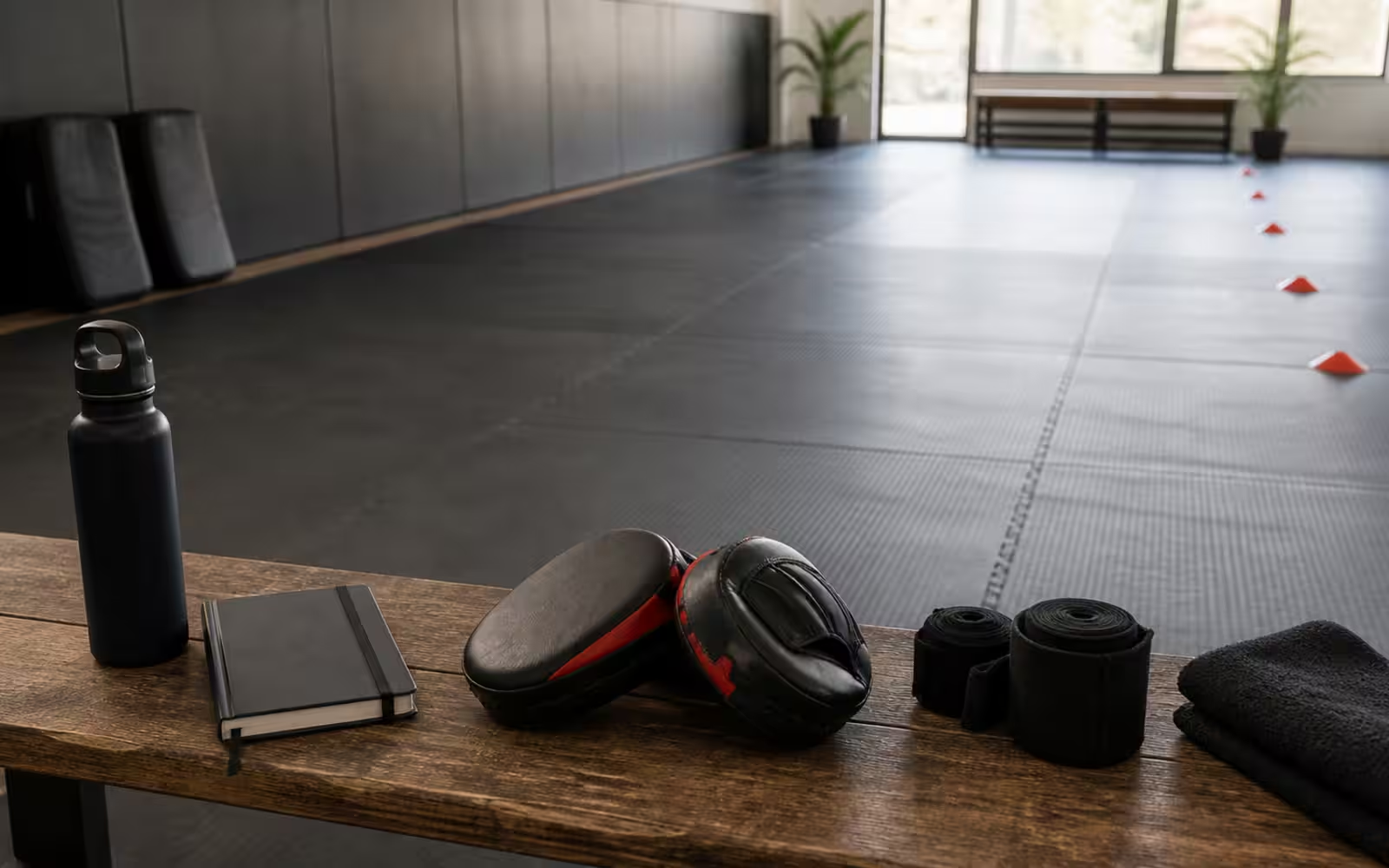
A beginner class can raise your pulse before it starts. The room is unfamiliar. People may be wrapping hands, moving pads, stretching, laughing with people they already know, or hitting equipment with a sound that makes the training feel more serious than you expected. It is easy to interpret that as a warning that you need to match the energy immediately.
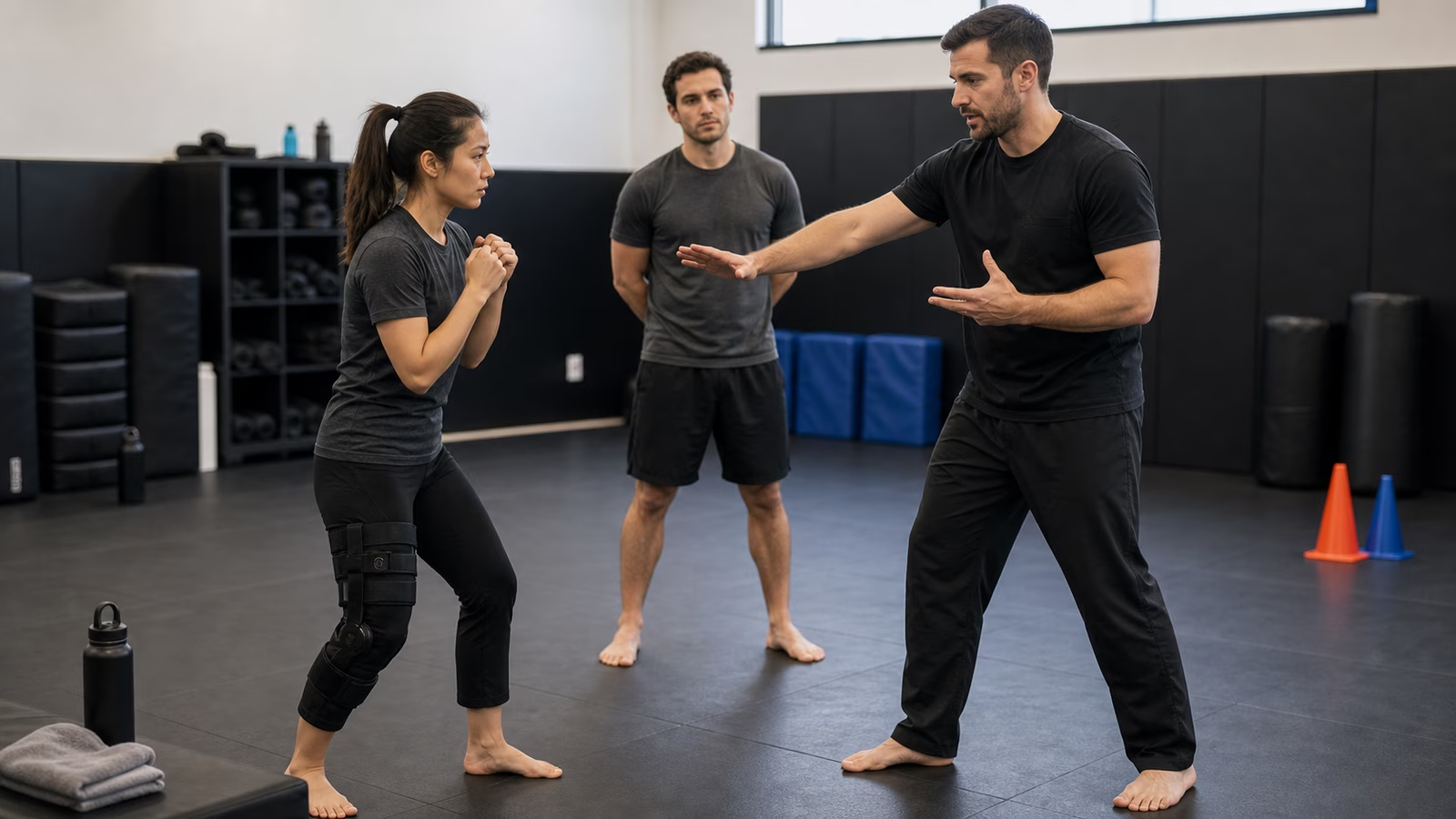
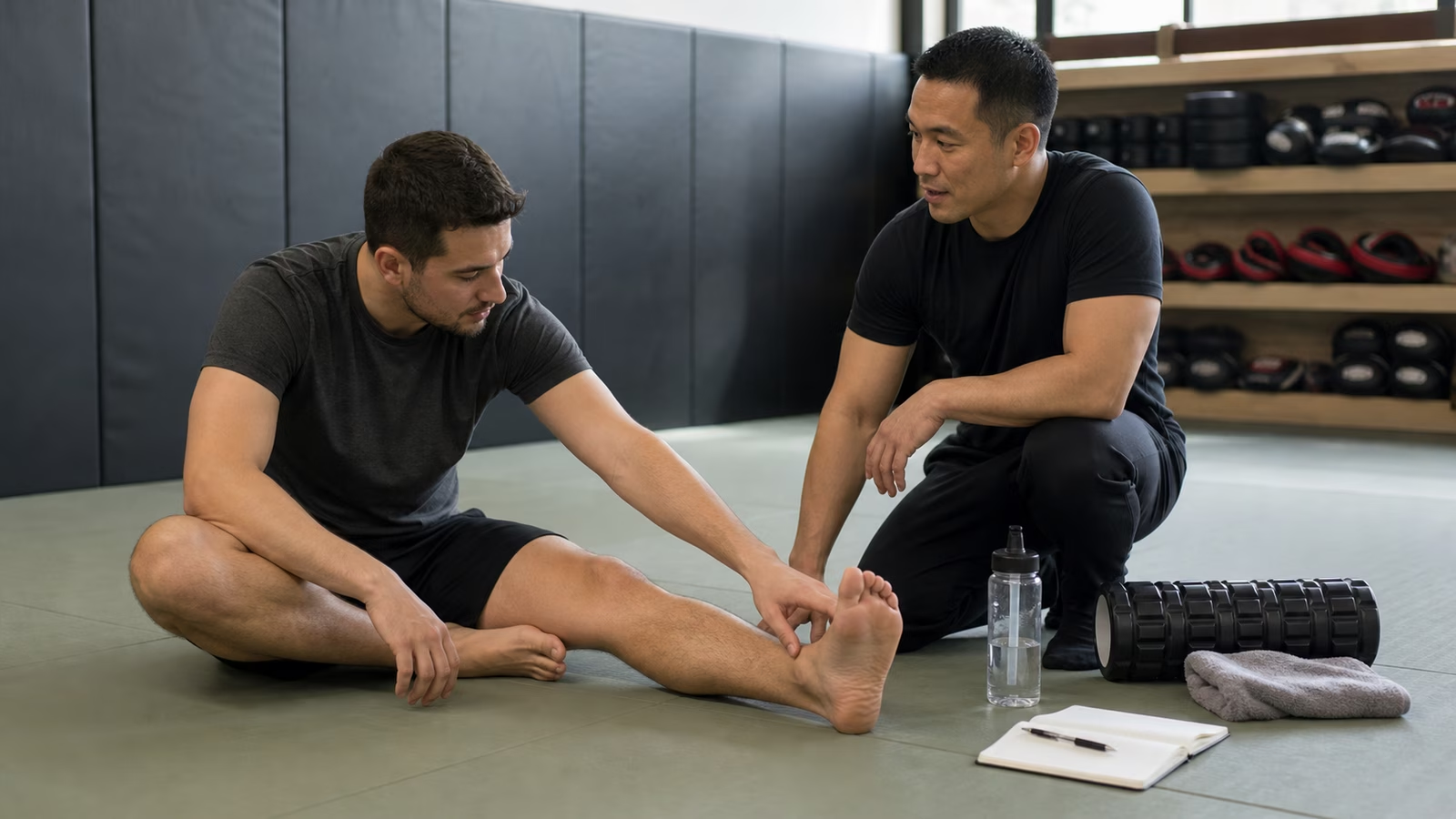
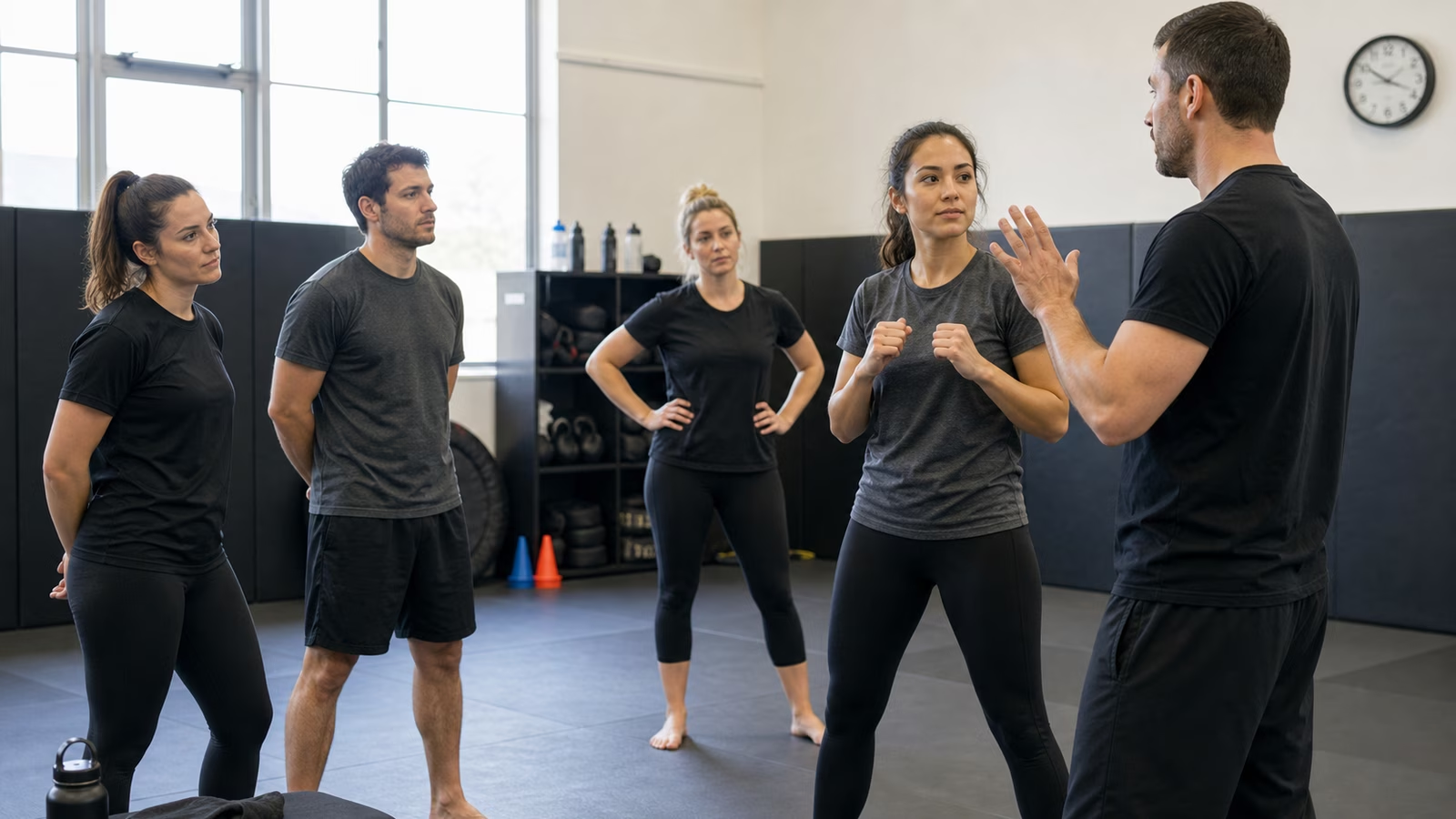
You do not. Your first job is to arrive early enough to understand the class shape. Introduce yourself. Mention relevant injuries or limits privately if needed. Ask where beginners should stand. Notice how the instructor gives corrections. Watch how experienced students treat newer partners. A room tells you a lot before the warmup begins.
Calm learning is not passive. It is active attention. You are listening for instructions, watching demonstrations, and noticing the safety rules that may not be repeated every minute. Where do people place pads when not using them? How much space do partners keep? What happens when someone needs to stop? Does the instructor normalize slowing down, or does the room reward reckless effort?
Your first month should teach you that awareness is not only something you practice outside. It is also how you train inside.
Pace Is a Skill
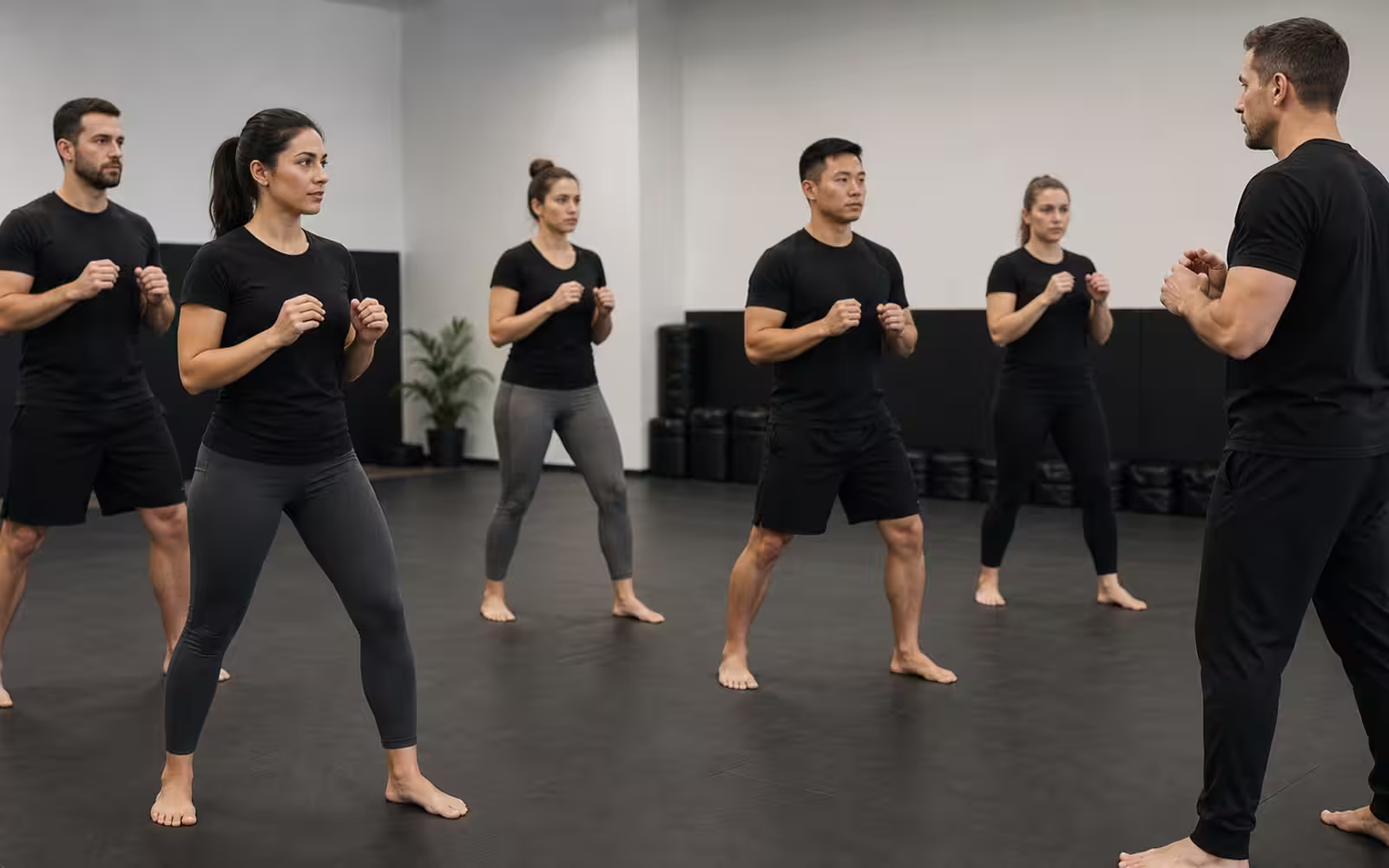
Beginners often treat pace as a personality trait. Some people go hard. Some people go easy. In training, pace is a skill. You should be able to turn effort up and down. You should be able to move with enough energy to learn and enough restraint to stay accurate. You should be able to hear a correction without feeling embarrassed and immediately proving that you can go faster.
Speed is seductive because it feels like progress. A drill done quickly can feel more real, more serious, and more satisfying. But early speed often hides poor balance, unclear distance, stiff shoulders, and a lack of control with a partner. The first month is better spent learning what clean movement feels like at a pace where you can still think.
This does not mean training should be sleepy. Krav Maga includes stress, pressure, and physical effort. The question is whether the pressure is useful. Useful pressure gives you enough challenge to reveal habits without overwhelming your ability to correct them. Useless pressure turns every drill into noise. You leave tired but not wiser.
A beginner who learns pace early becomes safer for everyone. They can train with smaller partners, newer partners, older partners, and people returning from injury. They can work with intensity when asked and pull back when the drill requires precision. That kind of control is not weakness. It is training maturity.
Partner Trust Is Built in Small Moments
Krav Maga is often described through individual confidence, but much of the learning happens through other people. A partner holds a pad, offers resistance, helps create a scenario, gives you space, and trusts you not to treat their body like equipment. The first month is where you begin to understand that partner work is a relationship, even when it lasts only three minutes.
Trust is built by small behaviors. You listen before moving. You check whether the pad holder is ready. You keep your eyes up enough to notice if something is wrong. You do not laugh at someone’s confusion. You do not turn a cooperative drill into a surprise test. You stop when the instructor stops the room. You respect the difference between a training signal and real distress.
This is especially important because many beginners arrive with adrenaline. They may be nervous, eager, self-conscious, or trying to prove they belong. Adrenaline narrows attention. A person who is trying too hard may forget that the partner in front of them is also learning.
The first month should make partner safety feel normal. If the school treats safety as an annoyance that gets in the way of toughness, that is a sign worth taking seriously. A useful room can still be demanding. It simply understands that trust is what allows pressure training to continue.
Questions Should Get More Precise
At first, every question feels large. Am I doing this right? Where should my feet go? How hard should I hit the pad? Why did I lose balance? What was I supposed to notice? Those are normal beginner questions, but over the first month they should become more precise.
Instead of asking whether a whole movement was wrong, you begin asking what broke first. Did your stance narrow? Did your shoulders rise? Did you forget to breathe? Did you step too close? Did you look down? Did you rush the beginning because you were worried about the end?
This is where good coaching matters. A qualified instructor can see patterns that a beginner cannot feel yet. They can give one correction instead of ten. They can tell you when a problem is mechanical, when it is timing, and when it is simply too early to worry about refinement. A beginner who receives every correction as failure will suffer through the first month. A beginner who receives correction as information will improve steadily.
There is also a useful question to ask yourself after class: what did I notice earlier than last time? Earlier noticing is real progress. If you noticed you were tense before the instructor said it, that counts. If you felt your balance shift before you stumbled, that counts. If you recognized when you were too tired to train cleanly, that counts too.
Recovery Belongs Inside Training
The first month teaches many people that they hold their breath under pressure. They rush, brace, tighten their jaw, and try to solve every problem with effort. Then the drill ends and they stay activated, as if the body did not receive the message that the moment is over.
Recovery is not a luxury after class. It belongs inside training. You should learn how to reset after a pad round, listen after a stressful drill, and return to normal conversation with a partner. If you cannot come back down, the next instruction lands on a nervous system that is still busy with the last event.
Breathing helps, but recovery is broader than breathing. It includes stepping back, shaking out tension, drinking water, checking on a partner, hearing feedback, and letting the room become ordinary again. A self-defense practice that only teaches escalation is incomplete. Real judgment depends on the ability to come down as well as rise.
This is one reason the first month should not be filled only with harder and harder drills. A beginner needs repetitions of safe activation and safe return. The body learns that pressure can happen, end, and become learning.
Progress Looks Ordinary
Real first-month progress is often unimpressive to an outside observer. You stand a little better. You listen sooner. You keep more space. You hit pads with cleaner structure. You stop apologizing for every mistake. You stop trying to win partner drills that are not contests. You remember to breathe earlier. You leave class tired but not rattled.
That kind of progress does not make a dramatic video. It does make a safer student.
The temptation is to measure yourself against a fantasy version of self-defense competence. That fantasy is usually too clean and too fast. Your first month is not about becoming invincible. It is about becoming trainable. Trainable means you can return, learn, adjust, and keep your partners safe enough that they can do the same.
You should still pay attention to whether the school is right for you. Good beginner training should include clear instruction, controlled contact, sensible warmups, respectful coaching, room for questions, and a culture that does not shame people for using boundaries. If you consistently leave feeling injured, humiliated, pressured into unsafe work, or confused about whether stopping is allowed, the problem may not be your toughness.
The best first month ends with a quieter kind of confidence. You know where to stand. You know how to ask. You know how to slow down. You know what a safe partner feels like. You know that progress can be measured by control rather than noise. You are still a beginner, but the room is no longer a mystery.
That is enough for one month. In a practice built around danger, the first serious skill is learning how to train without creating more of it.