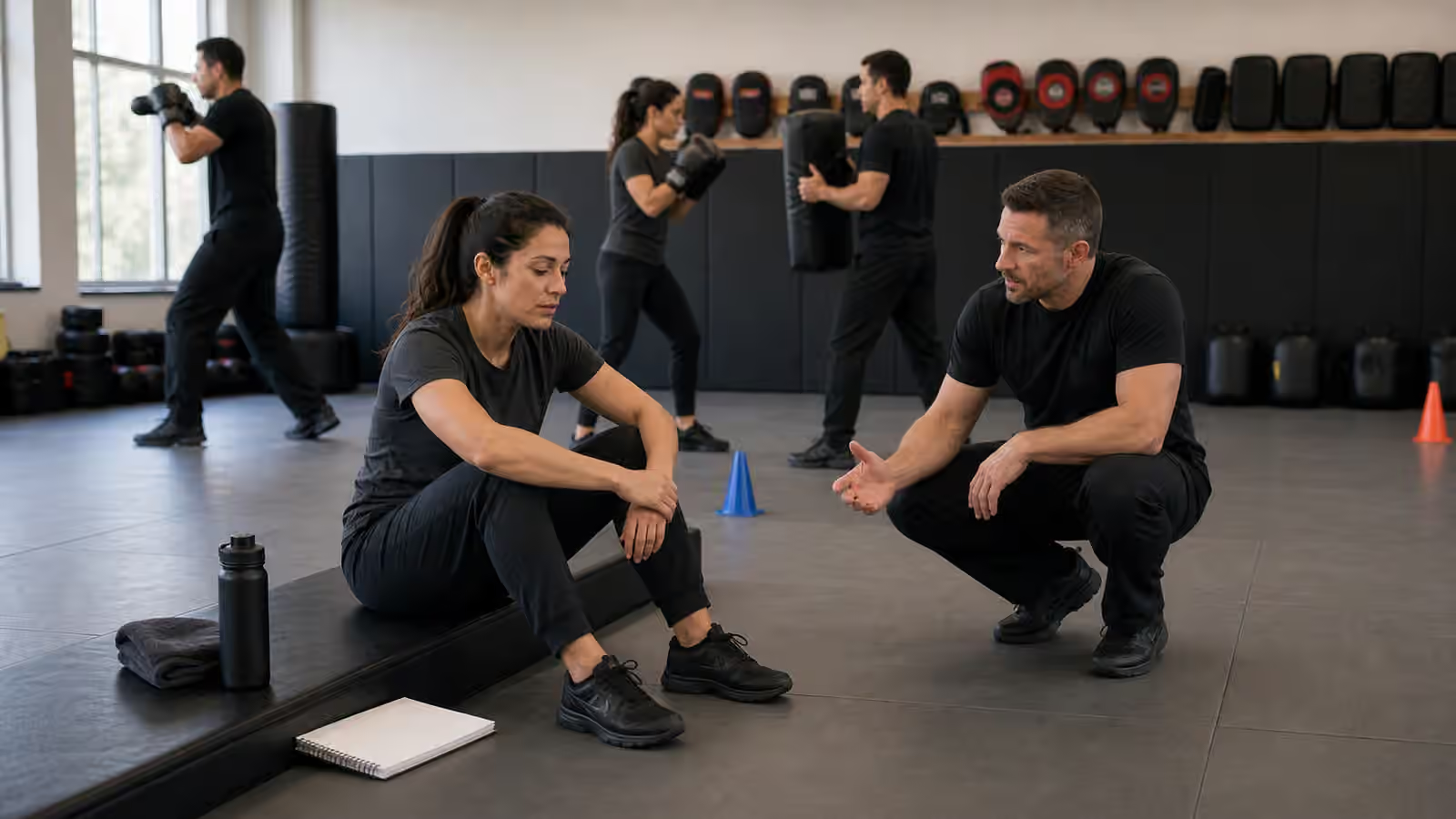
Fatigue is one of the most honest teachers in Krav Maga, and one of the easiest to misuse. A tired student shows the room what is really trained. The shoulders rise. The guard drops. The feet narrow. The breath turns shallow. Instructions that sounded simple at the start of class become harder to hear. A student may keep moving because everyone else is moving, while the quality of the work quietly disappears.
That does not mean fatigue is bad. It means fatigue has to be placed carefully. A class that never lets students feel tired may leave them surprised by stress. A class that treats exhaustion as the main point may teach students to confuse suffering with skill. Useful pacing lives between those mistakes.
Tired Is Not the Same as Trained
Krav Maga Conditioning Without Confusing Exhaustion for Skill makes the central point clearly: sweat is not evidence by itself. A drill can be hard and still teach nothing. A student can finish class destroyed and not know whether their stance, voice, movement, or judgment improved. The body remembers effort, but effort needs direction.
Fatigue becomes useful when it reveals a specific pattern. Maybe the student stops breathing during pad combinations. Maybe they forget to move after a strike. Maybe their hands drop when the instructor speaks. Maybe they become rougher with a partner because self-control is harder while tired. Those are lessons. They are also reasons to pause, reset, and return with intention.
A tired student should be encouraged to ask better questions, not only to push through. What changed when the breath got short? Did the feet stay under the hips? Did the student still hear the stop signal? Did they keep the pad holder safe? Did they know where the exit was after the burst? Fatigue is valuable when it exposes the question the next round can answer.
Pacing Is a Safety Skill
Many beginners arrive with a belief that good training means never stepping back. That belief can make them poor partners. When a student is too tired to hold a pad safely, too dizzy to track a drill, or too flooded to listen, continuing at the same pace is not discipline. It is noise.
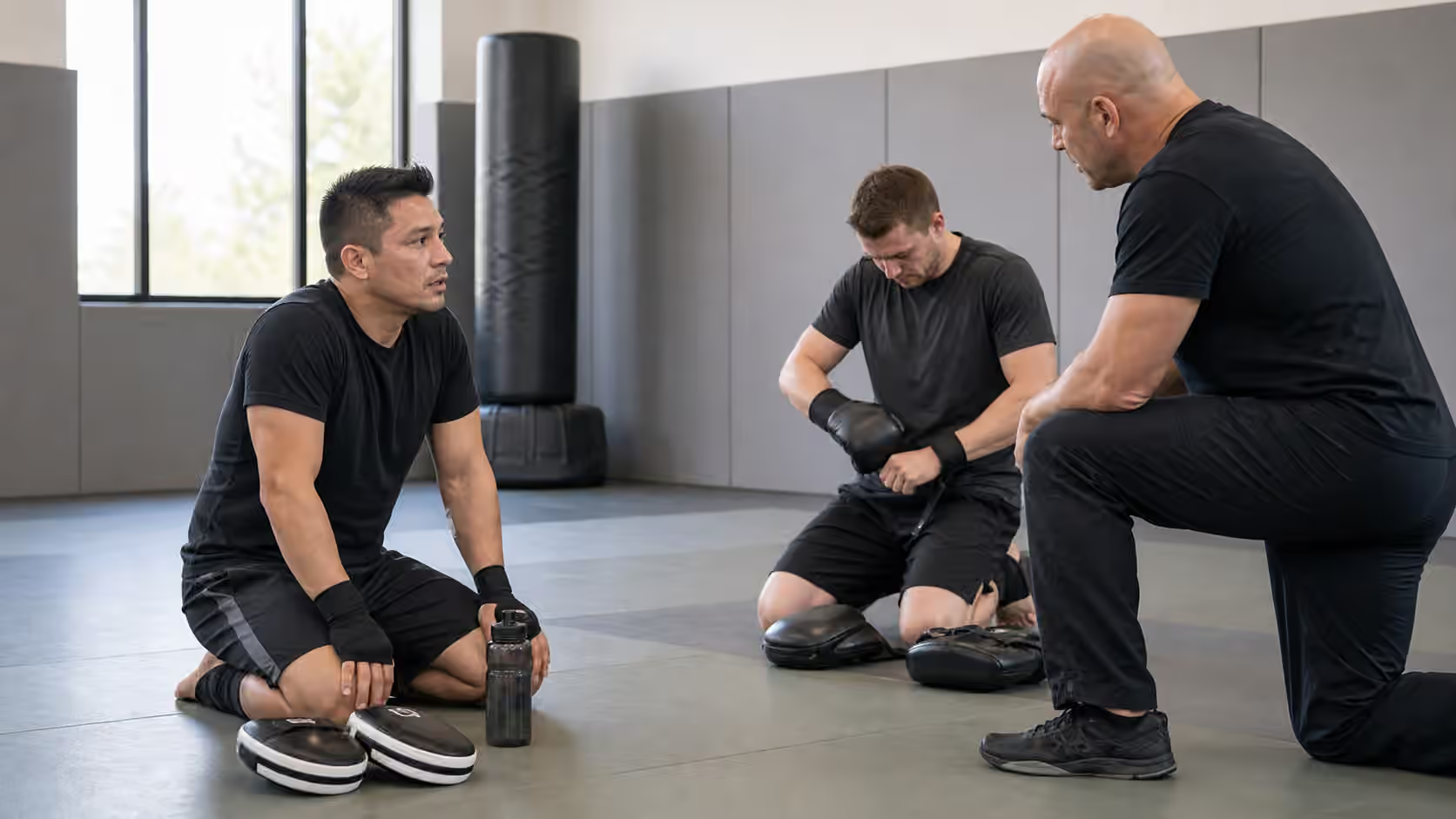
Safety Signals and Stopping Early belongs in every conversation about pacing because the ability to pause is part of keeping the room honest. A student who can say “I need a second” before form collapses is not weak. They are protecting the drill. A pad holder who asks to switch grips before the wrist fails is not interrupting progress. They are preserving it.
The instructor sets the tone. If pauses are treated like failure, students will hide warning signs. If every discomfort becomes an excuse to avoid work, the room loses training value. The useful culture is more adult. Students are expected to work, but also expected to notice when the work has stopped teaching.
Fatigue Changes Ethics
Tired people make different choices. They may become impatient. They may hit pads harder than they can control. They may ignore a partner’s smaller size, injury, or hesitation. They may laugh off sloppy contact because admitting fatigue would feel embarrassing. In self-defense training, those changes matter because partner safety is part of the skill.
Partner Work and Contact Control is especially relevant under fatigue. Contact that felt light during the first round may become careless in the fourth. A role player who began disciplined may start crowding too much. A defender who was calm may swing wide after missing the pad. None of this means the students are bad people. It means fatigue reduces spare attention, and training has to account for that.
The fix is not to avoid hard rounds. The fix is to keep hard rounds bounded. Define the goal. Limit the time. Reset the roles. Let students know what quality should survive the fatigue. If the goal is breathing after padwork, say so. If the goal is safe holding under pressure, say so. If the goal is decision-making after a burst, say so. Clarity keeps effort from becoming a vague contest.
Recovery Is Part of the Round
Recovery should not be treated as the empty space between real work. The first few seconds after effort tell the student a great deal. Can they breathe through the nose or are they gulping? Can they hear the instructor? Can they lower the shoulders? Can they look around the room instead of staring at the floor? Can they speak a simple sentence without rushing?
Breathing and Stress Recovery gives this subject a stronger frame. A student who recovers faster is not just fitter. They are more available for judgment. They can receive correction. They can decide whether the next drill is safe. They can avoid carrying the last mistake into the next partner.
Recovery can be trained quietly. After a pad round, the instructor may ask the class to step back, find posture, breathe, and notice the exit. After a pressure drill, partners may debrief one sentence each. After a floor transition, the student may stand, look, and reset rather than collapsing into self-criticism. These small habits keep fatigue from becoming the whole identity of the class.
Pacing Helps Learning Stick
Beginners often remember the most intense part of class and forget the correction that would make the next class better. That is normal. The nervous system gives loud moments more attention. But if every class is organized around maximum intensity, students may collect memories without building cleaner movement.
Class Debriefs and Training Journals can help because writing after class forces the student to separate heat from content. What drill became sloppy when tired? What correction repeated? What did the instructor say about breathing, posture, or partner care? What should be practiced lightly before the next class? A few plain sentences can rescue the useful lesson from the blur.
Pacing also helps students stay consistent over months. A person who trains so hard on Tuesday that they cannot move well until Saturday may feel committed, but the schedule may not last. Recovery, Soreness, and Training Frequency is useful because the body has to return for skill to grow. Sustainable training is not soft. It is realistic.
The Instructor Should See the Drop-Off
A good coach watches for the moment effort begins to damage learning. They see the student whose head is no longer protecting itself, the pair whose pad holding is becoming unsafe, the role player who keeps adding pressure after the reset, and the beginner who is smiling while clearly overwhelmed. They adjust before the drill becomes a story about toughness.
This may mean shortening the round. It may mean lowering contact. It may mean switching partners, changing the target, returning to footwork, or giving the class a water break that is also a teaching moment. The adjustment is not a retreat from seriousness. It is how seriousness stays useful.
Students can learn to see the same drop-off in themselves. A shaky stance, tunnel vision, nausea, sharp pain, confusion, or a sudden urge to prove something are all information. They do not all mean the same thing, and they do not automatically mean quitting. They do mean the student should pay attention and communicate.
Staying Useful
The best fatigue training does not ask whether you can suffer. It asks whether you can stay useful. Can you keep your hands available when tired? Can you hold a pad safely? Can you hear “stop”? Can you move to open space instead of posing at the end of a combination? Can you accept a correction without defensiveness? Can you take a break before you make your partner carry your pride?
Progress Without Chasing Intensity offers a better ruler for this work. Progress is not always louder rounds. Sometimes it is cleaner decisions at the same heart rate, safer contact late in class, or the humility to reset before the drill turns ugly.
Fatigue will always be part of Krav Maga because stress changes the body. The question is whether fatigue is treated as a teacher or a trophy. When pacing is taught well, tired students do not become reckless students. They become more honest students, and honesty is one of the few qualities that can survive when the room gets loud.