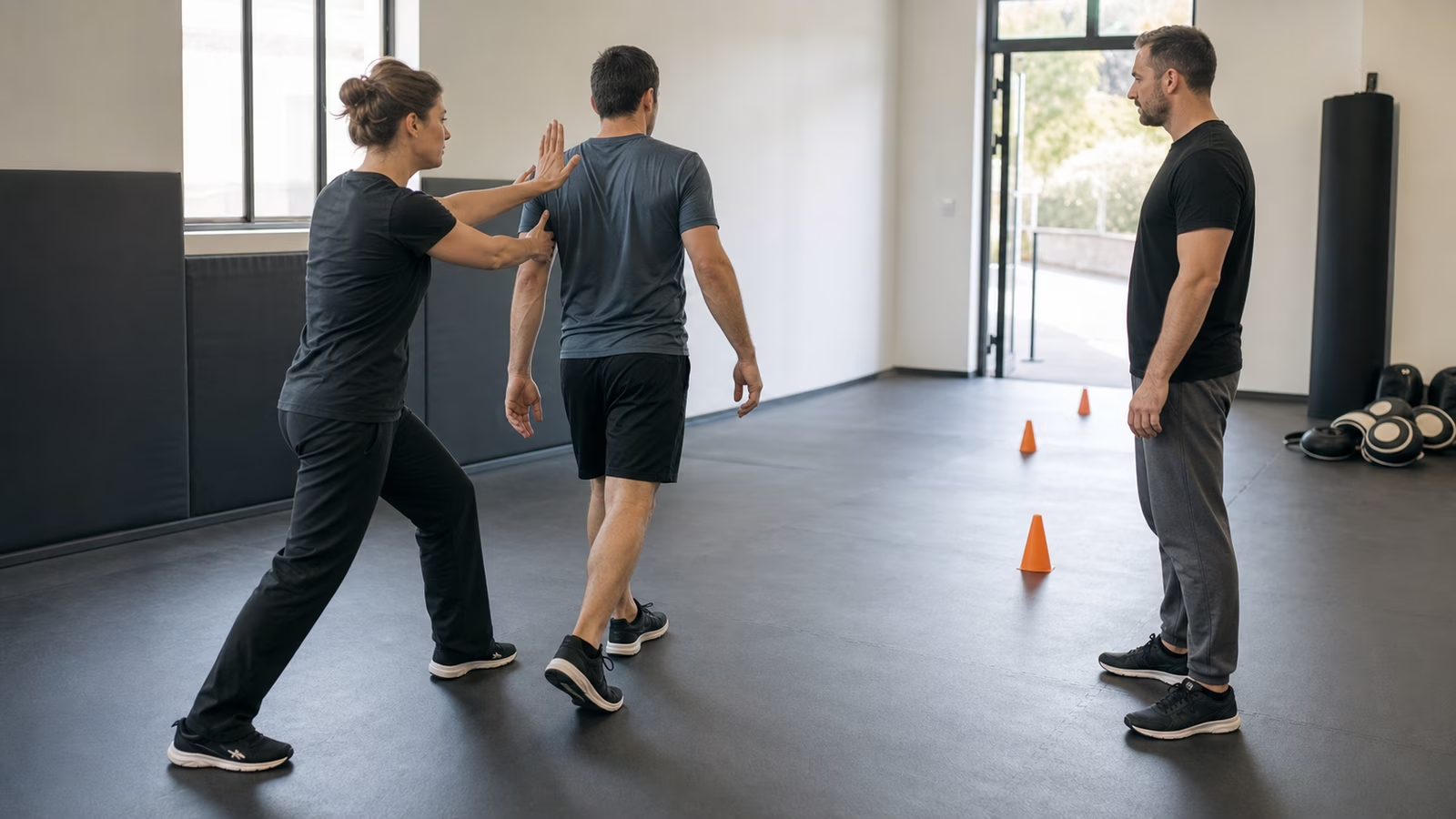
Krav Maga is often practiced on an open mat, but trouble rarely arranges itself like an open mat. Real rooms have corners, tables, bags, thresholds, wet floors, parked cars, railings, chairs, strollers, stairs, narrow hallways, and people who are not part of the problem but still take up space. The environment does not need to be dramatic to matter. A chair behind your calf can change your balance. A door that opens inward can steal the exit you thought you had. A wall behind your shoulders can make a small step backward useless.
This is why environmental movement deserves its own place in beginner training. It connects the physical work of stance and footwork to the quieter work of noticing, choosing space, and leaving before the situation becomes a contest. If Distance, Awareness, and Exit is the principle, environmental movement is where that principle becomes specific. Distance from a person is only part of the picture. Distance from the wall, the door, the curb, the table edge, and the crowd matters too.
The Room Is Part of the Drill
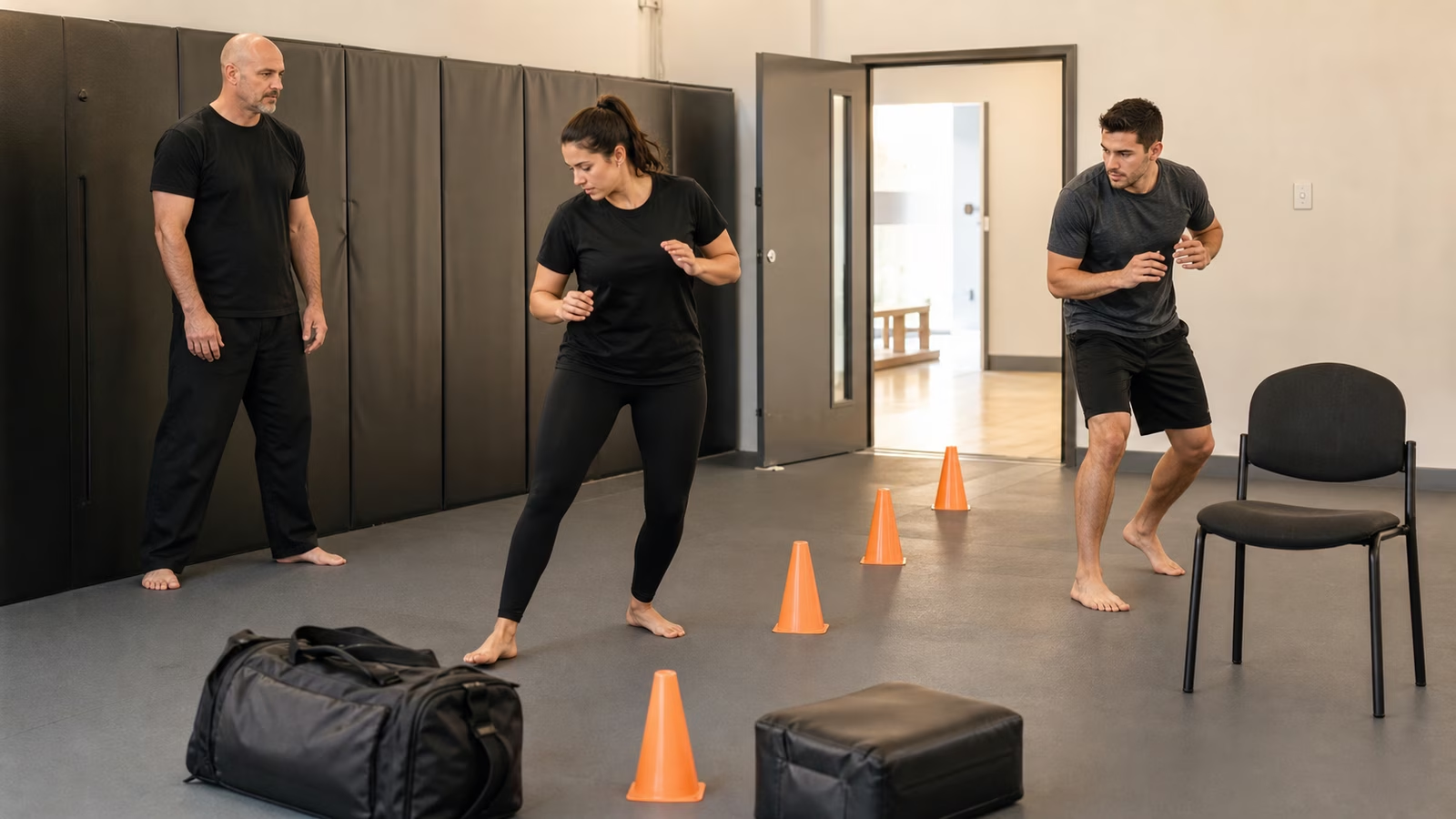
A beginner may think of the environment as background. The instructor sees it as another participant. When students practice in a clear rectangle, they can move backward, angle out, reset, and start again. Add a padded wall, a soft training bag on the floor, a chair, and a doorway, and the same movement asks different questions. Did the student look before stepping? Did they choose the open lane or drift into the corner? Did they keep the hands available while turning? Did they pause in the doorway and block their own exit?
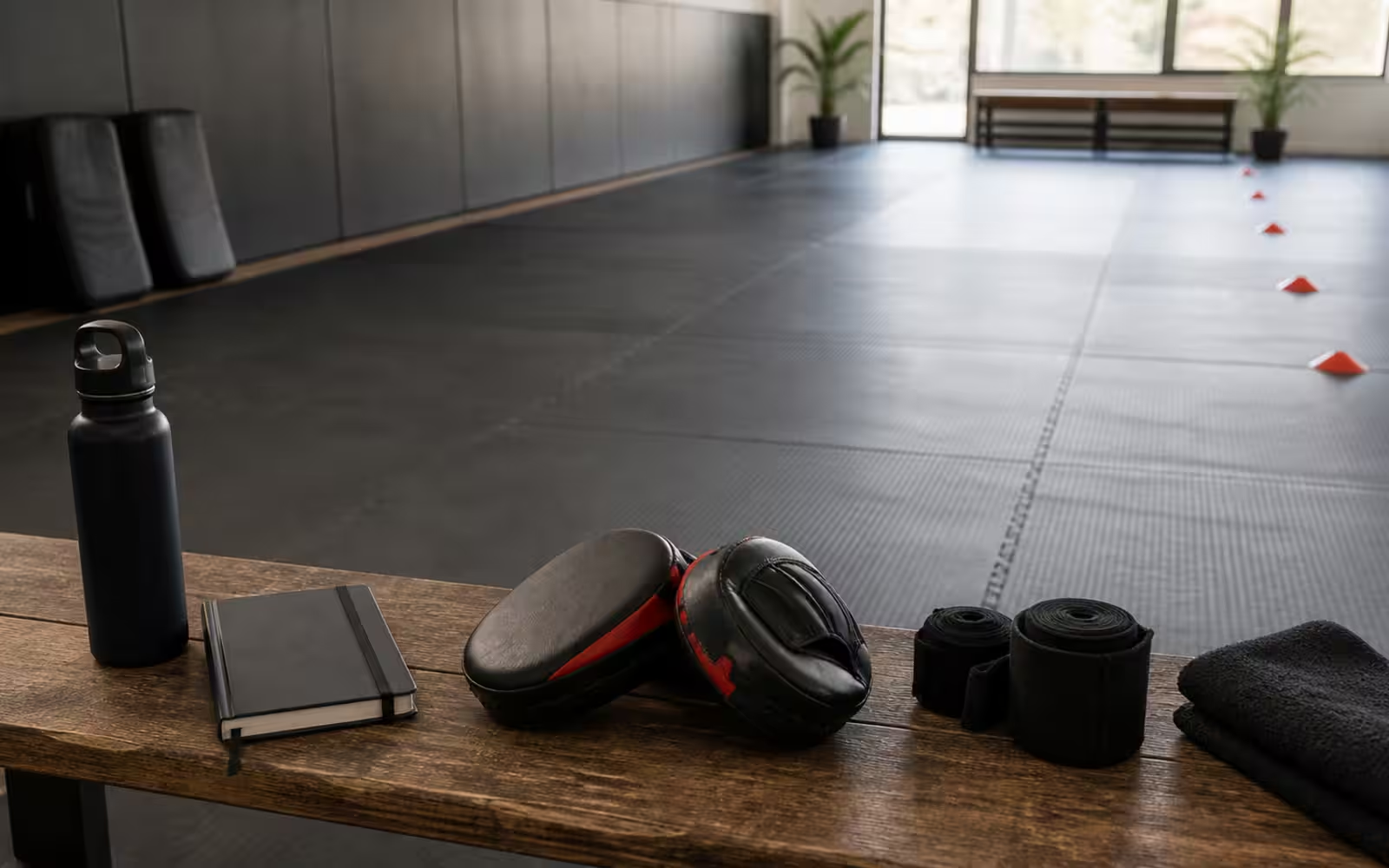
Good environmental training does not need elaborate props. In fact, too much theater can distract from the lesson. A pair of cones can stand in for a table edge. A pad can represent a wall. A chair can create a narrow path. The value is not realism in the movie sense. The value is that the student’s feet must solve a real spatial problem instead of repeating a shape in empty air.
The room also reveals habits that ordinary drills can hide. Some students retreat straight back until the wall catches them. Some turn their head toward the exit and let their hands drop. Some step over a bag as if the floor were guaranteed. Some freeze at a doorway because the body treats thresholds as decisions. None of this means the student is failing. It means the environment is giving honest feedback.
Walls Change the Conversation
A wall is not just a stopping point. It changes posture, options, and urgency. When a student backs into a wall during a drill, the body often stiffens. The shoulders rise. The chin lifts. The feet narrow because there is no more room to retreat. The student may try to push forward with the upper body instead of changing the angle with the feet. A small problem becomes crowded quickly.
This is where the phrase “do not back straight up” becomes less like a slogan and more like a physical fact. On an open mat, backing up may seem to work for several steps. Near a wall, the same habit runs out of road. Angling off is not a fancy footwork detail. It is a way to keep the wall from becoming a second attacker. A student who learns to feel the wall early can move before the wall starts making decisions for them.
Wall drills should begin slowly. One partner approaches with a pad or open hands, and the defender practices noticing the wall, using voice, angling toward open space, and leaving the line. The point is not to bounce off the wall or prove toughness under pressure. The point is to develop a small alarm in the body: space is closing, move now. That alarm is more useful when it arrives before contact.
The wall also matters in partner safety. Crowding someone into a hard surface during beginner practice can raise risk fast, especially when people are tired or embarrassed. Partner Work in Krav Maga is a useful companion here because environmental drills demand disciplined partners. The feeder must respect the agreed pressure. The defender must not panic into wild movement. Both people need enough control to let the lesson happen without turning the wall into a cheap source of intensity.
Doorways Are Decisions
Doorways are strange because they feel like exits and obstacles at the same time. A doorway offers a path out, but it also narrows movement. It can create a bottleneck, hide what is on the other side, and make a person pause at exactly the wrong moment. In class, a marked doorway drill can teach students to treat exits as decisions rather than decorations.
The first decision is whether the doorway is actually useful. An open door behind you may be a clean exit. It may also lead into a smaller room, a stairwell, a crowded hall, or a place where you lose sight of the person in front of you. Training cannot answer every layout, but it can teach the habit of reading before committing. A student should learn to see the lane, not merely the door.
The second decision is how to pass through without stopping in the frame. Beginners often move toward the doorway and then hesitate with one foot across the threshold. That half-in, half-out posture is weak. The body has not left, but it has turned attention away from the problem. A better drill asks the student to clear the frame, regain balance, look, and keep moving. The exit is not complete because the foot touched the hallway. It is complete when distance, line of sight, and continued movement make the situation safer.
Voice can help here. A clear “back up” or “stay there” may buy the moment needed to move through a doorway without turning it into a chase. Voice also draws attention from bystanders, which can matter in public spaces. The voice should not become a performance. It is a tool that connects awareness to movement, just as it does in Scenario Training and Ethics .
Bags, Chairs, and Occupied Hands
Everyday objects make self-defense less tidy. A gym bag near the feet changes how far you can step. A chair narrows the path. A phone in one hand changes your guard. Groceries, a backpack strap, a child’s hand, a coat, or a drink can delay movement by a fraction of a second that feels much larger under stress.
Krav Maga training should not turn every object into a weapon fantasy. More often, objects are obstacles, anchors, or decisions. The bag may need to be dropped. The chair may need to be moved around rather than through. The phone may need to be pocketed earlier or kept secure enough that it does not become the center of your attention. The point is not cleverness. The point is reducing the number of things your brain must negotiate while space is closing.
A useful beginner drill might begin with a student holding a soft pad, a bag strap, or an empty water bottle. The partner approaches. The student uses voice, creates space, decides whether to keep or release the object, and exits around a cone line. Nothing about this needs to be fast at first. Speed comes later, after the student understands that occupied hands are not a minor detail. Hands that are full cannot protect, frame, signal, hold a child, open a door, or strike a pad with the same readiness.
This is also a good place to train humility. Dropping an object can feel oddly difficult. People cling to bags, phones, and drinks because those objects are tied to normal life. Letting go can feel like admitting the situation is serious. A class can give students permission to make that choice early. Property can often be replaced. Balance, attention, and an open hand may matter more in the moment.
Floors Are Not Always Mats
The training floor is designed to forgive mistakes. Everyday floors are not. Tile, concrete, gravel, stairs, curbs, rain, loose rugs, and crowded sidewalks all change movement. This does not mean students should practice recklessly on unsafe surfaces. It means the mat should not teach them to assume the ground is kind.
Footwork in environmental training should keep that humility. Steps get smaller near obstacles. The eyes gather information without staring at the feet. The knees stay alive. The student avoids hopping over objects when a simpler path exists. The body learns that balance is not something to spend casually.
Ground recovery belongs in this conversation. A fall near a wall, chair, or doorway is different from a fall in the middle of a mat. Ground Recovery in Krav Maga explains the larger skill of protecting, orienting, and standing back up, but environmental work adds a practical question: what made the fall more likely, and what space is available now? A student who stands without looking may rise into the chair, the wall, or the same person they were trying to leave.
In responsible training, the instructor controls the risk. Props should be soft or stable enough for the assignment. Students should know the route before speed increases. The drill should stop if the room gets too crowded. Environmental training is meant to make students more attentive, not to create preventable injuries in the name of realism.
Crowds Narrow Choices
Crowds are not just collections of people. They are moving walls with opinions, delays, noise, and limited sightlines. A person who can move beautifully across an empty floor may become clumsy when asked to leave through a narrow lane with other students acting as passive obstacles. The body suddenly has to manage distance without assuming a perfect path.
Beginner crowd drills should be modest. Students can practice moving around stationary partners, using voice to pass, keeping hands visible, and choosing the wider route. Later, the drill can include light motion, a pad cue, or an exit that changes. The goal is still decision-making, not chaos. If the student learns only that crowds are frightening, the drill has missed its mark.
Crowds also test ego. The shortest path may not be the best path. The student may need to yield, slow down, circle wider, or abandon the desire to look composed. Good self-defense often looks ordinary from the outside. It is the person who leaves the argument, changes cars on a train, gives up the close parking spot, or walks around the loud group instead of threading through it. Training should make those choices feel legitimate.
Environmental Awareness Should Make Life Quieter
There is a danger in teaching environmental awareness badly. Students can leave class seeing every chair as a hazard and every doorway as a trap. That is not maturity. The point is not to make daily life tense. The point is to make simple observations arrive without drama.
When you sit in a cafe, you can notice whether your bag blocks your own feet. When you enter a room, you can notice the exits once and then return to the conversation. When you walk through a parking garage, you can keep enough space around parked cars without performing suspicion. When a hallway is crowded, you can slow down instead of squeezing into contact. These are ordinary behaviors, not secret tactics.
The same spirit appears in Training Between Krav Maga Classes . Daily awareness practice should support training without turning into private theater. You are not rehearsing a fight with every piece of furniture. You are learning to keep your body from being surprised by the shape of a room.
The Useful Question
Environmental movement keeps returning to one useful question: what is the room giving me, and what is it taking away? A wall may take away retreat but give you orientation. A doorway may offer escape but narrow your path. A chair may block a step but create distance. A bag may slow you down unless you decide early what to do with it. A crowd may hide a clear line but provide witnesses and space to disappear into ordinary movement.
That question keeps Krav Maga practical. It prevents students from treating techniques as answers that float free of place. It reminds them that self-defense is not only what the hands can do. It is where the feet can go, what the eyes notice, what the voice can change, what the body can release, and when leaving is still available.
The open mat is still useful. It teaches basics cleanly. But if training never leaves the open mat, the student may confuse clean movement with complete movement. Add the wall. Add the chair. Add the doorway. Add the bag. Keep the drill controlled enough to learn from. Then notice how quickly the subject becomes less about fighting and more about judgment.
That is the quiet value of environmental movement. It makes the room visible. It turns background into information. It teaches the beginner to move earlier, choose space more carefully, and stop treating the exit as an idea that can wait until after the technique. In a practice built around practical self-defense, that may be one of the most important habits a person can learn.