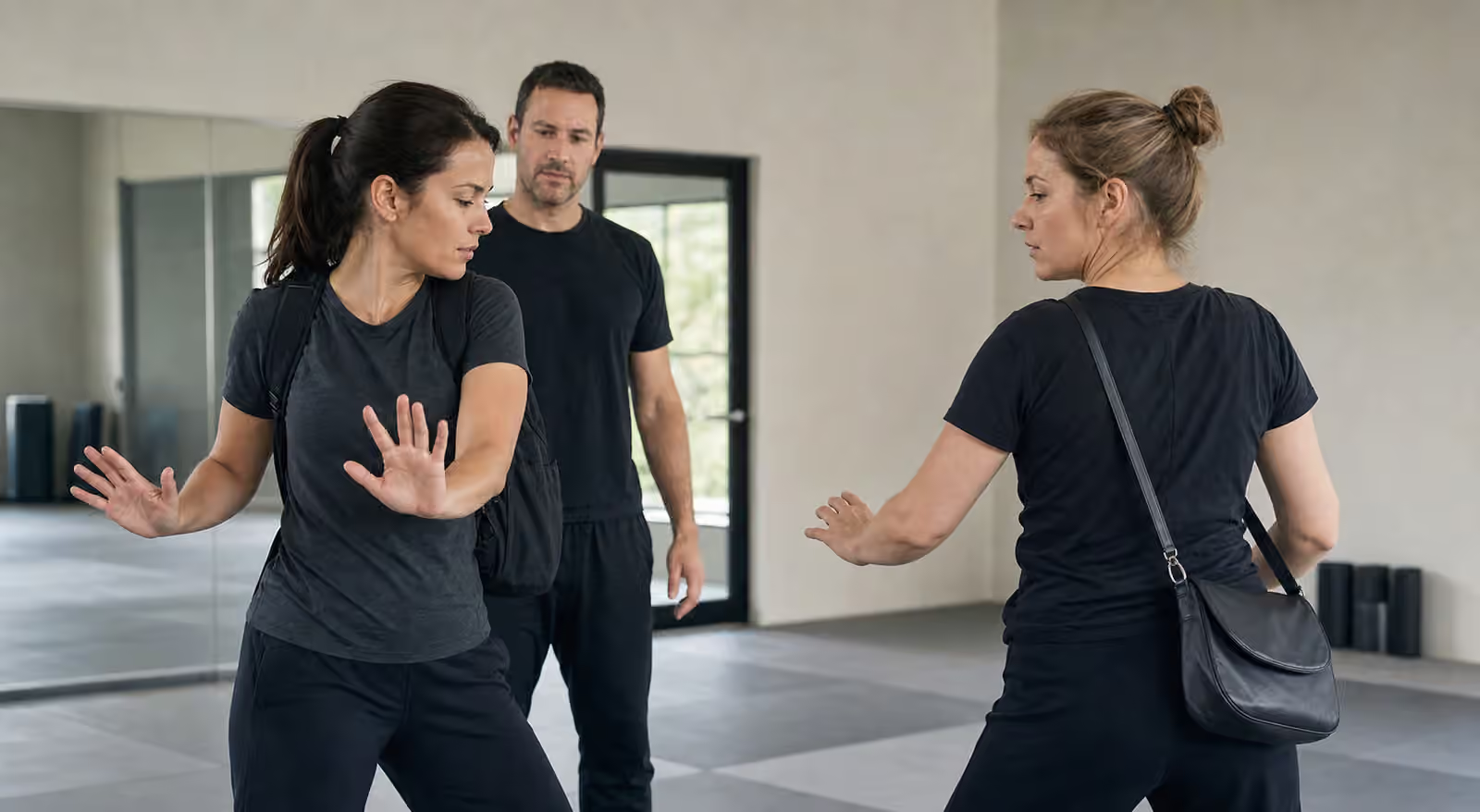
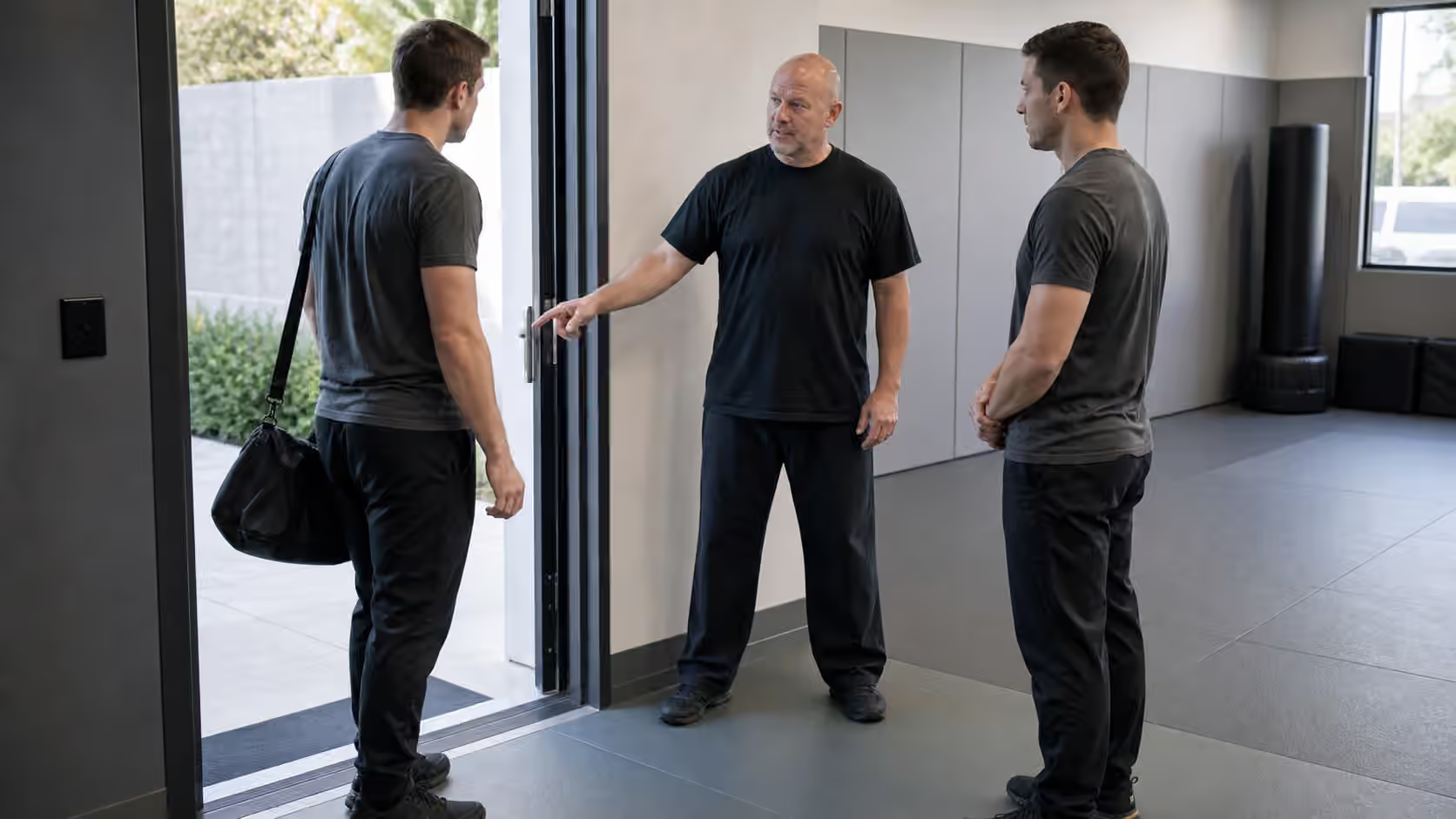
Elevators and stairwells look ordinary until movement becomes compressed. A hallway gives you lanes. A sidewalk gives you angles. A training mat gives you space the real building may never offer. An elevator gives you a box with a door that opens on its own schedule. A stairwell gives you hard edges, changing height, rails, landings, doors, and the small delay that happens whenever the body has to turn.
Good Krav Maga training should not turn these places into movie scenes. Most elevator rides and stairwell walks are uneventful. The point of training awareness around them is not to become tense every time a door opens. The point is to understand that tight spaces reward earlier choices. If you wait until the space is crowded, the door is closing, your hands are full, and someone is already too close, every option becomes harder than it needed to be.
This guide sits beside Environmental Movement because the room is not background. Walls, thresholds, stairs, rails, bags, and doors shape the decision before anyone touches anyone. It also belongs beside Crowded Space Awareness , because an elevator lobby or stairwell landing can become crowded faster than a beginner expects. The useful skill is not dramatic technique. It is the habit of noticing what the space is already taking away.
The threshold is the first decision
The most important moment may happen before you enter. An elevator that arrives with one person standing calmly in the corner feels different from an elevator that opens onto an argument, heavy intoxication, crowded bodies, blocked buttons, or someone who steps toward the door instead of making room. A stairwell with clean lighting and normal traffic feels different from a stairwell that is isolated, cluttered, wet, poorly lit, or full of people moving the wrong way.
You do not need a story to make a simple choice. Let the elevator go. Wait for another car. Take the public route. Return to the lobby. Walk with a group. Ask a desk, guard, staff member, or companion for help if that is available. These choices are not evidence of fear. They are the same idea behind Distance, Awareness, and Exit : when an ordinary exit is available, it deserves respect.
Beginners often make self-defense harder by treating every threshold as a commitment. The elevator opens, so they enter. The stairwell door is closer, so they use it. The route is shorter, so they take it. Krav Maga training can interrupt that reflex. A door is an option, not a command. A shorter path is not automatically a better path. A private stairwell may be useful in a fire drill and a poor choice in a social conflict. Context matters.
Inside the box, posture has to stay ordinary
An elevator does not give much room for a formal stance. Standing like a fighter inside a normal elevator is awkward, escalatory, and often unnecessary. The better habit is an ordinary posture that preserves function. Keep your feet placed so you can step without crossing yourself. Keep at least one hand available when possible. Avoid turning completely away from the door. Notice who is between you and the exit when the door opens.
Open-hand posture can remain natural. You might hold a phone lower instead of close to your face. You might let one hand rest near the chest while the other holds a bag. You might angle your body slightly so you can see the door and the person closest to you without staring them down. Open-Hand Protective Posture explains the same principle in a broader setting: the hands can communicate calm boundaries before they become frames.
Voice matters because tight spaces magnify small movements. A clear, ordinary sentence can prevent a physical problem from forming. “I am getting out here.” “Please give me space.” “Go ahead, I will wait.” The words do not need to sound theatrical. They need to be early enough that your body is not asking the words to do work too late.
Stairwells change balance before they change danger
Stairwells are not just narrow hallways. They change the height of the feet, the direction of the hips, and the way a person can turn. A quick step backward on a flat mat is one thing. A quick step backward near the edge of a stair is another. A grab, shove, stumble, or sudden turn has different consequences when the floor is not level.
This is why responsible training should begin with movement quality, not clever defenses. Students can practice stepping onto and off a low platform, turning on a landing, keeping hands available while opening a door, and pausing before entering a blind corner. The drill can be boring and still useful. The goal is to notice how quickly balance becomes precious when the environment changes.
Rails are useful, but they can also anchor attention. A hand on a rail may stabilize you. It may also occupy the hand you wanted for voice, balance, a frame, a bag, or a companion. A bag strap across the body may feel secure until it catches on the rail or pulls the shoulder while turning. Hands Full in Krav Maga covers this cost in everyday settings. Stairwells make the cost obvious because every carried object competes with the feet.
Companions make the route slower
Elevator and stairwell decisions change when you are with someone else. A friend may want to keep arguing. A child may run toward the closing elevator door. An older relative may need the rail and more time. A coworker may be distracted by a phone. A partner may be embarrassed and resist a simple choice like waiting for the next elevator.
The answer is not to invent a heroic plan. It is to leave earlier and use simpler language. “We will take the next one.” “Stay with me.” “This way.” “Wait here.” Krav Maga When You Are Not Alone explains that responsibility includes the pace and understanding of the person beside you. A route that works for you may not work for them. A stairwell that feels convenient alone may be the wrong route with a stroller, luggage, injury, fatigue, or a person who cannot move quickly.
Good training can include a companion role without turning the drill into chaos. One student moves with a partner through a doorway lane, pauses at a mock landing, and chooses between two exits. The partner may be slow, distracted, or uncertain, but the drill should stay controlled. The lesson is communication and route choice, not dragging someone across the room.
Training tight spaces without making them unsafe
Tight-space drills need more restraint than open-mat drills. Walls, platforms, rails, and door frames are unforgiving. A partner who adds surprise, speed, or resistance too early can turn a useful lesson into a preventable injury. Beginners should first learn how to move slowly through the shape of the space while keeping balance, hands, breath, and vision.
A good instructor can build the problem in layers. First the student walks through a doorway frame and clears the threshold without stopping halfway. Then the student adds a bag or phone. Then a partner stands near the exit lane. Then the student uses a verbal boundary and chooses to wait, exit, or angle away. Only after the basic choices are visible should pressure rise.
This connects directly to Safety Signals and Stopping Early . In a tight-space drill, stopping is not an interruption of training. It is part of training. The room should know how to freeze the action before a foot lands wrong, a shoulder hits a frame, or a student loses the point of the exercise and starts forcing movement.
Earlier is the real skill
The mature Krav Maga answer around elevators and stairwells is usually earlier, quieter, and less dramatic than the beginner imagines. You wait for the next elevator. You stand where the door is visible. You keep a hand free at the stairwell door. You let the hurried group pass before entering the landing. You take the better-lit route. You stop looking at the phone while crossing a threshold. You choose the route your companion can actually use.
Those choices do not prove that you could win a fight in a tight space. They do something more useful. They reduce the chance that the tight space becomes the place where you have to find out. Krav Maga is strongest when it gives students permission to solve problems before the room takes away their choices.