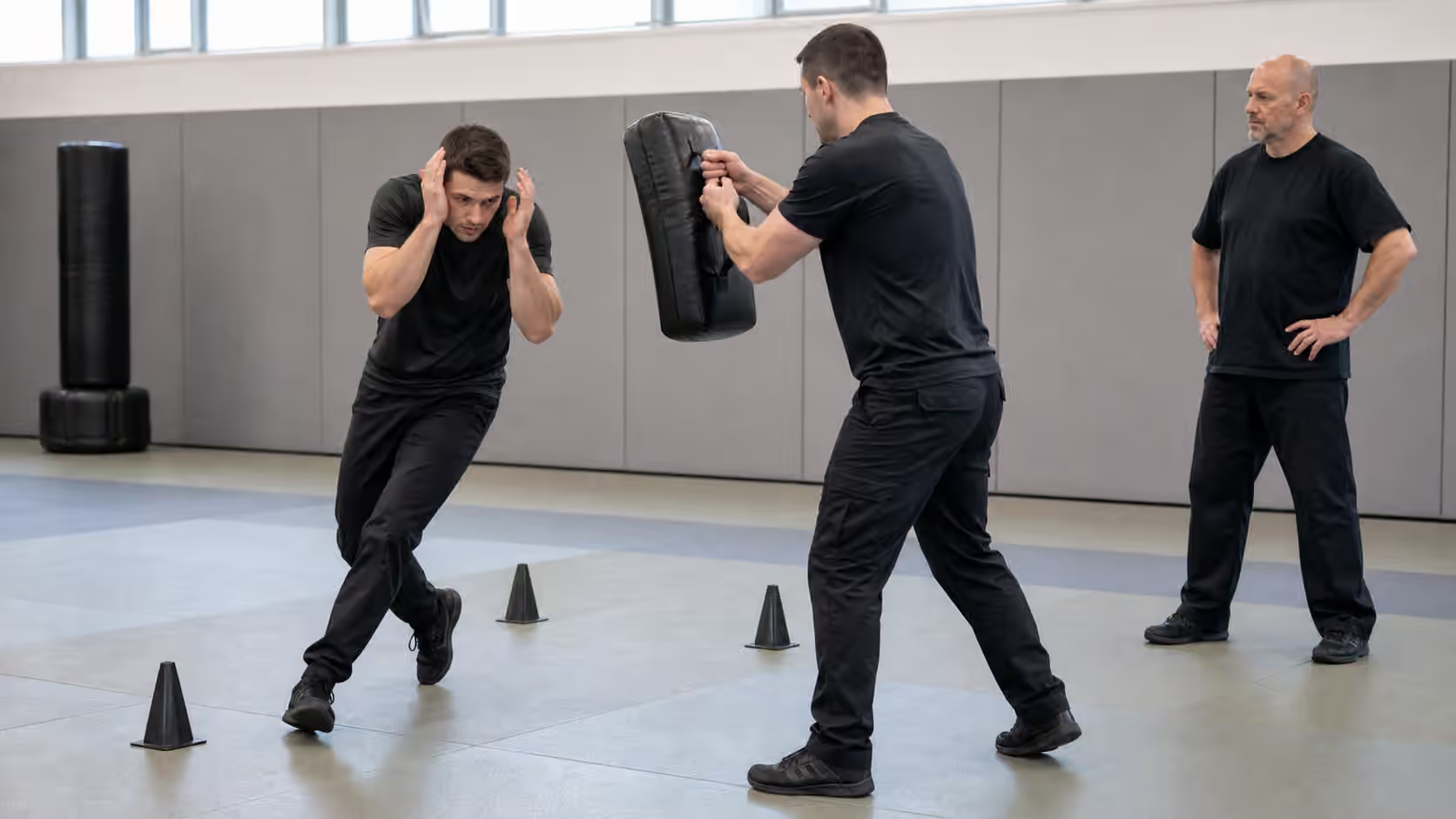
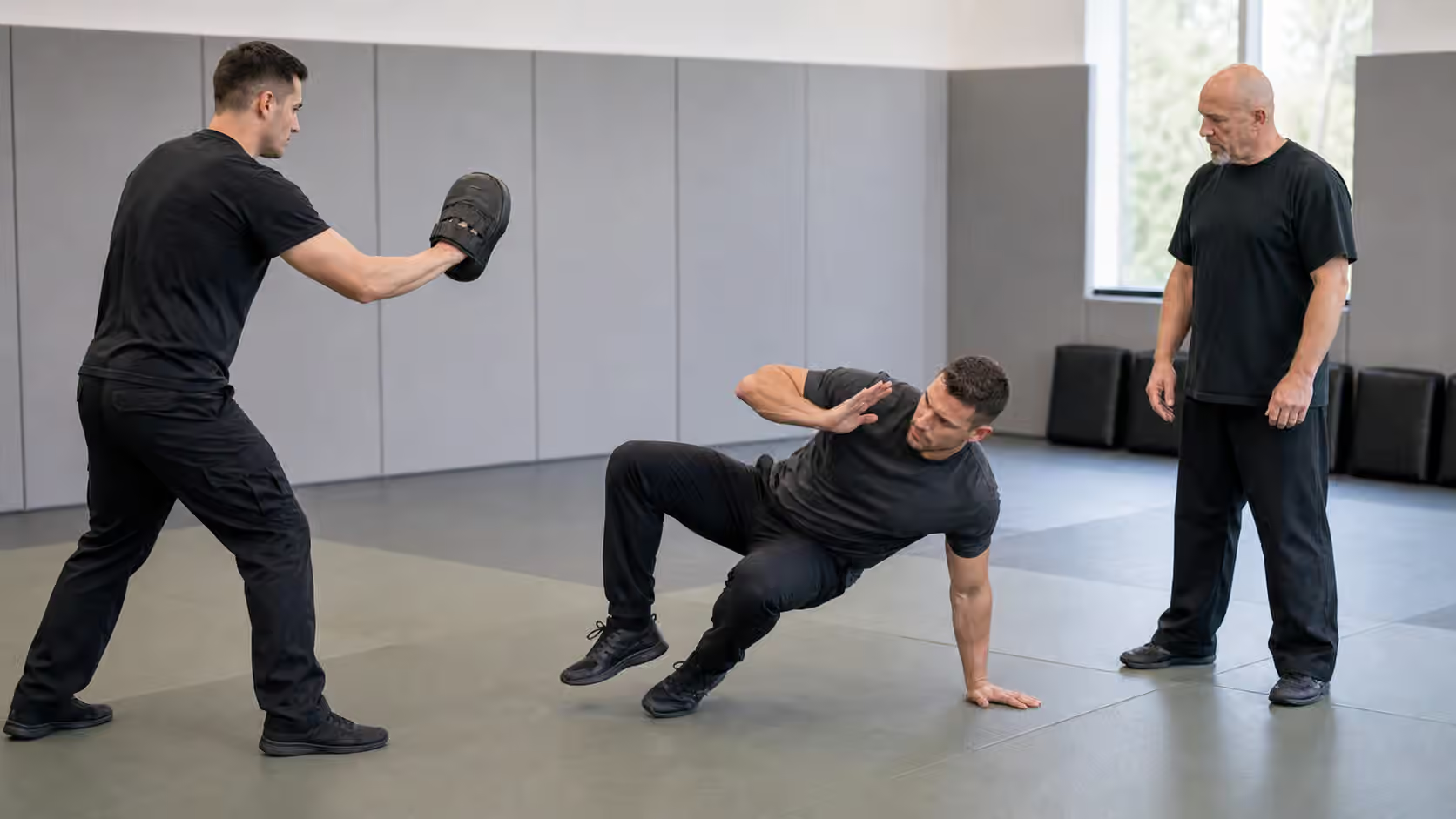
Elbow strikes make beginners impatient. The movement is short, the target is close, and the pad sound can arrive before the student has done much that looks complicated. Compared with long combinations, footwork drills, or careful de-escalation practice, an elbow can feel like a shortcut to seriousness. The body turns, the arm folds, the pad snaps, and the room briefly feels certain.
That certainty is exactly why elbow training needs restraint. Close-range tools are useful because the space is already crowded, not because the student wants to crowd it further. An elbow belongs to the uncomfortable distance where a person may be too near for clean straight punches, too upright to be on the ground, and too attached to the moment to think clearly. It can create room, but only if the student keeps balance, protects the head, respects the partner, and remembers that impact is not the end of the problem.
This guide sits naturally after Close Range in Krav Maga and beside Palm Strikes and Straight Punches . The first page explains why close range shrinks choices. The second explains why hand strikes need structure before force. Elbows live between those lessons. They are close-range strikes, but they still depend on distance, posture, breath, pad feedback, and a path back out.
Close Range Changes the Job
At long range, a beginner often has time to see the whole body in front of them. The shoulders move, the feet step, the hands show intention, and the exit may still be visible. At elbow range, the picture is smaller. A shirt pull, a shoulder bump, a wall, a bag strap, or a crowded doorway can make the student feel as if everything is happening inside the ribs. The nervous system wants one loud answer.
Good elbow training slows that urge down. The first question is not how hard the student can hit. The first question is whether the student can stay organized when space is already compromised. Are the feet under the hips, or has the body leaned into the pad? Is the chin protected, or did the head lift to admire the strike? Did the student breathe, or did the torso lock? Is there somewhere to go after contact, or has the striker planted in place and turned a close-range tool into a close-range trap?
These questions connect directly to Distance, Awareness, and Exit . Distance does not stop mattering when bodies are close. It becomes more expensive. A few inches can decide whether the elbow lands cleanly on a pad, crashes awkwardly into a holder, or misses because the student stepped past the useful range. A little space created after impact can decide whether the student has a chance to leave or simply remains in the same bad conversation.
The Elbow Is Short, Not Small
Beginners sometimes mistake a short strike for a small strike. Because the elbow travels less distance than a punch, they try to make it bigger with wild swings, spinning shoulders, or extra body lean. The movement feels powerful because the whole body is committed, but it may also be late, exposed, and hard to recover. A strike that cannot be recovered is not a reliable training habit.
In a responsible class, the instructor usually makes the elbow smaller before making it stronger. The arm folds into a compact shape. The shoulder moves without climbing toward the ear. The body turns only as much as balance allows. The opposite hand stays useful. The feet remain able to adjust. The student learns that a short tool can be serious without becoming reckless.
This is where the pad gives honest feedback. If the striker overreaches, the sound may be loud but the posture will show the cost. If the elbow collapses into the pad without body support, the strike feels dull and cramped. If the student crowds the holder, the pad has no room to absorb safely. The lesson is not hidden. The pad, the feet, the breath, and the partner all report what happened.
Padwork and Pressure treats impact as a conversation between structure and timing. Elbow padwork makes that conversation more intimate because the holder is close. The striker cannot pretend the holder is a distant object. The person behind the shield has shoulders, ribs, wrists, knees, breath, and trust in the drill. That should make the striker more careful, not less.
Pad Holders Carry the Safety Frame
Holding for elbows is not a passive job. The holder gives the striker a target, but also protects both bodies from awkward force. The pad needs to be placed where the instructor wants the lesson to happen, not where the holder guesses a dramatic strike should land. The holder’s stance matters. If their feet are narrow, the strike may drive them backward. If their arms are loose, the pad can fold into their own body. If they lean into the strike with pride, they may turn a training repetition into a contest.
The striker has equal responsibility. They should not treat the pad as permission to unload. They should check distance, wait for the agreed cue, strike the assigned target, and recover without adding extra shots. If the holder is smaller, newer, tired, or uncomfortable, the striker must lower the output. That is not politeness replacing realism. It is the discipline that lets close-range work be repeated safely.
This is why Partner Work in Krav Maga matters so much here. Elbow drills can become sloppy quickly because both students are near each other and the movement is compact. A small mistake may be harder to see before it is felt. Clear roles, named intensity, stop signals, and useful feedback are not administrative details. They are part of the technique’s training environment.
Close Does Not Mean Careless
Elbows often appear in conversations about sudden pressure, grabs, clinch range, or being crowded against a wall. Those are serious subjects, but seriousness does not require careless rehearsal. A beginner does not become more prepared by smashing pads from bad posture, surprising partners, or pretending every close-range moment has one answer. They become more prepared by learning what close range does to judgment.
Close range can make people rush. It can make them forget the exit. It can make them overuse strength because the other body is right there. It can make them confuse anger with urgency. Elbow training should reveal those tendencies without rewarding them. The strike is useful only if it helps the student regain something: space, balance, breath, vision, or a chance to leave.
The same idea appears in Open-Hand Protective Posture . Hands rise before the loud tools because the student is trying to keep the problem from becoming worse. If contact has already closed, the elbow may be trained as one possible response inside a larger sequence of protecting, framing, striking a pad, and disengaging. It should not teach the student to skip the earlier work. A person who can raise open hands, use voice, and move away may never need the elbow at all.
The Other Hand Still Has a Job
Because the striking arm gets attention, the other hand often disappears. Beginners drop it to the ribs, swing it behind the body, or leave it floating with no purpose. In a pad drill, the mistake may look harmless. In livelier training, it can expose the head, lose the frame, or make the body rotate too far.
A good coach keeps reminding students that one action should not empty the rest of the body. The non-striking hand may protect, frame, check distance, return to guard, or help the student orient after impact. The exact mechanics belong in class, where an instructor can see angles and safety. The broader habit is simple enough to name: do not spend the whole body on one short strike.
This is especially important when elbow work connects to controlled sparring or scenario training. Controlled Sparring in Krav Maga teaches that live timing exposes habits students cannot feel against a still target. A student who drops the other hand after every pad elbow may carry that gap into a moving drill. A student who recovers the hand, eyes, and feet after impact carries better information forward.
Disengagement Is the Point
The mistake that follows many strong pad strikes is staying to admire them. Elbows make that mistake tempting because the strike happens close and feels decisive. The student hits, feels the pad absorb, and pauses in the same range. In self-defense training, that pause should be treated with suspicion. If the strike was meant to create space, the next habit must use the space.
Disengagement does not have to be dramatic. It may be a small angle, a step that returns balance, a frame that prevents reentry, a voice cue, or a movement toward an exit. The exact choice depends on the drill. The point is that the elbow should belong to a sentence, not stand alone as a slogan. Protect. Strike if the training context calls for it. Recover. Move. See the room. Leave if leaving is available.
This connects the elbow back to the whole Krav Maga curriculum on the site. Footwork and Balance keeps the strike from tipping the student into the problem. Breathing and Stress Recovery helps the student return from the burst instead of staying flooded. Safety Signals and Stopping Early keeps the close-range drill from becoming a private test of toughness. The elbow is only one tool, and it works best when the quieter tools are still present.
A Serious Tool Needs a Serious Room
Written pages should be careful around strikes. They can explain principles, risks, training culture, and what a beginner should pay attention to, but they cannot replace coaching. An instructor can see whether a student is leaning, twisting a knee, striking at the wrong height, crowding the holder, bracing the shoulder, or missing the purpose of the drill. A page cannot do that from across a screen.
That limitation is not a flaw. It is a reminder of what practical training requires. Elbow strikes need pads, partners, supervision, controlled intensity, and a clear reason for being in the lesson. They should not be collected as tricks. They should not be practiced privately at speed against improvised targets without understanding the risks. They should not make beginners more eager to close distance.
The mature lesson is quieter. Elbows teach that close range is costly. They teach that compact movement still needs structure. They teach that the holder’s safety is part of the striker’s responsibility. They teach that a powerful moment is unfinished until the student has recovered balance and found a way out. If training makes the elbow feel like a reason to stay in the fight, the lesson has drifted. If training makes the elbow feel like one controlled way to regain space when earlier options failed, it is much closer to the point.
Good Krav Maga should make students less fascinated by impact over time, not more. The pad sound remains useful, but the student begins to hear other signals too: the feet landing under the body, the breath returning after contact, the partner’s trust staying intact, the instructor’s correction becoming smaller, and the exit appearing sooner. That is where elbow training becomes valuable. It turns a dramatic-looking strike into a disciplined close-range habit, then asks the student to leave before the habit becomes a place to live.