Some training days begin before class goes wrong. The student arrives after poor sleep, a difficult conversation, a crowded commute, a heavy workday, or a week that has left the mind scattered. The body is in the room, but attention keeps slipping elsewhere. Instructions are heard late. Partner cues feel sharper than they are. A drill that was manageable last week feels irritating, embarrassing, or strangely distant.
Krav Maga training should have room for those days because they are part of real practice. The answer is not to quit whenever attention is imperfect. It is also not to force full intensity while pretending nothing has changed. The useful path sits between those extremes: train honestly, communicate early, reduce unnecessary risk, and learn what attention can still do.
Distraction Changes Safety
Distraction is not only a private feeling. It changes timing, listening, distance, and partner awareness. A student who is mentally elsewhere may miss the start signal, forget the reset rule, hit a pad after the holder relaxed, or keep drilling after fatigue has made movement sloppy. None of this makes the student careless by character. It means their available attention is lower than usual.
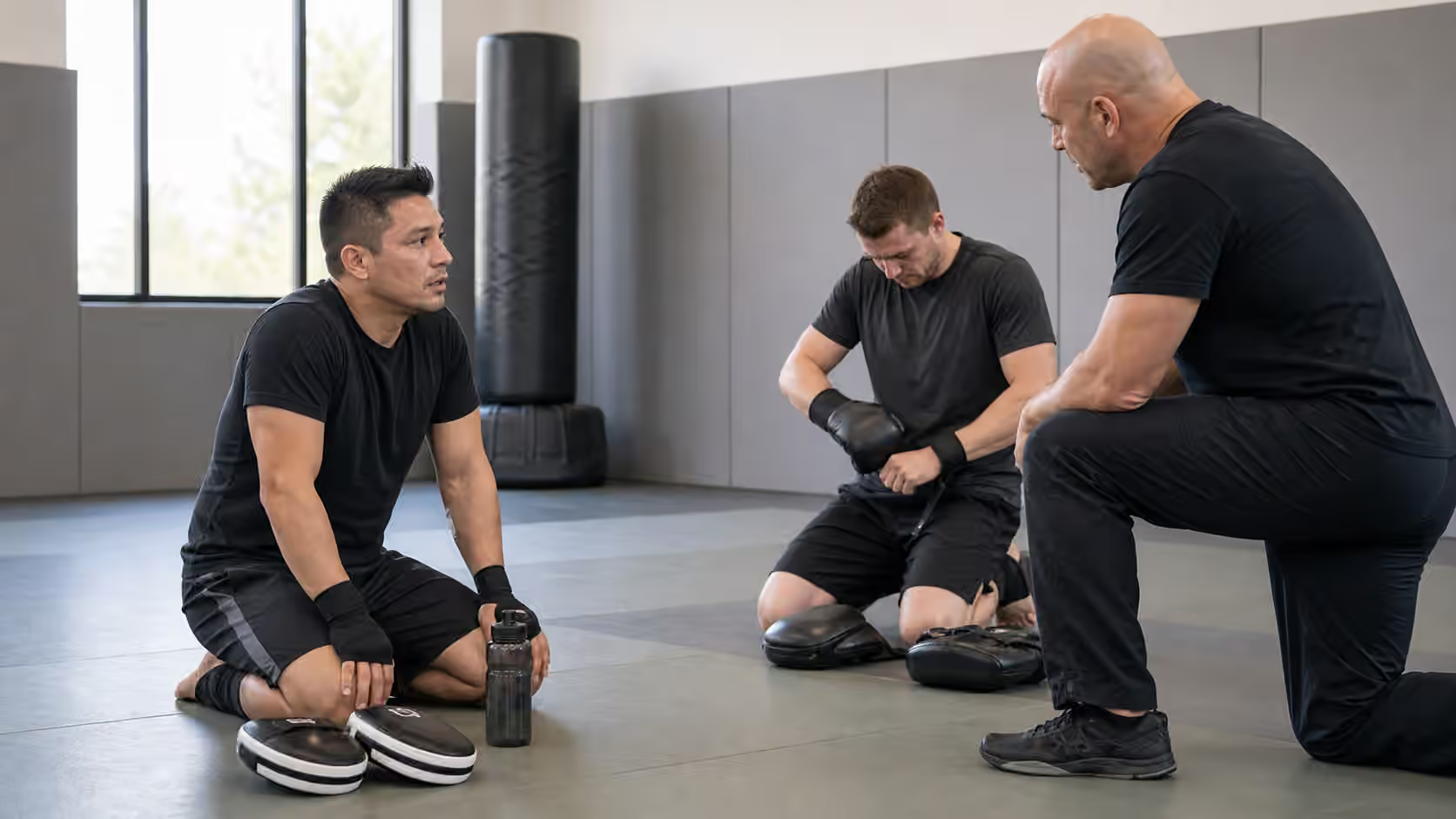
Partner Work in Krav Maga depends on shared attention. Each partner needs to know the drill, the intensity, the target, and the stop signal. On a distracted day, those details need more deliberate confirmation. The student may need to ask the instructor to repeat the assignment. They may need to tell a partner they are keeping the round lighter. They may need to step out for one repetition and rejoin when they understand the drill.
That kind of honesty protects everyone. It is better to pause for ten seconds than to drift through a contact drill with half the rules missing.
Lower Intensity Is Still Training
Many students believe a hard day requires hard training to prove discipline. Sometimes movement helps clear the mind. Sometimes a strong pad round is useful. But intensity is not automatically the medicine for distraction. It can also make the student less accurate, less patient, and less safe.
Progress Without Chasing Intensity is important here. A lower-intensity class can still build skill if the student chooses the right focus. They can work on clean foot placement, clear resets, breathing after contact, safer pad holding, or listening to corrections. They can leave class better organized than they entered, even if they never reached maximum effort.
The mature question is not “Did I go hard?” It is “Did I train in a way that made me and my partners safer and clearer?” On some days, the answer comes from reducing speed before the body has to force the decision.
Tell the Room Enough
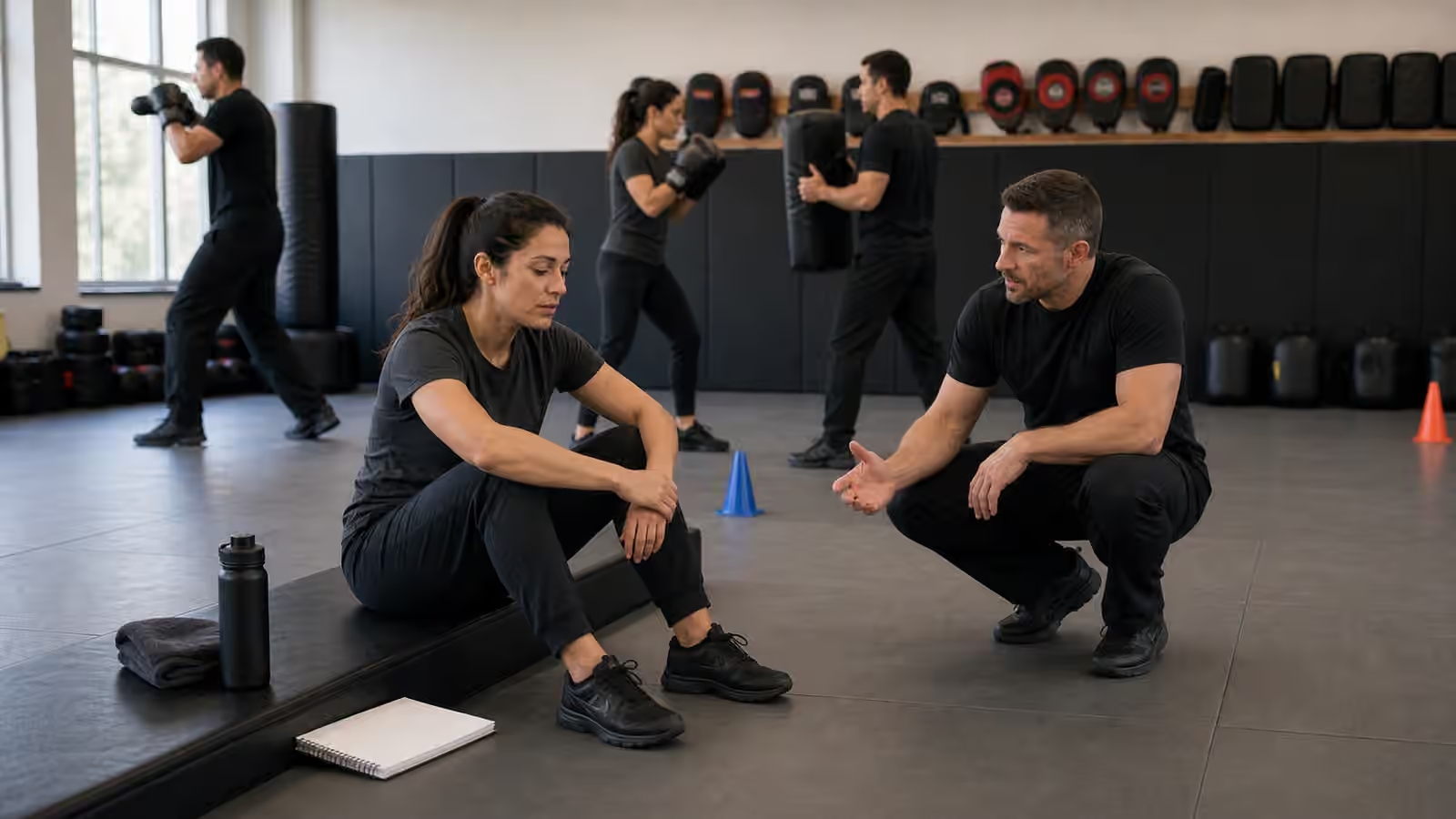
Students do not need to announce their private life to the whole class. They do need enough communication to keep practice honest. A simple sentence to an instructor can be enough: attention is low today, the student wants to work carefully, or they may need a reset if they get overwhelmed. A sentence to a partner can also help: lighter contact, slower feed, repeat the cue, pause if the student misses the start.
Safety Signals and Stopping Early gives students permission to use brakes. Distracted days are exactly when those brakes matter. The signal should arrive before the drill becomes messy, not after the student has already lost control of the round.
Communication should be plain. It should not become a long apology. Most partners do not need the full story. They need to know how to train with you safely. A good training culture makes that normal.
Choose a Narrow Focus
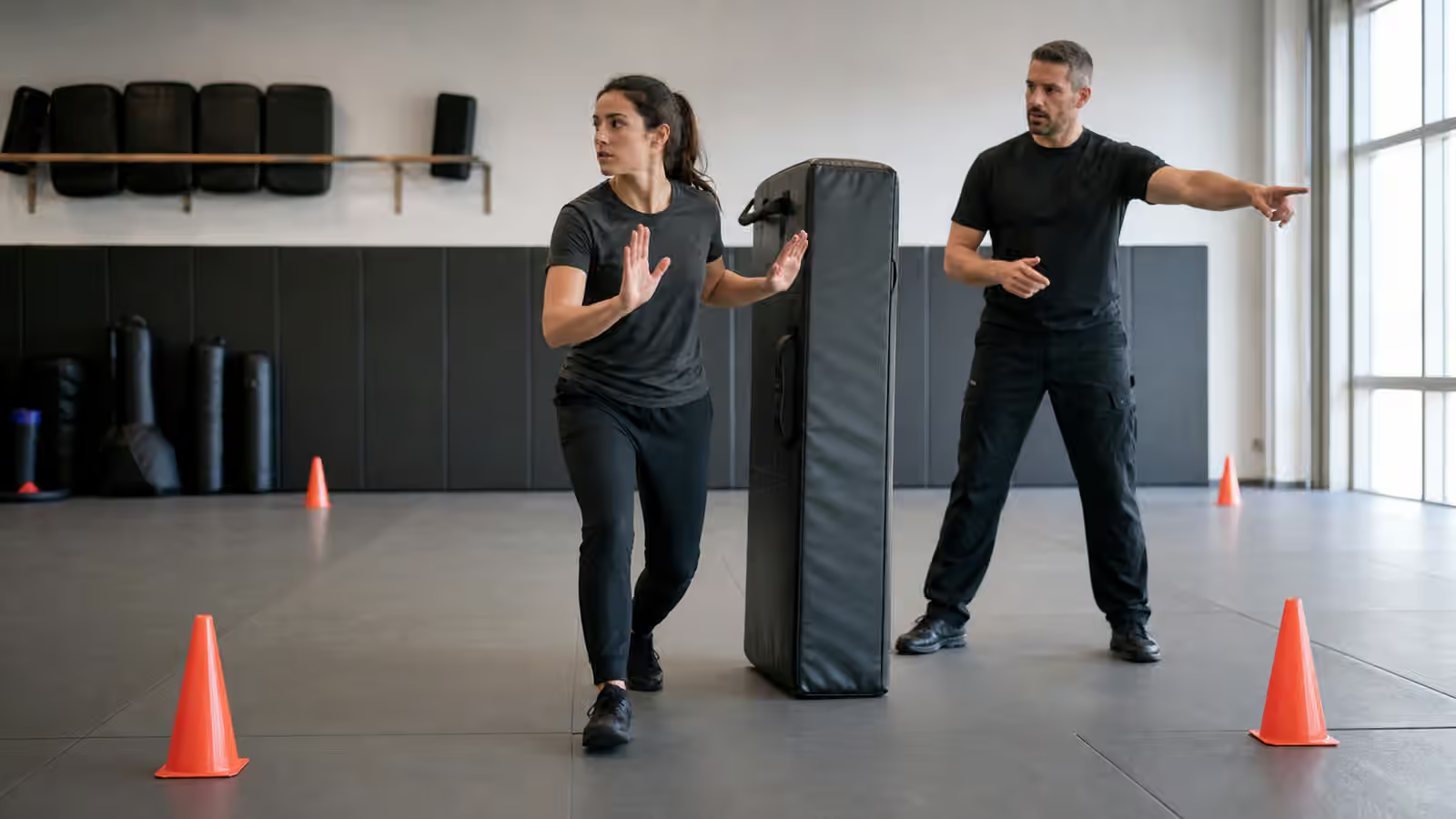
Distraction scatters attention, so a narrow focus can help. The student may choose one technical anchor for the class: keep the feet under the hips, breathe after each round, recover hands to guard, listen fully before moving, or notice the exit lane before resetting. The focus should be small enough to remember when stress rises.
Class Debriefs and Training Journals can support this habit. Before class, the student writes one sentence about the focus. After class, they write what happened. They do not need a polished reflection. They need a record that turns a scattered day into information.
The narrow focus also helps with corrections. If the instructor gives five notes, the student may be unable to hold all five. They can ask which one matters most for the next round. That question is not resistance. It is a way to keep learning within the attention available.
Watch the Emotional Volume
Krav Maga drills can wake up emotion even on normal days. On distracted or overloaded days, the emotional volume may rise faster. A partner’s pressure may feel personal. A correction may feel harsher than intended. A failed repetition may trigger shame instead of curiosity. The student may want to push harder to escape the feeling.
Breathing and Stress Recovery belongs here because the ability to come down is part of training. A student can take one round off, breathe, drink water, ask a question, or return at lower intensity. That reset is not a retreat from training. It is training the return.
Instructors should treat this with care. The goal is not therapy, and a martial arts class should not pretend to be medical support. The training room can still provide structure: clear rules, safe partners, permission to pause, and a path back into movement. Students with medical or mental health concerns should seek qualified help outside class. Within class, the practical task is narrower: keep the round safe and teachable.
Distracted Days Reveal Real Habits
When attention is low, the student’s real habits become visible. Do they listen before moving? Do they respect partner signals? Do they chase power when embarrassed? Do they keep posture when tired? Do they ask for clarification or guess? These questions can make distracted days valuable if the class is managed well.
Fatigue and Pacing in Krav Maga covers a similar truth from the body side. Fatigue reveals what holds up when energy drops. Distraction reveals what holds up when attention drops. Neither should be used as an excuse for sloppy practice, and neither should be ignored as if it does not matter.
A student may discover that their pad holding gets careless when their mind wanders. That is useful information. They may discover that they stop scanning for exits when annoyed. Useful again. They may discover that they can still use a calm boundary sentence even when the day is messy. That is a real skill.
Leaving Early Can Be the Right Call
Sometimes the honest training decision is to stop. If the student cannot follow safety rules, cannot control contact, feels too overwhelmed to hear instruction, or has a limit that makes the class unsafe, leaving early may be the mature choice. Training Around Injuries and Limits applies to attention as much as joints and muscles. Limits are not only physical.
Leaving early should be handled simply. Tell the instructor. Step off safely. Do not disappear from a partner drill without making sure the partner understands. If possible, note what happened afterward so the next class can begin with better information.
Training on distracted days is not glamorous, but it is honest. Real self-defense judgment rarely appears on perfect days only. The student who can slow down, communicate, choose a narrow focus, reset after emotion rises, and leave when necessary is practicing responsibility. That responsibility may not sound impressive, but it is one of the things that keeps Krav Maga from becoming noise.