The flashiest part of Krav Maga is impact. The quietest part is distance. Distance decides whether the impact is needed, whether it can work, and whether you could have left before the situation became physical.
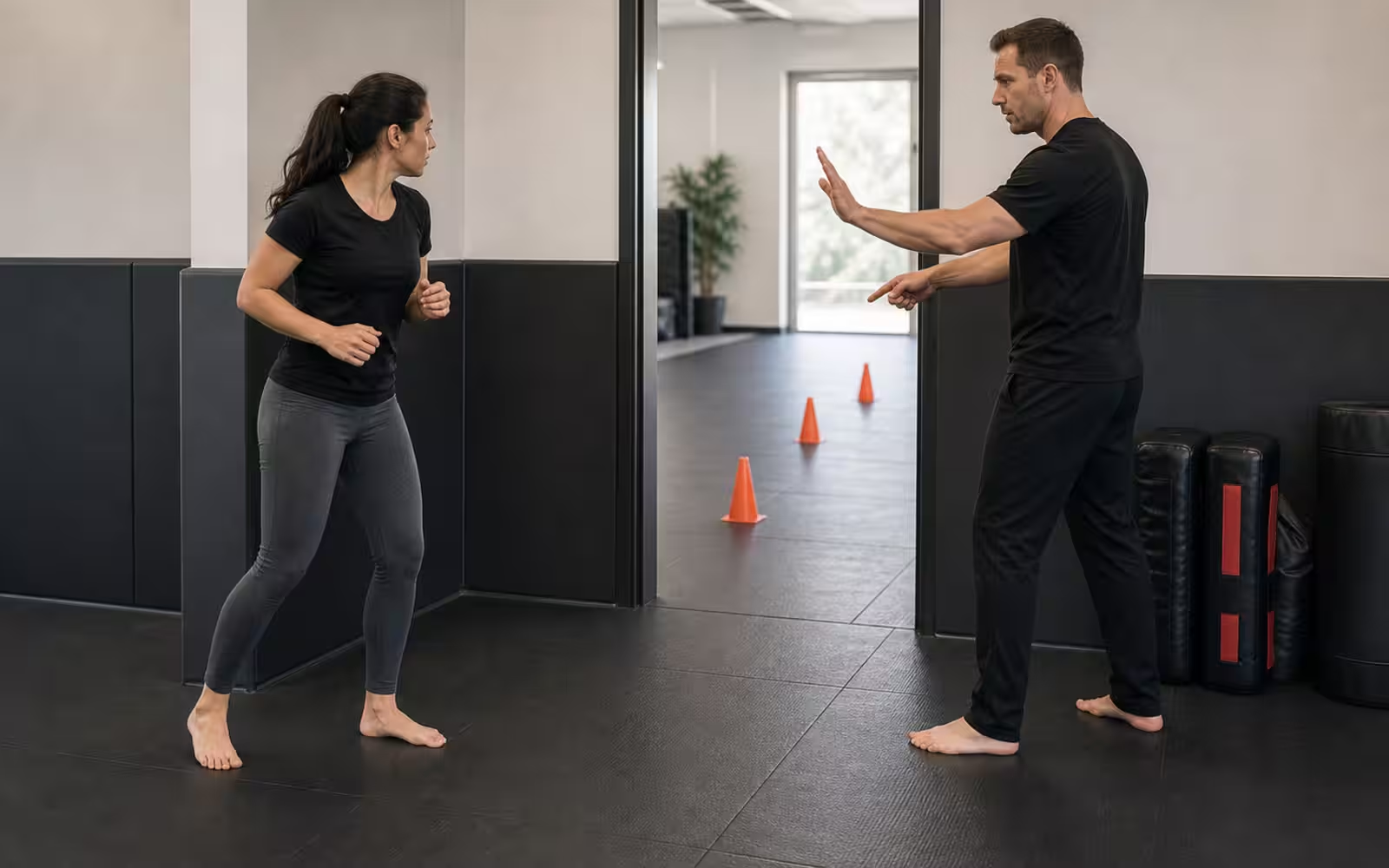
In a good class, distance is not introduced as a measurement. It is introduced as a feeling. The instructor asks one student to stand too close and another to notice what changes. The room sees it immediately. Shoulders rise. The back foot searches for space. The hands want to come up even before anyone says threat. A few inches can change a conversation from normal to charged.
That feeling is useful. Self-defense often begins as a violation of ordinary distance. Someone steps in after being asked not to. Someone blocks a path that did not need blocking. Someone follows when you create space. Someone speaks normally but keeps moving closer. None of those moments requires panic, but each one deserves attention. Awareness is not paranoia. It is noticing when ordinary social rules stop working.
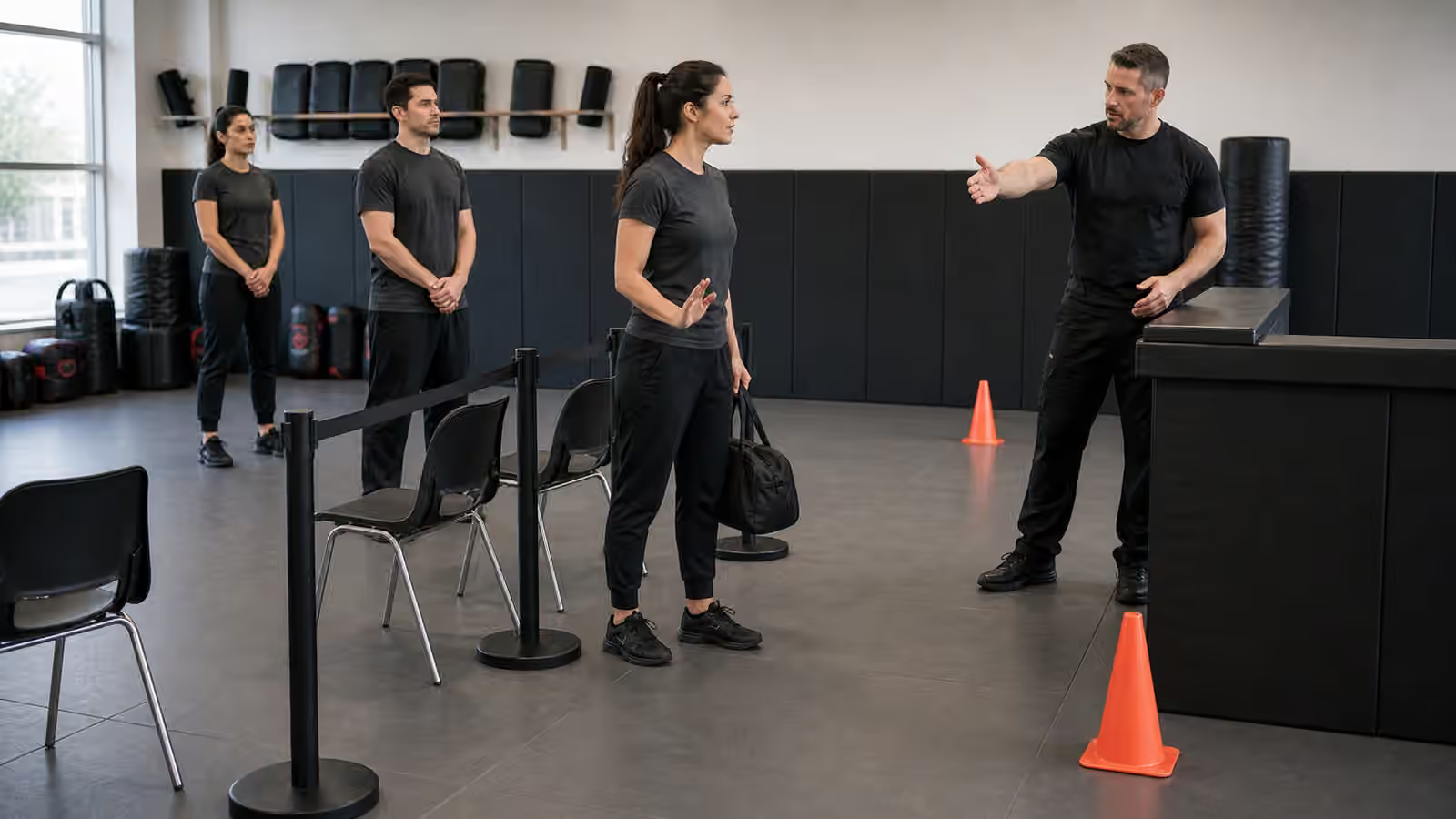
Beginners often imagine awareness as scanning every shadow. That is exhausting and unrealistic. Practical awareness is more ordinary. You know where the exits are because you looked when you entered. You keep one ear free when walking through a quiet lot. You notice when a conversation is moving you toward a wall. You choose the brighter route. You let the elevator go if the situation feels wrong. You do not debate yourself for taking the long way home.
Krav Maga can help because it gives these choices a physical context. On the mat, you learn what it feels like to have your heels near a wall. You learn that stepping straight back may keep the other person in front of you but also steals your room. You learn that a small angle can open a lane. You learn that hands can be both communicative and protective. You learn that the body needs permission to move before the mind finishes writing its perfect explanation.
Voice belongs in this conversation. Many people train punches more easily than they train a clear boundary. Saying “Stop” or “Back up” in a room full of adults can feel strangely exposing. That awkwardness is exactly why practice matters. A voice that has never been used under mild stress may not appear under real stress. A good instructor will not turn voice work into theater. They will treat it as a bridge between awareness and action.
The best boundary voice is not a movie line. It is clear, brief, and suited to the moment. It can be polite early and firm later. It can name distance. It can draw attention. It can tell a bystander what is happening. It can also give you information. If a person responds to a normal boundary by calming down, apologizing, or creating space, the situation has changed. If they respond by mocking, closing distance, or escalating, that is also information.
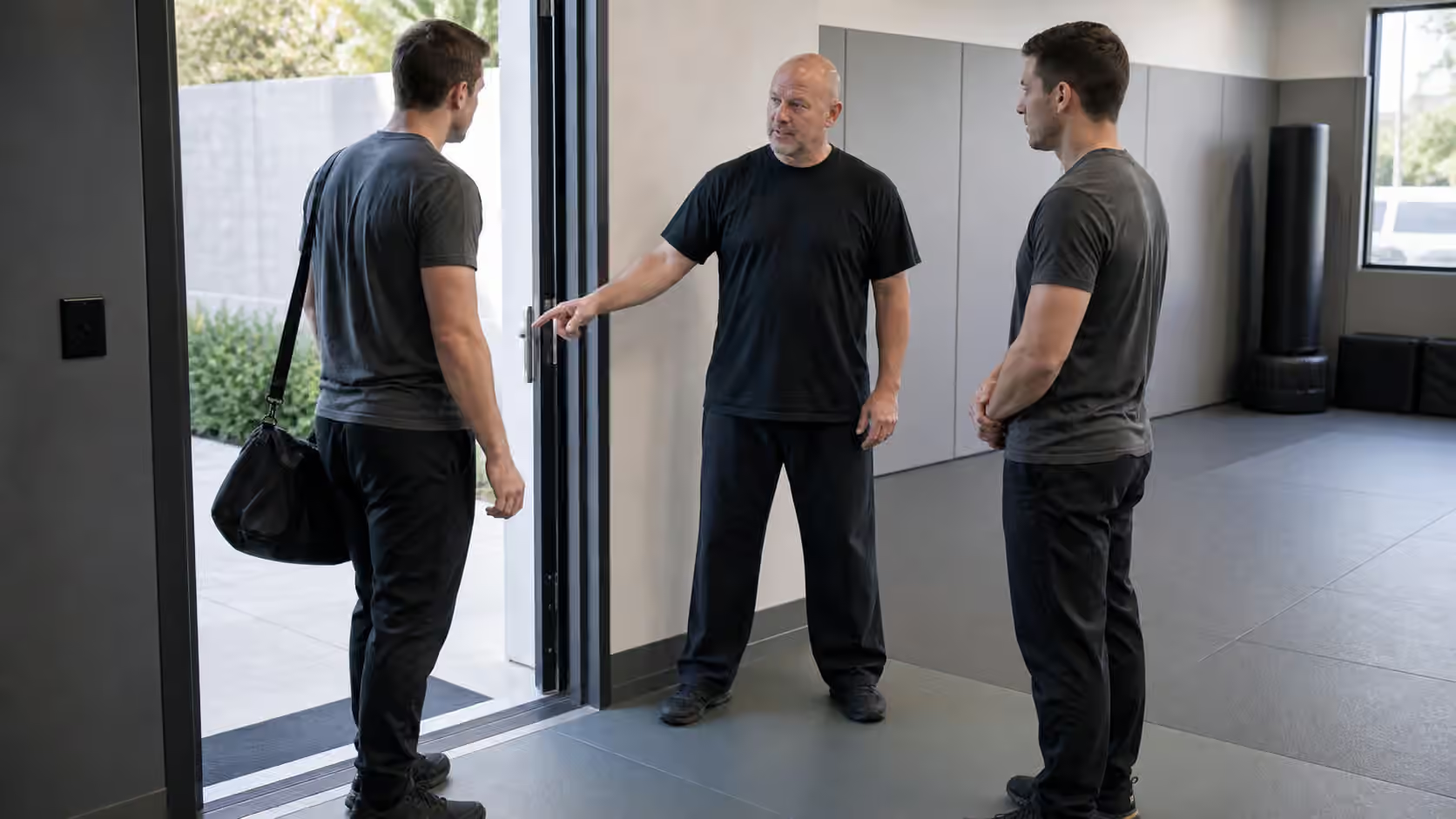
The exit is the most underrated technique in the room. New students sometimes feel cheated by that answer because they came to learn what to do if leaving is impossible. That training matters, but leaving is not a lesser skill. Leaving requires awareness, timing, ego control, and sometimes social courage. It may mean ending a conversation before you have the last word. It may mean looking rude. It may mean giving up a parking spot, a place in line, a drink, or a sense of being right.
Krav Maga should make leaving feel like success. If the culture around the training treats every retreat as failure, it is confusing self-defense with pride. Pride is heavy. It keeps people in rooms they could leave. It asks for explanations from people who are not listening. It turns insults into invitations. A good school keeps reminding students that the safest confrontation is the one that ends before anyone needs to prove anything.
There is also a legal and ethical reason to care about distance. Laws vary by location, and this site is not legal advice, but the broad principle is simple enough to respect: physical force carries consequences. The more clearly you can show that you tried to avoid, leave, create space, and stop the situation from becoming physical, the more responsibly you are behaving. Training should not make you eager to use force. It should make you better at understanding when force is not yet necessary and when delay has become dangerous.
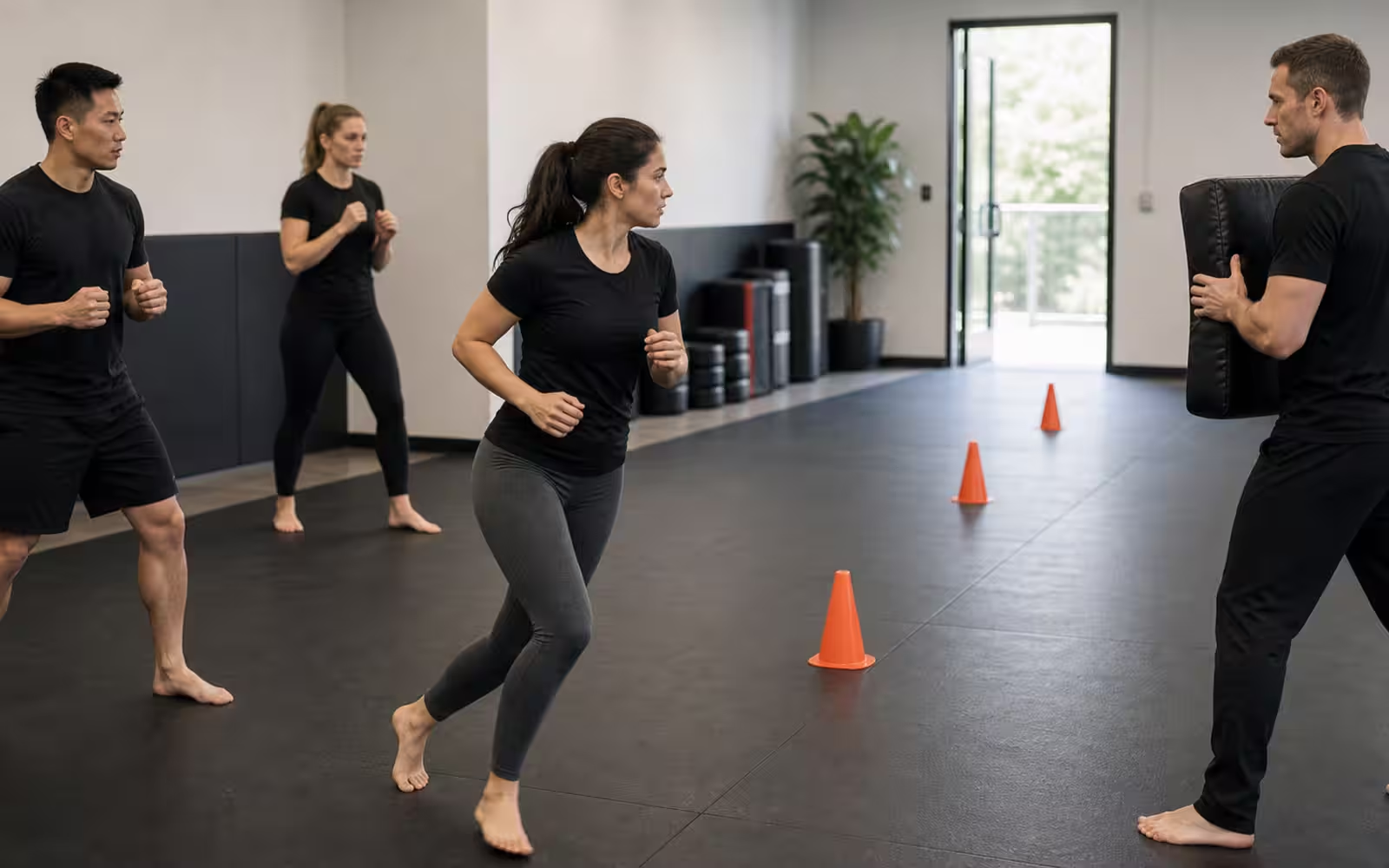
On the mat, distance drills can look plain. One partner steps in. The other angles out. A pad appears. A student moves, strikes the pad, and exits. The class resets. From the outside, it may look repetitive. From the inside, every repetition asks a question. Did you see the entry early? Did you freeze? Did your feet cross? Did your hands drop? Did you move toward the open space or toward the wall? Did you stay to admire your work after you should have left?
That last habit matters. Many beginners stop after the action. They strike a pad or complete a movement and then stand still, as if the drill were a sentence with a period. Real safety often needs a comma. Move, make space, look, leave. A coach who keeps saying “Do not pose at the end” is teaching more than athletic rhythm. They are teaching that a self-defense action is only useful if it returns you to decision-making.
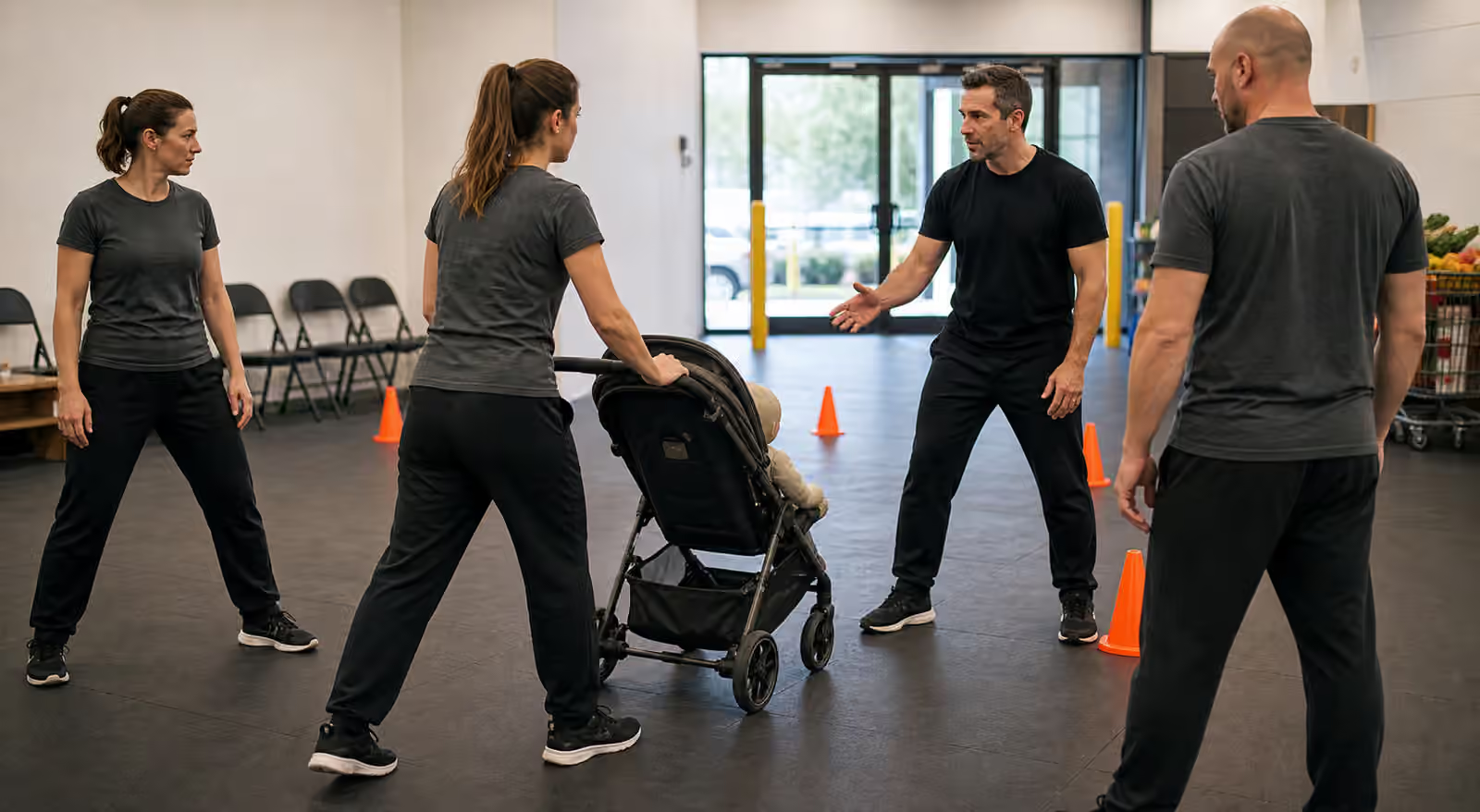
Awareness also includes the people around you. You may be with a child, an elderly parent, a friend who freezes, or a partner who is injured. The exit that works alone may not work with someone else. A restaurant booth, a narrow hallway, a car seat, a stroller, a crowded train, or a stairwell changes the problem. Good training eventually asks students to think beyond their own body without turning every public place into a threat map.
The challenge is staying human. Awareness can become fear if it is taught badly. You should not leave class believing every stranger is a problem. You should leave with a little more permission to notice, a little more comfort creating space, and a little less need to explain your instincts away. Most days, awareness simply makes life smoother. You choose better paths. You avoid drunk arguments. You keep your hands free in awkward places. You position yourself so leaving stays available.
Distance is not glamorous, but it is merciful. It gives people time to think. It gives words a chance to work. It gives exits a chance to stay open. It gives your body the room it needs if nothing else works. In the long run, the Krav Maga student who understands distance may use less force, not more, because they stop arriving late to problems that were already speaking.