The most useful self-defense moment is often the one that does not look like self-defense. It happens before anyone grabs a wrist, before a pad is hit, before a dramatic escape is needed. It happens when a person notices the distance closing, feels the tone changing, raises a hand without turning it into a challenge, and says something simple enough to be understood under stress.
Good Krav Maga training does include physical skills, but the physical skills sit inside a wider problem. Real conflict is not a clean demonstration. It is noise, embarrassment, surprise, pride, fear, alcohol, crowds, social pressure, bad lighting, furniture, friends, strangers, and the uneasy feeling that maybe you are overreacting. De-escalation and verbal boundaries matter because they give you useful choices before the situation has narrowed to force.
This is not about winning an argument. It is not about sounding tough. It is not about memorizing perfect lines. The goal is to create a pause, make your boundary visible, keep your body organized, and leave if leaving is available. If the situation settles, that is success. If the situation does not settle, you have at least bought information and distance.
A boundary is not a performance
Beginners sometimes think a verbal boundary has to sound commanding in a movie way. They imagine a deep voice, perfect wording, and a fearless stare. In practice, a useful boundary can be plain. “Stop.” “Back up.” “I do not want trouble.” “Do not touch me.” “I am leaving.” The words matter less than the combination of voice, distance, posture, and timing.
A boundary is not a speech. It is a signal. It tells the other person, witnesses, friends, and your own nervous system that a line exists. That signal can be calm and still serious. In fact, calm is often better. A person who is trying to provoke you may want volume and ego. If you give them a performance, the scene can grow. If you give them a clear line and a movement toward exit, you are working on the real problem.
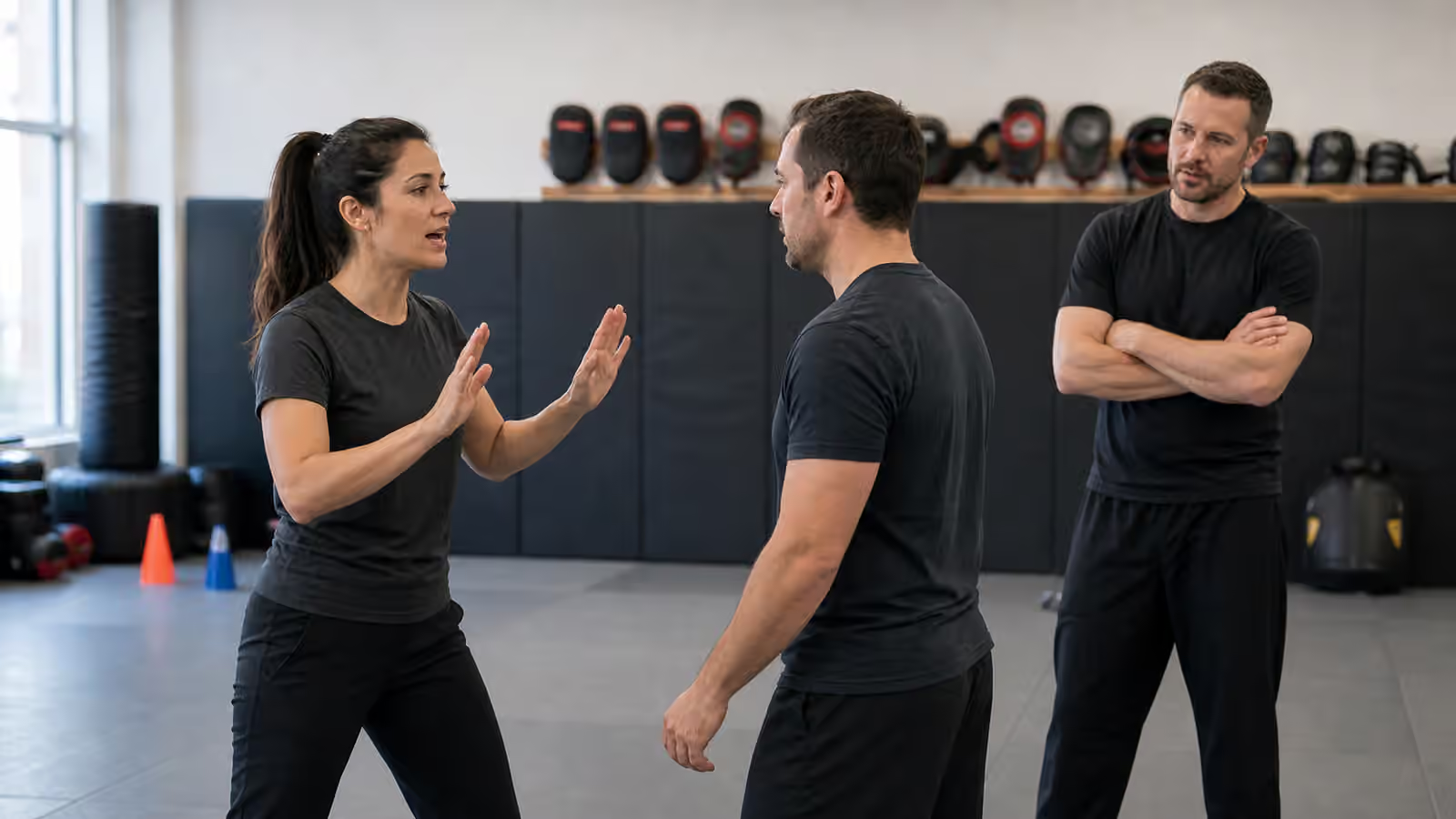
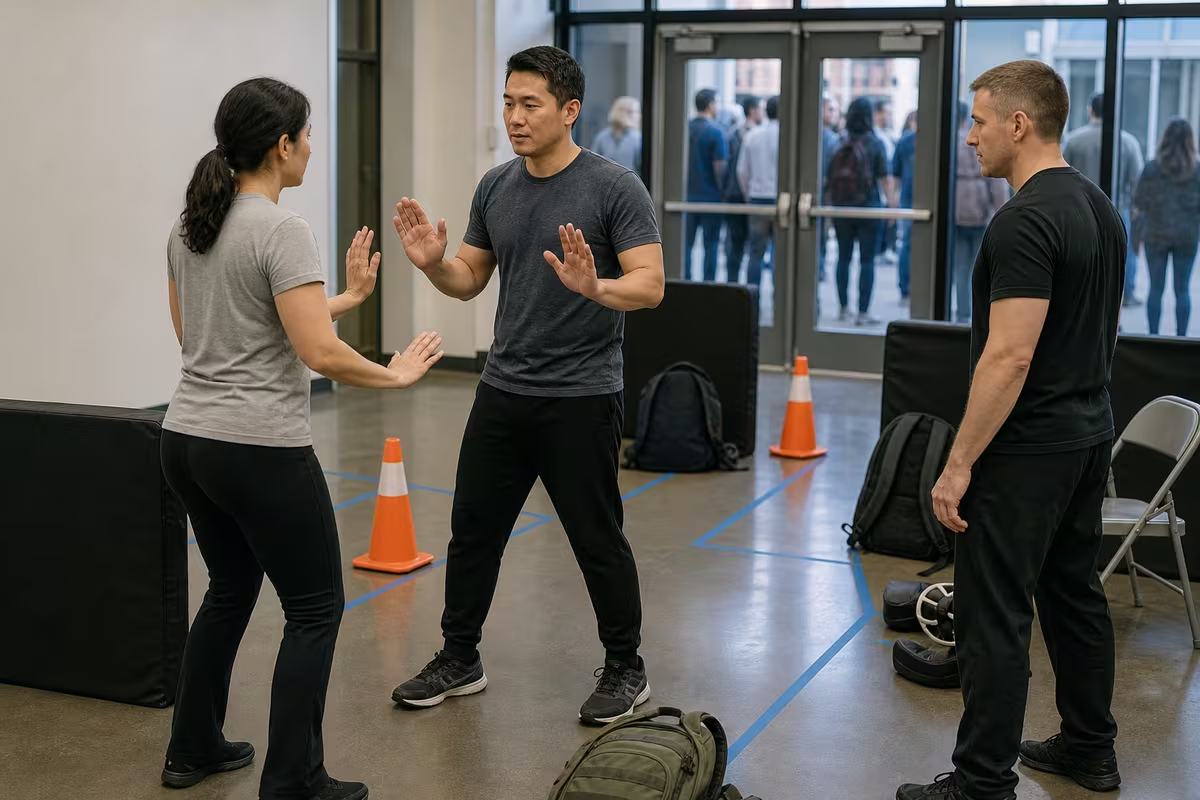
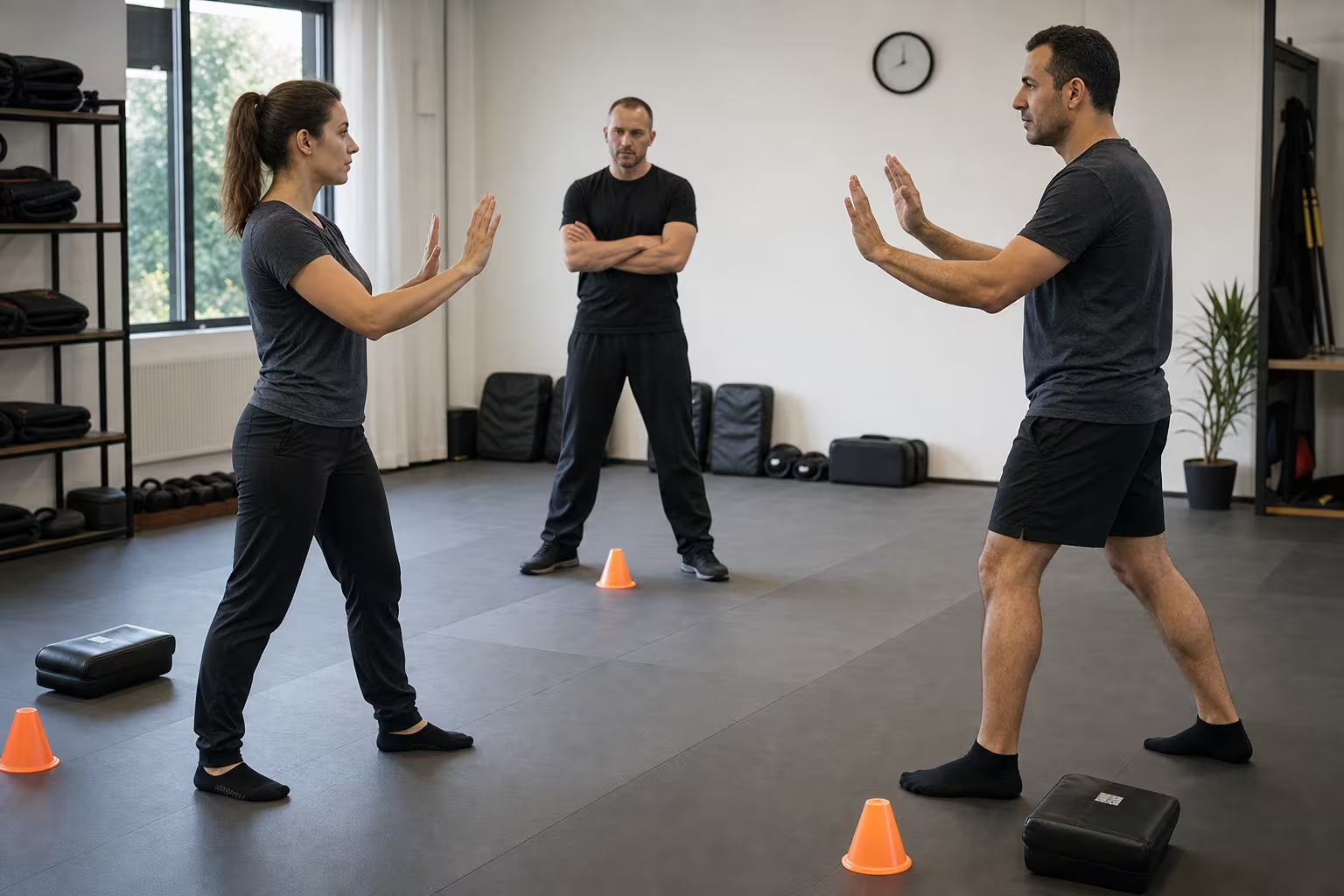
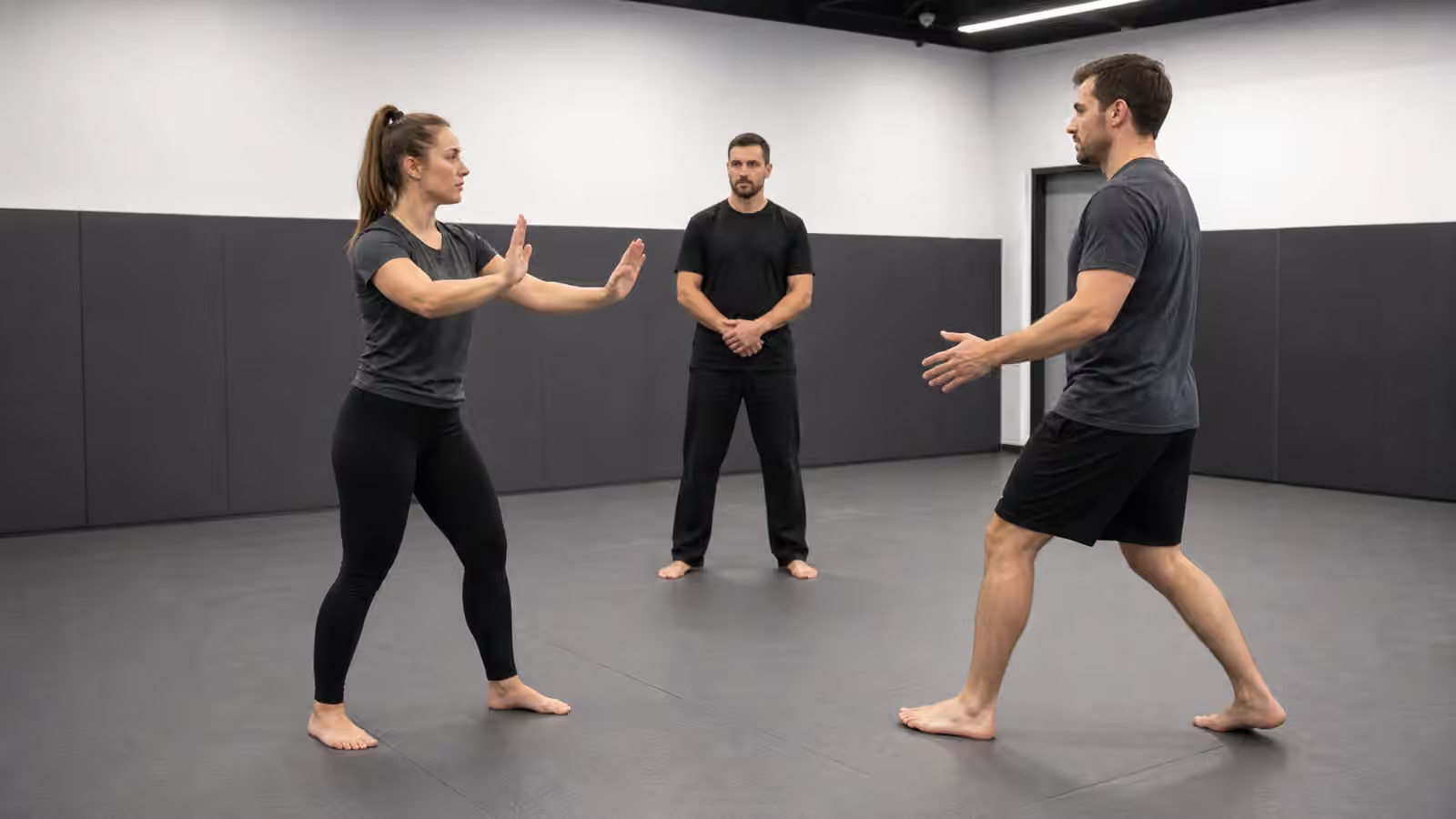
The hands matter too. Open hands near chest height can communicate “stay back” while keeping the body ready. They are less provocative than fists and more useful than hands buried in pockets. They also give your brain something concrete to do. Under stress, people often freeze, point, shove, or fold their arms. Practicing an open-hand boundary gives the body a better default.
Distance changes the conversation
Distance is not just a physical measurement. It changes what words can do. If someone is across the room, talking may have space to work. If someone is inches away, the body is already in the conversation. Verbal de-escalation is strongest when paired with movement that improves your position.
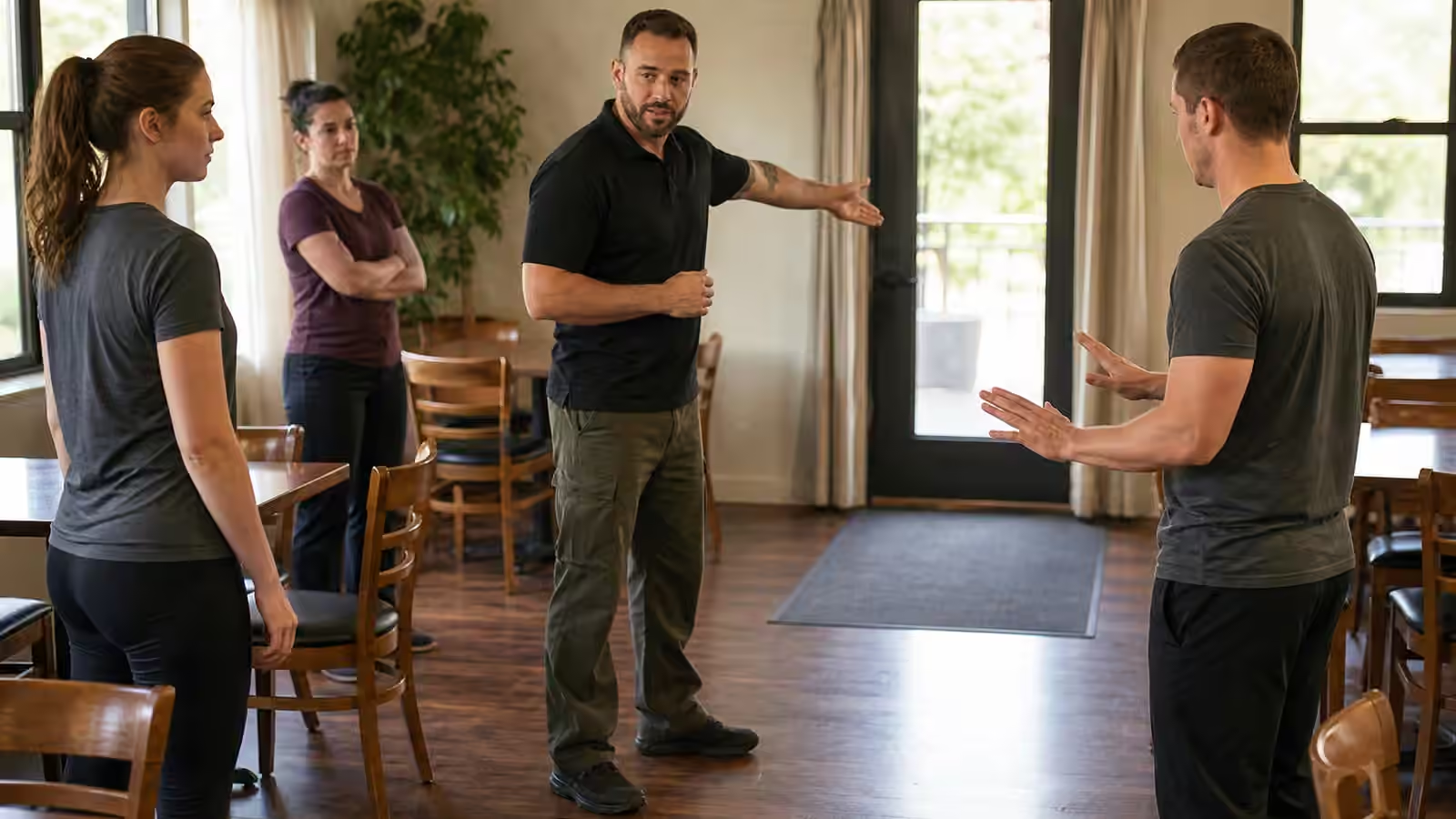
This connects directly to Distance, Awareness, and Exit . You are not trying to stand your ground as a matter of pride. You are trying to keep enough room to choose. A small step back, a turn toward an exit, or moving around an obstacle can matter more than a clever sentence. The words help shape the moment. The feet help solve it.
Training this in a class should feel controlled and almost boring at first. One partner approaches. The other sets a boundary, moves to keep space, and exits along a safe line. The point is not to act scared or angry. The point is to notice timing. When did the approach start to feel too close? Did your hands come up early enough? Did you move your feet or only lean backward? Did your words match your body?
The room teaches you that many people wait too long. They let politeness steal space. They smile when they are uncomfortable. They explain instead of leaving. They tell themselves the situation is not bad enough yet, then suddenly it is too close. Boundary practice gives permission to act earlier without making the action dramatic.
Tone can lower heat or raise it
The same words can land differently depending on tone. “Back up” can sound like a warning, a plea, or an invitation to compete. A useful tone is firm enough to be understood and flat enough not to feed the argument. That is harder than it sounds, especially for people who are not used to saying no out loud.
Some students are too soft at first. They whisper boundaries as if apologizing for having them. Others overcorrect and turn every line into a challenge. Both patterns are understandable. A good instructor helps students find the middle: audible, direct, and not theatrical.
This is one reason partner work matters. Alone in a mirror, everyone sounds reasonable. With another person walking toward you, the nervous system changes. Your voice may rise, vanish, shake, or become sharper than you intended. That feedback is useful. It lets you practice under mild pressure before life supplies a worse version.
The best classes also make room for different personalities. A small person may need a boundary that sounds clear without pretending to be physically intimidating. A large person may need to avoid accidentally escalating by looming. Someone with trauma history may need slower exposure and more control over drills. Someone who laughs when nervous may need to practice staying simple. De-escalation is not one voice pasted onto every student. It is a skill each body has to make honest.
Leaving is a skill
People say “just leave” as if leaving is easy. Often it is. Sometimes it is not. Pride can keep people in place. Friends can complicate the decision. A crowded room can trap movement. A person may block a doorway, follow, insult, or demand an answer. A date, coworker, relative, customer, or drunk stranger can make the social cost feel high.
That is why leaving needs practice as much as striking pads does. It is not only the physical route. It is the mental permission to end the interaction. “I am leaving” can be a complete sentence. Turning away safely, keeping awareness, moving toward people or light, and not getting pulled back into the argument are all part of the skill.
In training, an exit should be treated as a win, not an anticlimax. If the scenario ends because the student used voice, created distance, and left, the drill succeeded. The body learns what the culture rewards. If every drill is praised only when it becomes physical, students may unconsciously wait for physicality. That is a bad lesson.
De-escalation has limits
De-escalation is valuable, but it is not magic. Some people are not reachable in the moment. Some situations are already violent. Some threats are immediate. Some environments remove good exits. A person may be intoxicated, committed, panicked, predatory, or simply unwilling to respect a boundary. Training should not pretend that perfect words can solve every danger.
The value of de-escalation is that it works when it works, and when it does not, it can still clarify what is happening. If a person ignores a clear boundary and keeps closing distance, that is information. If they stop, that is information too. If witnesses hear you say “Do not touch me” and see you try to leave, that can matter later. The words create a record in the room, even when the room is informal.
This is also where ethics enter. A boundary should not be used as theater to justify escalation. You are not saying “back up” so you can feel licensed to hurt someone. You are saying it because you want space and safety. If the situation can end there, let it end there.
The practice should make you calmer
Good de-escalation training should make daily life feel less tense, not more. If a class turns every stranger into a threat, something is wrong. Awareness should widen your choices. It should not shrink the world.
The useful habits are ordinary. Notice when a conversation starts to feel off. Keep enough room in lines, elevators, parking lots, and doorways. Use a clear voice before resentment builds. Let people save face when that helps you leave. Do not argue with someone who wants an audience. Do not let politeness make every decision for you. Ask for help earlier. Move toward safer places.
These are not glamorous skills, which is why they are easy to skip. But they are the part of Krav Maga most likely to matter before anything dramatic happens. A person who can set a boundary early, move without freezing, and leave without needing the last word has already solved many problems that a harder skill would only address later.
That is the quiet promise of de-escalation. It does not make you invincible. It gives you more chances to avoid needing to be.