Crowded spaces make self-defense less dramatic and more practical. A train platform, busy lobby, parking garage elevator area, festival entrance, school pickup line, or narrow cafe aisle rarely gives you the clean geometry of a training mat. People drift. Bags swing. Doors open. Someone stops short to check a phone. A group blocks the lane without meaning to. If tension appears, the problem is not only the person in front of you. It is the lack of room around you.
Good Krav Maga training should make these settings quieter, not more paranoid. The goal is not to scan every room like a threat is hiding in the wallpaper. The goal is to notice earlier, choose better positions, and leave yourself fewer emergencies to solve. In a crowd, the best self-defense decision is often a small move that nobody else even registers. You step to the open side of the doorway. You let an agitated person pass. You keep your hands free while walking through a tight exit. You choose the wider route instead of threading through the loudest group.
That kind of movement is not glamorous. It is the work beneath the work.
Crowds shrink time
Distance is time. Distance, Awareness, and Exit explains that principle in a clean way, but crowds make it more obvious. When people are close, you have less time to read intent, less room to move your feet, and fewer clean angles. A hand gesture that would feel harmless across a room can feel sudden in a packed hallway. A person stepping toward you may be aggressive, confused, distracted, or simply trying to pass.
Because the information is messy, crowded-space awareness should begin before anyone has done something dramatic. Look for lanes, not enemies. Where is the exit? Which side of the room is opening and which side is clogging? Are you standing with your back to a wall, a counter, a parked car, or a railing? Are both hands available, or are you carrying three things in a way that makes every decision slower?
None of this requires a tense posture. In fact, a tense posture can create problems. The useful state is relaxed enough to look ordinary and awake enough to move early. If you are already jammed into the tightest part of a room, your options are smaller. If you shift before the room tightens, nobody needs to know you made a defensive decision.
Open hands are communication before technique
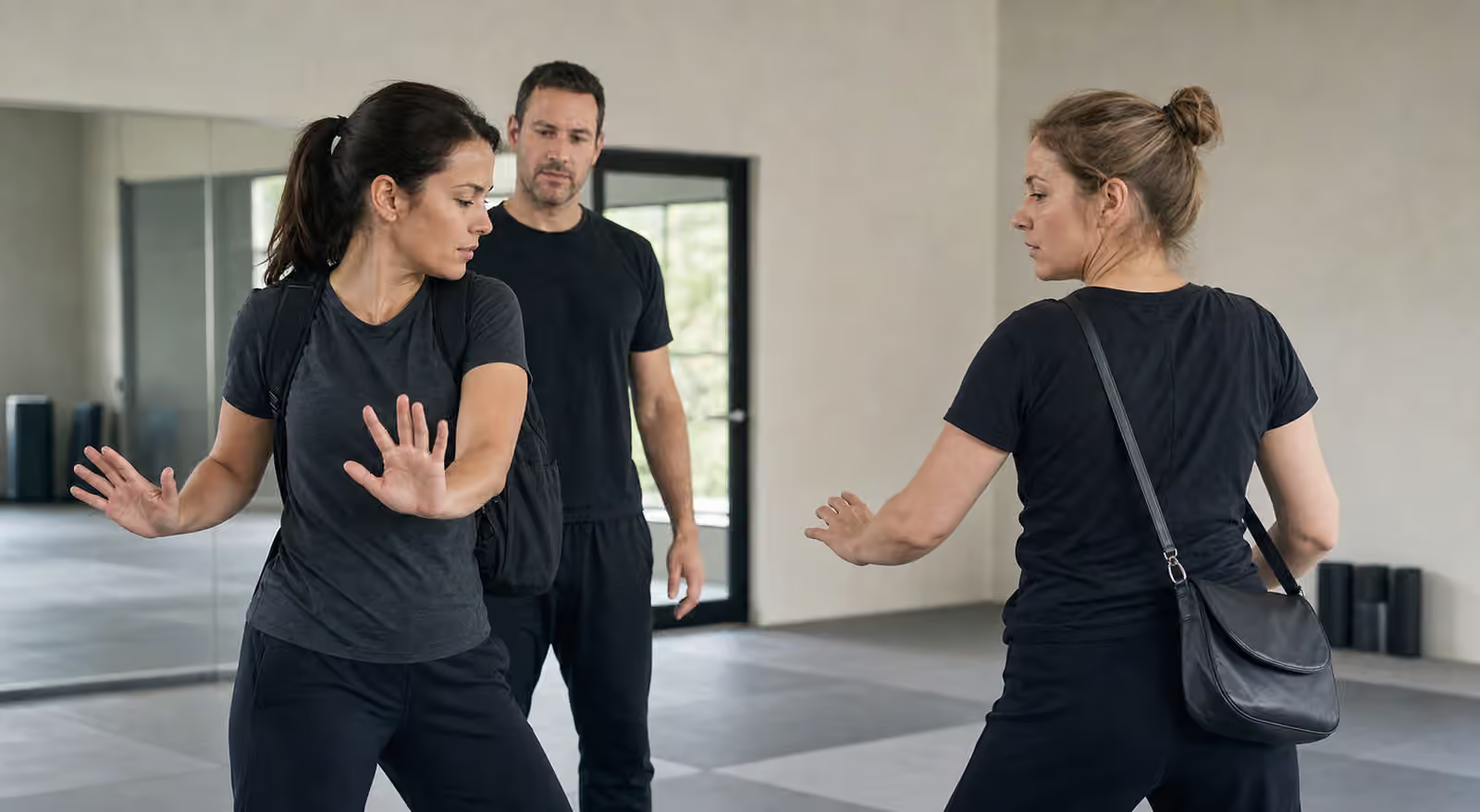
Krav Maga students often learn open-hand positioning as a protective habit. In crowded settings, it is also communication. Hands visible near the chest can say “stay back” without looking like a challenge. They can protect personal space, prepare a frame, and keep the body from being surprised with both arms down. They also let bystanders and cameras see that you are not hiding your hands or escalating.
The point is not to pose. A stiff guard in a grocery line looks strange and may make the situation worse. A more natural posture might look like palms lightly up while saying, “Give me a second,” or one hand near the chest while the other gestures toward space. The same physical idea can be expressed in a way that fits normal public behavior.
This is where De-escalation and Verbal Boundaries belongs beside physical training. Voice and posture should support each other. If your words are calm but your body crowds the other person, the message is confused. If your hands are up but your voice turns the moment into a contest, the posture has lost its purpose. In a crowd, clarity is valuable because confusion spreads quickly.
The exit is a path, not a sign
Beginners are often told to know where the exits are. That advice is useful but incomplete. An exit sign does not mean you can reach it. A door may be blocked by a line, furniture, a locked gate, a stroller, a bottleneck, or the person creating the problem. What matters is the path.
When you enter a crowded place, notice the path that would let you leave without pushing through the densest part of the room. In a restaurant, that might mean choosing the outside of a table cluster instead of sitting trapped against the wall. In a train car, it might mean moving away from a group that is already arguing instead of waiting to see whether the argument becomes your problem. In a lobby, it might mean standing near the open side of the flow rather than right in the doorway where everyone compresses.
This should not become obsessive. Most public places are ordinary most of the time. The habit is simply to keep a little movement in reserve. Environmental Movement covers walls, doorways, chairs, and exits in the training room. Crowded-space awareness adds the fact that other people are moving furniture. Your exit may open or close minute by minute.
Bags and phones steal hands
The most realistic detail in a crowded space is that your hands are often busy. You may be holding a phone, bag, coffee, child’s hand, umbrella, groceries, or keys. That ordinary load changes what you can do. It slows your ability to gesture, protect space, open a door, hold a railing, or move quickly.
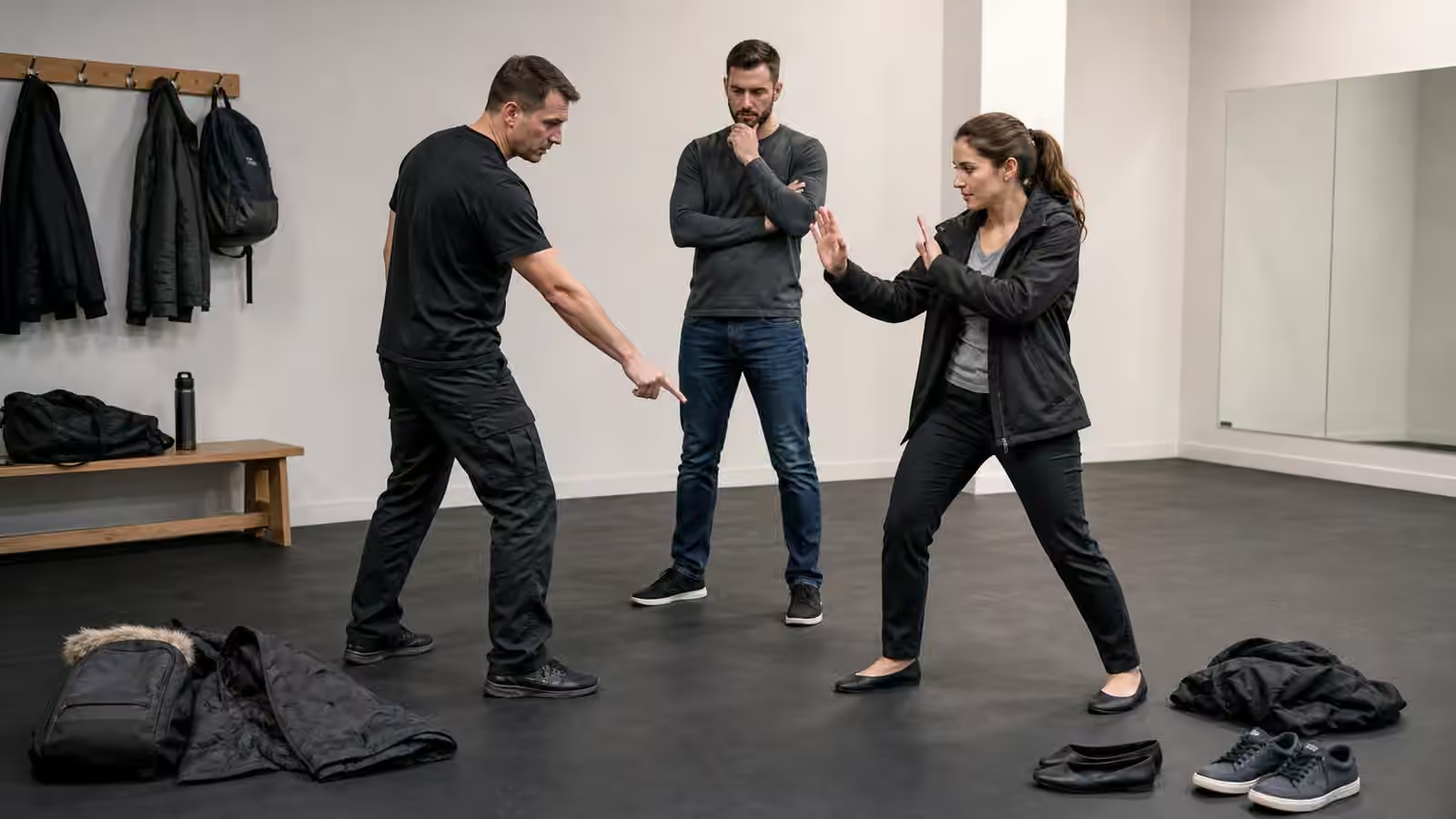
Training should include this without turning it into theater. A student can hold a soft training bag or empty bottle, then practice using voice, setting the object down, shifting to an open lane, and leaving. The lesson is not that every object becomes a tool. More often, the object is a delay. It is something you may need to drop, secure, or stop caring about for a moment.
Phones are especially sneaky because they absorb attention. In a crowded space, looking down can make you late. The safer habit is not never using a phone. It is choosing when to use it. Step aside before typing. Do not stop in a doorway. Do not let directions, tickets, rideshare messages, or headphones make you blind to the room around you.
Training the crowd without creating chaos
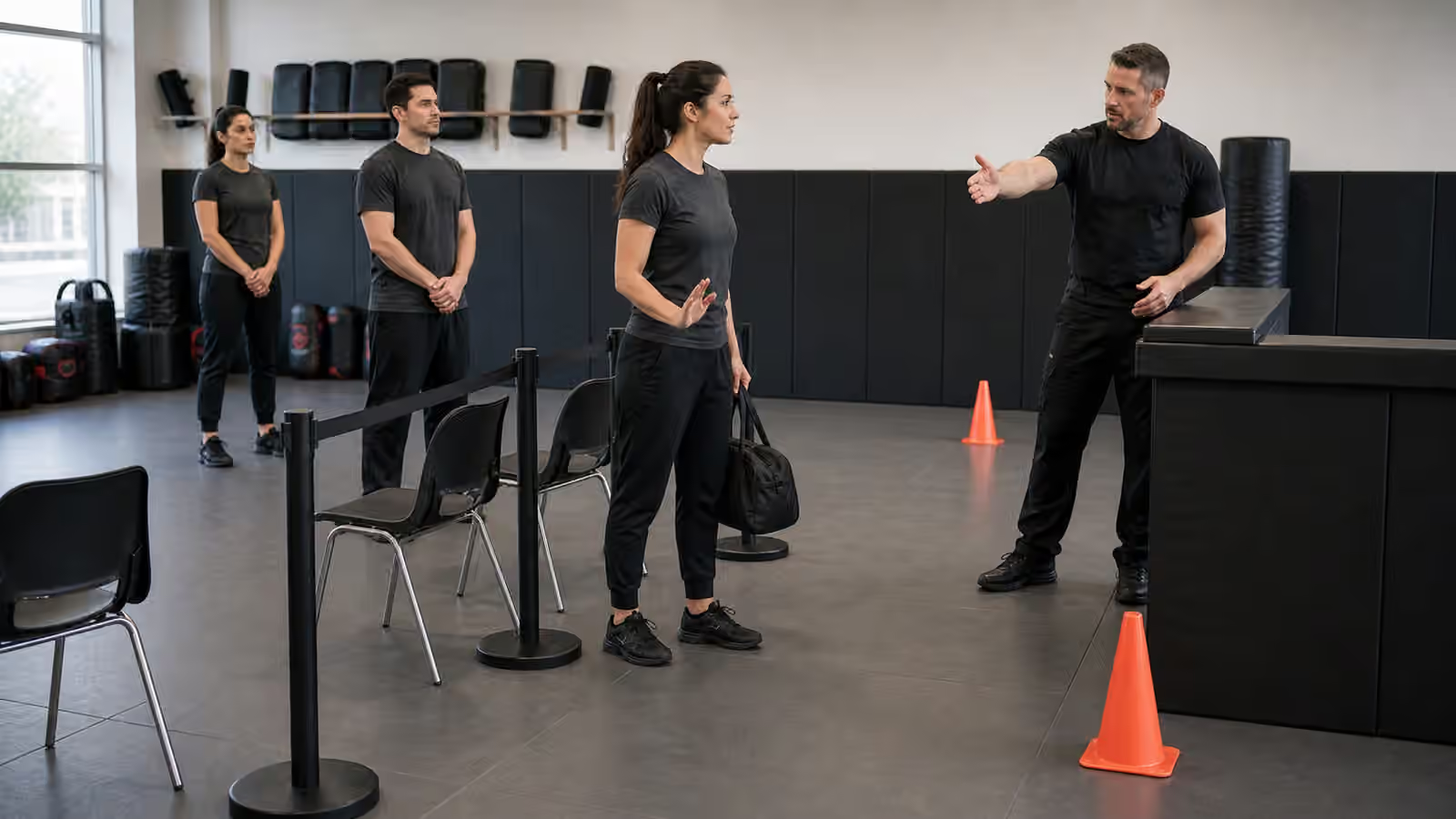
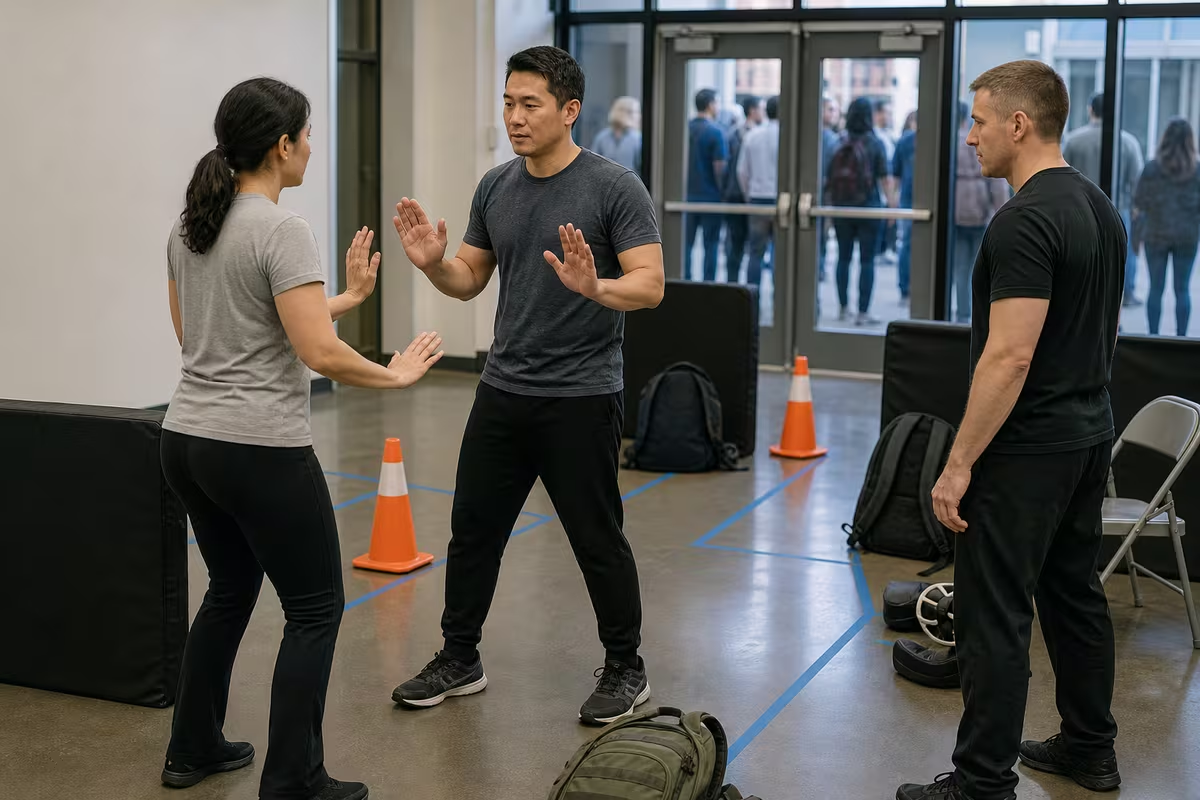
Crowded-space drills can go wrong when instructors confuse realism with confusion. A useful beginner drill does not need shouting, surprise grabs, or a room full of people rushing at once. It can begin with simple lanes made from cones, chairs, pads, and passive partners. The student practices walking through, noticing blocked routes, using a clear verbal boundary, keeping hands available, and choosing a wider path.
Pressure can increase only after the habits are stable. One partner may step into the lane. Another may create background movement. The exit may change. The student may be asked to escort a partner to the safer side of the room. The instructor watches whether the student gets tense, freezes in the bottleneck, forgets the hands, or tries to force the shortest route when a calmer route is available.
Safety has to remain visible. Safety Signals and Stopping Early matters here because crowded drills can overwhelm beginners quickly. Students need permission to pause. Partners need rules about contact and speed. The instructor needs to stop the drill before the lesson turns into a scramble. The purpose is better choices, not panic practice.
The ego wants a direct line
Crowds test ego because the best route is often indirect. People dislike yielding space, circling wide, stepping back, changing seats, or leaving a room because someone else is behaving badly. It can feel like losing. Good self-defense training should challenge that feeling.
If a direct path takes you through the most volatile part of the room, it is not the smart path just because it is short. If staying proves a point but leaving ends the problem, leaving is not weakness. If a verbal boundary works better with a step back than with a step forward, the step back is part of the skill. Krav Maga often speaks the language of action, but action includes not entering a bad position in the first place.
This is one reason Scenario Training and Ethics belongs late in the learning path. The body can learn techniques faster than judgment. Crowded spaces demand judgment first because every physical action can affect bystanders, companions, and people who do not understand what started the moment.
A calm person moves sooner
The real benefit of crowded-space awareness is that it gives you more ordinary choices. You notice the bottleneck and wait. You see the argument building and take the long way. You keep a hand free near the exit. You angle your body so you are not pinned between a counter and a stranger. You speak early, clearly, and without insult. You leave before leaving becomes dramatic.
That is not fear. It is good housekeeping for personal safety. Most people tidy a kitchen before cooking because the work goes better with clear space. Crowded-space awareness is the same idea applied to movement. Clear a little space before you need it. Keep your options from getting buried. Let the room stay boring if boring is available.
Krav Maga is sometimes marketed through intensity, but the useful version gives students a quieter nervous system and better timing. In a crowd, timing beats toughness. The person who moves early may never need the louder skills at all.