
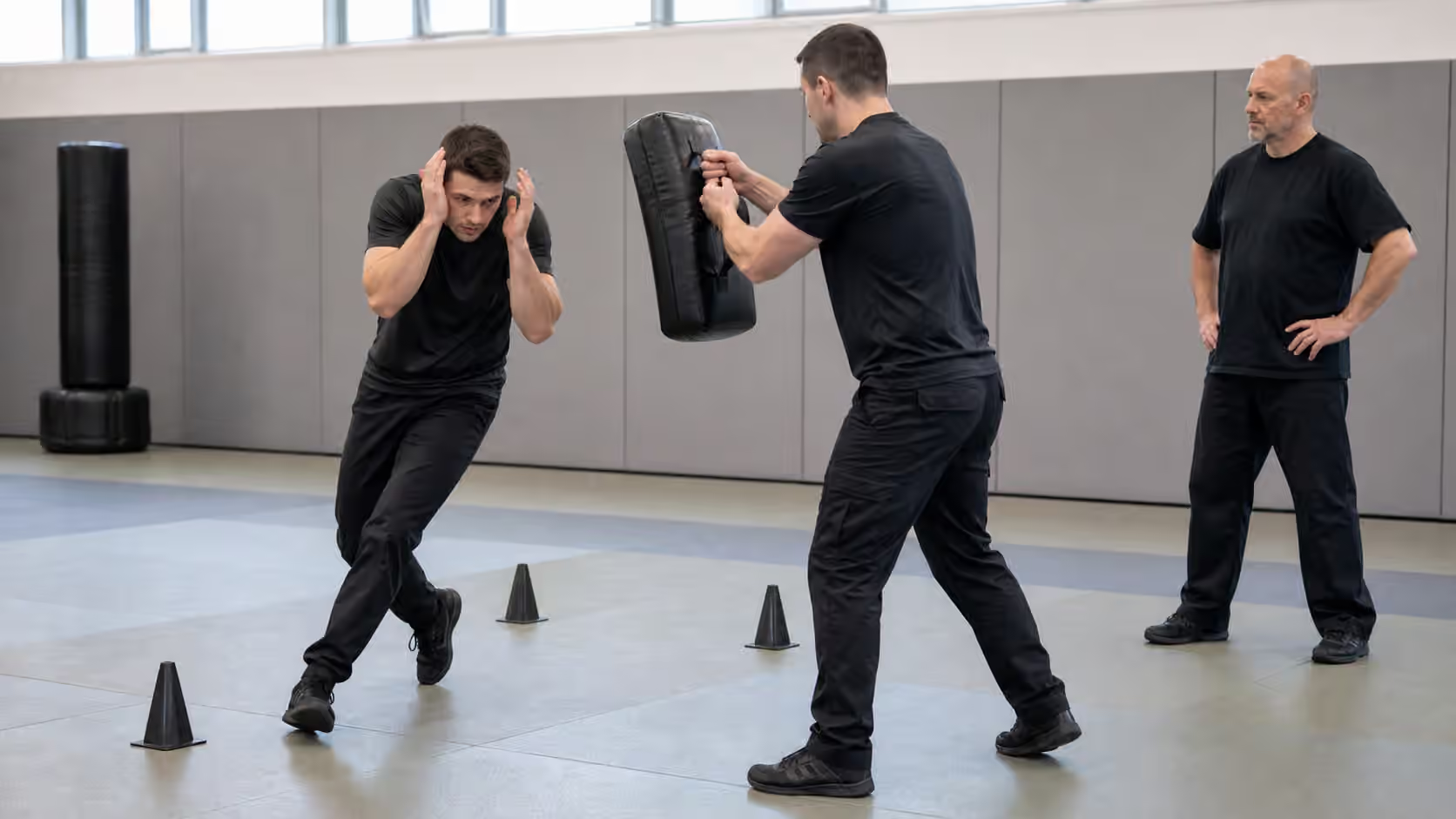
Covering the head is one of the first protective instincts many students understand, and one of the easiest to misunderstand. The hands come up, the forearms close around the temples, and the student feels safer because the face is less exposed. That feeling matters. It can give a nervous beginner a usable first action when the room gets loud. But a cover that does not move can become a small room with no exit.
Krav Maga cover work should teach protection without hiding. The hands protect the head while the feet look for space. The eyes keep collecting information. The body does not fold into itself and wait for the problem to end. Covering is not the end of the response. It is a bridge to movement, voice, distance, and leaving.
A Cover Is a Moment
Head Protection and Covering Under Pressure explains the basic value of getting the hands up when the first second is messy. The cover can reduce exposure, organize the shoulders, and keep the student from reaching blindly. It gives the body an answer while the mind catches up.
The trouble begins when the cover becomes a home. Some students clamp the arms around the head and stop seeing. Some bend at the waist and give away posture. Some back straight up until they reach a wall. Some hold the cover after the partner has stopped feeding pressure, as if the drill will praise them for staying closed. The instructor’s job is to keep reminding the student that a cover is a moment, not an address.
Movement changes the lesson. The student covers while stepping off line, angling around a pad, or moving toward an exit marker. The hands stay useful, but the feet carry the decision. This connects directly to Distance, Awareness, and Exit . Protection buys time, but distance decides what that time can become.
The Feet Must Stay Awake
Beginners often raise the hands and forget the lower body. The feet become narrow because the mind is busy with the head. The knees lock because tension travels downward. The student steps backward with heels close together and then wonders why the next impact feels larger. A good cover drill should make the feet as important as the arms.
The movement does not need to be complicated. Step to the side. Angle toward open space. Keep enough width to recover if pressure changes. Do not cross the feet while looking down. Do not sprint blind through a partner. The body should feel compact but not trapped.
Footwork and Balance is the foundation here. A cover can tolerate imperfect hand shape more easily than it can tolerate a collapsed base. If the student loses balance, the hands become emergency props instead of protection. If the feet stay alive, the student can cover, move, strike a pad if needed, speak, or leave.
Vision Through the Cover
Covering does not mean closing the world. The student needs enough vision to know where the partner is, where the exit is, and whether a wall, bag, chair, or second person has changed the answer. This is not easy under pressure. Tension narrows attention. The body wants to stare at the object making contact. A pad comes near the head and the eyes may lock onto it as if nothing else exists.
Coaches can train this gently. A partner feeds light pad pressure. The defender covers and moves to a cone. The instructor asks where the open lane was. Another round adds a second marker. A later round asks the student to call out the exit color or point to the safe lane after moving. The details can change, but the lesson is stable: a cover should not steal orientation.
This is especially important in Multiple-Person Pressure . If a student covers and stares at one person, they may move into another. The answer is not to spin wildly. It is to keep the cover compact, move toward open space, and keep the eyes wide enough to avoid becoming attached to the first problem.
Pads Make the Lesson Honest
Pads are useful because they can create contact without turning a drill into a fight. A partner holding a shield or focus mitt can give the student a reason to cover, step, and recover posture. The pad should not become a punishment tool. It should tell the truth at the intensity the student can use.
Padwork and Pressure belongs beside cover training because impact can make people either freeze or overperform. A pad that lands too hard too early may teach flinching without decision-making. A pad that never touches the student’s guard may teach choreography. The useful middle is controlled pressure, clear rules, and a reset that lets both partners learn.
The pad holder needs discipline. They feed the line the instructor requested. They do not chase the defender after the exit. They do not turn a head-cover drill into a surprise body shot because they got bored. They watch the defender’s balance and adjust. The defender needs discipline too. They do not swing blindly from inside the cover. They do not charge the holder to prove toughness. They move, see, and reset.
Covering and Striking Are Not Enemies
Some students treat cover work as purely defensive and striking as the real answer. That division is too neat. A cover may create the space for a palm strike to a pad. A strike may create the moment to cover and leave. The two skills can support each other if the student understands what each one is doing.
Palm Strikes and Straight Punches is useful here because hand recovery matters after impact. A student who strikes and lets the hand drift low is late to cover. A student who covers and never opens enough to act may stay stuck. Good training links the pieces. Hands protect, act, return, and protect again while the feet continue to solve the room.
The connection should not become frantic. A beginner does not need a long combination after every cover. They may need one clean movement to a pad, a step to a better angle, and an exit. The point is not to collect moves. It is to avoid freezing at either extreme: hands glued to the head with no plan, or hands thrown forward with no protection.
The Wall Punishes a Frozen Cover
Covering while backing straight up often leads to the wall. The student may not notice until the shoulder blades touch padding or drywall. Once the wall owns the back, the cover becomes heavier. The head has less room to move. The feet have fewer options. The partner’s pressure feels larger because there is nowhere for it to dissipate.
Wall Pressure in Krav Maga shows why angling matters. A cover drill should eventually include the wall as a boundary, not as a place to panic. The instructor can set a lane that teaches the student to cover, feel the boundary in peripheral vision, turn the corner, and exit. This is much more useful than letting beginners repeatedly retreat into the wall and then blaming them for being trapped.
The same idea applies to furniture, parked cars, counters, and narrow hallways. A cover that moves only backward is a cover with poor imagination. A cover that angles keeps more choices alive.
Calm Is the Real Finish
The drill should not end with the student hunched, hands glued to the head, breath held, waiting for approval. It should end with the student in better space, eyes up, hands available, and breath returning. That ending matters because it teaches the nervous system what the action was for.
Breathing and Stress Recovery is not separate from cover work. Students who cannot come down after contact often carry tension into the next round and make worse choices. A short reset, a breath, and a clear debrief can turn a loud drill into a useful lesson.
Covering while moving is humble training. It does not promise that forearms solve danger. It teaches that the body can protect itself long enough to make a better decision. Hands up, feet alive, eyes working, voice available, exit in mind. That is a lot to ask from a simple shape, which is why it deserves careful repetition.


