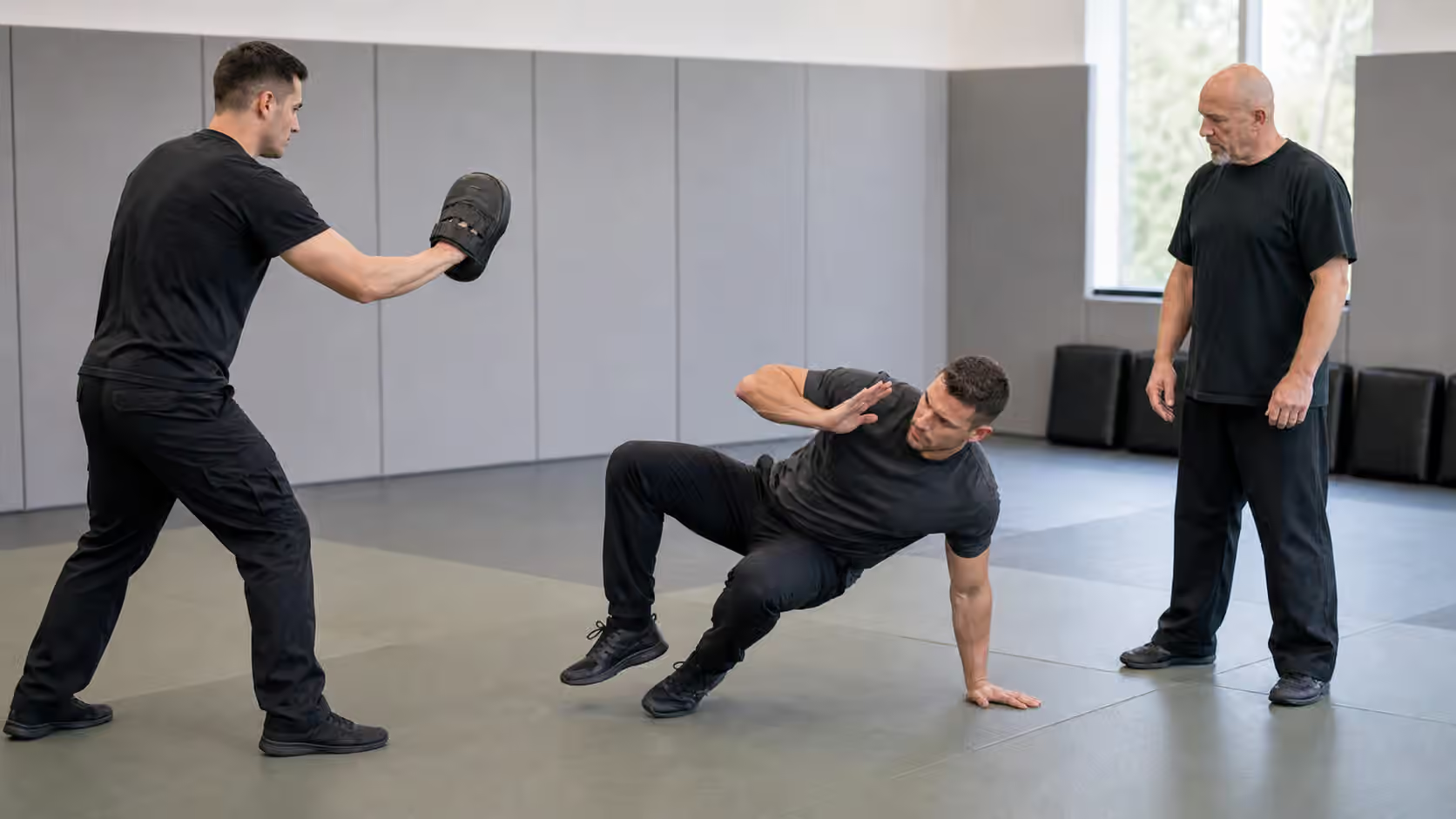
Sparring is one of the most misunderstood words in a Krav Maga room. Some beginners hear it and imagine a fight with rules. Others imagine proof that the training finally counts. A few dread it because they picture being thrown into contact before they know how to protect themselves. All of those reactions make sense, but none of them is a good definition.
Controlled sparring is a training conversation. It is not a self-defense encounter, and it is not a performance of toughness. It gives students a chance to feel timing, distance, hesitation, recovery, and contact against a person who can move back. That person is still a partner. The drill still has rules. The instructor still owns the frame. The goal is not to win a classmate. The goal is to learn what happens when a simple plan meets a live rhythm.
This topic belongs between Padwork and Pressure and Scenario Training and Ethics . Padwork teaches structure because the target is stable enough to read your body. Scenario work teaches judgment because the problem has a role, a setting, and a boundary. Sparring adds a different kind of information. The target does not stay where you expected. The other person reacts. Your feet may stop. Your hands may chase. Your breathing may become louder than your thinking.
That information is useful only when the room keeps it honest.
Sparring Is Not Proof Of Realism
Krav Maga often describes itself as practical, and practical students want to know whether their movement works. That question is healthy. The danger appears when sparring becomes the only test people respect. A round with gloves and agreed contact can teach valuable things, but it is still a narrow training format. It has a start time, a known partner, a clear surface, shared expectations, protective habits, and a coach nearby. Those conditions are not a weakness. They are the reason the drill can happen more than once.
Real self-defense may involve surprise, uneven ground, weapons, multiple people, poor lighting, intoxication, legal aftermath, medical consequences, or someone you are trying to protect. No sparring round can safely contain all of that. Trying to make it contain all of that usually turns training into noise. The better approach is to let sparring teach what it can teach: timing, balance under motion, emotional regulation, controlled contact, and the difference between available action and fantasy action.
In a healthy school, sparring does not replace awareness, de-escalation, exit work, or technical drills. It pressures them. A student who has read Distance, Awareness, and Exit will recognize the connection quickly. Sparring shows how late a person can become when they wait for certainty. It also shows how much easier everything gets when the feet make space before the hands panic.
Light Contact Tells The Truth First
Beginners often assume harder contact gives more truth. Sometimes harder contact gives less. If a new student is afraid of being hurt, embarrassed by being touched, or determined to prove they belong, their body may become too stiff to learn. They blink, flinch away, swing too wide, or rush forward with no memory of the drill. The round may look intense, but the information is muddy.
Light contact can be more revealing because the student stays present long enough to notice details. A jab touches the guard and the student sees that their chin was high. A partner steps away and the student feels that their own feet were late. A low kick is shown but not driven through, and the student notices they were standing too narrow. A touch to the shoulder makes clear that they were admiring their last strike instead of recovering.
This is not softness. It is precision. The partner is giving readable feedback instead of punishment. The student has enough safety to keep making choices. The instructor can stop the round and correct one useful habit rather than sorting through a pile of panic. That is the same philosophy behind Using Corrections in Krav Maga : feedback works best when the student can actually receive it.
Harder rounds may have a place for prepared students under qualified supervision. Even then, the contact level should be named before the round begins, not discovered by impact. A classmate should never have to guess whether this is a technical round, a body-contact round, a pressure round, or a private contest that someone forgot to announce.
The First Job Is Not Getting Hit Less
It sounds strange, but the first job in controlled sparring is not simply avoiding contact. If avoiding contact becomes the whole goal, beginners develop strange habits. They run straight backward. They turn away. They stiff-arm without moving their feet. They close their eyes and wait for the round to end. They treat every touch as failure, which makes them more reactive and less curious.
The first job is staying trainable while contact is possible. That means breathing enough to hear the coach. It means returning to stance after a touch. It means knowing where the edge of the mat is. It means respecting the agreed intensity even when pride flares. It means noticing that a partner touched you because your hand dropped, not because the universe has judged your courage.
When students learn this, contact becomes information. A clean touch says, “You were open there.” A missed strike says, “Your distance was wrong.” A stumble says, “Your feet did not support your plan.” A rushed counter says, “Your emotions moved before your structure did.” None of this requires humiliation. The round is simply giving back what the body did.
Breathing and Stress Recovery matters here because sparring can make the nervous system louder than the instructor. The student who can exhale, reset the eyes, and continue at the agreed pace is learning a real self-defense-adjacent skill: returning from surprise without becoming useless or reckless.
Partners Are Not Opponents For The Whole Round
The word opponent can be useful in some martial contexts, but in beginner Krav Maga sparring it can quietly damage the room. The person in front of you is giving you timing, resistance, and consequence. They are also trusting you with their body. If you forget that, your round may become selfish quickly.
Good partners manage each other. If one student is overwhelmed, the other lowers the pace instead of exploiting the panic. If one student is much larger, the round is adjusted so size does not become the only lesson. If one student is newer, the experienced student gives a clear rhythm and leaves room for learning. If contact drifts above the agreed level, the round pauses and resets.
That is not charity. It is good training. A partner who can regulate intensity is more valuable than a partner who can only dominate. Partner Work in Krav Maga makes this point across contact drills, and sparring is where the point becomes obvious. Control is not the absence of pressure. Control is the skill that lets pressure teach.
This also means students should not smuggle extra lessons into the round. If the instructor assigns hands-only light sparring, do not add kicks because you saw an opening. If the round is about movement, do not turn it into a clinch. If the contact is touch-level, do not decide that your partner needs a more realistic answer. The room already has a curriculum. Follow it closely enough that everyone knows what information the drill is supposed to produce.
Gear Does Not Grant Permission
Protective gear can make sparring more repeatable. Gloves can reduce some hand and facial risk. Mouthguards can reduce some dental risk. Shin guards, headgear, or other equipment may be used depending on the school, the surface, the rules, and the level of contact. None of that makes a round safe by itself.
Gear often creates a psychological trap. The moment people put on more equipment, they may behave as if consequences have been suspended. They swing wider because gloves are present. They crowd harder because headgear is present. They accept sloppier contact because a mouthguard is present. This is backward. Gear should support disciplined training, not authorize undisciplined training.
Krav Maga Training Gear is useful background because each school has reasons for its equipment rules. A beginner should ask what gear is required, when it is introduced, and what contact level it is meant to support. The answer should be clearer than “because sparring is serious.” Serious training explains itself.
The Round Begins Before The Timer
Many useful sparring habits happen before anyone moves. Students check the assigned rules. They confirm contact level. They know whether head contact is allowed, whether kicks are included, whether clinch work is part of the round, and what the stop signal is. They remove jewelry, empty pockets, adjust gear, and make sure the floor is clear. They choose a pace that fits the purpose of the round, not the mood they arrived with.
This preparation may feel dull compared with the round itself. It is not dull. It is the discipline that makes live practice possible. A student who cannot listen to the rules before contact is unlikely to respect them under stress. A student who rolls their eyes at safety language is telling you something important before the first exchange.
Safety Signals and Stopping Early belongs beside any sparring discussion. Stopping is not a failure of the round. It is part of the round’s control system. A glove slips. A student gets clipped in the wrong way. Someone feels dizzy. Contact rises unexpectedly. A partner looks overwhelmed. The correct answer is not to prove toughness through confusion. The correct answer is to pause, reset, and return only if the instructor and both partners can keep the work useful.
What Sparring Should Change
After a few controlled rounds, a beginner should not simply feel braver. Bravery is unstable if it is built only on adrenaline. The more useful changes are quieter. The student begins to understand how distance actually feels when another person can step. They stop freezing after a light touch. They recover their guard sooner. They move at angles instead of retreating in a straight line. They learn that breathing is not an accessory. They see that power means little without timing and that timing means little without balance.
They also become more humble about technique. A movement that looked clean against a pad may arrive late against a partner. A combination that felt powerful may leave the student square and open. A favorite entry may fail because the other person simply does not stand still. This is not a reason to abandon the technique. It is a reason to understand where the technique lives. Drills teach pieces. Sparring shows how quickly the pieces must be organized.
The best sparring also changes how students watch other people train. They become less impressed by wild motion and more impressed by composure. They notice the student who can touch lightly, reset quickly, and keep the partner safe. They notice the coach who stops a round before pride drives it off the rails. They notice that the strongest room is not the loudest one. It is the room where live pressure and trust can exist at the same time.
A Better Reason To Spar
The wrong reason to spar is to find out who you are when the gloves go on. That question usually invites theater. People perform courage, aggression, calm, or expertise because they think the round is judging them. The better reason is more practical and less dramatic: spar to find the next honest correction.
Maybe your stance narrows when someone steps in. Maybe your hands float after you touch the target. Maybe you back up until the wall solves the round for you. Maybe you hold your breath whenever the rhythm changes. Maybe you become too polite and stop offering useful pressure, or you become too eager and forget your partner’s safety. A controlled round can reveal any of that in a few seconds.
Then the work returns to the ordinary parts of training. Back to footwork. Back to pads. Back to partner drills. Back to breathing. Back to exits. Sparring is not a separate kingdom where everything becomes real. It is one laboratory inside a larger practice.
Krav Maga students do not need sparring to become reckless, and they do not need to avoid sparring because contact feels uncomfortable. They need sparring that is framed well enough to teach. Keep the rules visible. Keep the contact honest but controlled. Keep the partner human. Let the round show you what your body does when plans start moving. Then take that information back into the calmer repetitions where skill can actually grow.