Close range is where many Krav Maga students discover that distance was doing more work than they realized. From a few steps away, the problem still has shape. You can see the shoulders, the hands, the path to the door, and the space between bodies. When the distance collapses, the picture changes. Breath is closer. Balance is shared. A hand on the shirt, a shoulder in the chest, or a crowded doorway can make the room feel smaller than it really is.
That is why close-range training deserves careful attention. It is not the most cinematic part of Krav Maga, and it should not be treated as permission to wrestle wildly. Close range is the uncomfortable middle ground between avoidance and the floor. It asks whether a student can stay organized when another body is near enough to crowd posture, interrupt breathing, and make large movements expensive.
The first lesson is that close range is usually a failure of earlier space, not a separate world where awareness stops mattering. Distance, Awareness, and Exit still applies. The student who notices a blocked path, a narrowing conversation, or a person who keeps stepping in may never need to solve a clinch at all. But training cannot assume every boundary will be respected. Sometimes the step back is unavailable. Sometimes the wall arrives. Sometimes a partner in a drill reaches your shirt before your body has decided what to do.
Contact Shrinks Choices
At close range, small habits become loud. A lifted chin makes the body easy to fold backward. Narrow feet make every shove feel larger. Hands that stay low may be trapped against the ribs. Shoulders that rise toward the ears steal breath and make the neck tense. Beginners often try to fix all of this with strength, but strength used late can become a tug-of-war against someone who is already attached to them.
A good close-range class slows the moment down before it speeds it up. The instructor may have students feel what happens when posture collapses, when the feet square up too much, or when both hands chase the same grip. The point is not to collect clever answers. The point is to notice that the body needs structure before it needs drama.
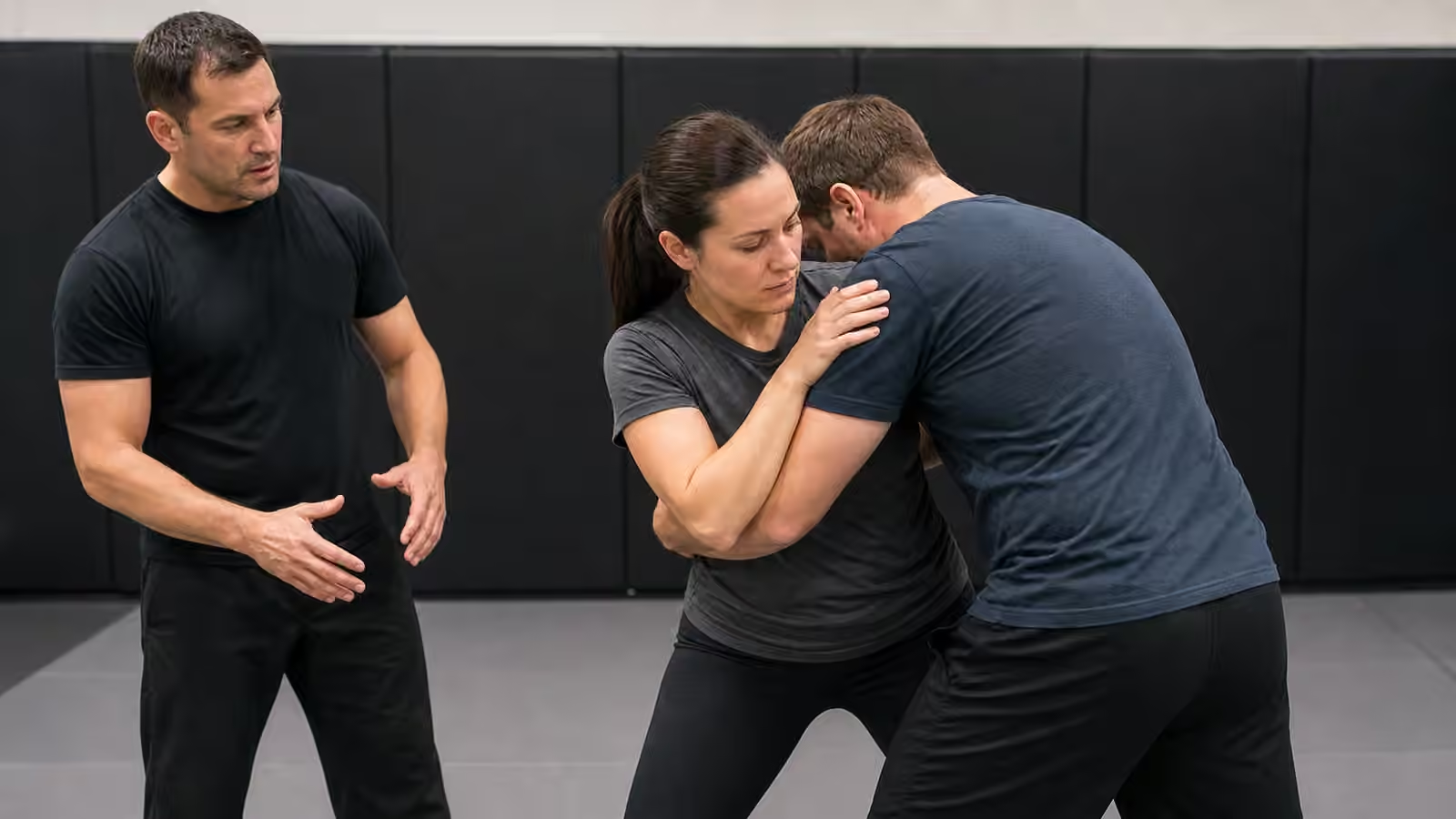
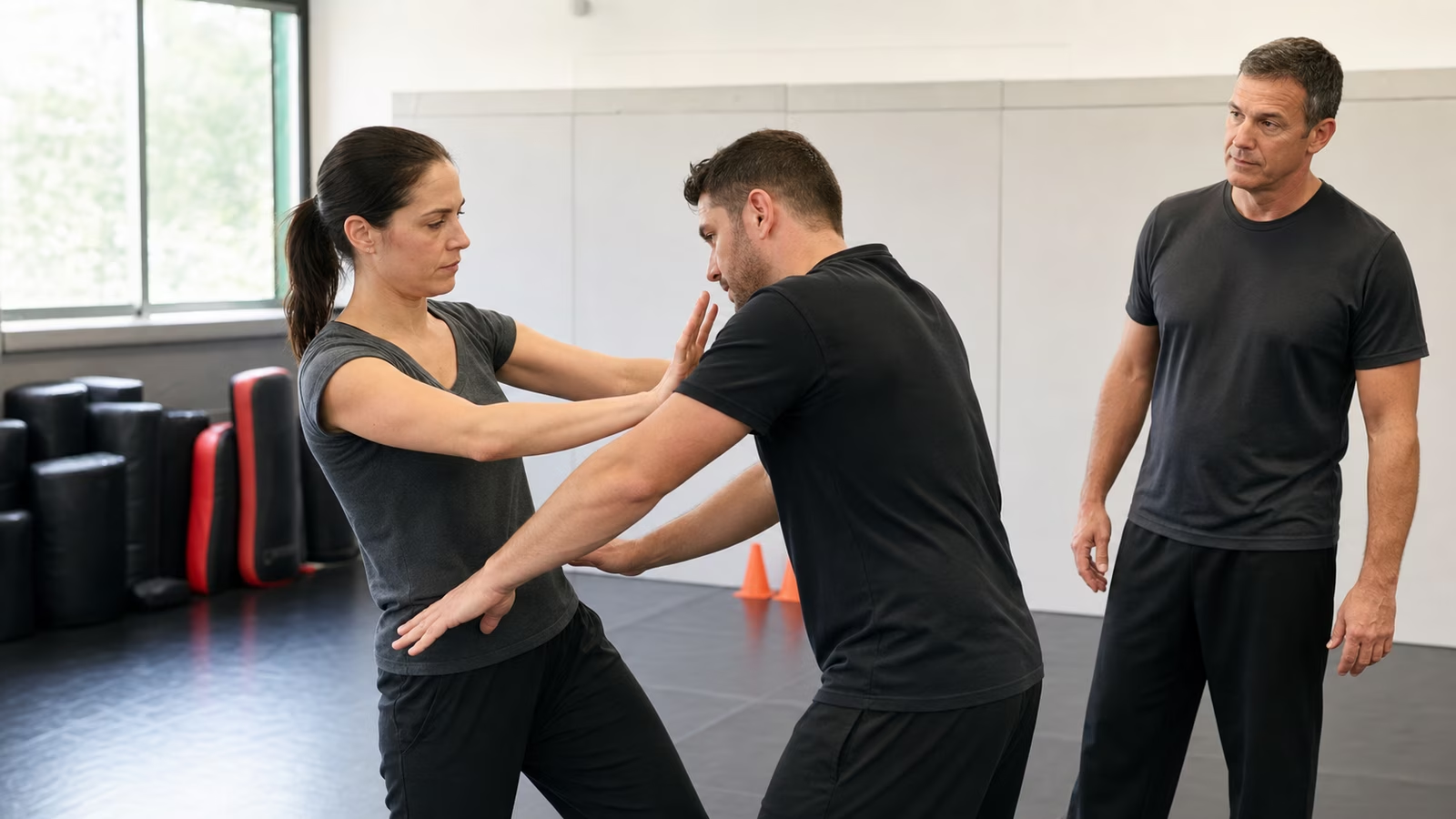
This is where frames matter. A frame is not a magic barrier. It is a way of using bones, posture, and alignment to keep another person from occupying all of your space. In class, a frame may look like forearms placed between bodies, an open hand managing the shoulder line, or a shape that lets the student breathe while deciding what to do next. The details belong with a qualified instructor, because angles, pressure, and partner safety are difficult to learn from words alone. The larger principle is simple: if close range steals space, framing gives some of it back.
Framing Is a Pause, Not a Pose
Beginners sometimes mistake a frame for a final answer. They create a little space and then freeze there, arms extended, waiting for the drill to end. That habit is understandable because the frame feels like relief. The body has gone from crowded to slightly less crowded, and the mind wants to celebrate. In practical training, though, the frame is a pause in the sentence, not the period.
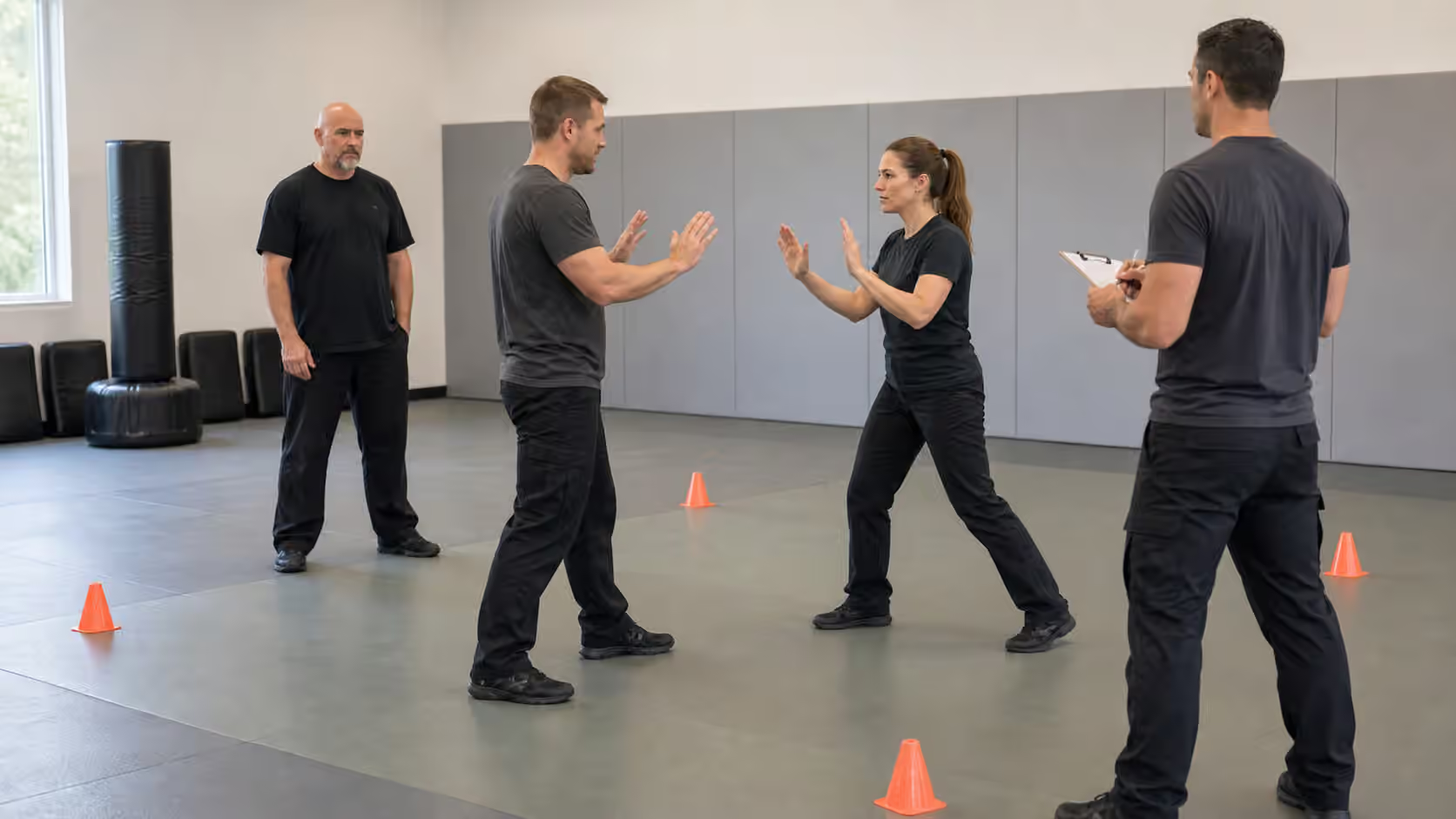
The question after a frame is what the space allows. Can you step to an angle? Can you turn the shoulders enough to see the exit? Can you bring your hands back to a safer position? Can you use voice? Can you move around the wall instead of through the person? Can you disengage before the partner closes again? The frame is useful because it makes those questions possible.
Footwork and Balance belongs in this discussion because frames fail when the feet are not underneath them. A student can create a good-looking upper-body shape and still be easy to move if the base is narrow, crossed, or leaning backward. Close range punishes decorative movement. The feet do not need to be fancy, but they need to be available.
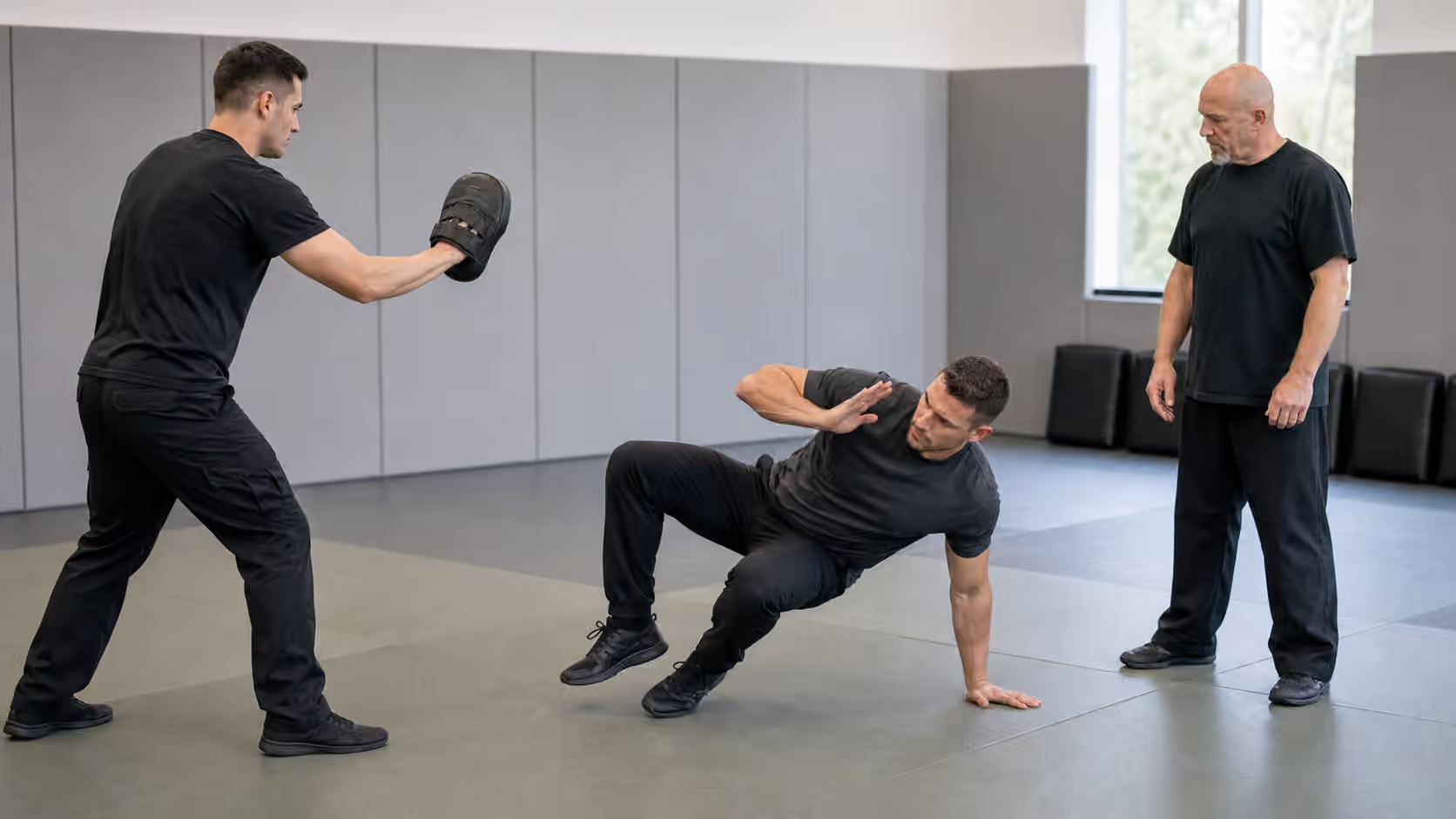
The most useful close-range repetitions often feel plain. One partner crowds slowly with a pad or controlled body pressure. The defender finds posture, makes a frame, takes an angle, and leaves the line. The drill may look less exciting than a fast escape, but the nervous system is learning a valuable order: organize, create space, move, recover. Without that order, speed can become flailing.
The Clinch Should Teach Calm Pressure
The word clinch can make beginners imagine a fight for dominance. In training, it should first mean controlled pressure at short distance. A person may be holding, leaning, wrapping, pushing, or trying to keep the defender from leaving. The student is not being asked to win a wrestling match in every repetition. They are being asked to keep enough posture and judgment to prevent the contact from becoming worse.
This distinction matters because close-range work can easily become ego-driven. Stronger students may clamp down. Smaller students may compensate with sudden sharpness. Experienced students may add pressure that was not part of the assignment. The room needs the same maturity described in Partner Work in Krav Maga . Contact has to be honest enough to teach and controlled enough to repeat.
A healthy clinch drill has a clear role for each person. The feeder gives the agreed pressure. The defender works the agreed problem. Both stop when the coach stops the drill or when safety requires it. Nobody adds surprise knees, throws, neck pressure, trips, or extra grabs because the first version felt too easy. Those additions may belong in some advanced rooms under supervision, but they do not belong as private improvisations during beginner practice.
Close-range training also reveals how much people rely on sight. When bodies are close, you cannot see everything. You may feel pressure through the shoulder, chest, arm, or hip before you understand it visually. This is one reason the drills should begin at manageable intensity. Students need time to learn what pressure is telling them. A shove that feels like one solid force may actually contain a direction, a gap, and a chance to turn. A grab that feels permanent may loosen when posture returns. That information disappears if the drill begins as a panic contest.
Breath Is Part of the Structure
Many students hold their breath when contact arrives. They do not decide to do it. The body tightens, the jaw closes, and the next few seconds become shorter. The result is predictable. The student overuses the arms, forgets the feet, and mistakes effort for effectiveness.
Breathing and Stress Recovery is not separate from close-range work. Breath is one of the first signs that the student is still teachable. If they can exhale, hear the coach, and reset after contact, the drill can progress. If every repetition ends with a rigid stare or nervous laughter, the instructor may need to lower the intensity and rebuild the frame.
Good breathing does not mean feeling relaxed in a soft way. Close contact can be unpleasant. The point is to keep enough breathing room for choice. Even one small exhale can remind the body that it is not trapped inside the first second of surprise. That is not a guarantee of safety, and it should not be sold as one. It is simply part of staying functional long enough to move.
Close Range Is Not the Same as the Ground
Close range can become ground work, but it is not the same subject. A student who loses posture, trips over a bag, or gets turned near a wall may end up on the floor. That possibility is why Ground Recovery in Krav Maga should be part of the larger training path. Still, close-range practice should not assume that every problem must become a takedown or scramble.
Often the better lesson is earlier. Do not let the head drift past the feet. Do not let the wall take away all angles. Do not turn both hands into a desperate grip fight if a frame and step can create a lane. Do not stay attached longer than the situation requires. If the goal is self-defense rather than sport, disengagement remains important. The student is usually trying to return to distance, voice, witnesses, exits, and decisions.
This is also where environmental movement matters. A clinch in the middle of an open mat is different from contact near a doorway, car, stairwell, table, or crowded hallway. The same frame may be useful, but the next choice changes. A student who creates space and then steps into a chair has not solved the problem. Close-range training becomes more realistic when the room slowly adds walls, soft obstacles, and exit lanes without turning the drill into chaos.
Disengagement Requires Timing
Leaving close range too early can fail because the other person is still attached. Leaving too late can fail because the student becomes absorbed in the contact. The useful moment is often brief. There is enough space to move, enough posture to keep balance, and enough awareness to choose a lane. That moment is what training is trying to make recognizable.
Disengagement is not a dramatic retreat. It may be one angle, one step, one turn of the shoulders, one clear voice cue, and continued movement. It may look ordinary from the outside. The student stops being tangled and starts leaving. In a good class, the coach will often care more about that exit than about the most forceful-looking part of the drill.
This can frustrate beginners who want a decisive finish. They want the drill to prove that the defender won. But self-defense training should be careful with that word. If you get space and leave, that may be enough. If you protect your balance and prevent the situation from going to the floor, that may be enough. If you use a frame to keep breathing and call for help, that may be enough. The training room should reward useful endings, not theatrical ones.
Practice Needs Guardrails
Close-range drills can touch fear quickly because they involve crowding, grips, pressure, and sometimes loss of personal space. A responsible room names that fact without making it melodramatic. Students should be able to tell partners about injuries, ask for slower pressure, and stop a repetition that feels unsafe. The purpose is not to avoid discomfort entirely. The purpose is to keep discomfort connected to learning.
Scenario Training and Ethics becomes relevant as soon as drills include crowding, role play, or emotional pressure. A role player who refuses to stop, adds insulting language, or changes the assignment is not making the drill more real. They are weakening trust. Close-range training depends on trust because the margin for careless contact is smaller than it looks.
The same care applies outside class. A written guide can explain concepts, but it cannot see your balance, your partner’s body, the floor under you, or the amount of pressure being used. Close-range practice should be learned under qualified supervision, especially when drills involve neck position, takedown risk, hard surfaces, or partners with injuries. The best habit a beginner can build is not secret practice at home. It is learning to ask better questions in the room where correction is possible.
The Goal Is More Space
Close range can feel like the most forceful part of Krav Maga, but its deeper lesson is restraint. The student learns not to panic because contact happened. They learn not to turn every grip into a contest. They learn that a frame can buy a breath, that a breath can restore hearing, that restored hearing can bring back the coach’s instruction, and that one clean angle may be more useful than three frantic movements.
The goal is not to become someone who wants to stay attached. The goal is to become someone who can function when attachment happens. Make space. Recover posture. Keep the feet alive. Protect the ability to breathe. Use the opening to leave if leaving is available.
Close range is the place where Krav Maga’s practical language becomes very literal. Space is no longer an idea. It is the few inches that let the lungs work, the step that keeps the wall from deciding for you, the angle that turns contact into movement, and the discipline to disengage instead of proving something. When taught well, close-range training does not make students more eager for conflict. It makes them less surprised by crowding and more capable of returning to the safest option the room still offers.