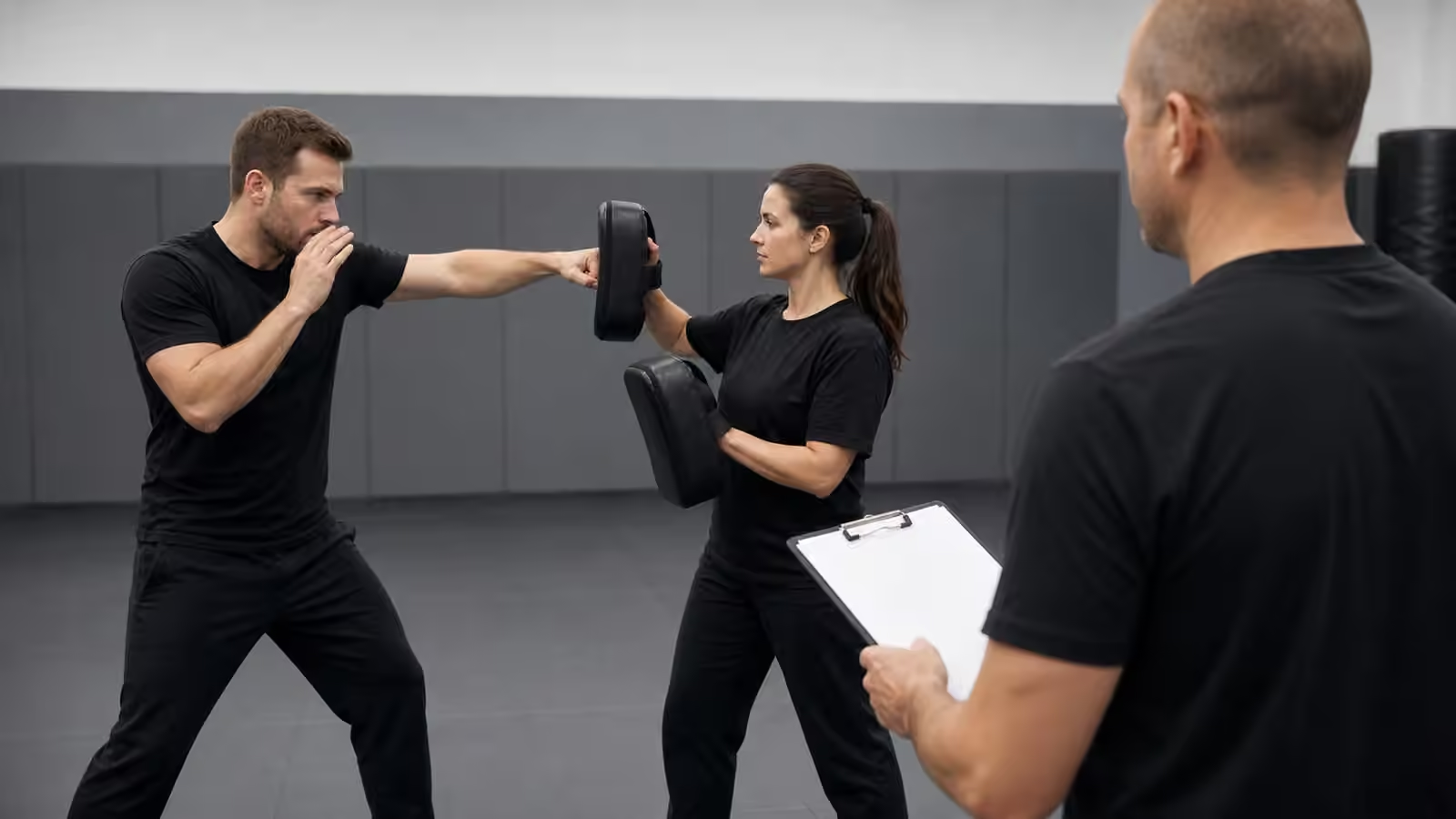
A Krav Maga class does not end cleanly when the timer stops. The body may still be carrying the last drill. A correction may be half remembered. A role-play moment may feel larger afterward than it felt in the room. A student may leave proud of a pad round and forget the footwork correction that would have made the round safer. Another student may leave embarrassed by a freeze, a clumsy voice drill, or a partner exchange that needs a calmer look.
This is where debriefing matters. Not the formal kind with a clipboard and performance language, but the practical habit of turning training into memory before it becomes a blur. A few quiet minutes after class can separate what actually happened from what adrenaline claims happened. A training journal can preserve the useful part of the session without pretending the notebook is a coach.
Training Between Krav Maga Classes argues that recall should come before sweat. A debrief is the doorway into that recall. It helps the student arrive at the next class with a clearer question, a safer home practice plan, and a better sense of what the instructor was really teaching.
The first memory is not always the best memory
Right after class, beginners often remember the loudest moment. They remember the pad strike that landed well, the partner who felt intense, the drill that made them tired, or the correction that stung their pride. Those memories are real, but they may not be the most useful ones. Training improves when the student can also remember the quieter pieces: the warmup theme, the safety rule, the foot position, the breath cue, the moment when the instructor stopped the room to explain why a drill mattered.
A journal slows the story down. Instead of writing that class was hard, the student can describe what made it hard. Maybe the difficulty was not the technique but the transition after the technique. Maybe the student could hit the pad but forgot to move after contact. Maybe they used a clear voice but stepped backward into a wall. Maybe they knew the exit intellectually but did not look for it when tired.
That level of detail is not busywork. It gives the next class a starting point. A student who writes “I kept turning my head before my feet moved” can ask an instructor to watch the turn. A student who writes “I held my breath during the wall drill” can connect the next warmup to Breathing and Stress Recovery . The journal turns a vague feeling into a trainable question.
Corrections need somewhere to land
Krav Maga students receive corrections quickly because the room moves quickly. A coach may say to widen the stance, lower the shoulders, recover the hand, use a clearer voice, angle away from the wall, slow down the pad feed, or stop chasing intensity. In the moment, the student nods. By the time they get home, only the emotion of being corrected may remain.
Writing the correction down changes its weight. It becomes less like judgment and more like information. Using Corrections in Krav Maga explains that feedback becomes useful when it is specific, testable, and safe to revisit. A journal gives that feedback a place to wait until the next class.
The tone matters. A good entry does not need to sound dramatic. It can be plain. The student noticed their feet narrowed under pressure. The instructor asked them to stop swinging at the pad and return to structure. A partner reminded them to call stop earlier. The student realized they were protecting the training bag instead of creating space. Plain language keeps the correction from becoming either self-criticism or self-congratulation.
Debrief pressure without making it mythology
Pressure drills are the easiest sessions to misremember. The body is tired. The room is louder. Partners move faster. A role player may create social discomfort. The student may feel brave, shaken, annoyed, proud, or embarrassed. If that experience is not debriefed carefully, it can become mythology. The student tells a story about toughness, failure, fear, or success, and the actual lesson disappears inside the story.
A better debrief asks what the pressure revealed. Did the student lose balance, stop breathing, forget the exit, crowd the partner, ignore the stop signal, or keep moving after the goal was already complete? Did the drill become too intense for the level assigned? Did the role player stay responsible? Did the student recover afterward or carry the drill home in a way that made sleep, mood, or soreness worse?
Those questions connect to Scenario Training and Ethics because pressure training is not only physical. It includes consent, role discipline, aftermath, and judgment. A journal does not turn a beginner into an expert on those subjects, but it can keep them from treating adrenaline as proof of learning.
Keep home practice inside the lane
The journal is most useful when it protects the student from practicing the wrong thing alone. A class note may remind them that the instructor said not to rehearse a partner defense at speed outside class. It may remind them that the useful homework was footwork, breath, mobility, or a single verbal boundary. It may remind them to rest because the soreness was already changing their movement.
This is important because memory is creative. A beginner can leave with half a sequence and fill in the rest from imagination. That imagination may feel convincing. It may also build a habit the instructor has to undo later. A journal entry written soon after class is a guardrail against that. It says what was actually taught and what still needs supervision.
The same guardrail helps with online videos, advice from friends, and private certainty. If a student writes down the instructor’s specific cue, they are less likely to replace it with a louder version from somewhere else. Krav Maga already has enough noise around it. A careful training record keeps the student’s attention tied to the room where someone can see and correct them.
The debrief can include the room, not just the body
Self-defense training is not only a catalog of movements. It includes the environment, bystanders, companions, fatigue, exits, and the student’s own decision-making. A useful class journal should make room for those details. The student might note that they kept choosing the crowded lane during an exit drill. They might notice that a chair behind them changed everything. They might realize they forgot the companion role and moved alone.
Environmental Movement and Krav Maga When You Are Not Alone both become easier to learn when the student records more than technique. Where was the wall? Where was the exit? Who else was in the drill? Did the student move the other person safely or leave them behind? Did the student’s voice make the route clearer?
These observations keep the journal grounded. It is not a secret manual of moves. It is a record of attention. The student is learning what they notice late, what they notice early, and which details vanish under pressure.
After an incident, write more carefully
Most training debriefs are ordinary. They help the student remember class and prepare for the next one. A real confrontation, a serious training accident, or a disturbing scenario drill deserves more care. The goal is not to create legal advice, medical advice, or a public story. The goal is to preserve basic facts, seek appropriate help, and avoid turning a serious moment into a dramatic retelling before the body has settled.
After a Krav Maga Incident covers that aftermath in more detail. A training journal can support the same habit by encouraging a student to separate facts from feelings. What happened? Who was present? Was anyone hurt? Was help called? What did the instructor say? What needs follow-up before returning to normal training? The entry should be private, careful, and modest.
That modesty matters. A journal is not a place to inflate a story or rehearse blame. It is a place to remain honest enough that the next responsible step is easier to see.
A small record changes the next class
The best debrief does not need to be long. It needs to be soon enough, specific enough, and humble enough to be useful. A student who arrives with one clear question is easier to coach than a student who arrives with only a feeling. A student who remembers the actual correction can test it. A student who notices a pattern can ask for help before the pattern hardens.
Krav Maga training often values action, but reflection is part of action when it changes what happens next. The notebook does not replace the mat. It keeps the mat from becoming a blur. It helps the student bring the right question back to the right person, at the right intensity, with enough honesty to keep learning.