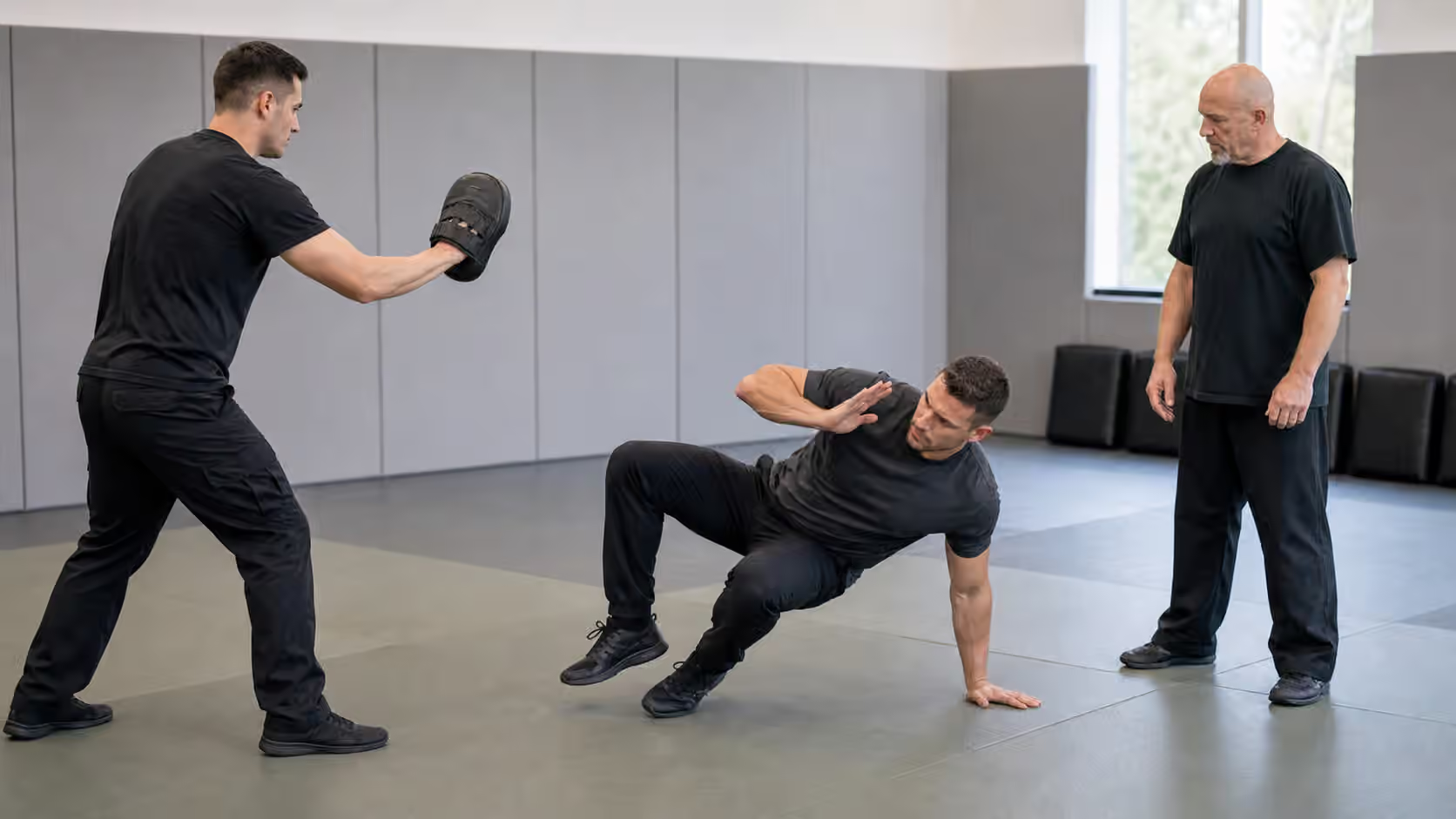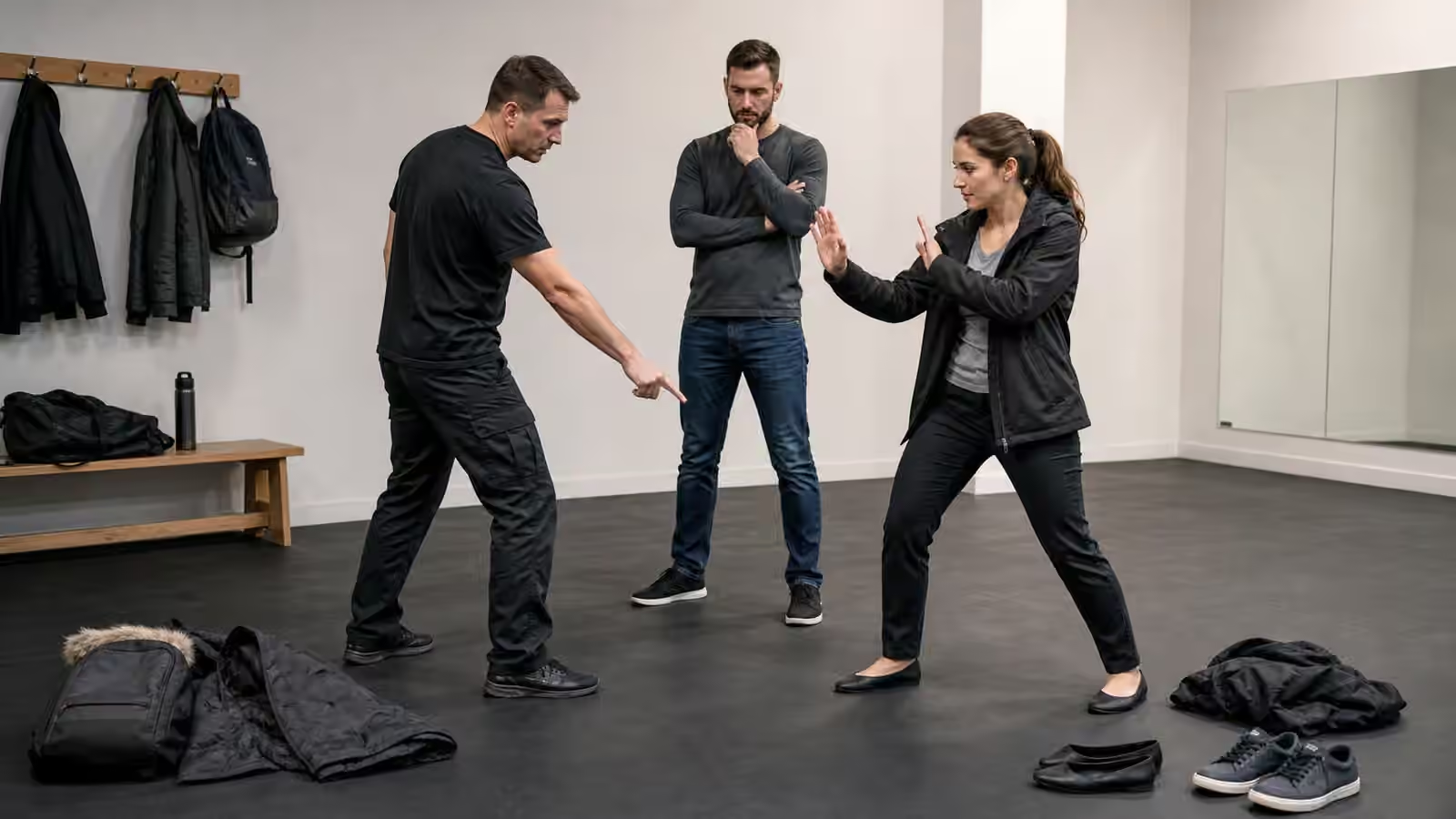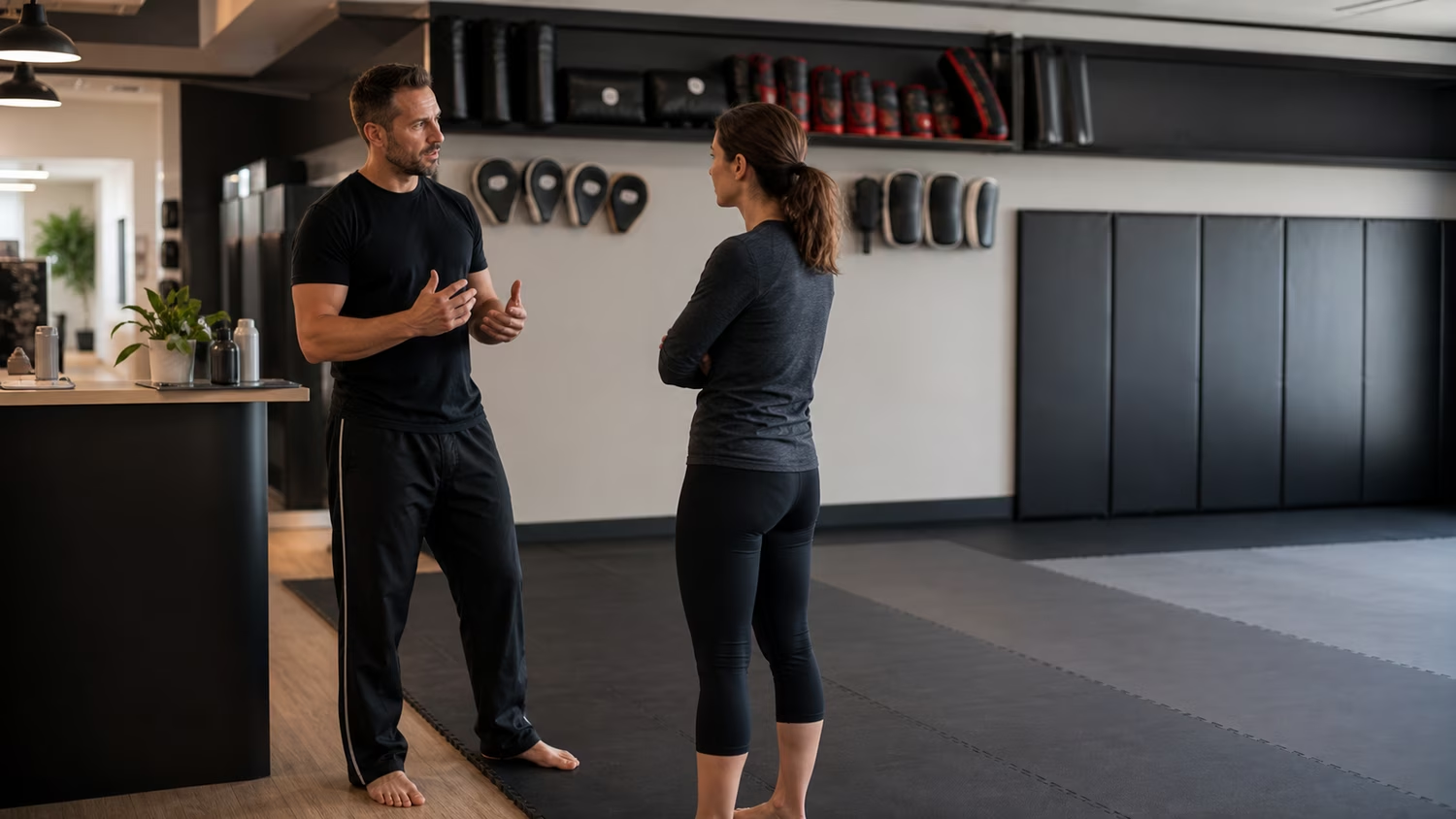
Choosing a Krav Maga school is not the same as choosing the loudest room. The loudest room is easy to find. It has fast combinations, hard pad shots, slogans about survival, and students who look busy enough to make a beginner feel that hesitation must be weakness. A better school may still train hard, but the first thing you notice is not volume. It is control.
Control shows up in small ways. The instructor knows who is new. Partners check injuries before contact. Pad holders are corrected with the same seriousness as strikers. People can ask for lighter intensity without being mocked. The room has enough order that a beginner can tell what is happening, why it is happening, and how to stop if something feels wrong.
That matters because Krav Maga sits in an unusual place. It borrows the discipline of a martial arts class, the sweat of a fitness room, the urgency of self-defense, and sometimes the atmosphere of a tactical sales pitch. A good school keeps those pieces in proportion. It does not pretend that practical training has to be reckless. It does not sell fear as maturity. It does not treat every beginner like a future action scene.
If you have not trained before, read Your First Krav Maga Class before you visit schools. It will help you recognize the rhythm of a healthy beginner room. Then, when you watch a class, pay attention to what the school rewards. Every training space has a curriculum on the wall and another curriculum in the behavior it praises. The second one matters more.
Watch the Instructor Before You Watch the Techniques
A beginner often evaluates a school by asking whether the instructor looks impressive. That is understandable, but not enough. A person can move well and teach poorly. A person can demonstrate power and still be careless with students. The better question is whether the instructor can make the room safer, clearer, and more skillful for people who are not already good.
Look at how corrections are given. Good corrections are specific and useful. The instructor notices a bent wrist, a locked knee, a drifting elbow, a held breath, or a student backing into another pair. They correct the problem without turning the student into a public example of failure. They explain why the correction matters, then return the student to practice.
Notice how the instructor handles size differences. A room with adults will include different heights, strengths, ages, injuries, athletic histories, and comfort levels. A serious school does not ignore those differences or use them for cheap drama. It adapts partners, intensity, and drill goals so people can train honestly. That does not mean everything becomes easy. It means difficulty is managed instead of dumped onto whoever happened to walk in.
The instructor should also speak about exits, avoidance, voice, law, aftermath, and restraint. This guide is not legal advice, and local rules vary, but a school that never mentions consequences is not teaching the whole subject. Distance, Awareness, and Exit should not feel like an optional side topic. It should sound like the center of responsible self-defense thinking.
Beginner Care Is Not a Luxury
The trial class tells you a lot. When you arrive, someone should orient you. They should tell you where to stand, what gear you need, how hard the class usually goes, and what to do if you need a break. If there are rules about shoes, jewelry, wraps, water, or mat space, those rules should be explained before they become a problem.
The class should not rely on embarrassment as a teaching tool. Beginners already carry enough friction. They are learning names, movements, etiquette, distance, and the strange feeling of practicing self-defense in front of strangers. A school that treats confusion as a weakness will lose thoughtful students and keep the ones who confuse performance with learning.
A good beginner environment also makes stopping normal. That does not mean students stop whenever training becomes uncomfortable. It means injury, panic, dizziness, sharp pain, and unclear consent are treated seriously. The body needs stress to adapt, but it also needs a way to report trouble. When the only acceptable answer is to push through, preventable mistakes become part of the culture.
Partner selection matters here. If an experienced student is paired with a newcomer, the experienced student should behave like a steward of the room. They should work at the assignment, not at their ego. They should help the beginner understand distance, safety, and rhythm without adding surprise or speed. If advanced students treat new people as props, the instructor has allowed that culture to grow.
Pressure Should Have a Point
Krav Maga schools often advertise pressure testing, and pressure can be valuable. Real fear changes breathing, vision, posture, and decision-making. Training that never raises stress may produce beautiful movements that disappear when the body gets loud.
The question is not whether pressure exists. The question is whether pressure teaches.
A useful pressure drill has a defined problem, a safety frame, and a debrief. Maybe the student must use voice and leave a marked exit. Maybe they must strike a pad and move off line. Maybe they must recover after a surprise cue, find distance, and stop when the instructor calls it. The drill can be intense, but the lesson should be visible.
Chaos is cheaper. Anyone can make a room loud, tired, and confused. That does not prove realism. It may only prove that exhausted people make worse decisions. Padwork and Pressure goes deeper on this distinction, but you can see the basics during a school visit. Ask yourself whether students leave the drill with clearer skill or only a story about surviving it.
Pay close attention to weapon claims. Some schools teach weapon defenses with serious care and clear limits. Others package dangerous situations as simple answers. A beginner should be wary of demonstrations that make knives, firearms, or multiple attackers look clean. Real danger is messy, fast, and legally serious. A responsible school speaks with humility about that.
The Sales Pitch Should Not Need Fear
Self-defense marketing often leans on anxiety. The world is dangerous. You are unprepared. You need this school. That message can hook people quickly, but it can also distort training. A student who trains from constant fear may become more tense, more suspicious, and more eager for certainty than the subject allows.
The strongest schools do not need to keep students frightened. They can explain risk without exaggeration. They can say that training may improve awareness, movement, confidence, and response options without promising safety. They can admit that size, surprise, weapons, multiple people, injuries, concrete, alcohol, cameras, and legal aftermath all complicate the story.
That honesty is not weakness. It is one of the best signs that the school is mature.
You should also notice how contracts and commitments are handled. A school needs to run as a business, but pressure at the front desk is different from pressure on the mat. If you are pushed into a long contract before you have watched enough classes, met enough instructors, or understood the schedule, slow down. The school may still be fine, but urgency benefits the seller more than the student.
What a Good Room Feels Like Afterward
After a trial class or observation, do not ask only whether you felt impressed. Ask what the room would do to you over six months.
Would it make you calmer or more performative? Would it make you safer with training partners or rougher? Would it teach you to leave early or fantasize about staying too long? Would it help you ask better questions? Would you trust the instructor to slow a drill down when the room needed it?
The best Krav Maga school for most adults is not the place that makes every class feel like a crisis. It is the place that lets you build usable skills without turning fear into your identity. It teaches stance, movement, impact, distance, voice, exits, recovery, and judgment. It trains hard enough to reveal your habits and carefully enough that you can come back next week.
A school earns trust through repetition. One good class is promising. Five good classes tell you more. Watch how the instructor behaves when people are tired. Watch how partners behave when the coach looks away. Watch whether safety language appears only during the welcome speech or throughout training.
Choosing well is part of the training. Before you learn a defense, you learn what kind of room you are willing to let shape you. Pick the room that treats intensity as a tool, not a personality. Pick the room where leaving is respected, questions are answered, partners are protected, and confidence grows with humility attached.