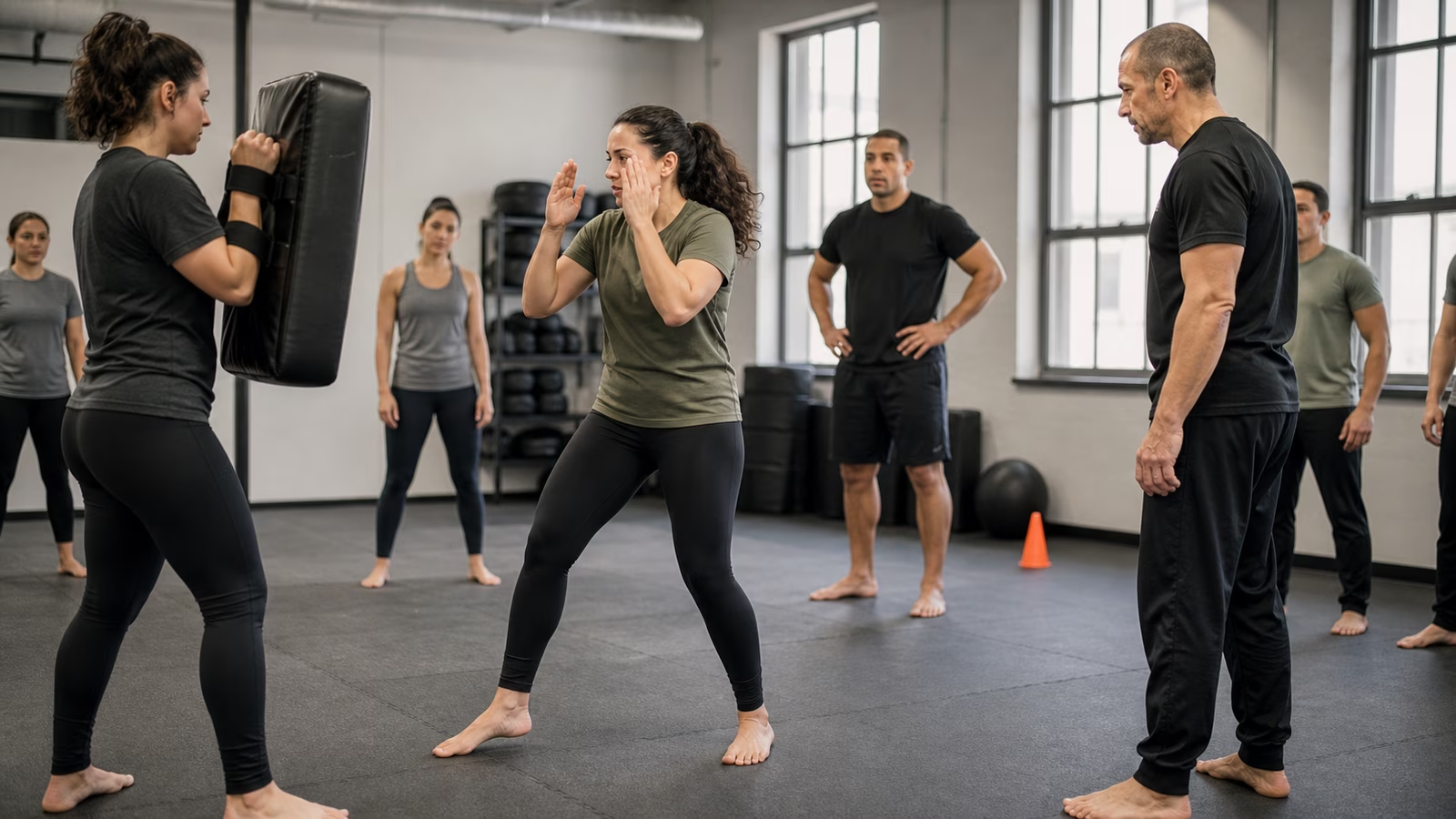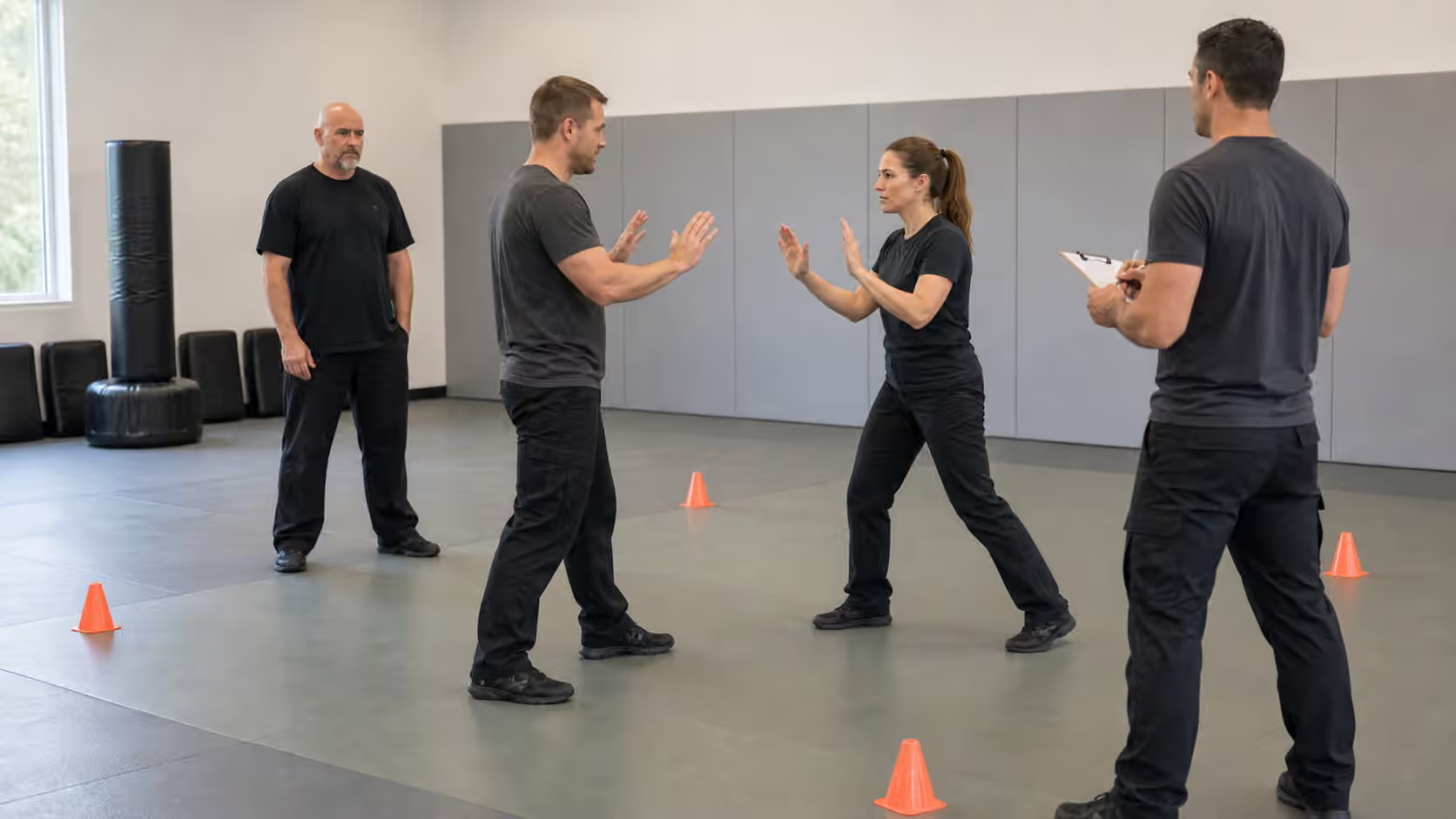
The first thing stress steals is usually not strength. It steals timing. Then it steals breath. A beginner in Krav Maga may start a drill with good intentions, clear instructions, and a body that mostly knows what to do. Thirty seconds later the shoulders rise, the jaw tightens, the hands turn stiff, the feet get noisy, and the breath disappears into short little sips that do not help.
This is not a character flaw. It is the body trying to manage pressure. The problem is that the body’s first emergency plan is not always useful for learning. When breathing gets shallow and posture collapses, a student may become faster in a frantic way but worse at seeing, listening, deciding, and recovering. Good training should not only make people work hard. It should teach them how to come back after effort.
Breathing and stress recovery are not decorative wellness add-ons to self-defense. They are part of the skill. A person who can strike a pad but cannot hear the next instruction is not finished. A person who can escape a drill but stays flooded for the rest of class is missing a piece. A person who can pause, breathe, regain posture, and look for the exit is building something more durable than intensity.
Breath shows what pressure did
In ordinary life, people often ignore breathing until something goes wrong. In training, breath becomes visible quickly. A student holds it while waiting. They inhale sharply before moving. They forget to exhale during effort. They gasp after a pad round and then try to talk while still half-panicked. The instructor may ask them to slow down, not because slow is more realistic, but because the student has lost the ability to learn.
Breath is useful feedback because it tells the truth without much drama. If you cannot breathe while moving, the movement may be too tense. If you cannot speak a short boundary after a drill, the pressure may have outrun your recovery. If you finish every round bent over with hands on knees, you may be training fatigue more than skill. Hard work has a place, but hard work without recovery can teach the body that every problem ends in collapse.
The first goal is simple awareness. Notice when you hold your breath. Notice when your shoulders climb. Notice when you stop seeing the room. Notice when a correction from the instructor sounds far away because your body is still inside the previous moment. This noticing is not weakness. It is the beginning of control.
Exhaling makes action less brittle
Many students hear instructors cue an exhale during padwork. Sometimes it becomes a sharp sound with each strike. That sound is not only for volume or aggression. Exhaling helps prevent breath-holding. It can connect movement to structure, keep the torso from locking up, and help the student recover between efforts.
The exhale does not need to be theatrical. A forced shout can become another form of tension. The useful version is honest and repeatable. The body works, air leaves, posture returns. Over time, the student learns that effort and breathing can happen together.
This matters beyond striking. A person may need breath while setting a verbal boundary, moving to an exit, getting up from the ground, or recovering after a startling moment. If training teaches breath only as a padwork noise, the lesson is too narrow. The deeper lesson is that breath should remain available when the body is under load.
Recovery is a trained transition
Recovery is not the same as rest. Rest is what happens when the drill is over and nothing else is asked of you. Recovery is the transition from stress back to useful attention. It can happen while standing, walking, listening, scanning, or preparing for another instruction.
A good recovery habit might look unimpressive. The student steps back, lowers unnecessary tension, takes a real breath, lets the eyes return to the room, and checks posture. The hands do not drop into helplessness. The body does not stay braced for a movie scene. The student becomes available again.
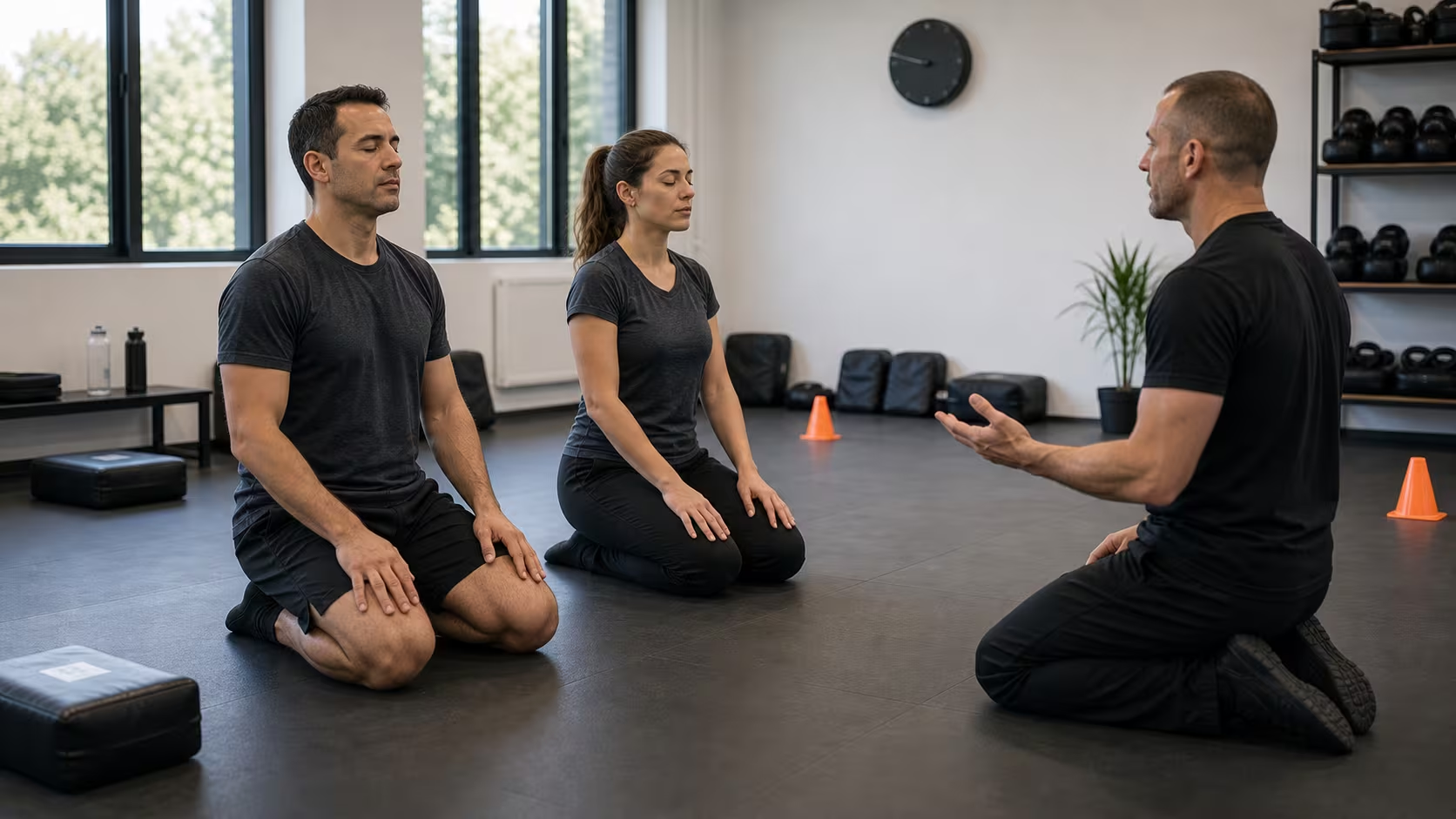
This is one reason cooldown moments inside class matter. If every drill ends with students wandering away in exhaustion, they may never learn the recovery itself. A coach who asks for one breath, posture, and eye contact after pressure is teaching a hidden skill. The body learns that the end of a burst is not collapse. It is return.
That return connects to De-escalation and Verbal Boundaries . A boundary said while flooded can sound panicked or provoking. A boundary said after one honest breath may be clearer. The breath does not solve the conflict. It gives the person a better chance to use the choices they still have.
Fatigue should not become identity
Krav Maga classes can be physically demanding, and beginners often measure themselves by exhaustion. They assume a class was good if they were crushed by the end. Effort can be satisfying, but fatigue is a poor teacher when it becomes the only proof of seriousness.
Under fatigue, movement changes. Hands drop. Feet narrow. Decisions get slower. People become more emotional or more careless. That can be useful to experience in a controlled way, because real stress rarely waits for perfect conditioning. But fatigue has to be framed. The question is not whether you can suffer. The question is whether you can notice what fatigue does and recover enough to keep learning.
A student who always trains at the edge of collapse may miss corrections. A student who never experiences pressure may not know how their body behaves when challenged. The middle is deliberate exposure. Work, notice, recover, repeat. That rhythm is more valuable than simply turning every class into a test of toughness.
The nervous system needs permission to come down
Some students remain keyed up long after a drill ends. Their body is still fighting a situation that has already stopped. They laugh too loudly, shake out their arms, talk over instruction, or go silent. Others feel embarrassed because a mild drill brought up a strong response. None of this is rare.
Good training rooms handle this without making it strange. Pressure drills should have boundaries, roles, and a way to stop. Instructors should normalize recovery without turning class into therapy. Students should be encouraged to signal when they need a moment. The room should take safety seriously enough that people do not have to pretend they are unaffected by everything.
The point is not to avoid stress forever. The point is to train stress in doses that build capacity. A person cannot learn well if the room constantly overwhelms them. They also cannot learn self-defense honestly if the room never asks the body to manage discomfort. Recovery is the bridge.
Breathing is part of leaving
The most practical breath may be the one that helps a person leave. Not the breath before a technique, not the breath during a pad round, but the breath that interrupts fixation. When people are stressed, they can become glued to the person in front of them. A breath can help widen attention enough to see the door, the friend, the light, the gap, the safer direction.
This is why breathing belongs with Footwork and Balance and Distance, Awareness, and Exit . The body needs a base, the eyes need the room, and the breath needs to keep the system from locking into one narrow answer.
Breathing will not make anyone invincible. It will not turn a beginner into an expert. It will not replace qualified instruction, good judgment, or leaving early. What it can do is make the rest of training more usable. It can keep a student teachable under pressure. It can turn effort into information instead of panic. It can help the body return.
That return is one of the quietest skills in the room. It is also one of the most important.