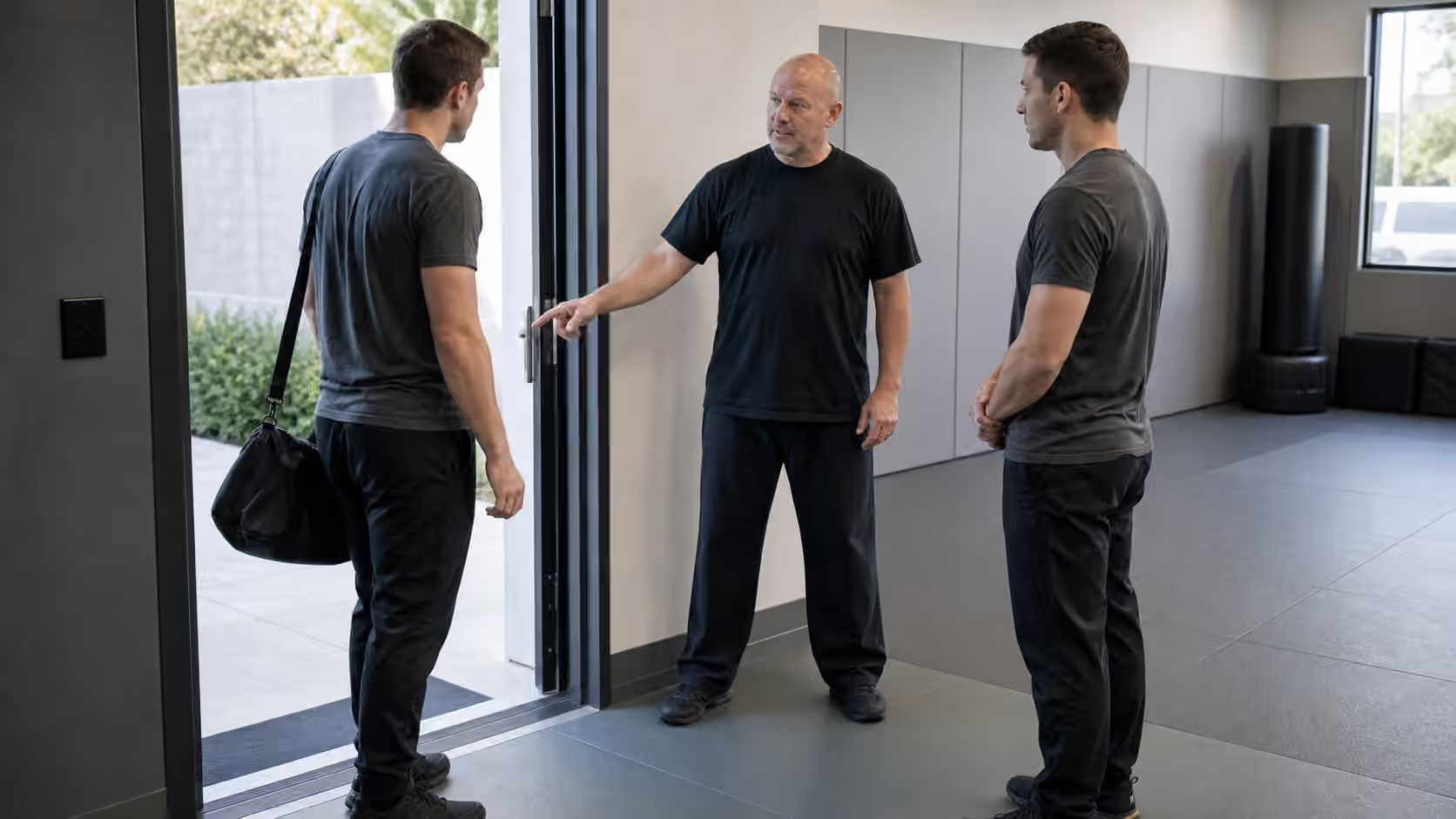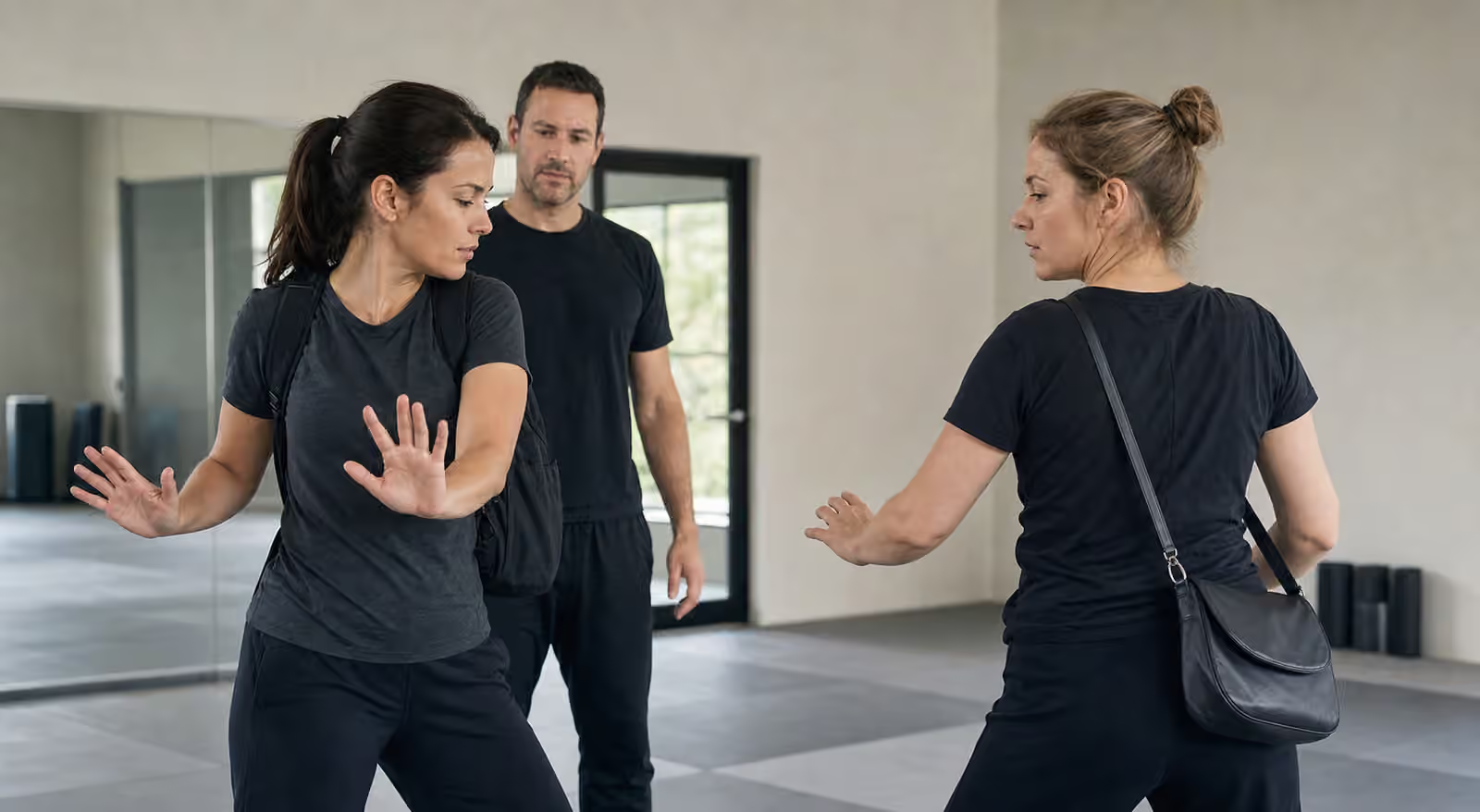
A bag can feel like a small private object until the room changes. A backpack, purse, sling bag, messenger strap, camera bag, diaper bag, or laptop case may sit quietly on the body for hours. Then a doorway narrows, a crowd compresses, a stranger asks a question too close, a car door opens into the walking lane, or a training partner adds light pressure in class. Suddenly the bag is no longer background. It is a handle, a weight, a tether, a trip point, and a claim on attention.
Krav Maga training should notice that change without turning ordinary life into theater. The point is not to make students suspicious of every bag they carry. The point is to stop pretending the body is empty-handed and perfectly balanced when daily movement says otherwise.
The Strap Changes Your Shape
A strap across the shoulder changes how the body turns. It may restrict one arm, pull fabric across the chest, slide down the elbow, or catch when the student rotates away. A backpack can make the shoulders feel wider than they are. A purse can swing into the hip. A sling bag can sit exactly where the arm wants to frame. These are not advanced tactical problems. They are ordinary movement problems that become louder under pressure.
Hands Full in Krav Maga explains how objects can delay decisions because people keep trying to save the object while also protecting themselves. Strap awareness adds a different issue. The object may still be attached after the student decides to move. A loose grocery bag can be dropped. A shoulder strap may follow, twist, or hold the student in place for a moment longer than expected.
In class, this can be explored with soft bags and light roles. A student wears a loose shoulder bag and practices angling away from a partner who is closing distance at a slow, agreed pace. The first lesson is not how to fight with the bag. It is how early the bag becomes relevant. The student may need to adjust posture before speaking, slip the strap off before stepping into a narrow lane, or decide that keeping the bag is less important than leaving cleanly.
Bags Invite Attachment
People carry important things. Wallets, phones, keys, medication, work documents, passports, school items, and personal objects can all live in one bag. That makes the bag emotionally louder than its weight suggests. A student may know, in theory, that objects are not worth injury. In the moment, the hand still grips the strap because the mind is already calculating the inconvenience of losing it.
Krav Maga should not answer that with slogans. It should let students feel the conflict safely. A partner lightly tugs a bag strap in a controlled drill, and the student notices the first instinct to pull back. Another round allows the student to release, step, use voice, and leave the prop behind. The contrast teaches more than a lecture. It shows that attachment can make the body late.
This connects to Distance, Awareness, and Exit . Distance is not only measured between faces or hands. It is also measured between your body and the things you are unwilling to release. If the bag owns one shoulder, one hand, and one second of decision time, then it has changed the true distance of the situation.
Crowds Make Straps Messy
Crowded places make straps more complicated because other bodies, railings, chairs, counters, and doors can catch them. A backpack brushed in a hallway may make the wearer turn around without thinking. A purse caught on a chair can pull the student backward. A messenger bag can swing into another person and create a social problem that did not need to exist.
Crowded Space Awareness already gives the larger frame: move earlier, keep exits in mind, and avoid making a scene when a quiet adjustment would do. Bag awareness fits inside that frame. In tight places, the student may shorten the strap, move the bag to the front for a few steps, keep one hand available, or choose a wider lane instead of squeezing through with the bag trailing behind.
Training can mark this with cones, chairs, and pads. The student walks through a narrow lane with a shoulder bag while a partner stands as a crowd marker. The goal is not speed. The goal is to feel when the bag changes the route. Many students discover that they look where their feet are going but not where the bag is going. That is a useful discovery because daily life often includes exactly that kind of partial awareness.
Backpacks Change Falling And Turning
A backpack can cushion some contact, but it can also change balance. It may shift when the student turns quickly. It may make it harder to lie back and stand up. It may make a chair, wall, or car seat feel closer than expected. If it is heavy, it can pull the upper body backward or make a sudden stop more awkward.
This belongs near Uneven Surfaces in Krav Maga and Floor Transitions in Krav Maga . The body does not move the same way under load. A technical stand-up with a backpack may feel different. A turn near stairs may need more patience. A crowded bus aisle may make removing the pack before moving through the doors more sensible than trying to twist through people.
The training point is humility. A student should not assume that the movement that worked on an open mat will work the same way while wearing a full backpack after a long day. Slower practice with harmless props can reveal the difference before pride edits it out.
The Bag Can Become An Accidental Barrier
Sometimes a bag helps create space. A backpack held in front of the body may keep a conversation from closing too quickly. A purse shifted to one side may free the hands. A training bag placed out of the walkway may clear an exit. But the bag should not be romanticized as a tool. It is not a shield with guaranteed behavior. It may tear, spill, snag, or make the student more attached to the encounter.
Environmental Movement in Krav Maga is a better guide than fantasy. Objects are part of the environment. They can help, hinder, distract, or disappear. The student should learn to ask what the object is doing right now rather than what a clever person might do with it in an imagined scene.
In practice, that means the simplest answer often wins. Move the bag before the drill begins. Drop the bag if it prevents leaving. Keep straps short in crowds. Do not stand in a doorway rummaging with both hands buried. Put the training bag where partners will not step on it. These choices are plain, which is why they are worth training.
Everyday Habits Are The Real Skill
The best bag awareness happens before pressure. When entering a crowded place, notice how the bag sits. When standing in a queue, keep it from blocking the person behind you. When moving through a doorway, avoid letting the strap trail across the frame. When loading a car, avoid getting pinned between the open door, the bag, and the task. Vehicle Loading Awareness in Krav Maga covers that last setting in more detail because vehicles turn bags into tiny projects at exactly the wrong moment.
None of this requires anxious performance. It is ordinary tidiness with self-defense value. A person who keeps a bag from tangling, frees a hand early, and chooses a cleaner route is not acting afraid. They are acting less late. Krav Maga has room for that kind of quiet skill. It is the same skill that keeps the head up while walking, keeps feet under the body while speaking, and leaves before a problem becomes a contest.
A bag is not the enemy. The fantasy that the bag does not matter is the problem. Good training lets the student feel the strap, release the attachment, recover the hand, and move through the open lane with less argument from their own belongings.