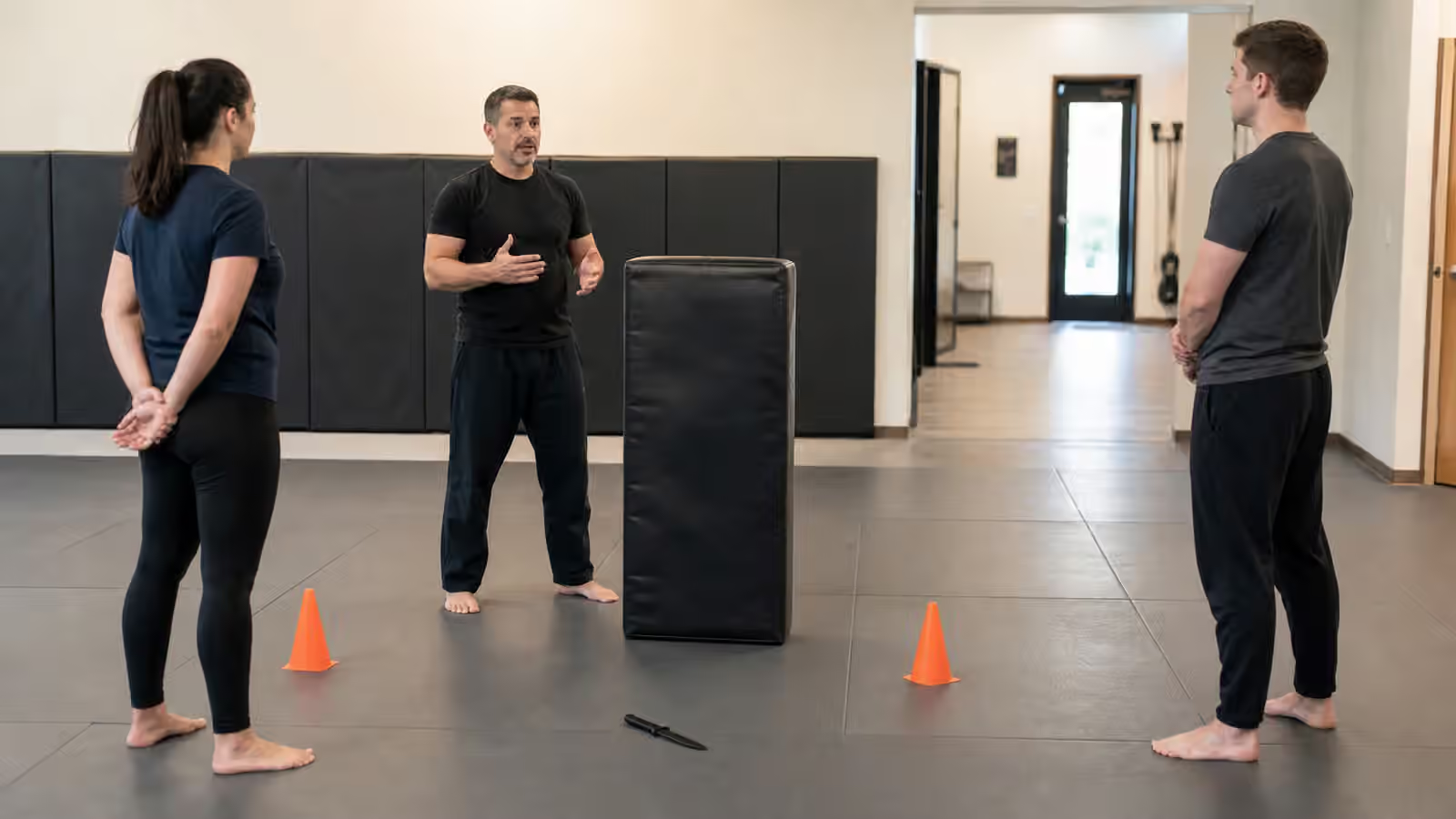
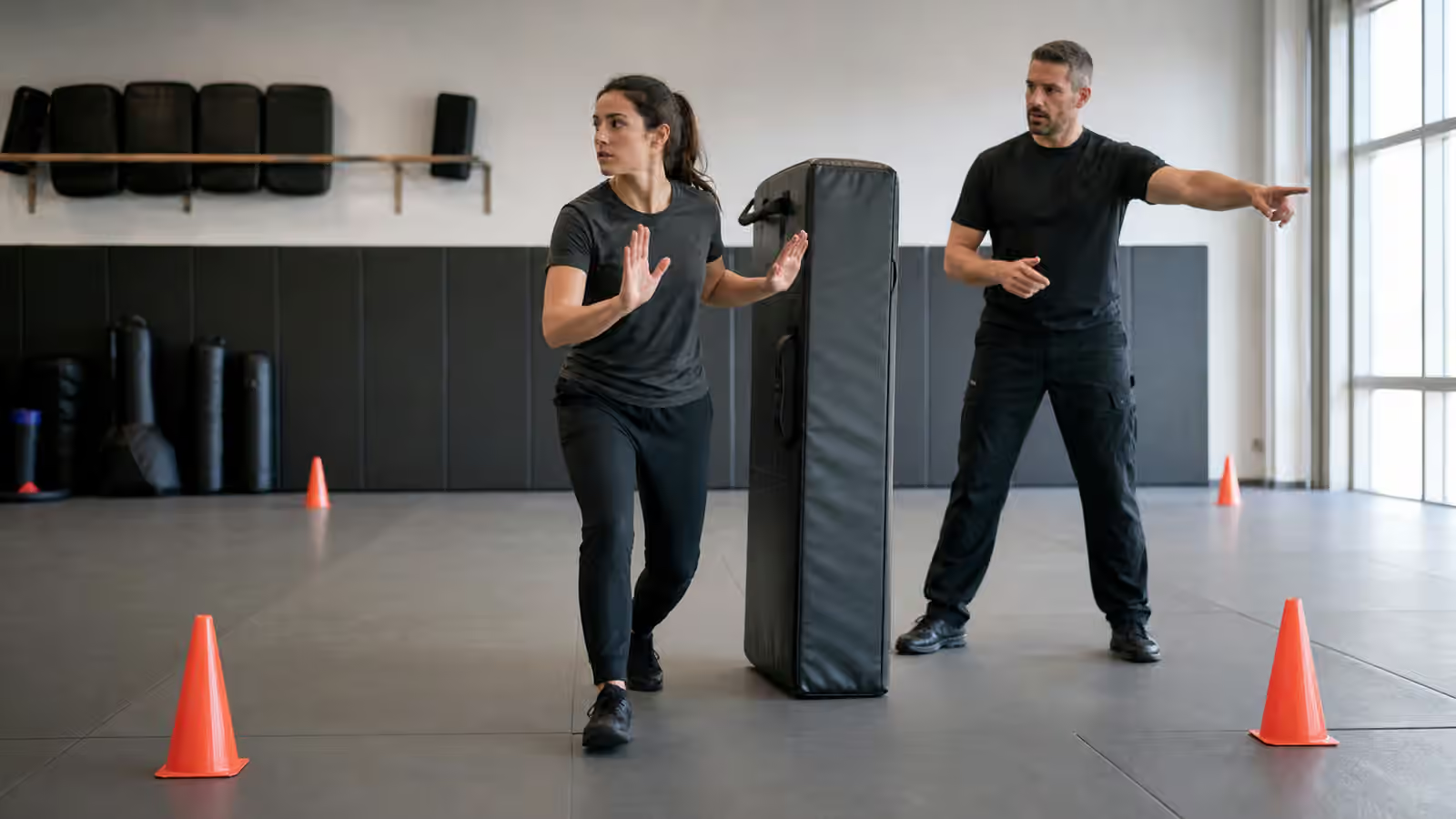
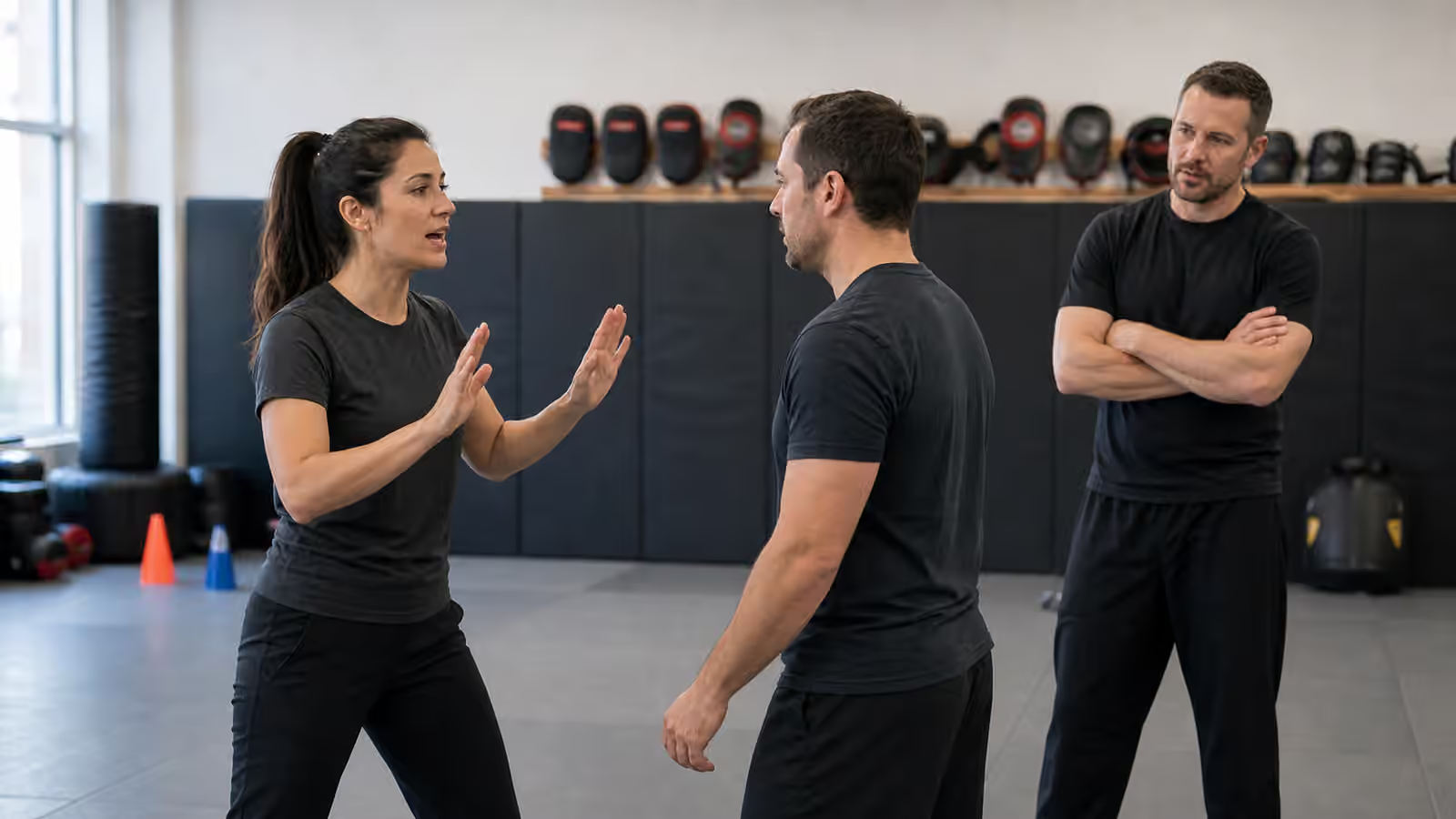
Krav Maga classes often spend a lot of time on the moment before contact and the moment of contact. Notice earlier. Use voice. Move your feet. Protect your head. Strike pads with structure. Get up from the floor. Exit the line. Those lessons matter, but they can accidentally leave a blank space after the action. The drill ends, the whistle blows, and everyone relaxes as if the story is complete.
Real incidents do not end that cleanly. Even training rounds have an aftermath. Breathing stays high. Memory may feel scattered. A partner may be embarrassed or shaken. A small injury may appear only after the noise drops. Outside a training room, there may be bystanders, friends, family members, medical concerns, police, workplace procedures, school rules, cameras, property, and decisions about what to say next. The after part is not separate from self-defense. It is part of the responsibility.
Scenario Training and Ethics explains why judgment belongs in Krav Maga. This guide follows the same idea after the scenario has ended. It is not medical advice or legal advice. It is a training conversation about reset, reporting, observation, and the humility to treat the aftermath as seriously as the movement.
The Body May Still Be in the Moment
After a loud pad round or pressure drill, the body may not understand that it is over. The student laughs too loudly, talks too fast, stares at the floor, forgets the correction, or immediately wants to run the drill again because stopping feels awkward. Those reactions are ordinary. Stress does not vanish because the instructor says reset.
Breathing and Stress Recovery belongs here because the first after-action skill is often coming back enough to perceive. A few slower breaths, a sip of water, unclenching the hands, and looking around the room can make the next conversation more useful. This is not a ritual of calmness for its own sake. It is a way to make the student teachable again.
In a real confrontation, the same principle is more serious. A person may feel shaky, angry, numb, talkative, or oddly clear. They may not notice pain immediately. They may repeat themselves. They may want to explain before they have checked whether everyone is safe. Training cannot predict every reaction, but it can teach students not to trust the first rush of emotion as the best guide for the next decision.
Check People Before Explaining the Story
In class, the first question after a rough moment should be practical. Is everyone all right? Did anyone hit a head, twist a knee, catch a finger, or feel neck pressure they did not expect? Did a partner freeze because the drill crossed a boundary? Did the holder absorb impact badly? The answer should be allowed to interrupt the training plan.
This is where Safety Signals and Stopping Early becomes more than a rule for the middle of the drill. A student who speaks up after the round is still using the safety system. A partner who says, “That was too much,” is giving the room information. A coach who pauses the class to check someone is not weakening the training. They are preserving the conditions that make hard training possible.
Outside class, checking people may include moving to a safer place, calling emergency services when appropriate, asking bystanders for help, and noticing whether someone needs medical attention. Laws, policies, and procedures vary, so a written guide should not pretend to answer every setting. The general habit is still useful: get to safety, check for harm, and do not let the desire to tell the story outrun the need to care for people.
Reporting Is Not Drama
Some students imagine reporting as something that happens only after extreme situations. In training, reporting can be much smaller. A student tells the instructor that a drill felt unsafe. A partner mentions that a pad strap is failing. Someone says that a role player added contact not assigned by the drill. These reports protect the room.
A healthy Krav Maga school should make those reports normal. Choosing a Krav Maga School encourages beginners to watch how a school handles safety culture. The after-action response is one of the clearest signs. Does the instructor listen without defensiveness? Do students get mocked for naming discomfort? Are repeated problems corrected, or do they disappear into the energy of the room?
In daily life, reporting may mean following workplace, school, venue, or local emergency procedures. It may mean documenting what happened while memory is fresh. It may mean identifying witnesses or asking for video preservation when that is appropriate through the proper channels. This guide cannot give legal instructions, and students should get qualified help for legal or medical questions. The training point is simpler: after an incident, responsible action often includes clear, timely communication rather than private storytelling.
Memory Can Be Messy
Adrenaline and fear can make memory feel both vivid and unreliable. A student may remember the sound of the pad but not the order of the steps. They may remember a partner’s face but not where the exit was. After a real confrontation, people may disagree honestly about what happened because they noticed different pieces of the scene.
This is one reason debriefing should be humble. In class, the instructor can ask what the student noticed before offering corrections. Where was the exit? What did the partner do first? When did breathing change? Did the student remember the stop signal? The answers may be incomplete. That incompleteness is useful. It shows what pressure hides.
Progress Without Chasing Intensity gives a better way to measure improvement. A student is not progressing only when the drill feels more intense. They are progressing when they can recall more accurately, recover faster, notice partners, and learn from the round without turning it into a performance story.
Debrief Without Replaying Forever
Debriefing is useful when it turns experience into learning. It becomes less useful when it turns into endless replay. Some students want to process every second immediately. Others want to escape the conversation. A good instructor gives enough structure for the lesson to land without trapping the room in analysis.
A training debrief can be short and concrete. What was the drill trying to teach? What did the student do well enough to keep? What changed when pressure increased? What safety issue needs correction before the next round? The answers should lead to action, not just commentary.
There is also a place for private follow-up. If a drill touched a student’s history, if a partner behaved badly, or if an injury concern appeared, the middle of class may not be the right place to handle everything. The school should have a way to speak with the instructor afterward. Serious rooms do not require every problem to be processed in public.
The Role Player Has an Aftermath Too
Scenario training often focuses on the defender, but role players also need to come out of the role. A person who acted as a boundary violator, pad attacker, or crowding partner may carry energy after the whistle. They should stop the role cleanly. No teasing, no extra lines, no crowding after the drill, no pretending the scene is still alive because it feels funny.
This matters for trust. Partner Work in Krav Maga describes role discipline during drills. Afterward, role discipline means returning to ordinary respect. The person who created pressure a moment ago is again a training partner. They may need to check in, apologize for a mistake, or hear that something felt too intense. None of that weakens scenario training. It keeps scenario training from spilling into the room after its purpose has ended.
Defenders also need to put the role down. A student who moved well in a drill should not spend the next ten minutes acting as if they are still inside the conflict. Pride can keep the body activated almost as much as fear can. The reset matters for both.
Training Notes Can Help
Training Between Krav Maga Classes suggests that practice outside class should stay grounded. After-action notes are one of the safest ways to do that. A student can write down what they noticed, what correction they received, and what question they want to ask next time. The notes do not need to become a dramatic diary. They can be plain observations.
Writing can also separate memory from interpretation. “I backed into the wall before I noticed it” is more useful than “I am bad under pressure.” “I forgot to breathe after the pad round” is more useful than “I panic.” The first version gives the next class a task. The second version becomes an identity that may not be true.
For real incidents, documentation may have practical importance, but it should be handled carefully and with qualified guidance when legal, workplace, school, or medical issues are involved. The training habit still matters: observe clearly, avoid exaggeration, and do not turn uncertainty into certainty just because the mind wants a complete story.
Recovery Is Part of Skill
After-action responsibility includes the body over the next hours and days. In class, a student may need to mention soreness, headaches, dizziness, joint pain, or emotional residue to an instructor, medical professional, or trusted support depending on the situation. Recovery, Soreness, and Training Frequency treats recovery as part of the training cycle rather than a break from it.
That idea applies after pressure too. If a drill leaves a student rattled, the answer is not always to push harder immediately. Sometimes the better response is to lower intensity, ask for clarification, change partners, or take a slower version next class. If a real confrontation happened, returning to training may require patience. The goal is not to prove that nothing affected you. The goal is to keep learning without lying to yourself or the room.
The Ending Teaches the Beginning
How a school handles endings shapes how students enter the next drill. If after-action moments are rushed, mocked, or ignored, students learn to hide discomfort and polish stories. If they are handled with clarity, students learn that responsibility continues after the loud part. They become more willing to stop early, report problems, remember details, and treat partners as people rather than props.
Krav Maga is often praised for directness. Directness should include the aftermath. Breathe enough to think. Check people before explaining. Report safety problems without making theater of them. Debrief the lesson, not the ego. Let role players return to being partners. Write down useful observations. Get qualified help when a situation calls for it.
The drill is not complete when the pad stops moving. It is complete when the room has returned to attention with more honesty than it had before. That quieter ending may be one of the best signs that the training is serious.