Umbrellas break in public and then get judged in private. A rib bends on the walk home, a metal tip slips free, the canopy pulls away from a spoke, the runner sticks, or one gust turns a cheap frame inside out and leaves everyone pretending it might still be fine. Some umbrellas deserve a small repair. Some are useful only until the next wind. The difference is not sentiment alone. It is the condition of the frame, the fabric, the joints, and the job you expect the umbrella to do.
Dry the umbrella before diagnosing it
A wet umbrella hides damage. Fabric sticks to itself, ribs look darker, handles feel slippery, and a bent joint may seem like ordinary tension. Open the umbrella in a safe place where it can drip without damaging floors, then let it dry fully. Do not force it open against a jam. If the runner will not slide or the latch catches, stop and look for the obstruction before adding pressure.
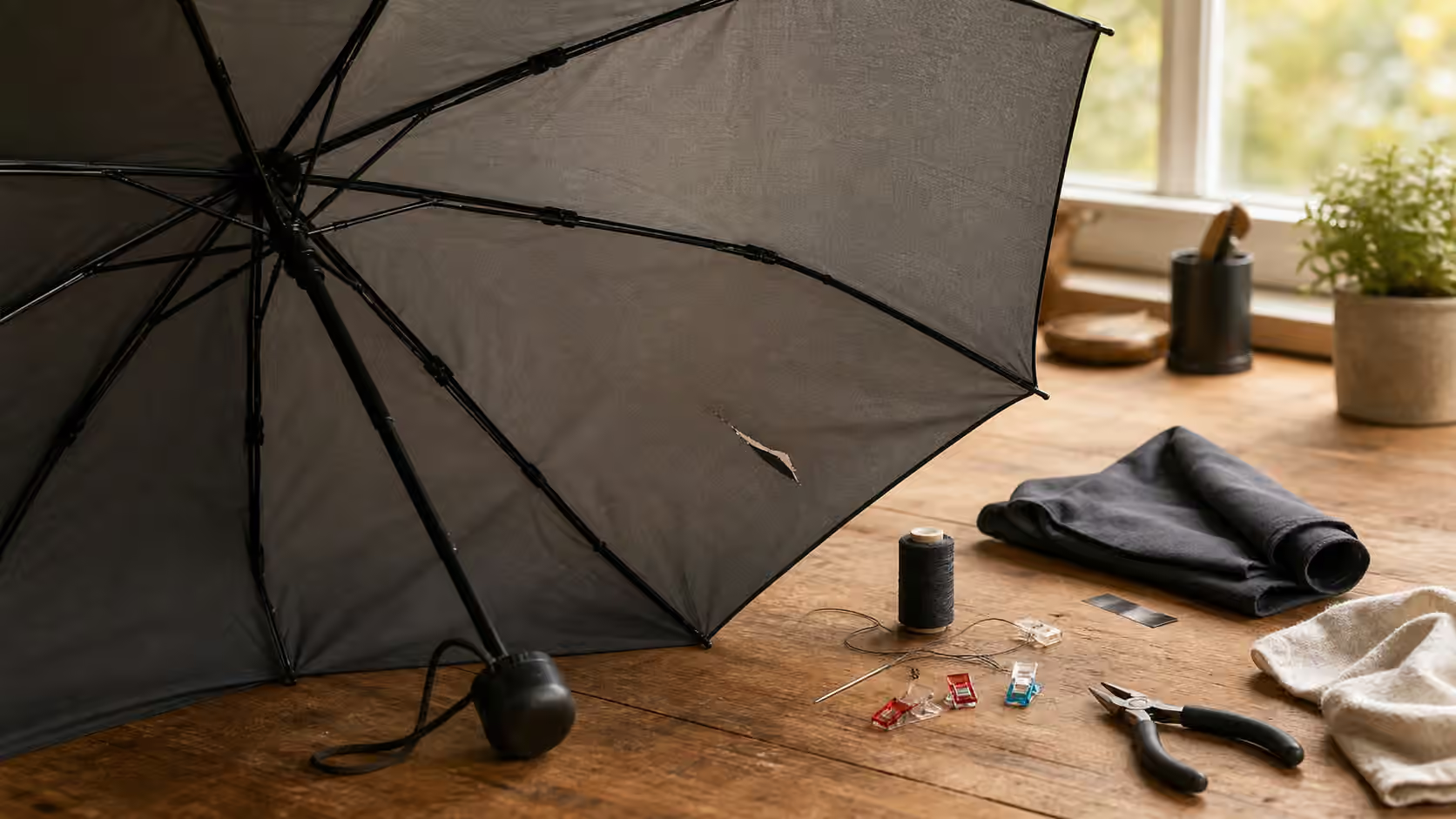
Once dry, inspect the canopy from above and below. Find the tear, if there is one, and follow the ribs outward to the tips. Does the fabric still attach at each rib end? Are any stitches missing where the canopy is tied to the frame? Is one rib bowed, kinked, or detached? Does the shaft look straight? The 10-Minute Triage helps because umbrella failures often combine fabric and frame symptoms. Repairing the visible tear does not help if the frame can no longer hold shape.
A quick photo before touching anything is useful. Umbrella ribs cross and fold in a pattern that looks obvious until a small connector has shifted. The habit from How to Photograph a Problem Before You Take It Apart prevents you from turning a simple retie into a puzzle.
Canopy repairs should stay flexible
Small canopy tears near the middle of a fabric panel may be patchable if the surrounding fabric is still strong. The repair needs to flex, fold, and shed water without creating a stiff ridge that rubs a neighboring fold. A patch or stitching choice that works on a tote bag may be too bulky for an umbrella. The canopy folds tightly; any repair rides through that fold every time the umbrella closes.
Clean and dry fabric matters. Adhesive patches need a surface that will hold. Stitching needs enough sound cloth around the tear. If the fabric is brittle, sun-weakened, flaking coating, or tearing in several places, the single hole is not the problem. The canopy has aged out. Basic Hand Stitching can help with the motion of a simple repair, but umbrella fabric asks for restraint. Do not make a decorative stitch line if the thread will catch, wick water, or bunch the fold.
At the rib tips, the canopy is often held by small caps, stitching, or pockets. A loose tip can let the rib poke through the fabric. If the cap is intact and the fabric pocket is sound, reseating and securing it may restore the umbrella. If the tip is missing, sharp, or bent, the frame may keep damaging the canopy until the right part is replaced.
Bent ribs tell you how the umbrella failed
A gently bowed rib is different from a kinked one. A bow may come from being stored badly under a bag. A kink often means the material has yielded and will bend again. Metal ribs can be sharp when cracked. Fiberglass can splinter. Tiny linkages can pinch fingers. Do not straighten a rib by forcing it against the rest of the frame. Support the area, move slowly, and stop if the material creaks, whitens, cracks, or resists.
Folding umbrellas add complexity because their ribs have joints designed to collapse. A bent joint may keep the umbrella from closing smoothly, which then tempts people to wrap the canopy tightly and shove it into a sleeve. That can tear fabric and stress other joints. If a folding umbrella no longer folds without negotiation, the useful repair may be retirement or replacement, not a new patch.
Handle and shaft problems are also important. A loose handle may be adhesive, fastener, or cracked-plastic trouble. If the handle slips while the umbrella is open, the object is unreliable. Adhesive Repairs applies only when the joint is low risk, clean, clampable, and not expected to take sudden force. A handle that must resist wind and hand pressure may not be a good casual glue job.
Sticky runners and dirty joints
Umbrellas collect grit at the runner, latch, and rib pivots. A sticky mechanism may need drying, brushing, and careful cleaning rather than oil. Lubricants can stain fabric, attract dirt, or make a handle unpleasant to hold. Start dry. Brush out sand, lint, and leaf bits. Wipe the shaft gently. Open and close the umbrella slowly while watching where the bind begins.
If the latch does not hold, the umbrella is not dependable. A canopy that collapses in light weather is annoying; a frame that snaps closed unexpectedly can injure fingers or strike a face. Do not keep using a mechanically unreliable umbrella because the fabric is pretty. The keeper mindset includes retiring things when the object cannot do its basic job safely.
Choose the repair by the umbrella’s role
An emergency umbrella kept in a work bag needs reliability more than charm. A porch umbrella used between car and door may tolerate a small visible patch. A travel umbrella used in unfamiliar weather should close, lock, and fit its sleeve without fuss. A sentimental umbrella can be kept as an object even if it is no longer a weather tool. Naming the role prevents overrepair.
Cost matters, but so does waste. A small repair on a sturdy umbrella can save a good object. A long repair on a fragile promotional umbrella may create a false sense of readiness. The Repair Cost Rule helps when time, reliability, and replacement quality all need to be weighed.
Store it so the repair survives
Dry the umbrella open before storing when practical. Closing a wet umbrella tightly invites odor, corrosion, and fabric wear. Do not cram it under heavy items. Use the sleeve without twisting the canopy into a hard spiral. If the repair is at a rib tip, check that the tip does not scrape the sleeve every time it goes in. The repair is part of a use cycle, not only a bench result.
Add a Save Log note with the umbrella type, failure point, repair material, and whether it opened and closed smoothly afterward. If the frame bent once, note the weather or storage situation that caused it. That note may decide whether the umbrella stays in a daily bag or moves to backup status.
Read this with Basic Hand Stitching for small fabric repairs, Adhesive Repairs before gluing a handle or tip, Replacement Parts when a cap or sleeve is missing, and When Not to DIY when sharp broken frame parts make the repair unsafe.