Stainless cookware confuses people because most of the marks it collects are not damage at all, and the instinct to scrub them away with the harshest thing in the cupboard does more harm than the marks ever would. A good stainless pan is close to indestructible in daily use, but its surface is a finish, and a finish can be dulled, scratched, and clouded by treatment that the underlying steel shrugs off. The skill, then, is diagnostic as much as physical: learning to tell a harmless heat tint from burned-on food, and a cosmetic cloud from actual pitting, so that you apply the right amount of force to the right problem and leave the pan both clean and intact.

The rainbow that is not a problem
The most misunderstood mark on stainless is the faint rainbow sheen that appears on the cooking surface after high heat, sometimes called heat tint. It looks like an oil slick, blue and gold and violet, and it panics people into thinking they have ruined the pan. They have not. Rainbowing is a thin, purely optical film that forms when the steel is heated, and it is harmless, food-safe, and completely reversible. It is not a stain in any meaningful sense and it is certainly not a sign the pan is finished. If you want it gone, a mild acid handles it easily, but the first and most useful thing to understand is that you are free to ignore it entirely. Half the “damage” people scrub at on stainless is this, and the scrubbing does more lasting harm than the tint ever would.
Sorting the other marks
Beyond rainbowing, the marks worth naming are cloudy mineral spotting from hard water, a sticky brown-gold varnish of polymerized oil baked onto the surface, genuinely burned food, and true pitting. Only the last of these is real damage. Mineral spots and water marks are surface deposits that wipe or dissolve away. Polymerized oil is cooked-on residue that softens with the right approach rather than brute force. Burned food is a soak-and-lift problem. Pitting, small permanent craters in the metal, usually from salty water or acidic food left sitting, is the one mark that will not clean out because the steel itself is gone there. Before you reach for anything abrasive, decide which of these you are looking at, and note whether the surface you are cleaning is brushed, polished, or a nonstick-coated stainless, because a polished exterior scratches in a way a brushed cooking surface hides.
Work from gentlest to strongest
The whole method is to escalate slowly and stop as soon as the mark lifts. Burned food comes off best after a soak that softens it, warm water and a little dish soap given time to work, sometimes with a simmer of water and baking soda to loosen a stubborn layer. A wooden or plastic scraper lifts the softened residue without touching the finish, and it should always precede any abrasive. For rainbowing and mineral marks, a compatible mild acid or a dedicated stainless cleanser dissolves the deposit chemically, which means no scratching at all. Only when soaking, scraping, and mild cleansers have been exhausted does a gentle abrasive come out, and even then it should be worked with the grain of the finish, in the direction of the brushed lines, never scrubbed in circles across them. A stainless-specific cleanser used sparingly and rinsed well does more, and more safely, than a heavy scouring pad attacked in frustration.
What not to do to a stainless pan
A few actions cause most of the avoidable harm. Harsh abrasives dragged across a polished exterior leave permanent swirl marks; if you use them there at all, do it knowing the finish will change. Assuming rainbowing means the pan is ruined leads people to over-scrub a cosmetic film into a scratched surface. And chlorine bleach does not belong on stainless cookware, because chloride is precisely what pits and corrodes the steel over time, turning a cleaning attempt into the cause of real damage. The pattern behind all three is the same: reaching past the mild solution for a harsher one, and in doing so creating the very permanent flaw you were trying to remove. When in doubt, use less force and more patience, not more chemistry.
The habits that keep cleaning trivial
Most hard stainless cleaning is really a heat-and-oil management problem that showed up later at the sink. Food sticks and burns onto stainless mainly when the pan is too hot, too dry, or crowded before it is ready. Preheat moderately rather than blasting the pan, use enough fat, and deglaze early while the browned bits, the fond, are still loose, and the pan will often wipe clean with almost nothing. Salty or acidic liquids left sitting overnight are what cause pitting and dull spots, so wash and dry the pan reasonably soon rather than leaving it to soak for days. Drying fully after washing prevents the mineral water spots that otherwise cloud the surface. None of this is a rigid regimen; it is a handful of small habits that keep the cleaning at the pennies-and-minutes end rather than the scouring end.
When the pan is genuinely past cleaning
Cleaning has honest limits, and it is worth knowing them so you do not scrub at damage that will not come out. If the interior aluminum or copper core of a clad pan is exposed at a worn edge, if the pan is severely warped so it no longer sits flat and heats evenly, or if there is deep pitting in the food-contact surface, the issue has moved from cleaning to condition, and the right response is to replace the pan or seek advice rather than to keep working at it. A sound stainless pan cleans up for almost nothing; a compromised one is not rescued by effort. Recognizing the difference is part of the same judgment that keeps you from wasting an afternoon on a lost cause, and a quick Save Log note about what worked on a given pan, and what finally retired one, sharpens that judgment for next time.
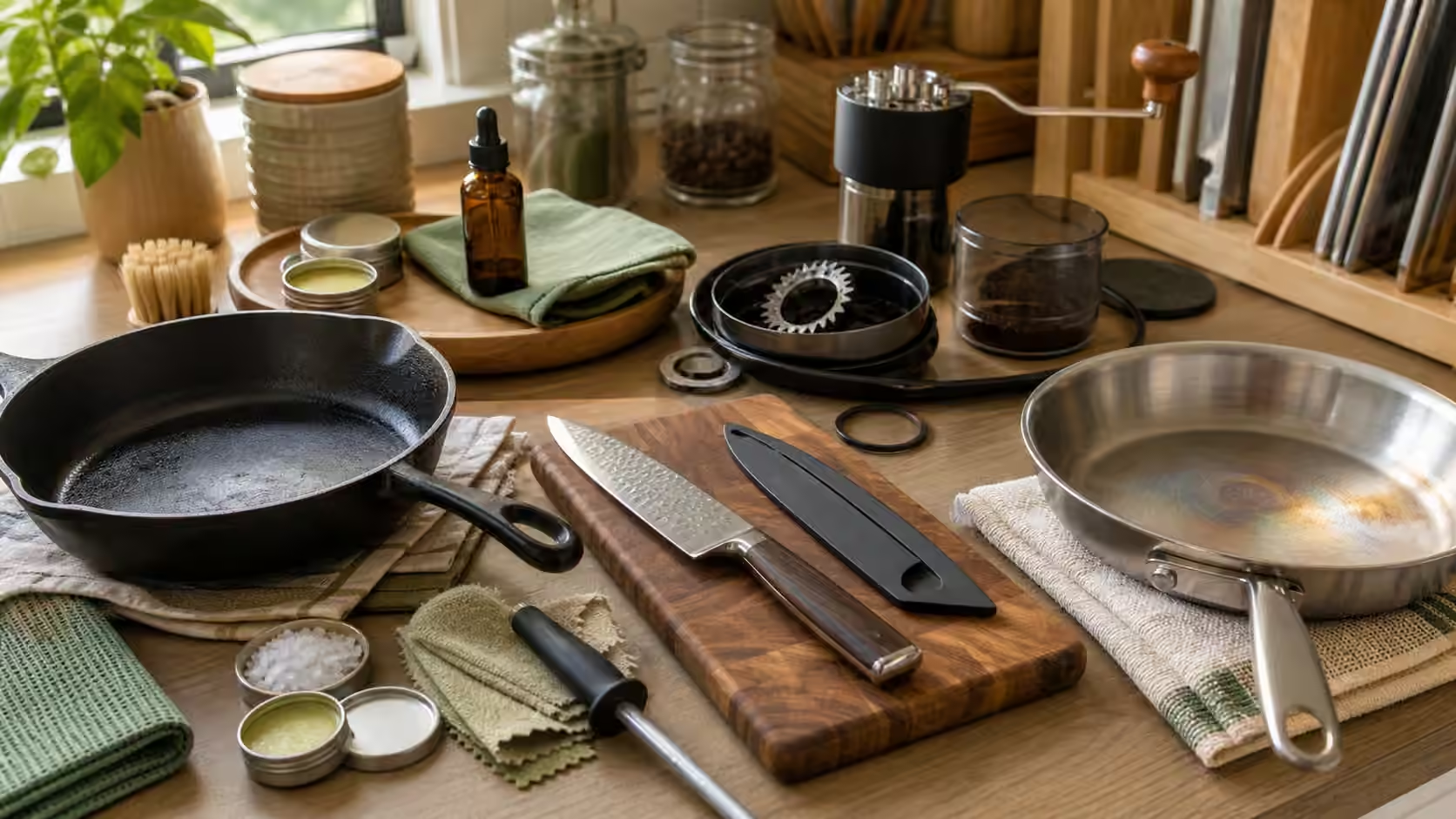
The neighboring kitchen guides round this out: Cast Iron Rescue: Rust, Sticky Seasoning, and Flaking Myths covers the opposite temperament of pan, while Knife Care: Honing, Sharpening, Storage, and When to Stop and Cutting Board Care: Oil, Wax, Cracks, Smells, and Warping handle the tools that share the counter with it.