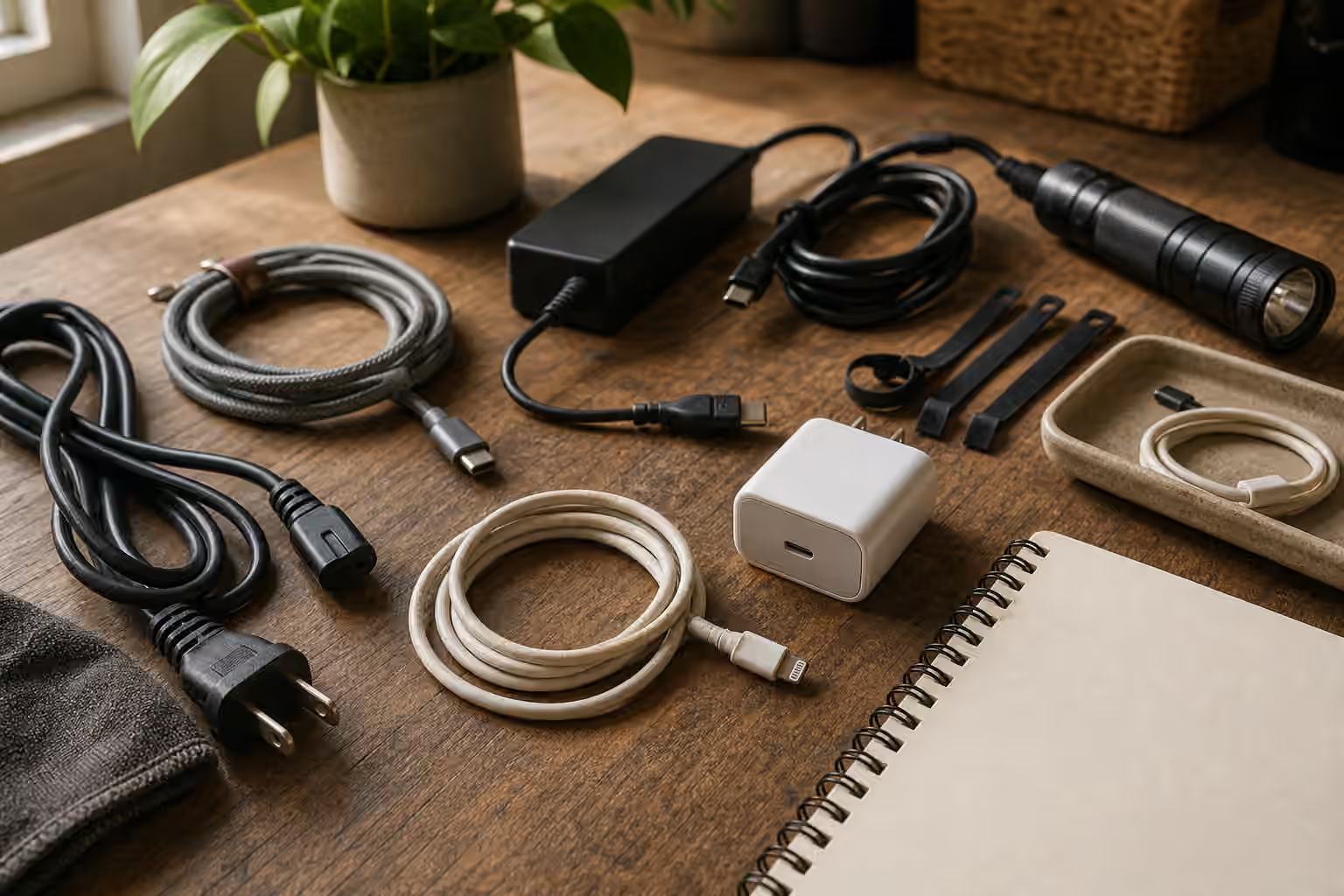
Power cords and chargers live rough lives. They are bent behind furniture, pinched under chair legs, yanked from outlets, packed in bags, wrapped too tightly, and left near heat, pets, moisture, dust, and food crumbs. Because they keep working until they do not, wear can feel abstract. A cord that charges a phone today may still be unsafe if its jacket is cracked, plug is loose, brick runs unusually hot, or connector wiggles in a way that exposes stress. The keeper skill is not cord repair heroics. It is inspection, prevention, documentation, and timely retirement.
Inspect only when unplugged
Start by disconnecting the cord from power and from the device if possible. Good light matters. Look along the full length, not only the plug. The most common stress points are where the cord exits a plug, charger brick, device connector, power strip, or appliance body. Bend gently, without forcing, and watch for cracks that open in the outer jacket. Feel for flattened spots, hard lumps, sticky insulation, sharp kinks, or places where the cord has become thinner.
Do not confuse cosmetic grime with structural wear. Dirt can be cleaned from a sound cord with a lightly damp cloth if the maker instructions allow it and the cord is fully dry before use. Cracked insulation, exposed conductor, melted plastic, scorching, loose prongs, buzzing, and heat marks are not cleaning problems. They are stop signals. When Not to DIY is blunt for a reason: electricity is one of the categories where improvisation can turn a cheap part into a serious risk.
Chargers add their own clues. A brick that has always become mildly warm in normal use is different from one that suddenly becomes hot, smells odd, discolors, or works only when the cable is held at an angle. A connector that wiggles may damage the device port as well as the cable. A charger with missing markings, unknown origin, damaged case, or poor fit should not be treated as a bargain rescue project.
Prevent wear at the boring points
Most cord care is arrangement, not repair. Keep cords out of pinch points behind beds, sofa legs, rolling chairs, door gaps, and appliance feet. Avoid pulling a plug out by the cord. Leave gentle curves instead of sharp bends. Use loose loops rather than tight wraps around a charger brick. Give power strips enough air and keep them away from wet areas, rugs, and heat sources according to their instructions.
Cable ties can help or harm. Soft reusable ties that hold a loose coil are useful. Tight bands that crease insulation create new weak points. Do not cinch cords hard just to make a drawer look tidy. A neat cable that has been crushed into tight bends is not better kept. The same practical restraint behind The Beginner Keeper Kit applies: simple supplies are useful only when they make the object safer and easier to maintain.
Dust and lint around charger ports can cause poor connection, but poking metal objects into ports is not a casual cleaning move. Follow device-maker guidance. If a port is loose, corroded, wet, burnt, or packed with debris you cannot remove safely, stop. A charger guide should not become device repair by accident.
Match the charger to the job
Not every plug that fits is right for the device. Voltage, current, connector shape, polarity for some older adapters, charging standards, cable quality, and heat behavior can matter. For modern consumer electronics, the maker’s supplied or recommended charger is often the cleanest reference point. For older appliances, routers, lamps, tools, toys, and specialty gear, a wrong adapter can damage the device or create heat.
Use The Warranty Folder to keep model numbers and original charger details with the device record. If a charger is lost, Replacement Parts: OEM, Aftermarket, Salvage, and Red Flags helps you avoid the “close enough” trap. Photograph labels for your private record if you can do that clearly, but do not rely on memory. A drawer of anonymous black adapters is a small museum of future mistakes.
Power strips and extension cords deserve even stricter role discipline. Temporary use is not permanent wiring. Do not run cords under rugs, through doorways, across wet areas, or where they can be damaged by traffic. Do not daisy-chain power strips or overload cords beyond their rating. If the setup requires constant workaround, the room needs a better power plan rather than one more adapter.
Retire damaged cords without guilt
Electrical gear is one of the places where the keeper mindset can be misunderstood. Keeping an unsafe cord in service is not thrift. Taping over a cracked mains cord, bending prongs back repeatedly, or using a charger that smells hot is not repair. It is delaying a clear decision. If the cord is detachable, replace it with the correct rated part. If the cord is built into an appliance, use qualified service or retire the appliance if service does not make sense.
Some low-voltage cables are inexpensive enough that replacement is the obvious repair. Others belong to expensive tools or specialty devices and need proper parts. The decision should count risk, device value, replaceability, and the consequences of failure. The Repair Cost Rule is useful here, but with an electrical adjustment: a cheap replacement part often wins because the downside of a bad cord is not just inconvenience.
Battery packs and chargers that are swollen, wet, crushed, overheated, or physically damaged deserve special caution. Do not press, puncture, or keep using them to “get one more charge.” Follow local disposal and recycling rules for electronic waste and batteries. That varies by place, so the evergreen keeper habit is to isolate the item safely, stop using it, and route it through the proper channel.
Add it to the Save Log
Record which device a charger belongs to, where the cord is used, any heat or fit issue, and the date a replacement was bought. Label storage without putting adhesive where it can overheat or leave residue on vents. Store cords in loose coils and keep the correct charger with the correct device whenever possible. The best cord repair is often a future mistake that never happens.
Use this guide with Lamp Won’t Turn On for household electrical stop signals, Small Appliance Care Without Opening the Case for exterior-only appliance boundaries, Replacement Parts before buying adapters, and When Not to DIY whenever heat, shock, exposed conductor, batteries, or mains power enters the decision.