A sharp knife is safer than a dull one, which is the first thing worth understanding about knife care, because it inverts most people’s instinct. A dull blade slides off the food, needs more force, and slips toward your fingers; a sharp blade bites where you place it and does the work you intended. So keeping an edge is not fussiness, it is safety. But keeping an edge well means knowing the difference between the two very different things people lump together as “sharpening,” and knowing how little steel a knife can afford to lose. Most home knives die not from dullness but from being ground away by well-meaning owners who reached for the aggressive tool when the gentle one would have done.

Honing and sharpening are not the same thing
Here is the distinction that saves the most steel over a knife’s life. Honing does not remove metal; it straightens an edge that has rolled slightly to one side from ordinary use. A knife’s fine edge bends microscopically as you work, and a honing rod, sometimes miscalled a sharpening steel, pushes that rolled edge back into alignment so it cuts cleanly again. Sharpening, by contrast, actually grinds away metal to form a fresh edge, and every sharpening shortens the life of the blade a little. The practical consequence is that you should hone often and sharpen rarely. A knife that feels like it has lost its bite has usually just rolled and needs a few light passes on a rod, not a session on a stone. Learning to reach for the rod first is the single habit that most extends a good knife.
How to tell what your edge actually needs
Before doing anything, look and test. Draw the blade gently across a sheet of paper or the skin of a tomato: an edge that catches and tears rather than slicing cleanly is dull, while an edge that cuts but feels like it has drifted off-center wants honing. Inspect the edge in good light for chips, a bent tip, or rust, because those are separate problems with separate answers. It also matters what kind of knife you are holding. A forged German or Japanese chef’s knife rewards proper stone work; a cheap stamped blade may not hold an edge long enough to justify it; a serrated knife should almost never be touched with a standard sharpener because the scallops need specialized treatment; and ceramic blades are their own world entirely and usually belong with a professional. Name the knife and the problem before you choose the tool, and you will rarely choose wrong.
Honing and sharpening without hurting the knife or yourself
Always start clean and dry, because grit dragged across a stone or rod damages the edge you are trying to refine. To hone, hold the rod steady and draw the blade down and across it at a consistent, shallow angle, alternating sides with light, unhurried strokes; pressure is not the point, angle and consistency are. When honing genuinely no longer restores bite, then it is time to sharpen, and here a whetstone is the tool that both works best and teaches the most, though it demands patience to hold a steady angle through the stroke. Pull-through sharpeners are quick and forgiving to use but aggressive; they remove metal fast and can leave an inconsistent edge, so if you use one, use it sparingly. Above all, keep every stroke moving the edge away from your hand, never toward it, and work slowly enough that you are never recovering from a slip. If the angle or the grip feels unsafe, that feeling is information: stop and let a professional do it.
Storage and washing decide how often you sharpen
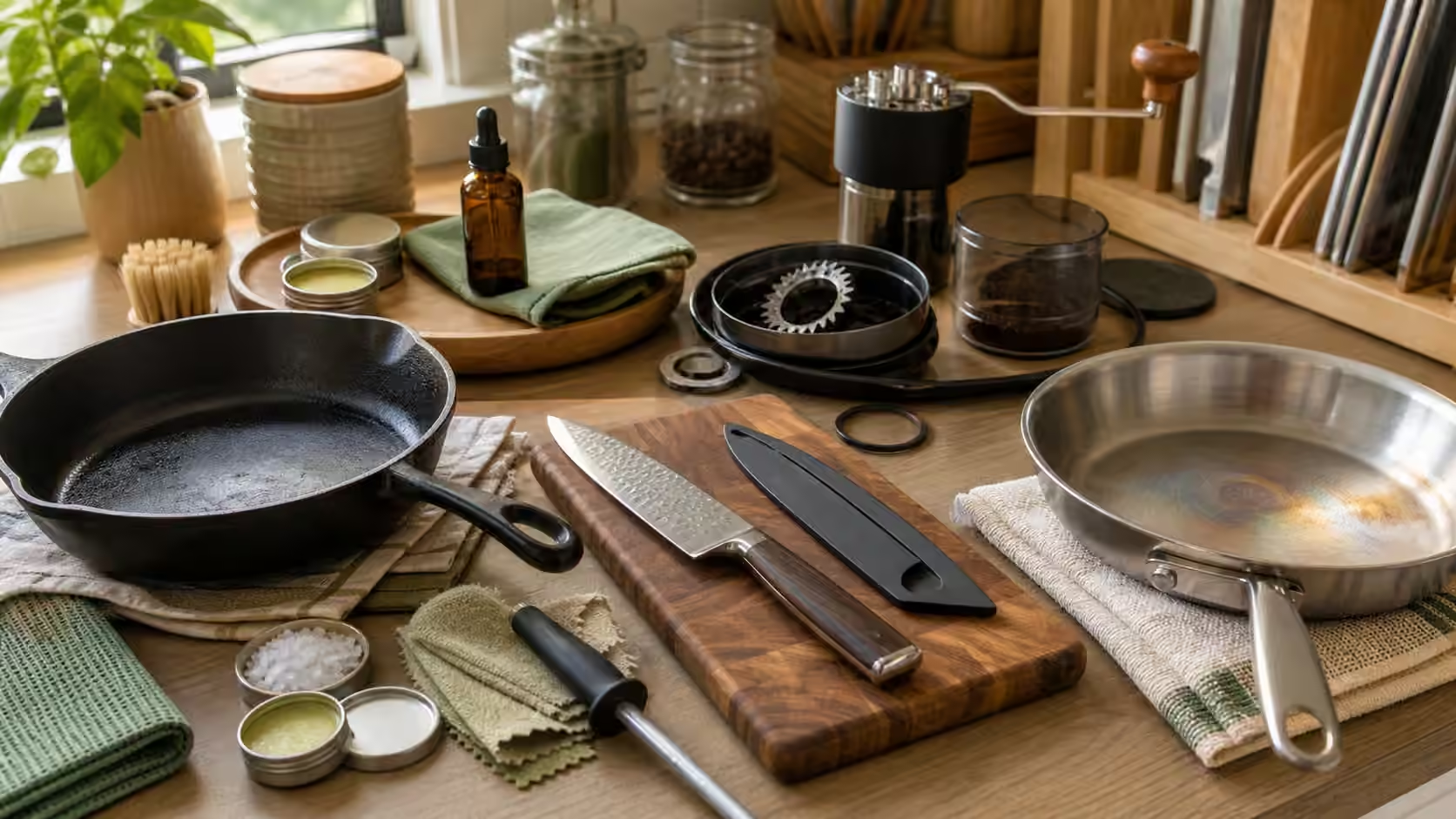
Most edge damage happens not while cutting but between cuts. Knives tossed loose into a drawer knock their edges against each other and against everything metal, dulling and chipping far faster than actual use ever would. Store blades where the edge is protected: a knife block, a magnetic strip, in-drawer trays, or edge guards. The cutting surface matters just as much, because glass boards and ceramic plates are harder than the steel and destroy an edge in a few strokes; wood and quality plastic give a little and spare the knife. Washing habits close the loop. Hand wash and dry immediately rather than leaving knives in the sink or the dishwasher, where they bang around, corrode, and endanger whoever reaches in; carbon steel especially will rust if left wet even briefly. Do these three things, protect the edge, cut on a forgiving surface, and dry the blade, and you will hone occasionally and sharpen only a few times a year.
When to stop and hand it to a professional
Some jobs are past honest home care. A chipped edge, a snapped tip, a badly rusted blade, an expensive or heirloom knife, any serrated knife, and any situation where you cannot hold the blade securely all belong with a professional sharpener rather than a hopeful attempt at the kitchen counter. Grinding out a chip takes skill and a lot of metal, and doing it badly wastes more of the blade than the chip did; a good sharpener removes the minimum and preserves the knife’s geometry. Handing that work off is not a failure of self-reliance, it is the choice that keeps a good knife good, and professional sharpening is inexpensive enough that there is little reason to risk ruining a blade you value.
Keep the rhythm simple: hone as needed, wash by hand and dry at once, sharpen only when honing stops working, and store with the edge protected. A short note in your Save Log of when you last sharpened each knife and how it was done keeps you honest about how rarely a well-kept edge actually needs the stone. The same drying-and-storage discipline runs through the rest of the kitchen, from cast iron rescue to cutting board care , and the board you choose to protect your edges is exactly the one that guide helps you keep in good shape; the clean-and-descale habit continues into coffee gear care as well.