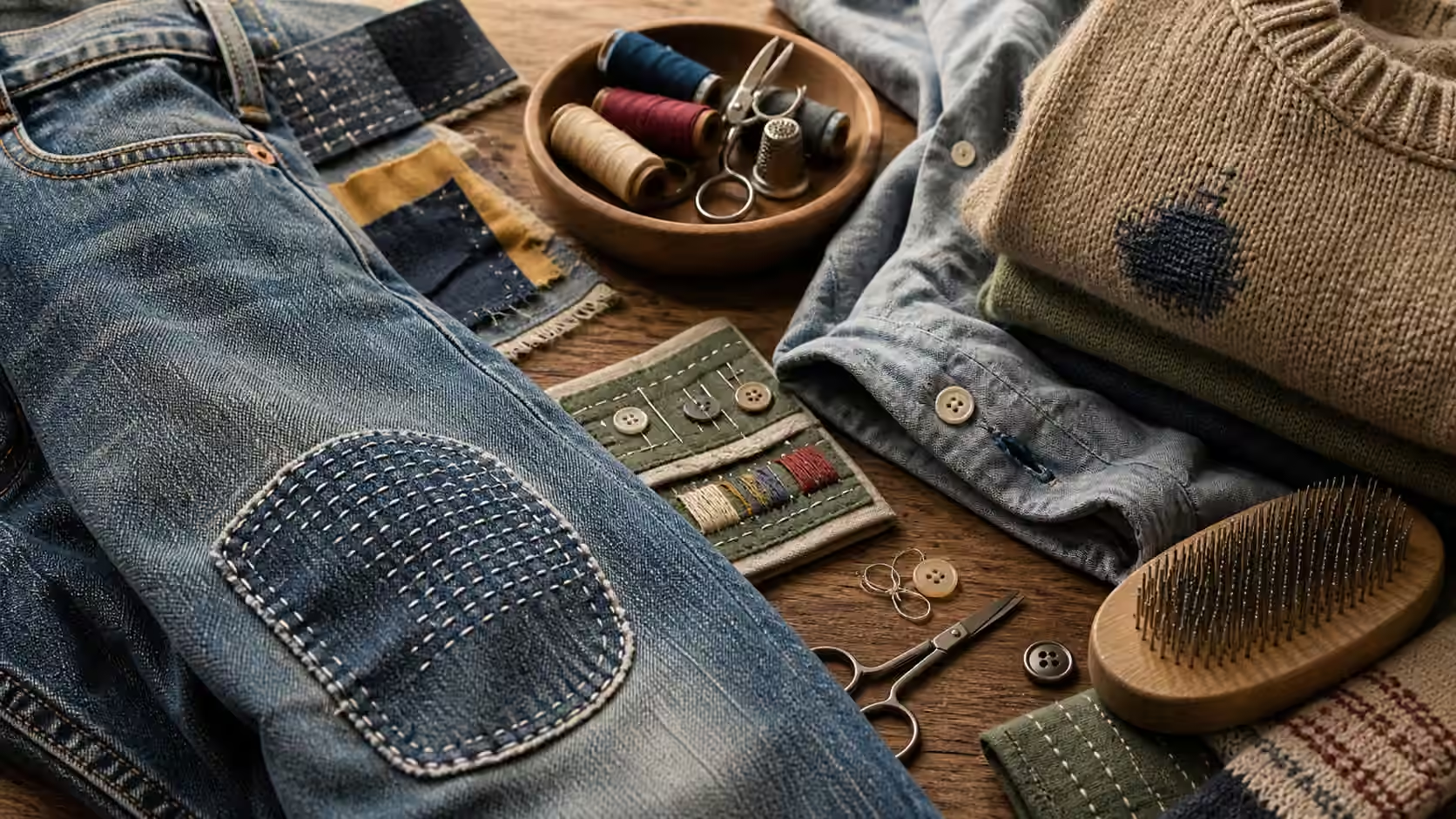
A surprising share of household repairs come down to five small moves. Tighten, lubricate, patch, glue, replace: master when each one applies and you can handle a genuinely large fraction of what breaks around a home without ever opening anything dangerous. The value of thinking in these five is not that every problem is simple, because plenty are not, but that naming the move forces you to name the failure first. You cannot decide between tightening and gluing until you have understood what actually went wrong, and that small act of matching the move to the material is most of the skill.
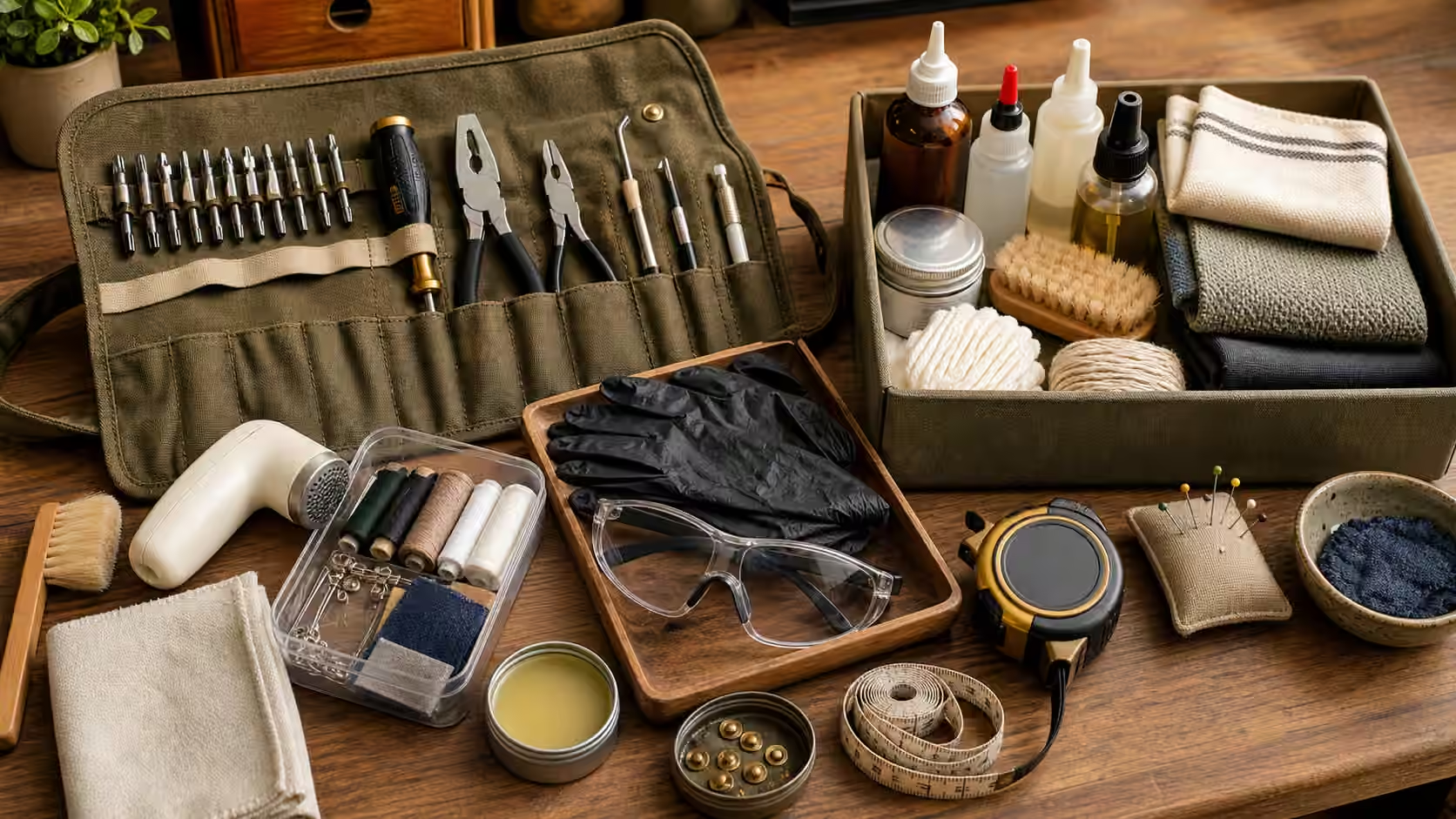
Tighten: the move that fixes the most for the least
Vibration and use loosen things. A chair that wobbles, a handle that turns in your hand, a drawer pull that rattles, a pair of glasses that droops, a cabinet door that has drifted crooked, all of these are frequently nothing more than a fastener that has walked its way loose. Tightening is the first move to reach for because it is completely reversible and costs nothing, but it has a hard limit that beginners routinely overshoot: you tighten until the fastener seats and then you stop. Keep going and you strip a thread, crush wood fibers, or crack plastic, converting a thirty-second fix into a real repair. Match the driver to the screw so you do not chew the head, and if a screw spins without biting because its hole is stripped, do not force it; that hole needs packing with a sliver of wood or a matchstick and glue before it will hold again. Buy replacement fasteners by measurement rather than memory, because “about that size” almost never is.
Lubricate: only what is meant to move
Lubrication is for surfaces that are designed to slide or pivot against each other and have gone dry or gritty: a squeaking hinge, a stiff zipper, a binding drawer slide, a sticky lock. The two mistakes here dwarf all others. The first is lubricating dirt, because oil over grit just makes grinding paste; clean the joint first and half the squeaks vanish before you apply anything. The second is using the wrong lubricant for the setting, and the consequences of that range from annoying to dangerous. Oil belongs nowhere near fabric, food surfaces, or the wood runners of a drawer, where it soaks in and turns to sticky grey paste. It belongs absolutely nowhere near anything whose job is friction: brake surfaces, climbing hardware, the contact points of safety gear. Dry PTFE or silicone often serves better than oil precisely because it does not attract dust, and a little goes further than people expect.
Patch and glue: matching the fix to the material
Patching and gluing are the two moves where material knowledge pays off most, because both fail loudly when the fix is stiffer or weaker than the thing it is joining. A patch on flexible material must flex with it; an iron-on or sewn patch on a knee or an elbow needs to move as the fabric moves, which is why patching against the grain or with a rigid material puckers and tears loose at the edges. Gluing rewards preparation more than product. The surfaces must be clean, dry, and fitting closely, because glue bridges gaps poorly, and the adhesive has to match the material: wood glue for wood, a flexible adhesive for flexible goods, a plastic-specific product for plastics that ordinary glue will not touch. One glue does not do everything, and reaching for the same tube regardless of material is the classic beginner error. Give every glued joint the full cure time on the label before you load it; the joint that feels set in ten minutes is often hours away from real strength.
Replace: the honest move for sacrificial parts
Many objects are designed around parts that are meant to wear out and be swapped: feet and glides, drawer pulls, filters, drive belts, gaskets, buttons, batteries in the ordinary sense, and the humble screw. Replacing a sacrificial part is not giving up on repair; it is repair working exactly as the designer intended. The skill is identifying the part precisely, which means measuring it, reading its markings, or matching it against the manual rather than guessing at the store. A correctly matched gasket or belt restores a machine to as-new function for a few dollars, while a near-miss part that almost fits creates a slow leak or a slipping drive that you will chase for weeks.
Knowing which move, and where the moves stop
The five moves share a single boundary, and it is the most important thing on this page. A move is a beginner move only while the failed part is cosmetic or ordinary-functional. The moment the part protects a body, holds a structural load, controls heat, carries electricity, contains gas, or is specified by a safety standard, the casual repair ends, no matter how tempting the quick tighten or dab of glue looks. Gluing a cracked chair leg or a load-bearing strap and then trusting it is not a repair, it is a hidden failure waiting for the worst moment. When the move would change the load path, the electrical path, a seal, or a safety rating, that is the signal to stop and bring in someone qualified.
Choose one move, try it on something low-risk, and write down what happened, because the fastest way to internalize the five is to run them once and see how the material behaves. A light quarterly pass, snugging fasteners on chairs, handles, and shelves, keeps most of the tightening work from ever becoming urgent. From here the natural next steps are the calm intake process in the Keepers Guild quickstart and the ten-minute triage , the underrated groundwork of cleaning first , and stocking the beginner keeper kit so the right move is within reach before something breaks.