Waistbands fail quietly. A pair of pajama pants still looks fine but will not stay up. A hoodie loses its drawstring in the wash. Elastic twists inside a casing and creates a hard lump at one hip. A skirt fits everywhere except the stretched band. These are not dramatic clothing failures, which is why they send useful garments to the back of a drawer. The repair is often simple, but the judgment matters: is the elastic worn out, is the casing damaged, is the fabric worth more sewing, or has the garment reached a different role?
Find the construction before choosing the fix
Some waistbands are built with a separate casing, which is a fabric tunnel around the body. Some have elastic stitched directly through the fabric. Some use a drawstring only. Some use both elastic and a drawstring. Some are serged, folded, topstitched, or sealed in a way that makes replacement more work than the garment deserves. If you cannot tell which type you have, slow down and inspect the inside seam.
Look for an opening in the casing. Many garments have one hidden near a seam. If no opening exists, a tiny section of stitching may need to be opened, but only after you know you can close it neatly. Use the same documentation habit as How to Photograph a Problem Before You Take It Apart . A close photo of the seam, drawstring exit, and elastic path can save confusion later.
Do not cut the old elastic immediately. If it still runs through the casing, it can help pull the new elastic through. If the drawstring is partly lost, the remaining end may show the original path and length. Textile repair often rewards patience because the old part is also a guide.
Rethread lost drawstrings without making knots worse
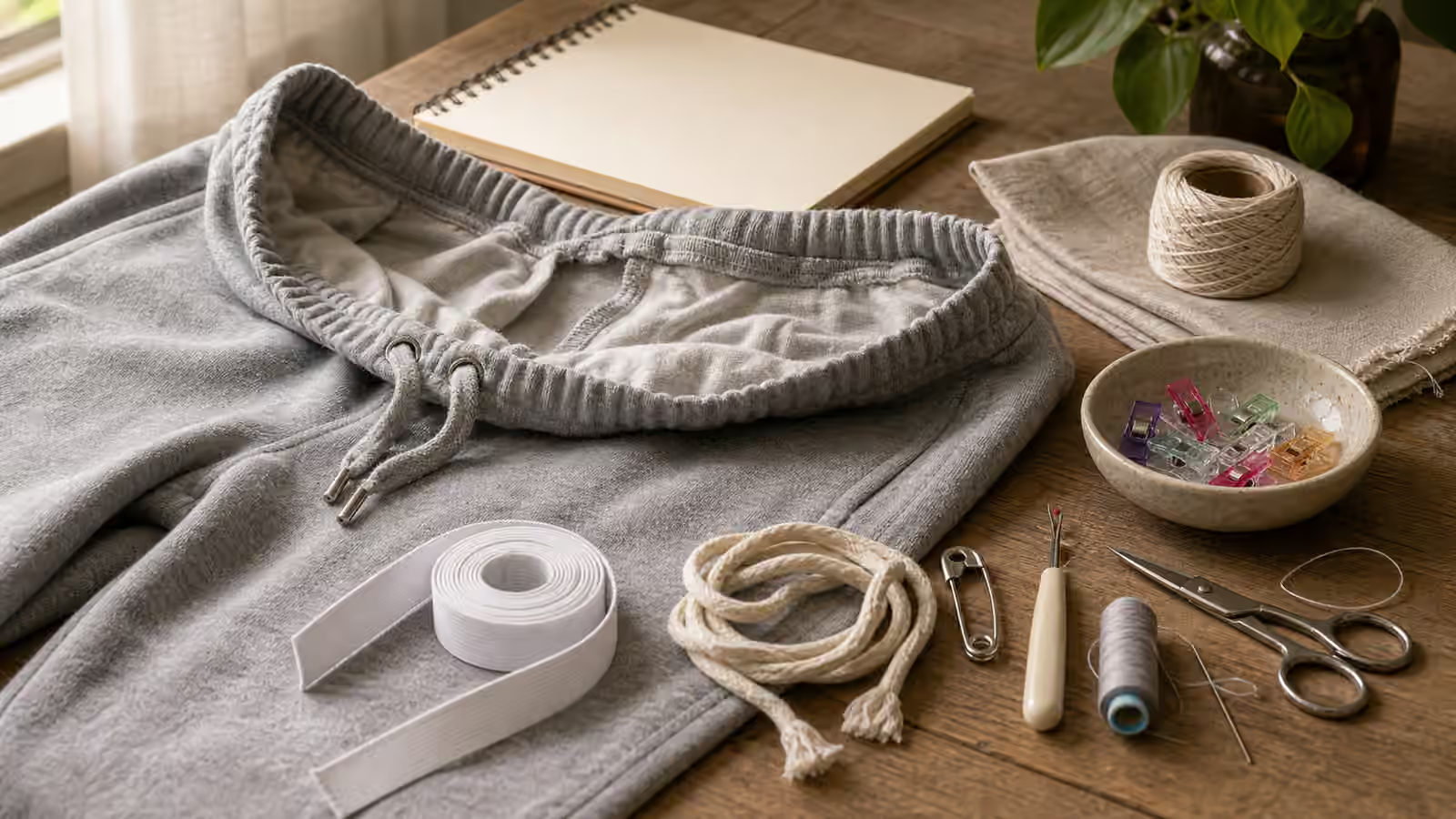
A lost drawstring is one of the friendlier repairs if the casing is intact. Attach a large safety pin or bodkin to the end of the cord, feed it into the opening, and work it through slowly by bunching and smoothing the fabric. Keep hold of the trailing end so you do not pull the whole string into the casing. If the cord meets resistance, do not force it. The casing may be twisted, stitched through, narrowed by a seam, or blocked by lint.
Choose replacement cord with similar softness, thickness, and wash behavior. A stiff cord can saw at fabric or feel bulky. A thin cord can cut into the wearer or disappear inside the casing. A slippery synthetic cord may refuse knots. If the original garment used cord stops, aglets, or stitched ends, consider how the new cord will survive laundering. The goal is not simply to get something through the hole. The goal is to make the garment easy to use again.
After threading, secure the ends in a way that suits the garment. Some drawstrings need knots. Some need stitched tips. Some need the two ends temporarily tied before washing. Avoid bulky knots that cannot pass through the opening if future adjustment is needed. If the drawstring exits through grommets that are loose or sharp, repair the hardware or stop. A fraying grommet can chew through fabric and cord.
Replace elastic when stretch is gone
Elastic that has lost recovery will not be revived by wishing, washing, or ironing. If it crunches, waves, cracks, feels gummy, or stays stretched after being pulled, it is done. Measure the old elastic only as a clue, not as a command. It may have stretched beyond its original length. Fit depends on garment style, fabric weight, wearer comfort, and how much drawstring backup exists.
Before removing elastic, check whether it is stitched in place at side seams or through the whole waistband. If it is stitched through many rows, replacement becomes a more involved sewing job. If it floats freely inside a casing, replacement is much easier. Attach the new elastic to the old and pull through gently if the old elastic is intact enough to guide it. If not, use a safety pin or bodkin and move slowly, keeping the elastic flat. Twisted elastic will feel bad immediately and may wear unevenly.
Join elastic ends securely without creating a hard lump. The exact stitch depends on the elastic and tools available, but the joint should lie flat, withstand stretching, and avoid sharp thread knots. If you do not sew much, Basic Hand-Stitching for People Who Don’t Sew is a useful place to practice before working on a favorite garment.
Repair the casing or change the garment’s role
Sometimes the elastic is not the main failure. The casing may be torn where the drawstring exits, the fabric may have thinned along the fold, or the seam may be unraveling. A clean casing repair can be simple if the fabric is sound. A shredded waistband on fabric that is already pilling, stained, and transparent may not deserve a careful elastic replacement. The keeper decision includes the whole garment.
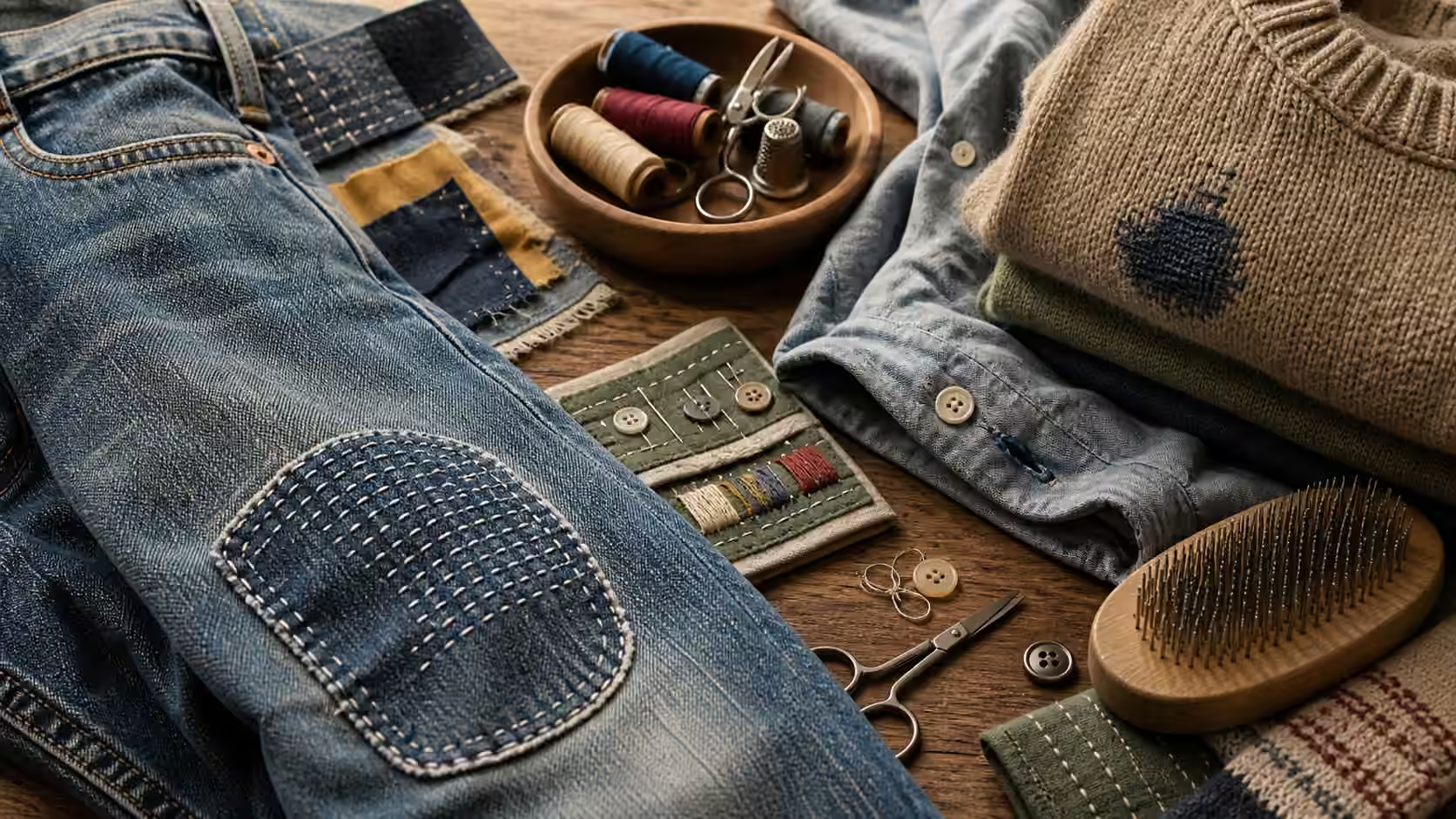
If the garment is beloved but no longer public-facing, role changes can be practical. A stretched pair of sweatpants may become sleepwear with a drawstring fix. A torn waistband might be harvested for fabric patches if the rest of the garment is worn out. Visible Mending can help when the repair will show and that is acceptable. Pilling, Snags, Holes, and Fraying helps decide whether the surrounding textile can survive more wear.
Wash habits matter after repair. Tying drawstrings before washing, using garment bags when appropriate, avoiding high heat that shortens elastic life, and removing laundry promptly can keep the same repair from returning. Laundry Mistakes That Quietly Destroy Clothes connects directly because heat and agitation often finish off elastic before the fabric is worn out.
Add it to the Save Log
Record the garment, elastic width, drawstring length, repair opening location, and whether the casing was stitched closed again. Add a note about comfort after wearing it for a day. A waistband repair that looks neat but digs into the body is not finished. If the garment returns to regular use, the note will help the next time a drawstring vanishes or elastic gives up.
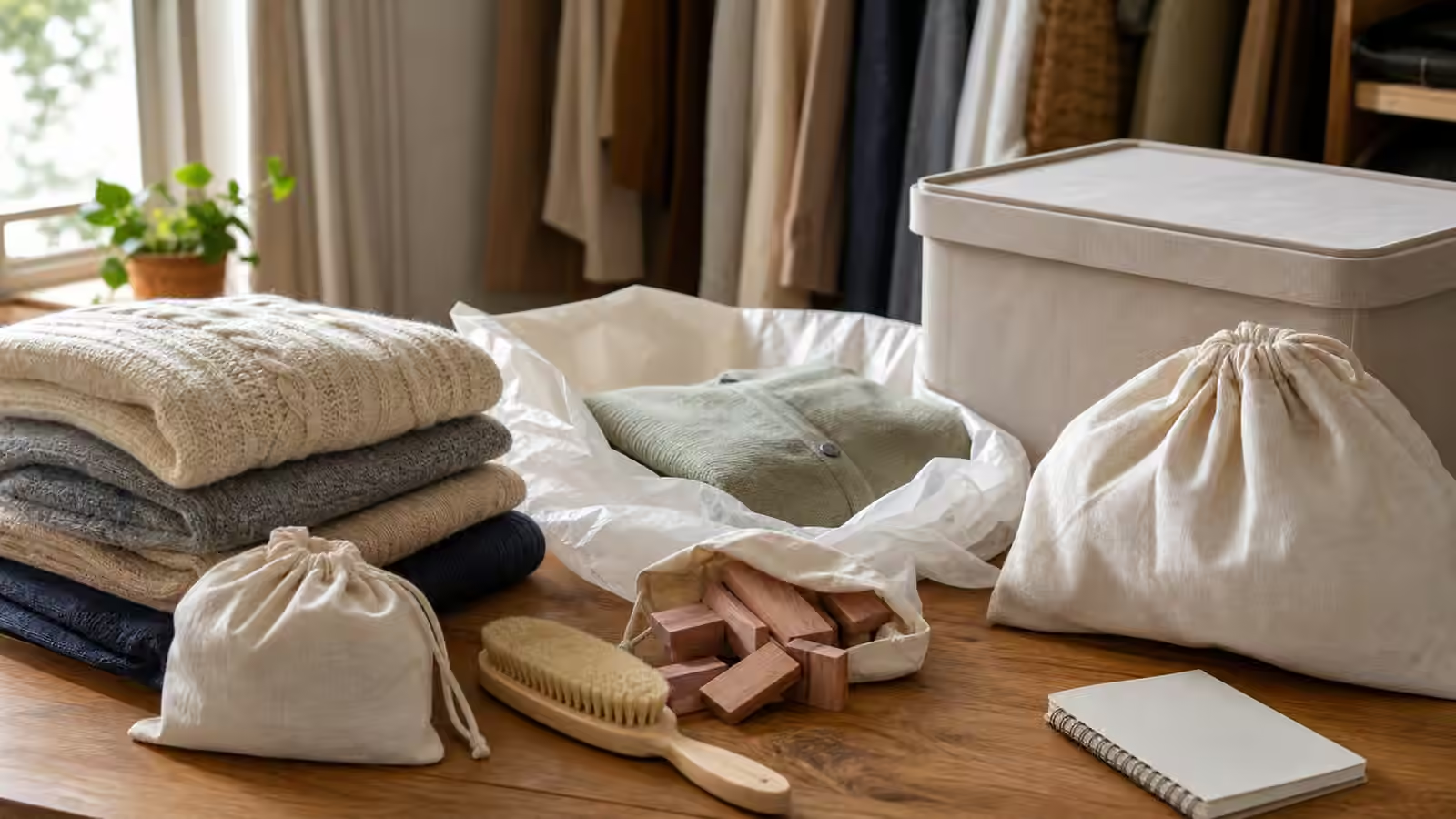
Read this with Basic Hand-Stitching for simple closures, Zipper Problems for nearby garment hardware, Pilling, Snags, Holes, and Fraying for fabric condition, and Seasonal Textile Storage if elastic keeps failing while garments sit unused.