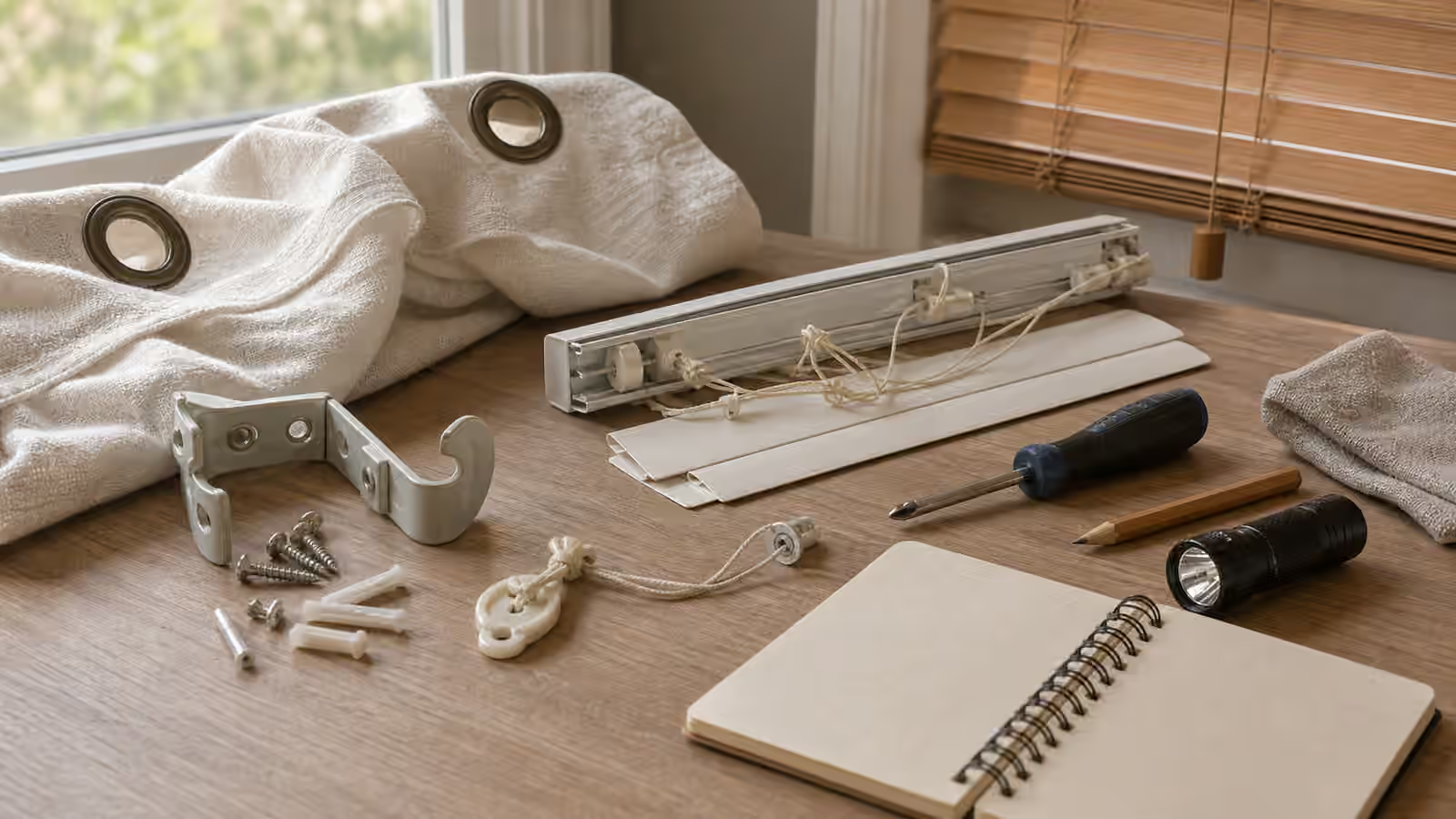
Window coverings fail in small ways before they fall, jam, or become unsafe. A curtain bracket loosens by a few millimeters. A blind tilts unevenly. A shade track grows gritty and stiff. A cord drags across a sharp edge. A wall anchor spins in a hollowed-out hole. Because the fabric or slats are more visible than the hardware, people often tug harder instead of inspecting the support. Keepercraft starts by treating the bracket, wall, track, fastener, and cord path as part of one system.
Inspect the support, not only the symptom
If a curtain rod droops, the obvious symptom is fabric hanging badly. The real problem may be a loose set screw, a bracket pulling from drywall, a missing center support, overloaded curtains, or a rod that is too flexible for its span. If blinds hang crooked, the issue may be a broken tilt mechanism, uneven cord tension, bent headrail, damaged slat ladder, or mounting bracket that no longer sits square. The first job is to find what moved.
Use the observation habit from How to Photograph a Problem Before You Take It Apart . Take a straight-on photo of the full window, then close photos of each bracket, screw hole, cord path, track end, and any cracked wall surface. The photos help you notice asymmetry. They also preserve the original path of cords, clips, stops, and end caps before small pieces scatter.
Do not keep yanking a stuck blind or heavy curtain. Pulling harder can enlarge screw holes, bend brackets, tear fabric, or damage the mechanism. A window covering is often held by small fasteners in a wall material that may not be as strong as it looks. Once the bracket starts moving, every tug can turn a simple adjustment into wall repair.
Read the wall around the fastener
A screw that turns without tightening is evidence. It may mean the screw is too short, the anchor failed, the hole is wallowed out, or the mount never reached solid framing. A screw that tightens briefly and loosens again may be chewing weak material. A bracket that rocks under light hand pressure should not be trusted with heavy curtains. The wall is part of the repair, not a background surface.
Small drywall anchor problems often connect to Wall Repair: Nail Holes, Anchors, Dents, and Paint Matching . The repair may involve patching and remounting, moving to a better support point, choosing the correct anchor for the load, or adding a center bracket. Guessing at a larger screw can make the damage wider without making the mount stronger. If the window covering is heavy, above a bed, above a child’s play area, or mounted in uncertain material, a professional installer may be the safer path.
Older homes add another caution. Paint, plaster, masonry, and trim can hide fragile or hazardous materials. Do not sand, drill, or disturb surfaces casually when age and material are unknown. A guide about brackets should not become a renovation guide by accident.
Tracks and moving parts need clean paths
Many curtain and shade problems are not fastener problems. Dirt in a track, missing glides, bent carriers, frayed cords, or a sticky tilt wand can make the user pull harder until the mounting fails. Clean visible tracks gently with a brush, vacuum nozzle, or cloth where the design allows it. Avoid oily sprays that attract dust or stain fabric unless the manufacturer calls for a specific lubricant. A smoother track reduces stress on every other part.
Look for the path the fabric or slats actually travel. A curtain may snag because one ring is cracked, one carrier is missing, or one bracket sits a little lower than the rest. A blind may bind because a slat is reversed near the ladder cord or because the headrail is slightly twisted from an old fall. These small alignment problems are easy to miss when the only goal is to make the covering move right now. Watching one slow open-and-close cycle can show where effort concentrates.
Check end stops and clips. A missing stop can let carriers slide out. A broken clip can make one section sag and load the next clip unfairly. A bent headrail can bind internal parts. If the blind has a sealed mechanism, opening it may not be worth the risk. The Repair Cost Rule applies here because a cheap blind with a damaged internal mechanism may not deserve hours of improvised repair, while a custom shade may deserve a specialist.
For sliding panels and window-adjacent tracks, Sliding Track Care is a useful companion. The same idea holds: remove grit, watch alignment, avoid forcing rollers or carriers, and stop before the track is bent beyond a simple cleaning task.
Treat cords as safety hardware
Cords are not just convenience. Long loops, loose chains, frayed pulls, and improvised knots can create entanglement hazards and unreliable operation. Keep cords secured and out of reach of children and pets, and follow the maker’s safety devices rather than bypassing them. If a cord cleat, tensioner, breakaway connector, or chain guide is missing or broken, do not treat it as decoration. It may be the part that makes the covering safer to live with.
Do not repair a cord by adding random knots that jam in the mechanism or create a loop where none should be. Do not shorten a cord in a way that defeats a breakaway feature. If you cannot identify how the safety device is supposed to work, pause and seek manufacturer guidance or qualified help. This is the same restraint as When Not to DIY : the repair is only good if the object remains safe in use.
Add it to the Save Log
Record the window location, covering type, what moved, which screws or brackets were loose, the wall material if known, and whether any cord safety part is missing. Photograph the hardware before buying replacements. Brackets and glides look similar in a drawer, but tiny differences decide whether they fit. If you replace a part, tape a spare label-free sample or note the model source in the warranty folder.
Use this guide with Wall Repair for anchor damage, Stripped Screw Rescue when fasteners no longer bite, Sliding Track Care for dirty moving paths, and The Repairability Checklist Before Buying Anything Durable before choosing window coverings that hide every serviceable part.