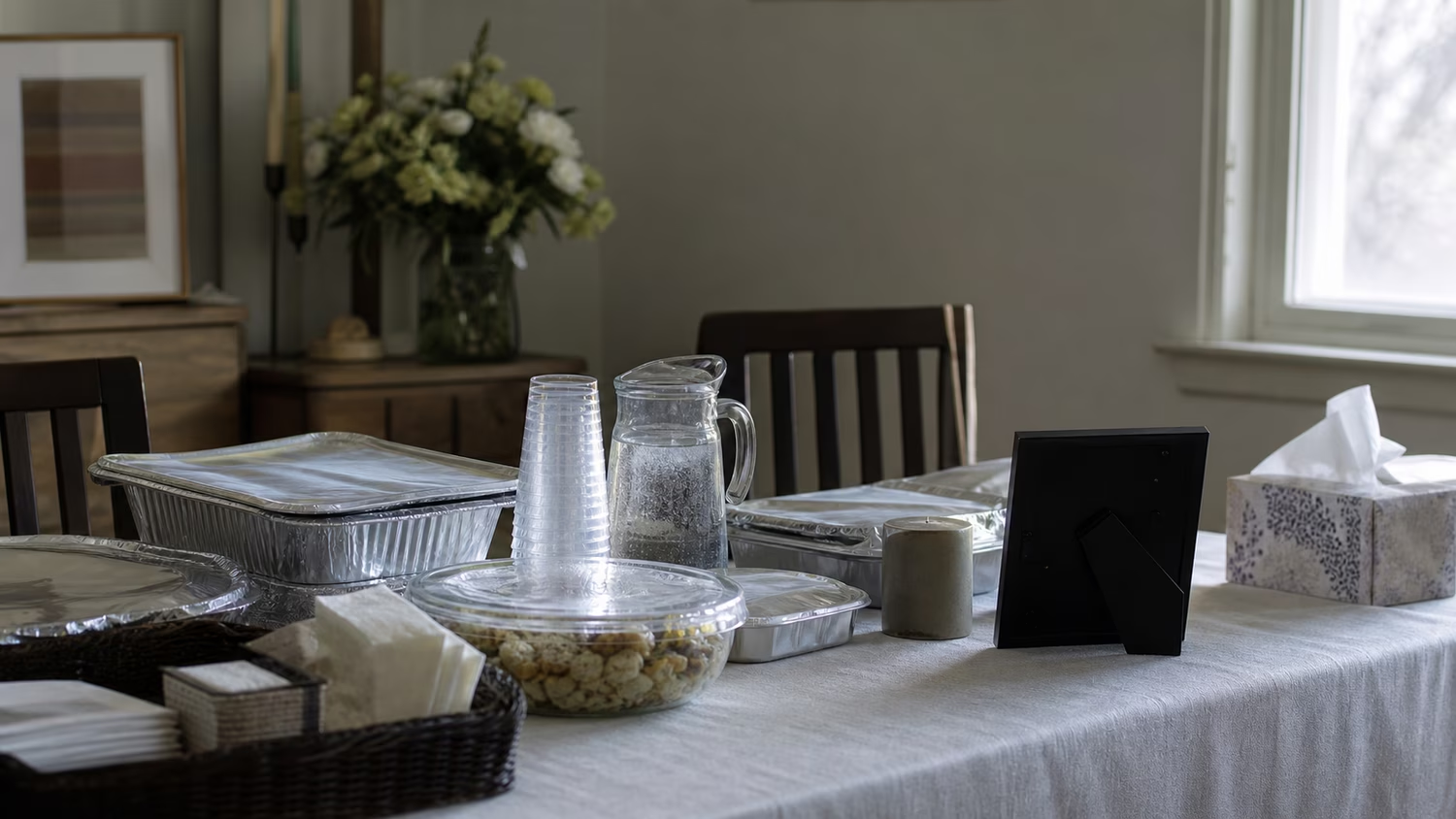
The house feels different after shiva ends.
During shiva, grief has a visible address. Chairs are arranged. Food arrives. Visitors come through the door. Stories gather and repeat. A mourner may not have to explain why the day feels suspended, because the room itself explains it. Then the chairs are put away, the extra food containers leave the refrigerator, and ordinary time starts asking for ordinary attention again. For background, read Maimonides — Mourning 1 (mourning background) .
Yahrzeit belongs to the part of Jewish mourning that comes later, when grief is no longer surrounded by a full house but has not disappeared. The word refers to the anniversary of a death, usually observed on the Hebrew date. For many Jews, it is marked by lighting a memorial candle, attending services to say Mourner’s Kaddish, giving tzedakah, studying, visiting a grave, telling stories, or saying the person’s name aloud in a way that keeps memory from becoming vague.
If Visiting Shiva is about entering the first room of mourning with care, yahrzeit is about learning how memory returns after the room has emptied. It does not ask a mourner to stay frozen in the first week. It also does not pretend that love obeys the calendar and politely finishes its work. It gives grief a recurring doorway.
Memory Needs a Date
A date can seem too small for a life. No calendar square can hold a parent, child, spouse, sibling, teacher, friend, or grandparent. A person is not their death date. They are a voice, a habit, a recipe, a temper, a kindness, a room they changed by entering, a name still said with a particular tone.
Yet the date matters because memory without a date can become easy to postpone. People mean to remember. They mean to call a relative, take out photographs, say Kaddish, give in someone’s memory, or tell a child where their name came from. Then the week fills. The calendar keeps moving. Yahrzeit interrupts that drift. It says that this love receives time.
Jewish communities calculate and observe dates in different ways, especially when a family is new to the Hebrew calendar, when records are uncertain, or when a death occurred near sundown. A beginner does not need to guess alone. A synagogue office, rabbi, knowledgeable relative, Jewish calendar tool, or community member can often help locate the Hebrew date and explain how that community observes it. The point is not to turn memory into arithmetic. The point is to give remembrance a reliable return.
That return can be surprisingly gentle. The first yahrzeit may feel raw, especially after a year of first holidays, first birthdays, and first ordinary days without the person. Later yahrzeits may arrive with different emotional weather. Some years are heavy. Some are quiet. Some carry gratitude more than pain. Some surprise a person by hurting after many years. Jewish practice does not require one authorized feeling. It provides a vessel sturdy enough for changing feelings.
The Candle Holds the Night
The most visible home practice is the memorial candle. Many households light a yahrzeit candle before sunset at the beginning of the yahrzeit and let it burn through the day. The flame is small, but it changes the room. It makes remembrance visible without demanding a speech every time someone passes the table.
The candle is not a decoration. It is closer to a companion for memory. It says that the person is not being summoned back and not being erased. Their life is being honored in the present tense of the household. A child may ask who the candle is for. A visitor may lower their voice. A mourner may notice the flame while making coffee and feel, for one moment, that the day has a center.
Practical details should be handled with ordinary care. Families use a safe location, follow the instructions for the candle or electric memorial light they are using, and make choices that fit their home. Some households cannot use an open flame because of children, pets, medical oxygen, building rules, travel, or simple prudence. An electric light can still mark the day with dignity. Jewish memory is not made meaningful by creating danger.
The candle can also teach restraint. Modern grief often gets pushed toward public display or private silence. The yahrzeit candle offers another language. It is visible, but not loud. It can stand on a shelf, side table, windowsill, or kitchen counter and quietly announce that the household is remembering. It does not need to explain everything it means.
Kaddish Is Said With Others
Many people first encounter Mourner’s Kaddish during shiva or at a funeral. Yahrzeit brings Kaddish back into the rhythm of communal prayer. In many communities, mourners attend services on the evening, morning, or day of the yahrzeit so they can say Kaddish with a minyan, a quorum where that is required.
Kaddish often surprises beginners because it does not talk about death directly. It praises and magnifies God’s name. That fact can feel strange at first. A person grieving may expect language that names loss, longing, or the person who died. Instead, Kaddish places grief inside a community saying words that have been carried for generations. It does not explain death. It gives the mourner a place to stand while explanation fails.
If synagogue services are unfamiliar, Synagogue and Prayer for Beginners can make the room less intimidating. A person attending for yahrzeit does not need to perform confidence. They can ask which service to attend, where Kaddish appears, whether names are read aloud, and what local custom expects. Many communities are used to helping people who come because a yahrzeit has brought them back through the door.
There is tenderness in that return. Someone who has not attended services all year may arrive because a parent died ten years ago. Someone who comes every morning may stand beside them without needing the whole story. The room holds different kinds of memory at once. The words are shared even when the grief is particular.
Yizkor Makes Private Memory Communal
Yahrzeit is personal and dated. Yizkor is communal and seasonal. In many communities, Yizkor memorial prayers are recited on Yom Kippur and on the last days of major festivals such as Passover, Shavuot, and Sukkot. Customs vary, and some communities handle timing, participation, and synagogue etiquette differently.
For a beginner, Yizkor can feel emotionally sudden. A holiday service may be moving along with its own music and themes, and then the room turns toward memory. People who have living parents may step out in some communities. Others remain. Some people hold printed booklets with names. Some whisper private names. Some say prayers for parents, spouses, children, relatives, martyrs, victims of catastrophe, or members of the community who have no one else to remember them.
The Jewish Holiday Year explains how the calendar carries joy, repair, liberation, learning, fragility, and mourning together. Yizkor is one of the clearest examples. Jewish holidays do not always protect joy by excluding grief. Sometimes they deepen joy by making room for the people who are missing from the table.
Yizkor also teaches that memory is not only private emotion. A person’s dead are their own, but no one is meant to remember entirely alone. When many people rise or open the same section of a prayer book, the room becomes a map of hidden losses. The person beside you may be remembering a mother, a brother, a teacher, a child, a friend, or a whole destroyed community. The prayers do not make those losses the same. They let them breathe in the same room.
Tzedakah, Study, and Deeds Carry the Name Forward
Jewish remembrance often moves from feeling into action. Giving tzedakah in memory of someone is one common practice. The gift may go to a cause the person cared about, a synagogue fund, a school, a food pantry, a medical support organization, a local need, or a communal fund that helps people discreetly. The size of the gift is not the whole measure. What matters is that memory becomes responsibility.
Tzedakah and Giving for Beginners describes giving as a habit of justice rather than a burst of sentiment. A yahrzeit gift can make that habit personal without turning it into performance. It can say that the person’s name should be attached to repair, nourishment, learning, shelter, dignity, or whatever form of good the giver can honestly support.
Study can carry memory too. Some people learn a passage of Torah, Mishnah, Psalms, or another Jewish text in someone’s memory. Some attend a class. Some read a book the person loved or a text they never had the chance to learn. Jewish Texts and Learning for Beginners is useful here because study in memory does not require showing off. It requires returning to words with care.
The same principle can enter ordinary home life. A family may cook a dish connected to the person, tell one honest story at dinner, look through photographs, write down a memory before it fades, teach a child the person’s Hebrew or family name, or place a stone at the cemetery. Names, Lifecycle, and Family History shows how names and records carry Jewish memory across generations. Yahrzeit turns that larger family thread into a yearly act of attention.
Remembering Honestly
Not every relationship is simple. Some yahrzeits are for people deeply loved without complication. Others are for people whose lives included harm, distance, silence, disappointment, estrangement, or unfinished questions. Jewish remembrance does not require false biography. It is possible to say Kaddish, light a candle, give tzedakah, or mark a date without pretending the relationship was easier than it was.
Honest memory is different from public accusation and different from sentimental editing. It may mean speaking gently and truthfully with a trusted person. It may mean saying less in a family setting where others remember differently. It may mean holding gratitude and pain in the same day. It may mean letting the practice do its quiet work when words are too tangled.
For converts, interfaith families, adopted families, returning Jews, and people with partial records, remembrance may raise extra questions. Whose yahrzeit is observed? Which names are used? What if no Hebrew name is known? What if a relative was Jewish by family but not by practice, or the reverse? Communities answer these questions with different pastoral instincts. A beginner should seek guidance without feeling embarrassed by the complexity. Jewish life has always carried complicated families.
The candle burns down. The service ends. The tzedakah is given. The book closes. Nothing about that erases grief, and nothing about grief cancels ordinary life. Yahrzeit asks for something more durable than constant intensity. It asks for return.
Each year, the date comes back and asks the household to pause. Say the name. Light the candle if that is your practice. Stand with others if you can. Give, learn, remember, and tell the truth kindly. A life is more than a day of death, but the day can become a doorway through which love keeps entering the room.