The first time you visit a shiva house, the hardest question may be what to do with yourself at the door.
You know someone has died. You know the family is grieving. You may know the word shiva, but not the rhythm of the room. You do not want to say the wrong thing, arrive at the wrong time, bring the wrong food, sit too long, leave too quickly, or make the mourners take care of your uncertainty while they are already carrying more than enough.
That nervousness is understandable. It can also be softened by one simple idea: shiva is not a performance you have to master. It is a structure that makes presence easier.
Jewish mourning practices vary by community, family, observance level, and local custom. Some households follow traditional rules closely. Some adapt them. Some families are Jewish in mixed, secular, interfaith, or returning ways and may be feeling their way through the practice. A beginner should not assume one script fits every house.
Still, the emotional center is steady. The mourner should not have to chase company, cook for guests, explain grief on command, or hold ordinary social life together. The community comes close enough that grief has somewhere to sit.
If you want the wider lifecycle context, Names, Lifecycle, and Family History places mourning alongside naming, coming of age, marriage, and memory. This guide stays inside the visit itself: the doorway, the chair, the food, the silence, and the leaving.

The House Is Not Hosting You
Most social visits begin with hospitality moving from host to guest. Shiva reverses that instinct. The mourners are not hosting in the usual sense. They may be sitting low, wearing a torn ribbon or garment, keeping a memorial candle nearby, receiving visitors, saying prayers, telling stories, or simply enduring the first days after a death.
Your job is not to be entertained. It is not to create conversation. It is not to prove closeness by staying for hours. Your job is to be present in a way that makes the room easier for the mourners, not heavier.
That begins before you enter. Check the posted visiting hours if the family has shared them. Many shiva houses set times because grief needs rest. If food is requested, bring something that fits the household’s practice. For a kosher-observant family, that may mean food from a source they trust rather than homemade food from an unfamiliar kitchen. If you are unsure, ask the organizer, synagogue, friend, or meal coordinator rather than making the mourner decide.
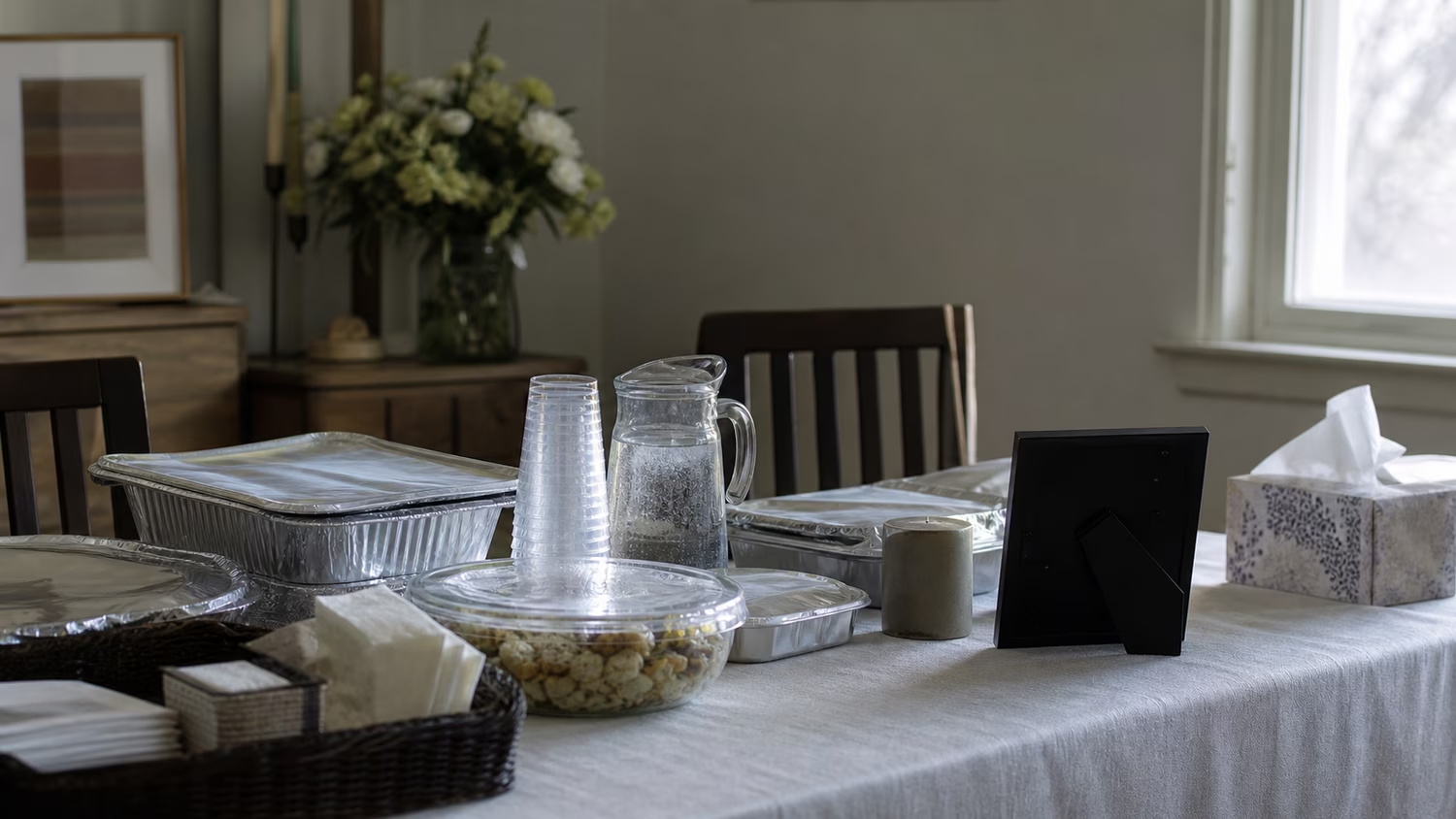
When you arrive, the room may feel quiet, crowded, awkward, warm, or all of those at once. There may be people telling stories in one corner and someone crying in another. There may be prayer books, folding chairs, paper plates, family photos, a water pitcher, children passing through, neighbors whispering logistics, and relatives who have not slept enough. Let the room teach you its pace.
Let the Mourner Lead the Conversation
One of the most useful shiva customs for visitors is the idea that you do not force conversation on the mourner. You may sit down and wait. If the mourner speaks, you respond. If they are quiet, you can be quiet. Silence at shiva is not a failure. It is often one of the only honest things available.
People reach for explanations when death makes them uncomfortable. They say the person is in a better place, that everything happens for a reason, that time heals, that the mourner must be strong, that at least the suffering is over, that the mourner has other blessings. Sometimes those sentences come from kindness. They still may land badly because they try to manage grief from the outside.
A better sentence is smaller. “I am so sorry.” “I loved hearing him tell that story.” “She was very kind to me when I first arrived.” “I do not have good words, but I am here.” If you did not know the person who died, you can say so plainly and gently. “I did not know your father, but I care about you and wanted to come.”
Stories are welcome when they serve memory, not when they shift attention to the visitor. A good shiva story gives the mourner something they can keep. It may be a small detail: a joke the person always told, a kindness nobody else noticed, the way they taught, cooked, prayed, fixed things, remembered names, or sat at the edge of a room making someone feel included. Grief often needs particulars. General praise floats away.
Food Is Care, Not Display
Food at shiva is practical theology. People in grief still need to eat, and grief is not good at shopping, chopping, serving, or cleaning. A tray of simple food, a pot of soup arranged through the right channels, fruit, coffee supplies, disposable plates, or a meal that follows the family’s standards can say what words cannot: you do not have to do this ordinary task alone today.
The point is not culinary performance. A shiva house does not need guests competing for emotional usefulness through elaborate dishes. It needs food that can be served, stored, labeled if necessary, and eaten by the people actually in the house. If the family keeps kosher or has allergies, respect that exactly. If there is a meal coordinator, use them. If the family has asked for no food, honor that too.
Visitors sometimes bring food and then expect the mourner to praise it, manage it, or return a dish. That misses the purpose. Bring it in a way that reduces work. If someone else is organizing the kitchen, hand it to them. If you can help clean without taking over, help. If the house has enough food already, ask whether another day would be better.
Prayer, Kaddish, and Being Useful Without Knowing Everything
Some shiva houses hold services so mourners can say Mourner’s Kaddish with a minyan, a quorum in communities that require one. Kaddish may surprise beginners because it does not describe death directly. It magnifies and sanctifies God’s name. The mourner stands inside praise when explanation is unavailable.
If you are not familiar with the service, you can still be respectful. Follow the room. Stand when others stand if that is appropriate for you. Sit quietly if you are unsure. Do not photograph, livestream, or turn the moment into content. If someone hands you a prayer book, you can hold it without pretending fluency. Jewish communal life has room for people who are learning.
Sometimes the most useful visitor is not the person with the best words, but the person who helps the room function. They refill water, clear plates, direct new visitors gently, answer the door, keep an eye on children, or make sure an elder has a chair. Do not take command unless asked. Do notice what would reduce friction.
Leaving Is Part of the Visit
A shiva visit does not need to be long. Many good visits are brief. You arrive, sit, listen, offer a memory or a quiet presence, and leave before the mourner has to host your departure. If the room is crowded, a shorter visit may be kinder. If the mourner clearly wants you to stay, stay. Again, let the room lead.
Traditional parting words vary by community. Some visitors say a version of “May God comfort you among the mourners of Zion and Jerusalem.” If that is not your language, you can still leave gently. “I am thinking of you.” “I will check in next week.” “May her memory be a blessing.” The important thing is not to turn the exit into a second emotional event the mourner must manage.
After shiva, grief continues. That is one reason Jewish mourning has stages: shiva, sheloshim, the first year for some mourners, yahrzeit, and memorial practices. The community does not disappear after the chairs are folded, though often ordinary life makes that hard. A note, a meal later, a walk, a remembered birthday, help with paperwork, or showing up at a service can matter more after the first wave of visitors has gone.
The beginner’s fear of doing shiva wrong usually comes from caring. Let that care become steadiness. Check the hours. Respect the household. Bring food only in a helpful way. Let the mourner speak first. Do not explain death. Offer a real memory if you have one. Sit in silence if silence is what the room needs. Leave with gentleness.
Shiva does not fix grief. It gives grief a room, chairs, food, witnesses, prayer, and time. When you visit well, you become part of that room without making it about yourself.