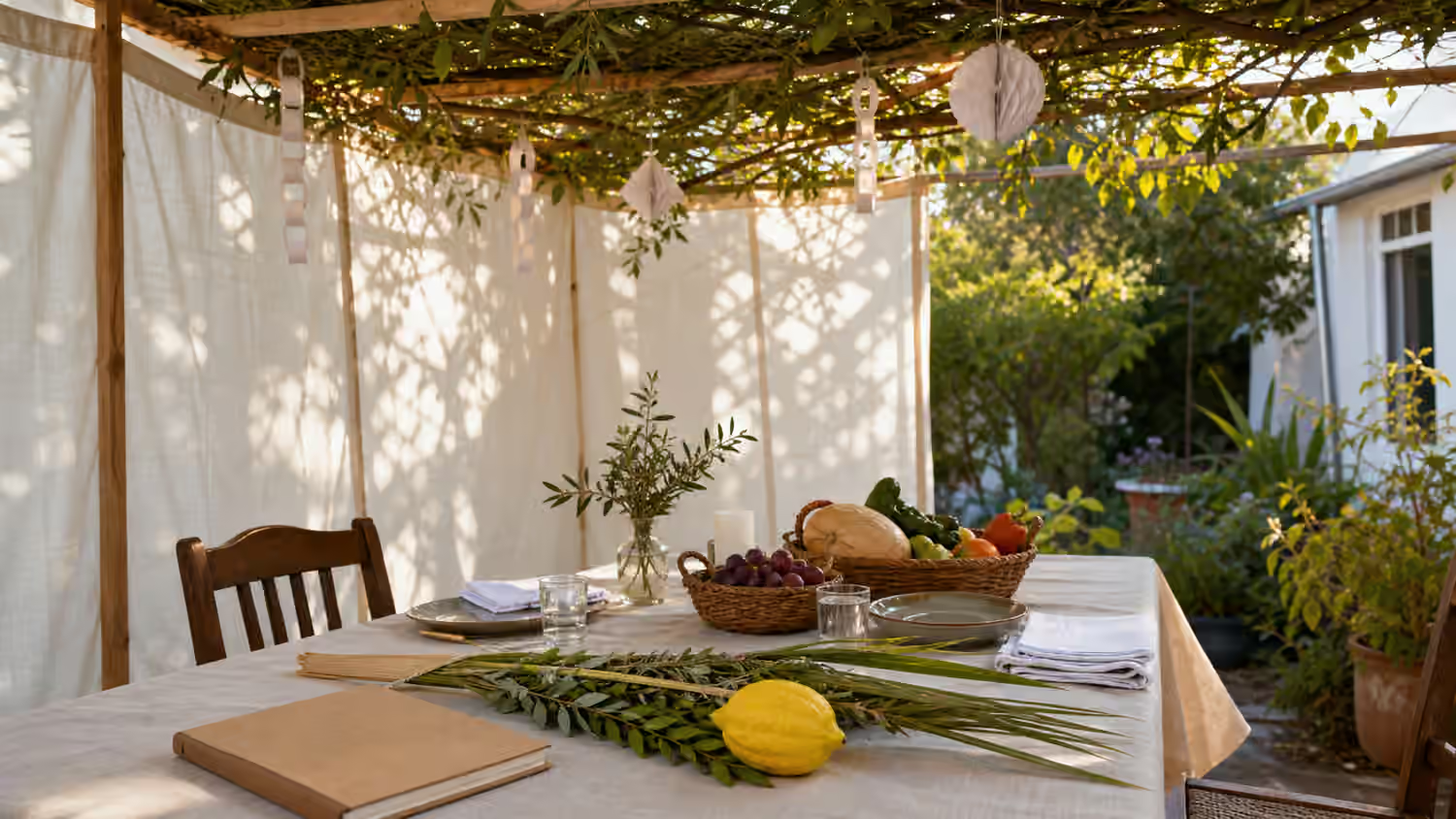
Tu BiShvat is easy to underestimate because it often arrives quietly. There may be no crowded synagogue service, no long meal with a familiar script, no week of preparation that rearranges the kitchen. It can pass through the year as a small winter date with fruit on the table and a few songs about trees. Yet the holiday has a distinctive kind of power. It teaches that renewal can begin before anything looks renewed. For background, read Mishnah Rosh Hashanah 1:1 (new year for trees) .
The name means the fifteenth day of the Hebrew month of Shevat. In classical Jewish sources, that date functions as a new year for trees, a legal marker for counting the age and produce of fruit trees. Over time, Jewish communities also gave it symbolic, mystical, educational, and ecological meanings. The result is a holiday that can be modest and layered at the same time. A beginner can enter through a piece of fruit, a blessing, a memory of land, or a question about what it means to live responsibly among growing things.
The Jewish Holiday Year names Tu BiShvat as part of the wider calendar spiral, but this guide slows down inside the holiday itself. It belongs beside Jewish Months and Rosh Chodesh because the date makes little sense until the month is allowed to matter. It also belongs beside Everyday Jewish Blessings because Tu BiShvat can begin with the simplest act: pausing before eating fruit and noticing that it came from a tree.
A New Year That Begins in Winter
For many people in colder climates, Tu BiShvat arrives when trees still look bare. That can feel odd. Why celebrate trees when branches seem asleep, soil is hard, and spring is not yet visible? The timing is part of the lesson. The Jewish calendar does not always wait for evidence that a change is obvious. In the Land of Israel, the date falls near the season when winter rains have begun to feed the coming growth of trees. Sap rises before leaves announce themselves. Life can be moving beneath the surface.
That image gives the holiday emotional range. It can speak to someone who is waiting for change but does not yet see it. It can speak to a family that wants a gentle holiday between Hanukkah and Purim. It can speak to a community thinking about land, food, water, and gratitude without turning every meal into a lecture. Tu BiShvat does not need to be inflated in order to matter. Its quietness is part of its character.
The beginner mistake is to look for one required form and become discouraged if it is not obvious. Some communities hold a Tu BiShvat seder. Some children plant seeds or collect money for trees. Some people eat fruits associated with the Land of Israel. Some study texts about creation, agriculture, blessing, or care for the earth. Some do almost nothing formal but mark the day with fruit and attention. Jewish practice often grows through local custom, family memory, and community teaching. Tu BiShvat is a good place to learn that variety without panic.
Fruit Makes the Holiday Tangible
Fruit is the most accessible doorway. A table with figs, dates, grapes or raisins, olives, pomegranate, wheat crackers, barley soup, nuts, citrus, or seasonal fruit can make the day visible. The seven species associated with the Land of Israel in the Torah are wheat, barley, grapes, figs, pomegranates, olives, and dates. Many Tu BiShvat tables include some of them, though availability, budget, dietary needs, and local custom all matter.
The point is not to create a flawless display. The point is to let fruit become more than a snack. A fig carries seed, sweetness, texture, trade, harvest, memory, and blessing. A date may evoke desert palms, family recipes, or the sticky sweetness of a holiday table. Olives can lead to questions about oil, light, food, and ancient agriculture. Pomegranate seeds can make abundance visible in the hand. Even an apple from a local market can open the question of soil, labor, weather, and gratitude.
Blessings help keep the meal from becoming only symbolic decoration. Before eating fruit from a tree, many Jews say the blessing that thanks God for creating the fruit of the tree. Some also say Shehecheyanu over a new seasonal fruit, depending on custom and context. A beginner should use a reliable siddur, teacher, or community source for exact blessing practice, but the larger movement is simple enough to feel. The fruit is received, not merely consumed.
Jewish Home Rituals for Beginners describes how small household practices can carry meaning without needing a dramatic setting. Tu BiShvat works the same way. A bowl of fruit on a table, a blessing said with understanding, and one real conversation may be enough for a first year.
The Seder Is a Map, Not a Test
Many people meet Tu BiShvat through a seder, a structured meal or study ritual influenced especially by Jewish mystical traditions. Some seders move through different kinds of fruit: fruit with an inedible outside and edible inside, fruit with an edible outside and hard pit, fruit that is fully edible, and fruits or fragrances that suggest more subtle forms of nourishment. Many seders use cups of wine or grape juice that shift in color from white toward red, evoking winter, spring, growth, and the mingling of hidden and visible life.
That structure can be beautiful, but it can also intimidate beginners if it is presented as the only legitimate way to observe. It is better to treat the seder as a map. It offers stations for attention. It asks a person to taste slowly, notice texture, read a short text, sing, speak about trees, or connect fruit to moral imagination. A household can use a printed haggadah-like booklet, a synagogue program, a school handout, or a home-grown set of readings. The form should support attention, not perform sophistication.
If children are present, the seder can be wonderfully concrete. Which fruits have shells? Which have pits? Which can be eaten whole? What grows nearby? What grows far away? Who harvested it? What does a tree need that people also need? A child does not need a lecture on agricultural law to understand that food comes from somewhere and that trees are living neighbors in the world.
For adults, the seder can become a quieter form of moral study. A hard shell can raise questions about protection. A pit can raise questions about what is hidden inside a person or community. A fully edible fruit can suggest openness. Fragrance can remind people that not every nourishment is visible. These associations should be handled gently. Symbolism becomes thin when every object is forced to mean too much. Tu BiShvat is strongest when the symbols remain close to the senses.
Ecology Without Slogans
Modern communities often connect Tu BiShvat with environmental care. That connection can be fruitful, but it deserves care. The holiday is not simply a Jewish version of a modern environmental awareness day. It has its own roots in Jewish law, land, calendar, blessing, and later mystical custom. At the same time, a new year for trees naturally invites questions about how people treat trees, soil, food systems, water, and shared places.
The best Tu BiShvat ecology begins close to responsibility. A family might learn the names of trees on its street. A synagogue might plant carefully where planting is appropriate and maintain what has already been planted. A household might reduce food waste around the holiday meal. A class might study Jewish texts about not destroying fruit trees, resting the land, gratitude after eating, or the dignity of created life. A person might give tzedakah to work that protects food security, local parks, or land restoration, choosing with care and humility.
Tzedakah and Giving for Beginners is helpful here because giving is strongest when it becomes responsibility rather than seasonal mood. Tu BiShvat can remind a household that love for trees should not remain only aesthetic. If the holiday awakens gratitude for fruit, shade, beauty, and breath, it can also ask what forms of care follow from that gratitude.
Still, the holiday should not become a sermon that leaves no room for delight. Eating a sweet date slowly matters. Watching a child count pomegranate seeds matters. Remembering a grandparent’s fruit compote, a school tree-planting certificate, an orange tree in a courtyard, or an olive branch in a family story matters. Environmental concern that loses tenderness can become brittle. Tu BiShvat keeps tenderness on the table.
A Beginner Home Practice
A first Tu BiShvat at home can be small. Choose a few fruits, including one that feels connected to Jewish memory or family memory. Learn the relevant blessing before eating. Read a short passage about the holiday from a trusted source. Ask each person at the table to name a tree they remember. If you are alone, write the memory down. Notice whether the memory is about shade, food, climbing, grief, a street, a schoolyard, a cemetery, a yard, or a place you left.
That last detail matters because trees often hold time differently than people do. A tree may outlive a tenant, a business, a school year, or a generation. A family may remember a house by the fig tree in the yard or a neighborhood by the palms along the road. Cemeteries often have trees that become part of how mourners locate memory. Tu BiShvat can make space for those associations without turning them into nostalgia only. It asks how memory becomes care.
If you want a more structured observance, use a Tu BiShvat seder from a community you trust and read it before the meal. Do not discover the whole script while hungry guests are waiting. If you want a simpler practice, set out fruit and read one page together. If you want a learning practice, connect the holiday to Building a Jewish Home Library by placing one holiday book or source sheet where it can be used again next year. The return matters more than the display.
The holiday can also be a gentle doorway into the Hebrew calendar. A person who marks Tu BiShvat begins to sense that Jewish time includes small thresholds as well as famous ones. Not every sacred date rearranges the whole week. Some dates change the angle of attention for an evening and then let ordinary life continue.
Tu BiShvat teaches through that modesty. It places fruit in the hand and asks for gratitude. It remembers trees before leaves are obvious. It links land, law, sweetness, hidden growth, and care. It gives a household permission to begin with one bowl, one blessing, one tree remembered, and one act of responsibility that can still be there after the fruit is gone.