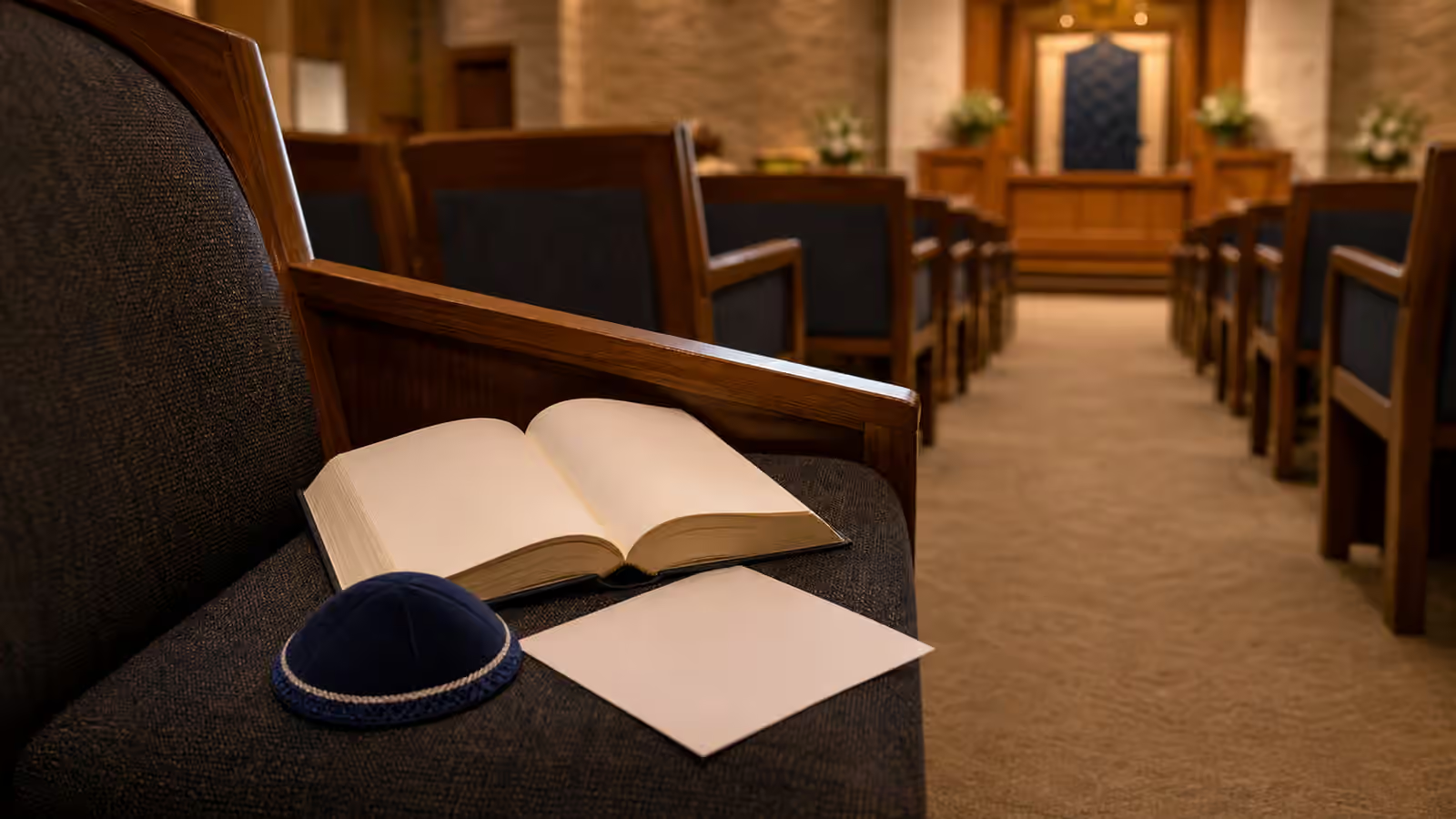
Public Torah reading can be the moment in a synagogue service when a beginner feels most aware of being new. The room shifts. People stand. The ark opens. A scroll is carried, lifted, unwrapped, or dressed according to local custom. Someone chants from parchment without vowels or punctuation. Others follow in printed books, whisper page numbers, kiss a book or tallit as the scroll passes, or step forward for an honor whose rules are not obvious from the seats. For background, read Megillah 23b (communal prayer and Torah reading) .
Synagogue and Prayer for Beginners gives the larger map of the room. The Weekly Torah Portion explains how the yearly reading cycle can shape home study. This guide stands between them. It asks what is happening during the public reading itself and how a newcomer can listen with respect even before the details are familiar.
The Scroll Is Not Just a Book
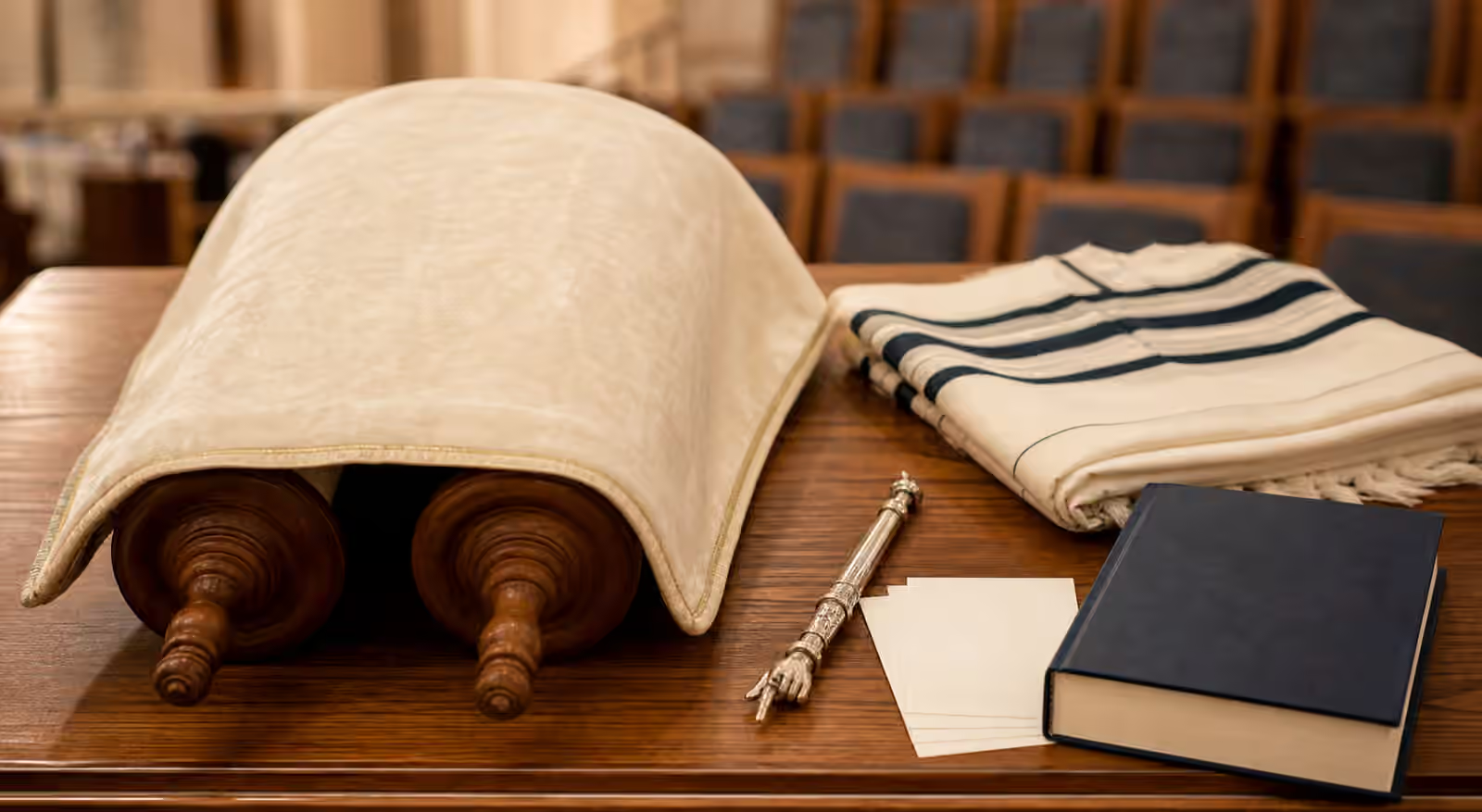
A printed book can be opened casually. A Torah scroll is handled with ritual care. It is handwritten on parchment by a trained scribe, without the vowels, punctuation, chapter numbers, or page design that help modern readers. It is usually kept in an ark, dressed or covered, and brought out for public reading at particular times. The physical care teaches that the community is not treating Torah as disposable information.
This distinction can surprise beginners because many people meet sacred texts first as printed translations or online pages. Those formats are useful and often necessary for study. Still, the scroll carries another kind of authority and intimacy. It has weight. It has a smell of parchment, wood, cloth, silver, or old fabric. It requires someone prepared to read from it. It asks the room to slow down.
The scroll’s dignity does not mean that only experts belong near Torah. It means that nearness comes with attention. If the scroll passes by, watch what the community does. Some touch a prayer book, tallit corner, or hand to the scroll’s covering and then bring that object to the lips as a gesture of affection. Some do not. Follow local practice gently, and do not reach across people or touch the parchment itself.
The Room Has a Reading Geography
Torah reading gives the synagogue a temporary geography. The ark is where the scrolls are kept. The bimah or reading table is where the scroll is read. The reader, gabbai, service leader, people receiving honors, and congregation each have roles. In some communities the reading table is central. In others it is at the front. The movement from ark to table and back teaches that Torah is both held apart and brought into the middle of the people.
A beginner can learn a great deal by watching the movement. When do people stand? Where does the scroll travel? Who announces pages? Who checks the place? Who chants? Who corrects the reader if a word is missed? Which people come forward for blessings? Which books are people using to follow?
Do not worry if the terms blur at first. A chumash may contain the Five Books of Moses with translation, commentary, and haftarah readings. A tikkun is a study aid used by readers preparing to chant from the scroll. A yad is a pointer often used so the reader does not touch the parchment by hand. An aliyah is an honor connected to being called up for a section of the reading. These words become less intimidating when attached to what you can see.
An Aliyah Is an Honor, Not a Performance
The word aliyah means going up, and in this setting it refers to being called to the Torah for blessings before and after a section is read. Customs vary widely. In some communities, the person receiving the aliyah chants the portion. In many, a trained reader chants while the person called up recites or follows the blessings. Some communities call individuals, couples, families, bar or bat mitzvah students, mourners, guests, or people marking life events. Some communities have different practices around who may receive an aliyah based on denomination, gender, membership, Jewish status, or local custom.
For a beginner, the main thing is not to improvise. If someone offers you an honor and you are not sure whether you can or should accept it, ask. If you are invited forward, someone will usually help with where to stand and when to say the blessing. If you are not Jewish, exploring conversion, visiting family, or uncertain about your status in that community, be honest before accepting ritual honors. Respect is clearer than embarrassment.
The aliyah reveals something beautiful about Jewish public life: Torah is not only read by a professional to passive listeners. The community surrounds the reading with honors, blessings, memory, and responsibility. People are called by Hebrew names. Families remember ancestors. A child becomes visible before the community. A mourner may be honored. A guest may be welcomed. The reading is textual, but it is also relational.
Chanting Makes Listening Different
Torah reading is often chanted with a traditional system of cantillation. The melody helps shape grammar, rhythm, and memory. To a newcomer, it may sound like song but not exactly like the songs in the rest of the service. It has its own movement. A skilled reader makes the text audible without turning it into a theatrical performance.
Because the scroll has no vowels or punctuation, preparation matters. A reader does not simply open the scroll and guess. They study the words, vowels, trope marks, and phrasing from a printed or digital study text before reading from the scroll. When a reader is corrected during the service, the correction is usually not meant as public shaming. It is part of the community’s care for accurate reading.
Beginners can listen in several ways. You can follow the translation. You can listen for repeated names. You can notice when the reader’s melody changes. You can let the Hebrew pass over you while attending to the physical respect around the scroll. You can read the portion before services so a few phrases feel familiar. No single mode is the correct beginner mode. The point is to stay awake to the moment.
The Haftarah Opens a Second Window
Many Shabbat and festival services include a haftarah, a reading from the Prophets connected in some way to the Torah portion, the calendar, or the occasion. It is not a random extra reading. It places the Torah portion in conversation with another biblical voice. Sometimes the connection is obvious. Sometimes it is historical, thematic, liturgical, or shaped by inherited practice.
The haftarah may be chanted with a different melody from the Torah reading. At a bar or bat mitzvah, a young person may chant haftarah, Torah, or both depending on community practice. Bar and Bat Mitzvah for Beginners explains why these services are not performances inserted into synagogue life but visible moments of communal responsibility.
For a beginner, the haftarah can feel like one more layer at the exact moment attention is fading. Let it be a second window rather than a second exam. It may introduce prophetic protest, consolation, warning, hope, or historical memory. Over time, the pairing between Torah and haftarah can become one of the ways Jewish reading resists being too narrow.
Etiquette Protects the Moment
Torah reading etiquette is mostly an extension of attention. Avoid casual talking while the reading is happening. Silence your phone and keep it away, especially on Shabbat and holidays where phone use may violate the community’s practice. Do not photograph the scroll or reader without explicit permission, and in many communities do not photograph the service at all. Do not handle ritual objects unless invited. If a procession passes, make room.
If you are lost, use a quiet question at a natural pause rather than a running commentary. If a child is restless, step out gently if needed and return without drama. If the reading feels long, remember that people around you may be marking a yahrzeit, hearing a family member chant, or listening to a passage they have waited all year to hear. The room may contain more meaning than is visible from your seat.
Kippah, Dress, and Synagogue Etiquette for Beginners is useful because Torah reading brings many etiquette questions into focus at once: head coverings, phones, touching ritual objects, moving around the room, and respecting local custom. The goal is not stiff fear. It is enough care that other people can pray and listen.
The Reading Continues After the Scroll Is Dressed
After the Torah reading, the scroll may be lifted, shown, dressed, carried, and returned to the ark. The service continues. There may be prayers for healing, prayers for the community or country, a sermon, a Musaf service on Shabbat and festivals, announcements, kiddush, or a meal. The reading does not end when the scroll is covered because its questions continue into the rest of the day.
This is where public reading meets home learning. Jewish Texts and Learning for Beginners can help a newcomer understand the wider shelf, while Chavruta for Beginners shows how paired study turns reading into conversation. A person may hear a passage in synagogue, then ask about it over lunch, read a commentary at home, or return to it years later when life has made it strange in a new way.
The weekly cycle is patient. If you miss one week, another arrives. If you are confused this year, the same portion will return with more context next year. If you hear only one verse, that verse may be enough for now. Jewish learning is built from return, and public Torah reading gives return a voice.
Listening Is Already Participation
Beginners often measure participation by visible fluency. Did I know when to stand? Did I find the page? Did I understand the Hebrew? Did I know what an aliyah meant? Those questions are practical, but they are not the whole measure.
Listening can be real participation. Standing when the community stands, making room for the scroll, following the translation, noticing the care of the reader, and refusing to turn confusion into cynicism are all forms of respect. You are not required to pretend expertise. You are asked to stay teachable.
The first Torah reading you attend may remain blurry. The second may reveal the route from ark to table. The third may make one blessing recognizable. Later, a portion name may sound familiar. Later still, you may notice that public reading has changed the way a week feels. The scroll comes out, the room rises, the old words are voiced again, and a community gathers around them not because everyone has mastered Torah, but because Torah is how the community keeps learning to return.