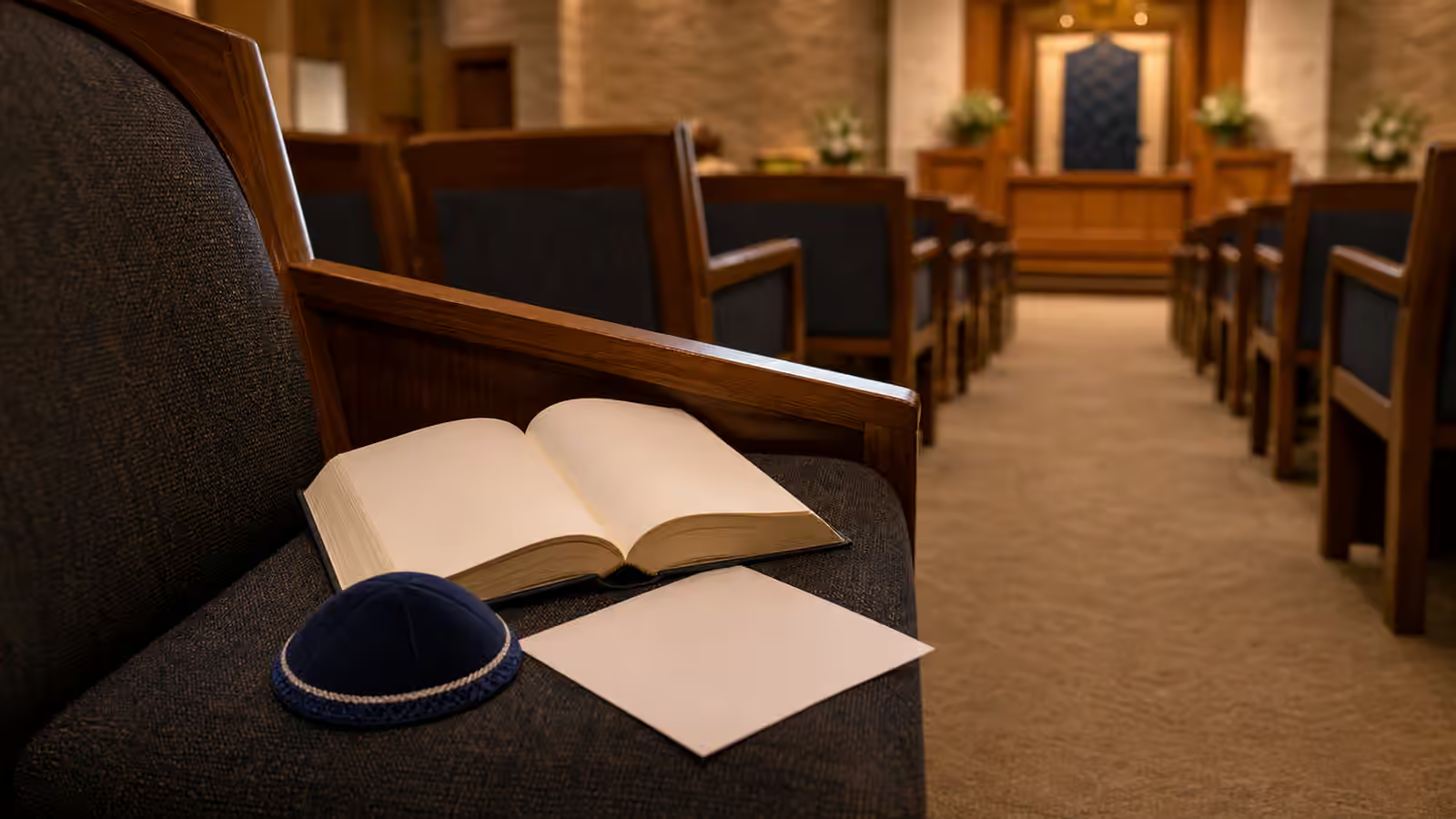
The first synagogue service can feel like arriving after a conversation has already started.
People know when to stand. They know which page to turn to, even when the page number announced does not seem to match your book. Some sing words you cannot read. Some whisper. Some bow. Some sit quietly. A child walks in and somehow understands more of the traffic pattern than you do. You may feel as if everyone can see your uncertainty.
Most of the time, they cannot. And if they can, many remember being new.
A synagogue is not one thing everywhere. It may be called a synagogue, shul, temple, minyan, congregation, or community. It may be large and formal, small and intimate, traditional, liberal, egalitarian, non-egalitarian, musical, quiet, multilingual, intergenerational, urban, suburban, campus-based, online-supported, or held in a rented room. The service may follow Orthodox, Conservative, Reform, Reconstructionist, Sephardi, Mizrahi, Hasidic, Renewal, secular-adjacent, or local patterns. A beginner should not expect one visit to define all Jewish prayer.
The goal of a first visit is more modest: enter respectfully, follow enough to stay oriented, and notice what kind of community the room is trying to be.
The room has landmarks
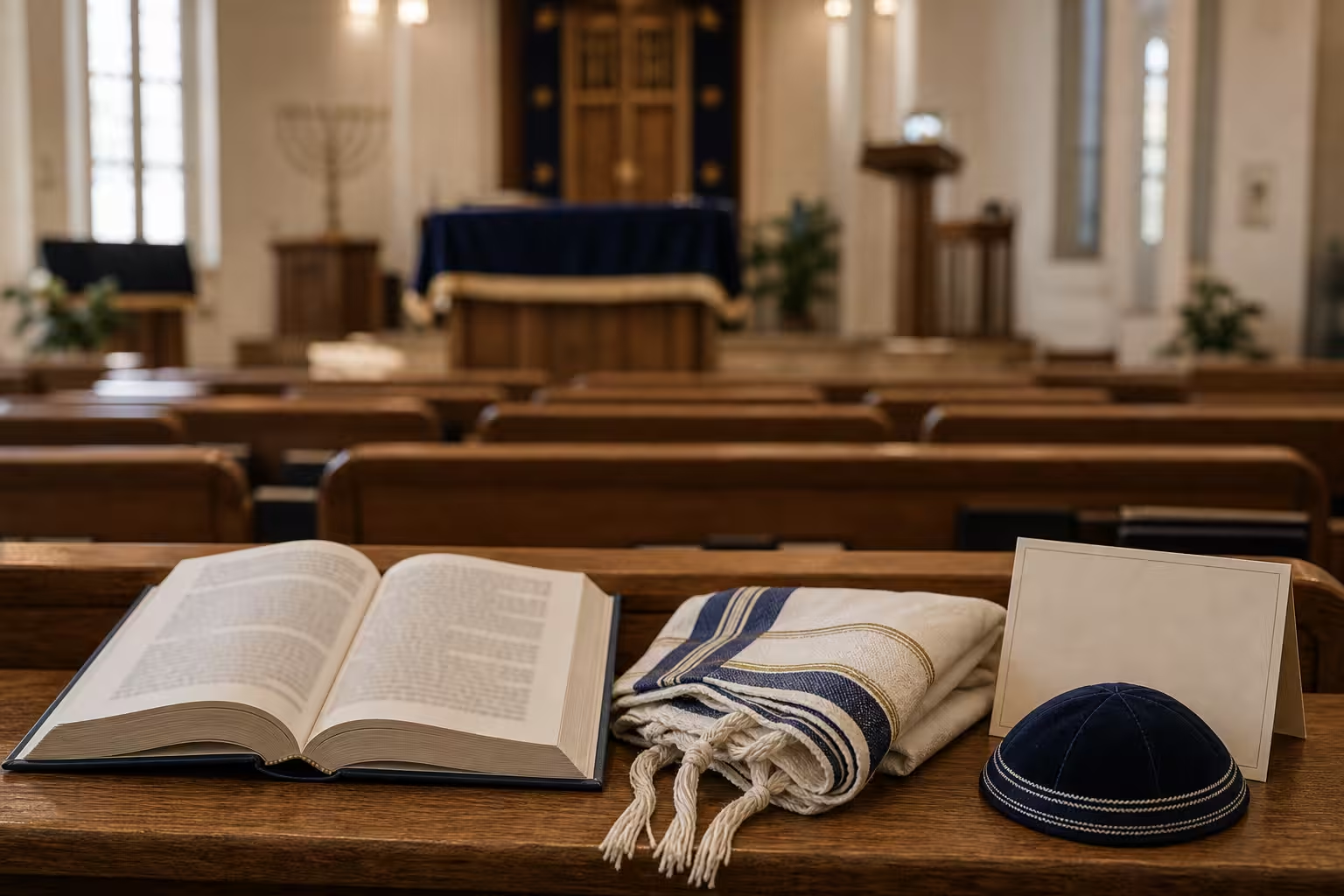
Even before the service begins, the room can teach you. There may be an ark, the cabinet or space where Torah scrolls are kept. There may be a bimah, a raised platform or central reading area. There may be prayer books called siddurim and, on Shabbat or festivals, books for Torah readings called chumashim or printed Torah portions. There may be a ner tamid, an eternal light, near the ark. There may be seats that regulars usually use, though most communities make space for visitors.
Do not worry if you do not know all the terms. Learn the landmarks the way you would learn a train station. Where are the books? Where is the leader? Where does the Torah reading happen? Where do people gather afterward? Orientation reduces anxiety.
If there is a greeter, introduce yourself and say you are new. Ask which book you need and whether there is anything you should know. This is not a confession of failure. It is useful information. Many communities want to welcome newcomers well but cannot help if they do not know who is visiting.

The siddur is a map with layers
The siddur, the prayer book, can intimidate beginners because it may move through Hebrew, translation, transliteration, commentary, stage directions, and alternate readings. Some services use screens or printed handouts. Some use no transliteration. Some move quickly through familiar Hebrew. Some pause for explanation.
Think of the siddur as a map with layers. One layer is fixed liturgy: blessings, psalms, the Shema, the Amidah, songs, and prayers arranged in an inherited order. Another layer is choreography: when people stand, sit, bow, cover eyes, face the ark, or take steps. Another layer is community sound: melodies, pace, call-and-response, and the emotional tone of the room. Another layer is personal attention: which words catch you, which words resist you, and which words you are not ready for.
You do not have to access every layer at once. On a first visit, following the page and listening may be enough. If you know a refrain, join. If you do not, let the room carry it. Jewish prayer is not a solo performance where every participant must be equally fluent.
Standing and sitting are participation too
Beginners often worry about words, but much synagogue participation is physical. People stand for certain prayers, sit for others, and rise when the ark is opened or the Torah is carried. Customs vary, and accessibility matters. People who cannot stand should not feel excluded from prayer. If you are able and unsure, quietly follow the people around you.
Head coverings also vary. In many communities, men wear a kippah or yarmulke; in some, all participants may wear one; in others, it is optional. Tallit, the prayer shawl, is worn in different ways depending on community, gender, time of day, and personal practice. Do not grab ritual garments casually if you are unsure. Ask.
Photography, phones, writing, money, and driving can be sensitive, especially on Shabbat and holidays in more observant communities. Some synagogues have explicit policies for security and ritual reasons. When in doubt, keep your phone away and ask before taking any photo.
Torah reading slows the room down
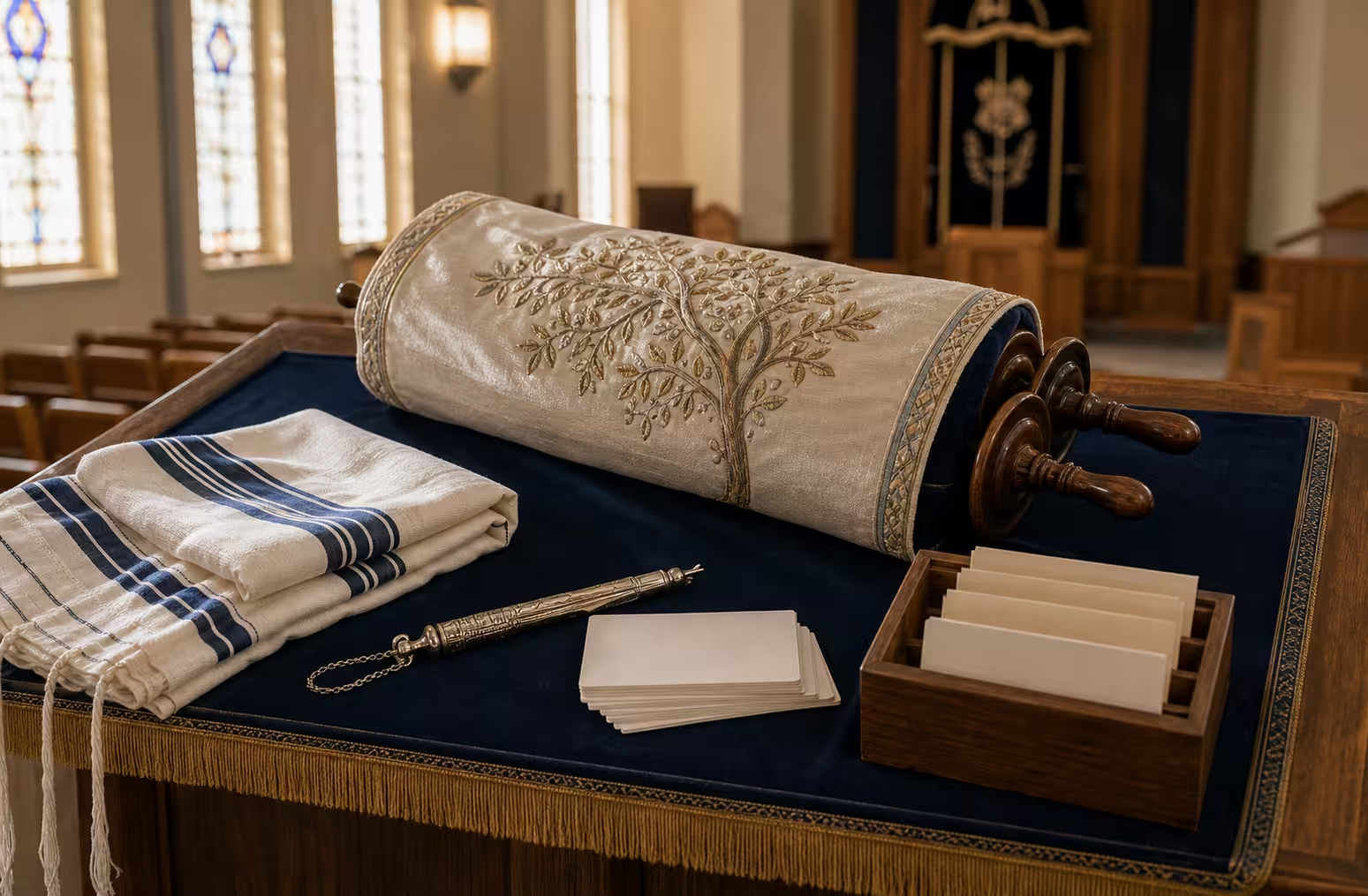
On Shabbat morning, Monday and Thursday mornings in many traditional settings, holidays, fast days, and other occasions, the Torah may be read publicly. The scroll is taken from the ark, carried through or near the congregation in some communities, placed on the reading table, and chanted in portions. People may be called for aliyot, honors connected with the reading.
For a beginner, Torah reading can feel both impressive and opaque. The Hebrew may be chanted from a scroll without vowels or punctuation. The melody has its own system. People may follow in printed books. There may be blessings before and after each portion. In some communities, a sermon or teaching connects the reading to the week.
The key is to notice that Torah is not only a text on a shelf. It is read in public, with ritual care, in a community that returns to it week after week. The reading says that Jewish learning is not finished by private possession. It is voiced, heard, interpreted, and argued over together.
Services have emotional weather
A Friday night service may feel welcoming and musical. A Shabbat morning service may feel longer and more text-heavy. A weekday morning minyan may feel intimate and practical. High Holiday services may feel crowded, solemn, and emotionally charged. A mourning service may carry the weight of kaddish. A child’s bar or bat mitzvah may include family celebration and nervous pride.
Do not judge all synagogue life by the first service you attend. The same room can have different weather depending on time, season, leadership, and community. If one service leaves you cold, another setting may be different. If one service moves you unexpectedly, do not assume you understood everything. Let experience accumulate.
The social room matters
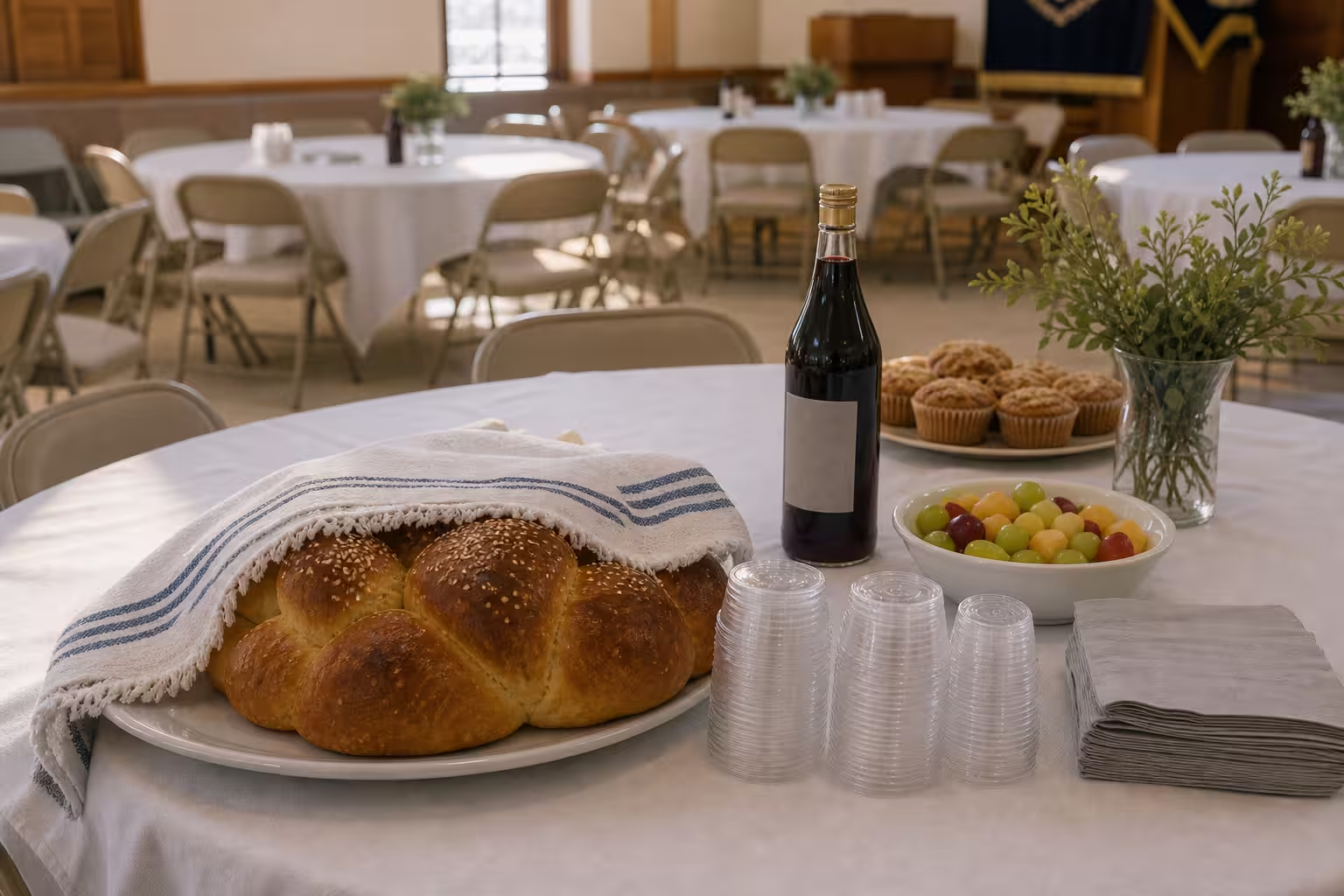
Many synagogues teach themselves after the service, during kiddush, oneg, lunch, coffee, or the informal gathering in the hallway. This is where you may learn who is new, who is grieving, who is organizing meals for a family, who teaches beginners, who knows the local kosher options, and who will invite you back.
For some people, the social room is harder than the service. Prayer has a book. Conversation does not. A useful beginner move is to ask grounded questions: “How long have you been part of this community?” “Is there a beginner class?” “What should I read before coming again?” Avoid turning strangers into spokespeople for all Judaism. Let relationships grow normally.
If you are visiting as part of conversion exploration, family learning, interfaith curiosity, or returning after distance, you do not owe everyone your full story immediately. Share what helps people welcome you. Keep the rest at your pace.
Prayer is not only belief stated out loud
Many beginners assume prayer means saying exactly what you already believe. Jewish prayer can be more complicated. Sometimes it is praise. Sometimes petition. Sometimes discipline. Sometimes memory. Sometimes inherited language you are still learning to inhabit. Sometimes silence inside a room of sound.
You may encounter words that feel difficult. You may not know what to do with God-language, chosenness, sacrifice, resurrection, gendered language, nationalism, grief, gratitude, or obligation. Different communities address these tensions differently. Some translate or adapt. Some preserve traditional language and teach around it. Some invite wrestling.

The beginner does not need to resolve every theological question before attending. Jewish prayer has room for practice before certainty. Showing up can be part of the learning.
Leaving with one next step
After your first service, resist the urge to grade yourself. Ask three simpler questions. Did I feel respected? Did I understand more by the end than at the beginning? Is there one next step I can take?
That next step might be returning to the same service, trying a different service time, asking about a class, learning the Shema, practicing the alphabet, reading the weekly Torah portion in translation, or meeting with a rabbi. It might also be deciding that this specific community is not the right fit and visiting another.
Entering a synagogue is not about pretending you already belong everywhere. It is about learning how Jewish public life sounds, moves, welcomes, challenges, and remembers. The room may feel like a conversation already underway. That is because it is. The invitation is not to master the whole conversation on day one. It is to find a seat, listen well, and learn when to add your voice.