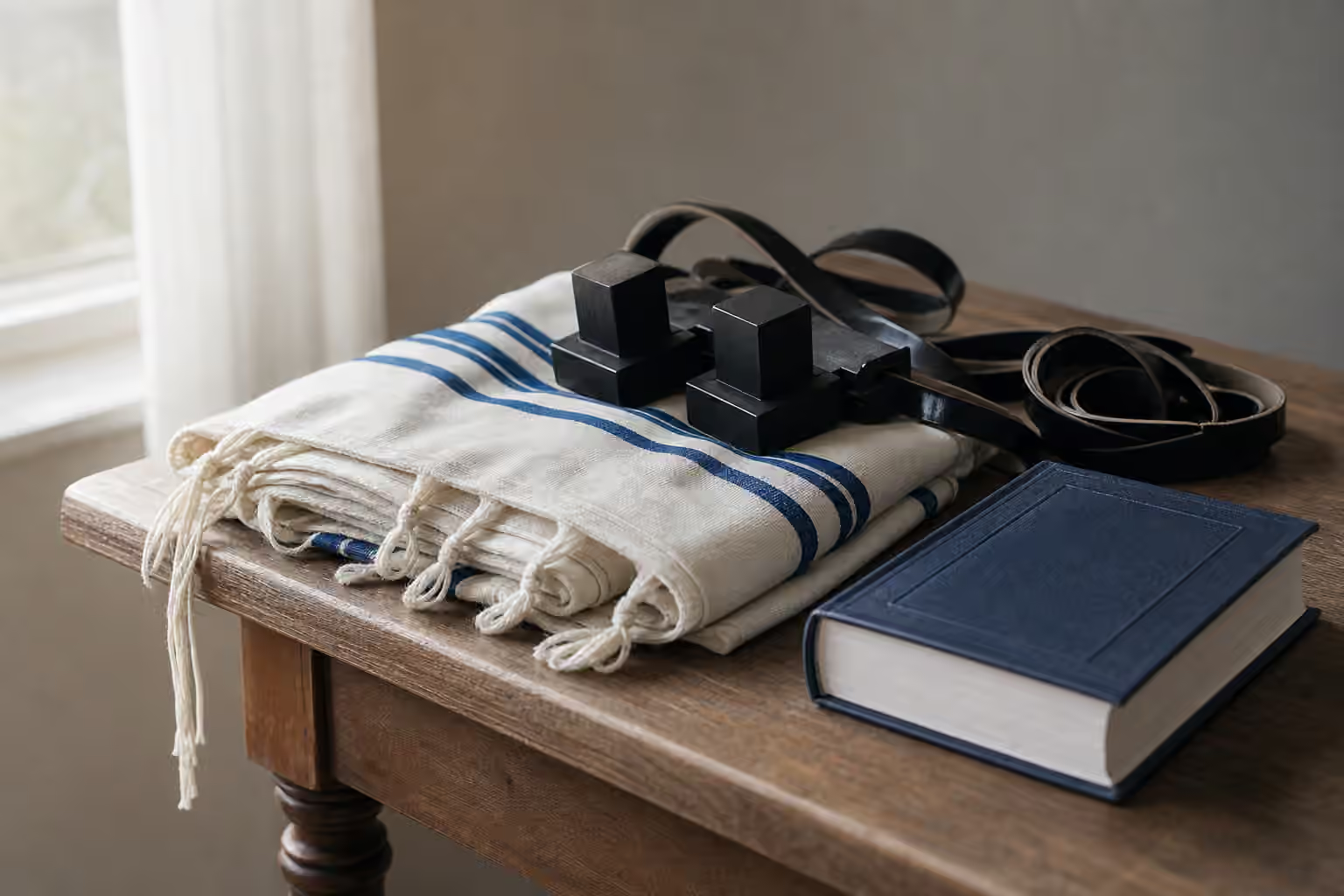
The siddur can feel less like a book than a moving room.
A beginner opens it during a service and immediately discovers that the page is not enough. The leader may announce one number while the person beside you turns somewhere else. Hebrew may run across the page in a direction you are not used to following. English translation, transliteration, commentary, stage directions, and optional readings may all compete for attention. The congregation stands, then sits, then sings a line that appears nowhere obvious. Someone whispers that the service has moved ahead. You wonder whether you are lost because the book is difficult, because the community is moving quickly, or because everyone else received instructions years before you arrived. For background, read Mishnah Berakhot 5 (prayer and attention) .
The answer is usually all three, and none of it means you have failed.
A siddur is a prayer book, but it is also a map of Jewish time. It knows weekday mornings, Shabbat evenings, festivals, home blessings, mourning, songs, private petitions, public responses, and the repeated phrases that let a community pray together across generations. Synagogue and Prayer for Beginners explains how to enter the room. This guide stays with the book in your hands: how to understand its layers, how to follow without pretending fluency, and how to let the siddur become familiar slowly.
The Siddur Is Organized by Time
Most beginners first look for the page number. That is reasonable, but the deeper structure of the siddur is time. Jewish prayer returns in daily, weekly, seasonal, and lifecycle rhythms. A weekday morning service has a different shape from Friday night. Shabbat morning has additions that a short weekday service does not carry. Festivals bring their own insertions, melodies, psalms, Torah readings, and sometimes an entirely separate prayer book.
The regular siddur often includes weekday prayers, Shabbat prayers, blessings for the home, grace after meals, songs, and sometimes festival material. Some communities use a different book for the High Holidays, called a machzor. Some print handouts. Some use local melodies or skip sections in ways that regulars understand but visitors cannot predict. The book is stable, but the community’s use of it is alive.
That is why page numbers can be both helpful and insufficient. A page number tells you where the service is now. The structure tells you why the service is moving there. When you know that a morning service often moves through opening blessings, psalms of praise, the Shema and its blessings, the Amidah, Torah reading on certain days, concluding prayers, and Mourner’s Kaddish in some places, the pages stop feeling random. You begin to see a path.
Hebrew, Translation, and Transliteration Do Different Work
Many siddurim place Hebrew beside translation. Some include transliteration, which writes Hebrew sounds in Latin letters. Each layer helps in a different way. Hebrew connects the service to inherited language and sound. Translation lets the mind follow meaning. Transliteration lets the mouth join before the eyes can read Hebrew comfortably.
It is tempting to choose one layer and judge yourself by it. If you can read Hebrew but do not understand it, you may feel like a machine. If you read translation while others sing Hebrew, you may feel outside the sound of the room. If you use transliteration, you may worry that you are only imitating. These anxieties are common, but they mistake learning for performance.
A healthy beginner uses the layer that lets attention stay present. During a fast section, translation may keep you connected. During a repeated refrain, transliteration may help you join. During a familiar blessing, Hebrew may carry you even before every word is clear. Over time, the layers begin to speak to one another. A word you have sung for months suddenly appears in translation. A phrase from the Shema becomes recognizable at a doorway because The Shema at Home has made it part of daily practice.
The Page Includes Choreography
A siddur is not only words. It often tells the body what to do. It may indicate when to stand, sit, bow, cover the eyes, take steps, face the ark, respond aloud, or read silently. These instructions vary by edition and community. Some books explain generously. Others assume more background.
Beginners often miss the stage directions because they are trying so hard to follow the text. That is understandable. Jewish prayer is embodied, and embodiment is hard to learn from a page alone. The room becomes the second teacher. If people rise, rise if you are able. If people sit, sit. If you cannot stand or need to move differently, Jewish prayer should not turn accessibility into embarrassment. The goal is participation, not athletic precision.
The same principle applies to sound. Some passages are recited quietly. Some are sung together. Some are led by one person with communal responses. Some are repeated by the leader after private prayer. You may not know which is which at first. Let the room carry you. Listen for recurring responses. Notice when the congregation becomes louder. Notice when the leader’s voice alone matters. A siddur is a script, but communal prayer is learned like music as much as reading.
The Amidah Is a Quiet Center
One of the first landmarks to learn is the Amidah, the standing prayer. It appears in different forms on weekdays, Shabbat, festivals, and other occasions. In many services, people stand and pray it quietly before the leader repeats it in some settings. The room may become still in a way that feels sudden to a visitor.
The Amidah matters because it gathers praise, petition, gratitude, holiness, memory, and hope into a disciplined form. On weekdays it includes requests connected to wisdom, forgiveness, healing, justice, sustenance, and peace. On Shabbat and festivals the shape changes, because those days carry a different spiritual labor. A beginner does not need to master every variation at once. It is enough to recognize that the room has entered an inner chamber.
If you are lost during the Amidah, stand respectfully if you are able, read the translation slowly, or sit quietly if standing is not possible. Do not rush through unfamiliar words just to appear synchronized. Jewish prayer has room for silence. The book can hold your place while your attention catches up.
Margins and Tabs Are Not Cheating
Many experienced worshipers have practical systems. They mark pages. They know the local tune. They keep a finger in one section while turning to another. They bring their own siddur because they know its layout. They ask a neighbor quietly. They arrive early enough to find the right book. These habits are not signs that prayer is simple. They are signs that repeated practice becomes humane when people use tools.
Colored tabs, a discreet bookmark, a pencil mark in a personal copy, or a small note with common page numbers can help a beginner. In a borrowed synagogue book, do not write on the pages unless the community clearly permits it. But you can keep your own notes. You can write down where Kabbalat Shabbat begins, where the Shema appears, where the Amidah starts, where Aleinu is found, and where Mourner’s Kaddish is usually recited in that community.
Building a Jewish Home Library is useful here because owning or borrowing a siddur for home study changes the relationship. The book no longer appears only under pressure during services. You can open it on a quiet afternoon, learn the table of contents, compare translation and Hebrew, and notice how weekday, Shabbat, and home blessings sit near one another.
The Siddur Also Leaves the Synagogue
The siddur is not confined to synagogue seating. It may contain blessings before and after eating, bedtime prayers, Havdalah, songs for the Shabbat table, prayers for travel, healing, gratitude, and study. Everyday Jewish Blessings shows how short blessings train attention around food. The siddur gives those small pauses a reliable language.
This matters for beginners because synagogue prayer can feel too large to enter all at once. Home practice lets one page become familiar. A blessing over bread, the Shema before sleep, a short Havdalah service, or one morning paragraph can become a doorway into the larger book. Familiarity gained at the kitchen table returns with you to the synagogue seat.
The flow can also move the other way. A melody heard in synagogue may make a home practice warmer. A phrase from a Shabbat service may appear in a blessing at the table. A line learned while saying Kaddish with a minyan may change how memory feels at home. The siddur ties these places together.
Getting Lost Is Part of Learning
Every regular worshiper has been lost in a siddur. Some still get lost when visiting a different community. A Sephardi siddur, an Ashkenazi siddur, a Reform prayer book, a Conservative siddur, an Orthodox siddur, a Reconstructionist siddur, a Hasidic setting, a weekday minyan, a festival service, and a local handout may all arrange the experience differently. Familiarity in one room does not automatically transfer to every room.
That variety can be frustrating, but it also reveals something important. Jewish prayer is inherited, edited, translated, argued over, sung, adapted, preserved, and localized. The siddur is not a museum label. It is a living book with family resemblance across communities and real differences between them.
The best beginner question is not, “How do I never get lost?” It is, “How do I return when I get lost?” Keep listening. Find the page if you can. Ask quietly when appropriate. Let one phrase anchor you. Watch the room without staring. After the service, ask someone where the confusing section was. Most communities would rather answer a sincere question than watch a newcomer silently conclude that prayer is impossible.
The siddur becomes less intimidating when it becomes a companion rather than an exam. At first, you may only find the page. Later, you recognize the service shape. Later still, a phrase catches because life has made it necessary. A book that once seemed to move without you begins to move with you, not because every word is mastered, but because you have learned how to stay in the room long enough for the map to become familiar.